Spectator Life

Spectator Life

An intelligent mix of culture, style, travel, food and property, as well as where to go and what to see.

Yorkshire puddings: is there anything as satisfying?

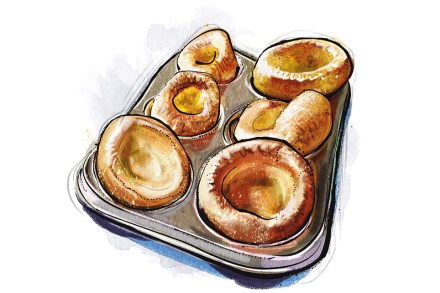
My mother, a Yorkshire woman, would occasionally take shortcuts in the kitchen, but not when it came to a roast, and certainly not when it concerned a Yorkshire pudding. She even owned a specific Tupperware shaker for the job: like a plastic cocktail shaker, in 1970s orange colour, with a propellor insert, and a lidded pouring spout. The batter would be prepared in this shaker and handed to anyone foolish enough to pass through the kitchen, and woe betide anyone who stopped shaking before they were so instructed. There are few things more satisfying than filling a perfect Yorkshire pudding with gravy I didn’t inherit my mother’s Yorkshire pudding shaker, but I make do with a vigorous whisk and then a short rest.

Harry Kane is many things – but he’s not a leader

What’s not to love about David de Gea? Manchester United’s goalkeeper might appear to have it all: a humongous salary, a lovely family, a sensationally beautiful wife, Edurne Garcia, who is a star in her own right in Spain, and a pleasing ability to behave like a complete berk. He is a mix of utter brilliance and complete rubbish. On Sunday, de Gea went the wrong way every time before Solly March shot over the top  Last week he made a series of terrible errors, backed up by a woeful Harry Maguire, to gift Sevilla a Europa League tie that United should have won quite easily. Then at the weekend he was magnificent in the FA Cup semi-final, keeping United in a game that Brighton should have won. But wait, he can’t save penalties!

My blue tick humiliation

I was one of the first people to take up Elon Musk’s offer to purchase a blue tick, the Twitter equivalent of VIP status. Not because I didn’t have a complimentary one – I did, believe it or not – but because if you sign up to Twitter Blue it means you can post videos on the site that are longer than a couple of minutes. Poor Elon Musk then had to do a reverse ferret, announcing he’d be restoring the merit badges to a select few I had noticed that my friend Konstantin Kisin had put up a speech he’d made at the Oxford Union and it was getting lots of views. I spoke in the same debate and gave what I thought was a much better speech, so wanted to put mine on Twitter, hoping it would prove even more popular.

Inside America’s Satanist movement

The largest gathering of Satanists in history is taking place in Boston this weekend. It’s not open to the public. Or, to be more precise, no longer open to the public. That’s because all the tickets have been sold. They’ve downgraded the supernatural in favour of aggressive secularism, with an emphasis on trans issues The second annual SatanCon is being organised by The Satanic Temple or ‘TST’, the world’s biggest Satanic sect, at the Marriott Hotel in Copley Square. That’s the same Marriott chain founded by a devout Mormon family who, back in the 1960s, only agreed to serve alcohol to guests after securing permission from the president of the Church of Latter Day Saints.

Where to get your Lapsang (now Twinings has ruined theirs)

Tea drinkers erupted in a fit of caffeinated rage on Monday; kettle cosies were dashed across the kitchen, bone china was placed down hastily and many people were all very cross. Twinings sparked the uproar after axing its Lapsang Souchong tea and replacing it with something called ‘Distinctively Smoky’. It has been met with near universal disapproval and branded a stain on the company’s 300 year history. Famously Winston Churchill’s brew of choice, Lapsang Souchong is a centuries-old tea thought to have originated in the Wuyi Mountains in the Fujian Province of China, with the first record of it in 1646. Legend has it Wuyi locals fleeing Qing soldiers dried fresh batches of tea over fire to expedite their escape.

The joy of India’s heritage hotels

As the pandemic roared through India, I wondered when tourists like me would be able to return to a country so central to the traveller’s imagination. When we did return, would it show the scars of the hideous death toll and extreme burden of suffering? Would we feel safe? Finally, nearly three years since I first wondered this, I went to find out. I flew not long after India relaxed all Covid paperwork late last year. A sadistically bureaucratic nation at the best of times, India had scrapped British e-Visas in retaliation for something that no one can quite work out, making the visa application process somewhat Kafka-esque. The e-Visa has, thankfully, since returned.

Inside London’s first community-owned pub

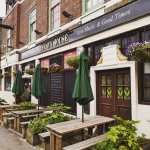
When Enterprise Inns closed the Ivy House in April 2012 – with plans to sell it to a property developer – things looked bleak for the south London pub. Its well-established status as a community and live music venue, which has hosted artists like Joe Strummer, Elvis Costello, and Ian Dury, was under threat. What followed is a story of civic triumph.  Nestled in the residential backstreets of Peckham Rye, The Ivy House has the proud title of being London's first cooperatively-owned pub. When its existence was threatened, members of the local community stepped forward, campaigning successfully for a Grade II listing and raising £1 million to buy the freehold and refurbish the building.

Tales of an octogenarian hitchhiker

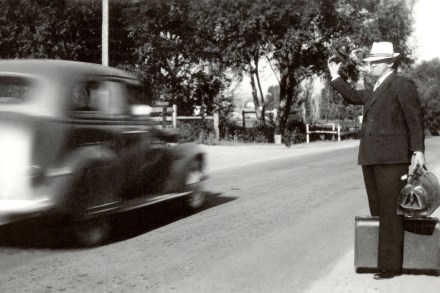
Hitchhiking has always seemed to me a good way to get about. It is cheap, some drivers even treat you to coffee or a meal, and it is always companionable. What’s more, the knights of the road who stop for you are often people you would otherwise never meet. My first experience was when I hitched from London to Athens and back in 1951. South of Florence, en route to Rome, I discovered that not all drivers were knights. I was wearing, I am pretty certain, grey flannel trousers, a tweed jacket and a tie (this was the 1950s). After a short time of putting up my thumb, a Fiat Cinquecento swerved over to where I was standing. The window on the passenger’s side was wound down and a woman’s voice said: ‘I can see you are English and I need someone to protect me.

Could you become a spy?

Why spy? Why do people become spies, what are their motives, their justifications, and how do they perceive what they are doing? Could any of us do it? Are we all potential spies? Short answer: yes. Long answer: depends on circumstances. The Sunday Times ran a story about Abdi (a pseudonym), who was recruited in the wake of 9/11 by MI5 to spy on UK-based terrorists. He was subsequently sent by MI6 to penetrate training camps in Waziristan, despite both agencies allegedly being aware that he was mentally unstable. When he returned to the UK he killed his own child, claiming that this was a psychotic episode resulting from the stress of spying. The jury did not believe he was unable to control himself and convicted him of murder.

Why speeding is good for us

What’s your go-to speed on the motorway? Do you snuffle along at 70, slowing down the lorries in your Rover 75? More likely you cruise the middle lane on the cusp of 80 – just on the wrong side of the law, plus 10 per cent and then some. That’s what I like to do, along with nine out of ten of the other drivers I observe. Perhaps you’re one of the speed merchants in a grot-covered Beamer, or a fly-drenched Audi who insists on making the M4 a little autobahn when no speed cameras are watching?  That’s the joy of Britain’s motorways, there’s something for everyone. Aside from pensioners who accidentally stray onto the motorway on their mobility scooter in search of an Asda, no one voluntarily drives under 70.

The BBC’s Blue Lights is a near-perfect cop drama

‘Remember your training Grace, get the rifle.’ We’re only moments into the opening episode of the superb new police procedural Blue Lights when we are reminded this is a very different cop show. In Northern Ireland, where it is set, policing the semi-skimmed peace still carries the additional risk of being ambushed by terrorists. Being tooled up, even for a traffic stop, can be a matter of life and death.   Any of us who have worn a uniform while wet behind the ears can empathise with the struggle of these three new officers Grace and Stevie, her mentor – and possibly more as the series develops – are two central characters in a six-part BBC drama that manages to humanise the lives of the men and women in the Police Service of Northern Ireland without mawkishness.

Why Madeira is like Swiss cheese

Three days on Madeira can feel like a week – not because time ­­drags, but because the place is so varied with its many different weathers. From the aeroplane you could be circling over the Caribbean, an impression given by the lush scrambling vegetation and orange rooftops jostling up the mountains. We landed at Cristiano Ronaldo airport, named for the most famous living Madeiran. Having surveyed the situation from the air, I wondered how he found anywhere flat enough for football. We kicked off with a puncha – Madeira’s ubiquitous rum punch, sweetened with orange and honey. It was our duty and pleasure to try it We headed first for the sunny southwest, to Quinta da Vinhas, a wine-growing farm above the seaside resort of Calheta.

There’s nothing wrong with leaving a sick partner

Danielle Epstein’s story is a sad one; last year she was in the process of buying a house with her boyfriend when he was diagnosed with a brain tumour, underwent a serious operation and had to learn to walk again. He wasn’t the only one who walked; Miss Epstein did also, and not just down the road where she could keep an eye on him, but all the way to sunny Thailand. She said in her defence: 'I felt like the most awful person, leaving somebody because they have cancer, but it was damaging my mental health and it wasn't helping him… I couldn't sleep or eat, I was having panic attacks and was on so much medication to sort myself out I just couldn't function.

How useful is a Twitter blue tick?

Alex Salmond was one of the first to fall victim to Twitter’s blue tick cull. An account with the same name as his began sending out disparaging tweets about his sub-optimal bowel movements. The account was tweeting shortly after Elon Musk removed 400,000 ‘legacy verified’ blue ticks, little badges that sit next to a user's name, which were originally designed to stop impersonation. Musk’s removal of the verified ticks – previously given to celebs, politicians and journalists to prove they are who they said they are – makes way for a free market approach to verification. Any tweeter can now pay £9.60 a month for the blue tick (provided their email address has been verified).

Two tips for the Scottish Grand National

Scottish trainer Lucinda Russell has her string in such fine form that she might win a race at Ayr this weekend if she entered the stable cat. From her five runners at Aintree last weekend, she ended up with two wins, two seconds and a sixth – quite an achievement. Pride of place went, of course, to Corach Rambler who landed the Randox Grand National. No tipster rightly gets many plaudits for putting up the favourite in a big race but I am pleased to say that loyal Spectator Life readers were put on him before Christmas – three and a half months before the race – at 20-1.

AI and the end of immigration

There are many things to be learnt from visiting an airport. A trip to Stansted Airport, for instance, will teach you that Stansted is a really dim place to locate an airport. Meanwhile, JFK in New York City will inform you that America is becoming seriously pricey for European tourists. But a recent trip to Bangkok airport taught me something more profound. There I was, supping some pleasant Singapore Laksa, and I saw this thing hove into view. It was an autonomous robot cleaner, busily keeping all the shiny floors of Suvarnabhumi airport in pristine condition.

In defence of the hash brown

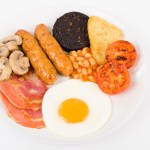
The English Breakfast Society has cancelled the hash brown, calling it a ‘lazy American replacement to bubble and squeak’. Guise Bule de Missenden, the society’s founder (sounds European to me), warned that giving hash browns the stamp of approval would only encourage the adoption of other ‘unsuitable fillers like chips’, or worse ‘fish fingers’ and ‘kebab meat’. (Seriously Guise, unless you are an infant or a drunk, the latter two are not part of any normal diet.) The boffins at the English Breakfast Society need to get with the times ‘Someone has to draw the line and say no to hash browns,’ he said. ‘They are served by those who lack pride in the full English breakfast tradition.’ Well, I've had enough. I’m taking a stand.

How I found friendship through online Scrabble

The internet, as we all know, is a place for rage and hate. It’s a free-fire zone in which even something as apparently innocuous as Facebook – original use-case: posting family snaps for your gran – ends up incubating armed insurrection and spreading 5G conspiracy theories. But what if there was some corner of it untouched by death threats, disinformation and the baleful influence of Vladimir Putin’s troll farms? What if there was still some corner of the world wide web which lived up to its original promise of connecting people who would not otherwise be connected, and what if once connected they were nothing but agreeable to each other? Be of good cheer. That corner exists. Not everyone is arguing with Owen Jones and India Willoughby.

Why are beds flat?

Last month in a Swiss hotel, I came across an idea so beautifully simple that I felt it would be immoral of me not to share it. The bed in our room, rather than having one king-sized duvet, was covered by two double-size duvets overlapping in the middle. Eureka! Given that the Swiss are world leaders in conflict-avoidance, it seems likely the idea originated there, although I have since learned the practice is also common in Scandinavia. Back in Blighty, when one person in a double bed rolls towards the edge, they take three feet of duvet with them, leaving their partner out in the cold. This typically leads to retaliation and often escalation. The Scandi-Swiss system, by contrast, creates a buffer, a DMZ of surplus duvet, which means that bedding fights are no longer a zero-sum game.

The grand shame of the Grand National protestors

When jockey Derek Fox came over from Ireland to join the Scottish stable run by Lucinda Russell and her partner, Peter Scudamore, the long-time champion rider, he was teaching himself to read via texts on his phone. Now he discusses books with Scu. Cleverness comes in different shapes and it was a supremely intelligent ride Fox gave Corach Rambler to win this year’s Grand National, just as he did winning two Ultima Chases at Cheltenham on the same horse. The same close-knit team won the National six years before with One For Arthur but this time Fox’s participation was in doubt until just hours before the race when, after completing a series of press-ups, he finally declared himself recovered from a shoulder injury.

The restorative qualities of a great martini

It was a perfect setting for a spring day, next to a 15th-century barn. Other walls and buildings had clearly recycled ancient masonry over the centuries. This was in Kent. Though not that far from Ashford station, it was a garden deep in the garden of England: l’Angleterre profonde. There are excellent local pubs, with absolutely no pop music, but proper hoppy beer as well as proper dogs, looking forward to the shooting season. There was also modernity, in the shape of the Pleasant Land distillery, which has the most up-to-date impressive-looking German kit. Vorsprung Durch Technik also applies to pot stills. The fellow who inspired all this is Sebastian Barnick.

Why I’ve fallen out of love with my Brompton

In the darkest depths of lockdown, trapped in a subterranean flat in South London, I struck upon an idea: I would buy a bike. I’d had one at university and remembered enjoying the meditative effects of gliding through parks and down streets. It would mean something to do other than fighting over who got to work at the kitchen table or staring mutely at our little telly.  I met the seller in a multi-storey car park in Woolwich. He popped his trunk, revealing a jumble of metal tubing and cables about the size of a suitcase: a foldable Brompton bicycle. As he lugged it onto the concrete floor, Taut explained that he loved the bike but had just bought a super-lightweight, modified Brompton. It was time to part ways.

I miss the Cold War

Berliner Luft is a popular peppermint-flavoured shot downed in the city’s bars. It also means Berlin Air and is a colloquialism for the city’s spirit of unfettered freedom and rebellious abandon. Given what this city went through, reduced to rubble by the furious Russians at the end of world war two, and then rent in two for more than 40 years during the Cold War, it’s not surprising that after the Berlin Wall came down in 1989, the populace needed to let off steam.

How to speed up buying a house

Everyone has a story about the stress of moving house. For those buying a new home, the process of exchanging contracts is perhaps even more nerve-racking than loading their worldly possessions into the back of a van. When I started in the property game in the late 1970s, buying a property – that’s when you pay your 10 per cent deposit and your sale becomes irrevocable, not when your agent says ‘well done, your offer has been accepted’ – took roughly eight weeks. It now takes over 20, which is absurd. This extra time contributes the lion’s share of stress and seems to be getting worse.

A beginner’s guide to (legally!) avoiding tax

You have to feel a little sorry for Rishi Sunak. When you have a wife as rich as Akshata Murty, just how do you keep tabs on all her investments, making sure that each one of them is properly declared as an interest in the House of Commons Register? The Prime Minister has suffered the embarrassment of being investigated by parliamentary authorities over an apparent failure to declare his wife’s holdings in a childcare firm Koru Kids, which potentially stands to benefit from changes in the Budget. Sunak previously nearly had his political career derailed thanks to revelations that his wife, who is an Indian citizen, was living in Britain as a non-dom – a status she later gave up.

Self-obsession is killing music

Though I’m not the most avid fan of her oeuvre, I was cheered recently to see that Ellie Goulding wanted her new album to be less personal: ‘It was such a relief and really refreshing to not be sitting in the studio going through all the things that happened to me and affected me… it’s the least personal album, but I think it’s the best album because I got to just explore other things about myself. I just really, really enjoy writing; really enjoy being a singer.’ What a refreshing take on the creative process, which in modern times can often seem like a cross between a bulletin from the therapist’s couch and a ceaselessly-picked sore. Millennials can’t seem to get enough of spilling the tea, and that goes especially for their most successful singers.

For sale: Jane Austen’s birthplace

‘There is nothing like staying at home for real comfort,’ wrote the eminently quotable Jane Austen in Emma, in 1815. ‘Nobody can be more devoted to home than I am.’   If the incomparable Regency writer and social critic could see Steventon House, on the site of her birthplace and childhood home in Hampshire, she would doubtless approve. Although it’s not quite on the scale of the manicured estates that feature so largely in her property-obsessed novels, the Grade II listed 1820s home is all Georgian elegance, with 7,000 sq ft of living space, beautifully proportioned high-ceilinged receptions and fine period features including decorative fireplaces, cornicing, and working shutters.