Emma Wells

Inside the Kent townhouse built for heroes of the Napoleonic wars

From our UK edition

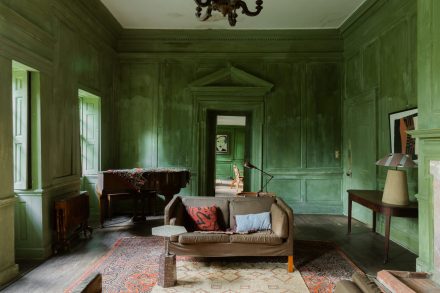
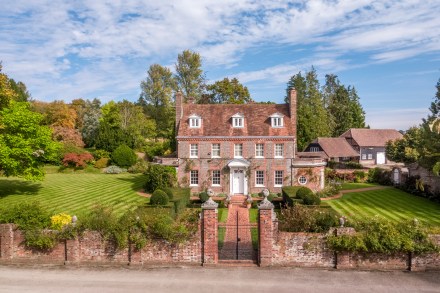
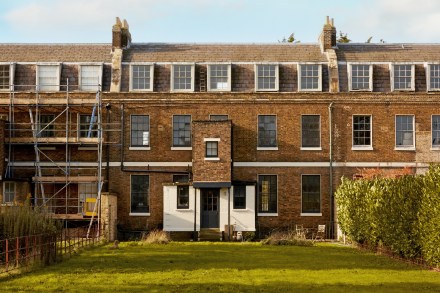
‘I’m used to going deep into narratives, and I just loved the story of this house,’ says actress and director Sara Sugarman, who is selling her Grade II* listed Georgian home in a historic Kentish dockyard. Her roles include TV series Grange Hill and Juliet Bravo, movies Sid & Nancy and Mr Nice, and she has also directed Lindsay Lohan in Confessions of a Teenage Drama Queen and Jonathan Pryce in Very Annie Mary, earning the Sundance Film Maker’s prize along the way. ‘I wanted pure authenticity, so I researched everything I could about the history of the house and 1830s design and got a real hunger for it.
Inside Kelly Castle (baronetcy optional)

From our UK edition

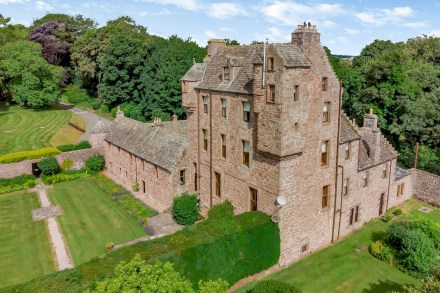
For most of us, a cursory flick through an in-flight magazine might lead to the purchase of a G&T, or a bottle of perfume. For Alun Grassick, it was a slightly more substantial investment. When he spotted an ad for a crumbling B Listed castle in the Angus countryside, with its towers, turrets, an associated baronetcy and 33 acres of land, he and his wife bought the property. Since 2001, they have spent an eye-watering £2 million restoring it. The couple had long hankered for a second home in their native country since moving to Hong Kong in the late 1980s.

Inside the fading beauty of Crowland Manor

From our UK edition

Ceramicist Sophie Wilson’s Christmas decorations at her Lincolnshire manor house are calmingly analogue. For her, there are no flashing lights, tawdry tinsel or store-bought baubles.   ‘I love to have bare trees around, and always have a huge one in the main kitchen, big enough so I can tilt my head back and gaze up at it,’ she says. ‘The tree in the playroom, though, will be on just the right side of horrible, festooned with two decades’ worth of my children’s art projects and the old fairy, with the rolling eye – all the things that flood me with memory.

Inside Jerome K Jerome’s nine-bedroom Oxfordshire house

From our UK edition

Jerome K Jerome’s Three Men in a Boat – a tale of three hapless, hypochondriac London clerks who take a trip along the River Thames in the hope of curing their ailments – became an instant bestseller when it was published in 1889, and hasn’t been out of print since. Bruce Chatwin, Paul Theroux and Bill Bryson all owe it to Jerome.  The book’s success meant that in 1895, Walsall-born Jerome (then in his mid thirties) could make a move to a rambling Oxfordshire house, built in the 1820s on the site of an ancient monastery.  Although he clearly had a fondness for the Thames, the home he chose wasn’t quite on the waterfront. It was, however, in a glorious rural spot in the village of Ewelme, part of what is now the Chiltern Hills Area of Outstanding Natural Beauty.

Inside the Cornish home of John le Carré

From our UK edition

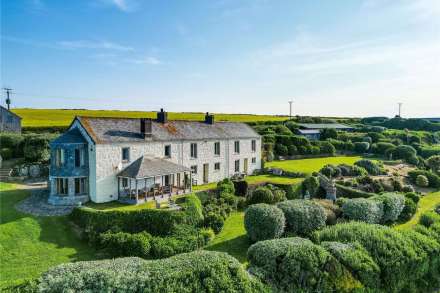
Every writer needs a bolt hole. Novelist John le Carré’s was particularly picturesque, perched high above the waves on one of south Cornwall’s most glorious coastal stretches, between Lamorna and Porthcurno.  Tregiffian Cottage, made up of a trio of former fishermen’s homes, was where Le Carré conceived and wrote some of his most famous novels, including Tinker Tailor Soldier Spy, Smiley’s People, The Spy Who Came in from the Cold and The Constant Gardener. ‘I love it here, particularly out of season,’ Le Carré, real name David Cornwell, who died in 2020, told a local newspaper. ‘The empty landscape, walking on the cliff, and the light, which of course everyone always mentions... but it seems that I can think well here.

Inside the Glastonbury home of Mulberry’s founder

From our UK edition

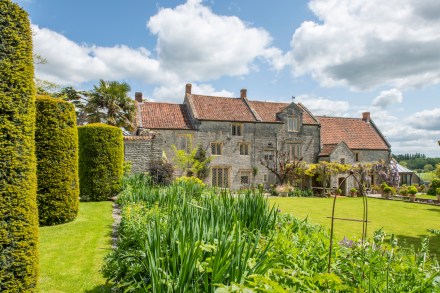
Roger Saul founded Mulberry in 1971. He created their now iconic range of bags, belts and purses, but was ousted from the designer label’s board in the early Noughties. Undeterred, he reinvented himself as the purveyor of organic spelt cereal and flour brand, Sharpham Park. His range of products is de rigueur on every health-conscious Waitrose shopper’s weekly list. There have been some intriguing historical discoveries over the past 45 years Saul, now 73, can put many of his triumphs in both fashion and food down to Abbots Sharpham, his 268-acre Somerset estate, just outside Glastonbury, made up of a Grade II* Listed 15th-century eight-bedroom main house, two cottages, a deer park, indoor swimming pool – and field upon field of spelt.

The mysterious history behind an 11-bedroom country manor that’s up for sale

From our UK edition

With its perfectly soaring Jacobean-style architecture, leaded windows and enchanting walled garden, all set within 17-plus acres of East Sussex countryside, Grade II* Listed Possingworth Manor is the rural idyll of an English country house.   Despite its tranquil appearance, however, the 11-bedroom, 8,500 sq ft manor near Uckfield has had a disproportionate share of drama over the years, as the site of some legendary lovers’ tiffs, and with links to royalty past and present, literary and artistic icons and wartime heroes, to boot.

Inside Denham Place, inspiration for the early James Bond films

From our UK edition

House hunters nearly always have to make a compromise to suit their budget – the size of the garden, say, or those dated avocado bathroom suites, or the slightly inconvenient distance from the station. You might think that being a multi-millionaire would exonerate you from such stresses, making finding your dream home trouble-free.   Not so, according to Mike Jatania, the British Asian cosmetics tycoon who reportedly sold personal care brand Lornamead to Li & Fung Ltd for $200 million a decade ago and who regularly tops charts of Britain’s richest Asian people.

For sale: Jane Austen’s birthplace

From our UK edition

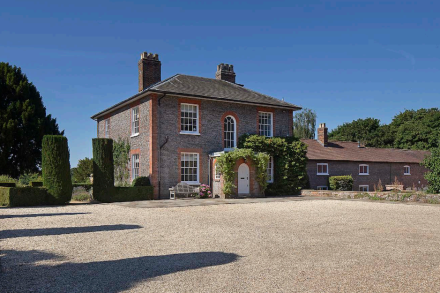
‘There is nothing like staying at home for real comfort,’ wrote the eminently quotable Jane Austen in Emma, in 1815. ‘Nobody can be more devoted to home than I am.’   If the incomparable Regency writer and social critic could see Steventon House, on the site of her birthplace and childhood home in Hampshire, she would doubtless approve. Although it’s not quite on the scale of the manicured estates that feature so largely in her property-obsessed novels, the Grade II listed 1820s home is all Georgian elegance, with 7,000 sq ft of living space, beautifully proportioned high-ceilinged receptions and fine period features including decorative fireplaces, cornicing, and working shutters.

Home is where the art is: inside J.M.W Turner’s last house

From our UK edition

Joseph Mallord William Turner continues to occupy a singular place in British cultural consciousness. The English Romantic artist, watercolourist and printmaker – often referred to as ‘the painter of light’ – elevated landscape painting to high art and, when he died in 1851, left a legacy of 550 oil paintings, 2,000 watercolours and 30,000 works on paper. When one of these surfaces at auction, it sells for tens of millions of pounds. However, most of his works – with the power of nature, the sea and the industrial revolution as central themes – were bequeathed to the nation.

The Norfolk manor house that inspired Virginia Woolf

From our UK edition

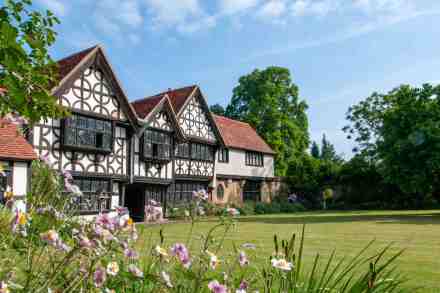
Many English country houses lay claim to literary legacies. Blo Norton Hall, however, has more right than most. In the summer of 1906, while in her early twenties, Virginia Woolf rented the Elizabethan Norfolk manor house with her older sister, artist Vanessa. The seven-mile journey there from Diss station, through isolated countryside, and their arrival at the secluded, moated site made a deep impression on Woolf. She wrote in her diary: ‘Every mile seemed to draw a thicker curtain than the last between you and the world. So that finally, when you are set down at the Hall, no sound whatever reaches your ear; the very light seems to filter through deep layers; and the air circulates slowly, as though it had but to make the circuit of the hall, and its duties were complete.

For sale, the £3m Welsh mansion with political foundations

From our UK edition

Known as Wales’s first tycoon, the industrialist and Liberal politician David Davies was born in 1818 in a hillside tenement in the village of Llandinam, Powys. Davies, the son of a farmer and sawyer, went on to amass a fortune through bridge-building, railways, coal-mining and dock development, while also serving as an MP for Cardigan.   The teetotal Calvinistic Methodist, probably best remembered for founding Barry Docks in the 1880s, was known for his philanthropic deeds, although he did have one obvious indulgence. In counterpoint to his hill-darkened boyhood home, where he cared for several younger siblings, in the 1860s he constructed a light-filled family property that he named Broneirion – designed so that it would receive sunlight all year round.

The £6m country house that was home to Churchill’s secret army

From our UK edition

The high-risk, adrenaline-fuelled operations dramatised in recent BBC1 mini-series SAS Rogue Heroes left viewers gripped. Not quite as attention-grabbing, but no less fearless (or dangerous), were the activities of another special forces unit, the Special Operations Executive (SOE) – a volunteer force set up in 1940 to wage a secret war. Famously ordered by Prime Minister Winston Churchill to ‘set Europe ablaze’, this band of brave agents were often dropped by parachute into Nazi-occupied territory, tasked with sabotage, subversion and helping local resistance movements. Many of them were serving soldiers with commando training; others had been drawn from civilian life.

Is this Britain’s most historic house?

From our UK edition

Hyperbole in estate agents’ brochures isn’t unusual – but when it comes to a write-up for Great Tangley Manor, which has gone on the market for £8.95 million, overkill is almost impossible. Believed to be the UK’s oldest continuously inhabited property – its Saxon foundations date from 1016 – the Grade I-listed moated manor house, in the village of Wonersh in the Surrey Hills Area of Outstanding Natural Beauty, comes with an extraordinary roll call of associated famous names. From the spheres of royalty, art, literature, garden design and even America’s Gilded Age, all have played their part in shaping secluded Great Tangley into a country house with a compelling story.

Eric Sykes, Spike Milligan and the house with comedy value

From our UK edition

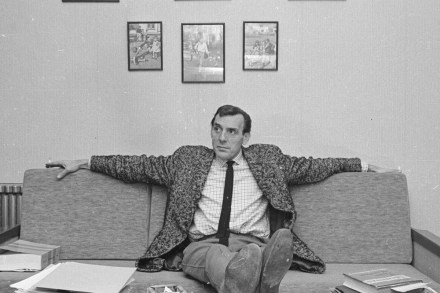
Part of an 1890s terrace of Arts and Crafts buildings, 9 Orme Court, off the Bayswater Road in W2, is at first glance simply the kind of grand red-brick townhouse you’d expect to find in the area. Look up beyond the elegant entrance canopy to the ornate first floor balcony, however, and above it you’ll spot a pair of blue plaques that single out its seminal role in the birth of British alternative comedy – and a place from which peals of laughter would ring out across the sedate street.

Yours for £3k a week, the townhouse with royal history woven into it

From our UK edition

The 34 early Georgian houses that line Fournier Street, in the heart of Spitalfields, are a perfectly preserved microcosm of East London life through the centuries. Since it was built in the 1720s, the street – which runs between Brick Lane and Commercial Street, in E1 – has variously been home to the city’s wealthiest and poorest. With many of its first residents Huguenot weavers escaping religious persecution in France, the street is characterised by its series of highly glazed lofts, harnessing the light vital for the skilled textile work, with many of the houses subsequently bought by those in the silk trade. Arguably one of the finest houses on the street, No.

The £15m Surrey mansion where Rudolf Hess was held prisoner

From our UK edition

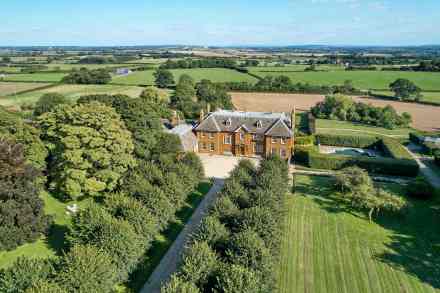
The restoration of any run-down English country mansion is likely to involve extensive re-roofing, re-plumbing and re-wiring. Only one, however, is likely to uncover microphone wires hidden deep within walls by MI6, or involve the polishing of a grand, three-storey oak staircase over which Hitler’s top henchman, dressed in full Nazi regalia, tried to throw himself (failing when he got his leg stuck in the balustrade). Mytchett Place, between Ash Vale and Frimley Green in Surrey, is a sprawling 23,000 sq ft Victorian house that has just hit the sales market for £15 million.

The Mayfair mansion that was once the home of Gucci

From our UK edition

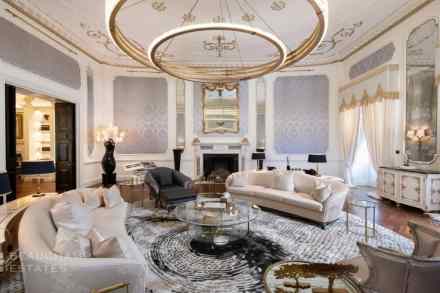
Minimalists, look away now. With its magnificent 20ft-high ornately plastered ceilings, lashings of gold leaf, bookcases topped by busts of Alexander the Great, Caesar Augustus and Marcus Aurelius – and its role as the global HQ of one of the world’s most glamorous fashion empires – this 14,000 sq ft Mayfair mansion is in need of an owner with a budget as big as their lust for luxe. For sale with a price tag of £55 million, through beauchampestates.com, the palatial Grade I listed Neoclassical Grafton Street house was built over seven storeys between 1769 and 1772 to a design by architect Sir Robert Taylor, whose pupils included John Nash.

Inside the Henley mansion that housed the Fords and the Kennedys

From our UK edition

Turville Grange has many of the expected hallmarks of the top-end English country houses and estates on the market this spring. First comes its punchy price tag – in this case £18.75m – and lusted after location, the upmarket riverside town of Henley-on-Thames, in Oxfordshire. Then there are its classic good looks: built in Queen Anne style in the 1880s, the Grade II listed three-storey house sprawls across 8,000 sq ft of space, has five main bedrooms, five staff bedrooms, two guest bedrooms and five reception rooms. There’s even a scratch or two of graffiti as proof of the requisite royal visitors – Princess Victoria, younger sister of King George V, etched the dates 1915, 1917 and 1918 into a first- floor window with a diamond ring.

The Bridgerton effect: a guide to buying Georgian homes

From our UK edition

With its high society intrigue, gossipy plotlines, raunchy love scenes and gravity defying hair do’s, all set against the backdrop of spectacularly sumptuous homes, Netflix series Bridgerton has rewritten the rules for small-screen period drama. The Shonda Rhimes exec-produced series gained 193 million hours of viewing time for its second series in the first three days – the highest for any English-language Netflix series in this time frame. Whether you love it or hate it – or love to hate it – its impact is undeniable, offering an irresistible twist on classic 19th-century tales of the upper classes, imbued with a modern sensibility.