Spectator Life

Spectator Life

An intelligent mix of culture, style, travel, food and property, as well as where to go and what to see.

Does Shakespeare tell us how Succession will end?

The award-winning Succession is many things. Now in its fourth series, it has been compared with a Renaissance painting, a Greek tragedy, a Jane Austen novel, and a psychoanalytical allegory of trauma responses (Kendall – fight; Connor – flight; Shiv – fawn; Roman – freeze). Ultimately, however, it is a Shakespearean series. The writers may have swapped the battlefield for the boardroom and armies for anxious shareholders, but the show’s character studies and themes – power, family, politics, betrayal, revenge – are Shakespearean in their complexity and circularity. Only instead of soliloquies, we have a lot more raised eyebrows, death-stares and ‘uh-huhs'. There’s even a playwright called Willa.


Mean streets: the psychology of neighbour disputes

Eunice Day’s breaking point came when her neighbours asked if she would move her car from a communal grass verge in their cul-de-sac so that it could be mowed. After several weeks of polite hostilities, Day stormed a neighbour’s home in the Dorset town of Ferndown, a row ensued, and the resulting scuffle left the 81-year-old in court charged with assault. In Bedminster, Bristol, fed-up locals have taken a more passive-aggressive approach to ‘outsiders’ parking on their streets. Suburban vigilantes have been creeping out and sellotaping notes to windscreens urging their owners to park outside their own homes instead.

A 100-1 shot for the Grand National

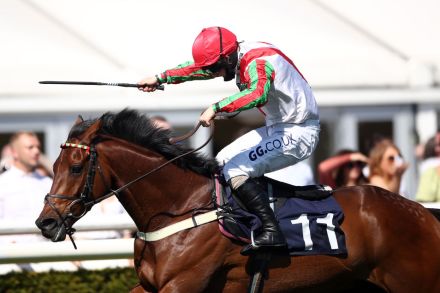
My late father, who was the kindest man I have ever encountered, introduced me to horse racing when I was a small boy. Although he died all of 33 years ago, I still remember his advice to me when betting on the world’s most famous horse race: ‘The best form for the Grand National is… the Grand National.’ He was convinced that very few horses were capable of both jumping the unique Aintree brush fences and truly staying the marathon trip, which is now 4 miles 2 and a half furlongs. So he concentrated his bets on horses that had done well in the race the year before. A few trainers seem to share my father’s thinking because the first three home a year ago all return once again tomorrow (5.15 p.m.

The cult of Aesop

Do you think the luxury soap-maker Aesop would have been valued at £2 billion pre-pandemic? I don’t. Sure, the botanical Aussie cosmetics brand, famously seen in the prettiest restaurants and lining the bathrooms of the fashionable, has been valuable for some time, but ‘hands, face, space’ propelled its growing stardom into a multi-billion pound lather. Today, having one of the cult bottles on the basin is as ubiquitous a status symbol as driving a 4×4 around Chipping Norton.  L’Oréal announced this month that it has signed an agreement with Natura &Co, the brand’s owners, to acquire Aesop in a deal worth $2.5 billion USD (around £2 billion).

Britain’s best boltholes for under £50 a night

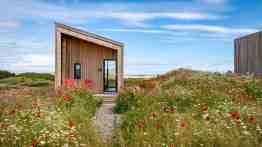
Whether it's train fares, energy bills or the supermarket shop, prices are rising and belts are tightening. But if you’re desperate to get away from it all, it’s still possible to have a break on a budget – however many people you’re taking with you. From cosy couples’ cabins to beach houses big enough for two families, and from Scotland to Sussex, these seven boltholes offer spring getaways with plenty of wow factor – and all cost no more than £50 per person per night. For couples  Tahuna Bothies, Aberdeenshire Sleeps: 2-4Price: From £100 a night (£50 each for two people)  [Lee Fowlies] These wooden huts on a corner of Scottish coast are a stargazer’s dream.

Ghost story: the dark side of Rolls-Royce

Some years ago, I was despatched to Las Vegas to learn how to be a chauffeur. The Wynn hotel had purchased a fleet of Rolls-Royces, and their Aloysius Parkers were being taught how to drive the Rolls-Royce way – i.e. a cut above your Lincoln Town Car etiquette. ‘The umbrella can be used both defensively and offensively,’ I recall Rolls-Royce’s Andi McCann saying, as if he’d walked off the set of Kingsman. Andi is the personal driver to Rolls’s CEO Torsten Müller-Ötvös and the company’s lead trainer.

Mary Quant 1930–2023

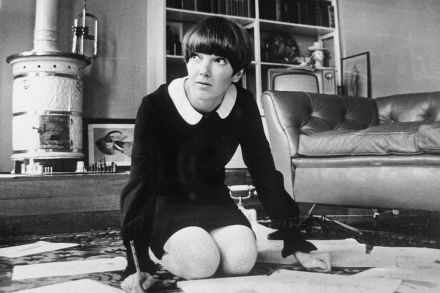
The fashion designer and icon Mary Quant has died at the age of 93. Brigid Keenan wrote the following piece in 2019. It is almost impossible to explain to today’s readers why Mary Quant (and the other Young Designers, as they became known) had such a huge impact. Over the half-century since, there have been so many ‘new’ ideas in fashion that her and their initial shock value has been diluted. Luckily, though, the Christian Dior exhibition is also showing at the V&A, and a quick visit there — look particularly at the fashions of the 1950s — will give you a clue. Pre-Quant, clothes were constricted: fussy, fitted, buttoned, cuffed, boned. They demanded a lot of the wearer. Mary’s were unstructured and she took her inspiration from surprising places.

Chess pie: how to make the flakiest pastry

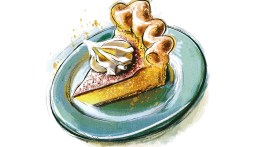
Chess pie was, in one sense, new to me when I started learning about it a few months ago. I’d never heard of this favourite of the American South until I came across it in a pie-centric cookery book. But in another sense, it’s extremely familiar – both to me and to anyone who’s ever eaten a pie or a tart before. Chess pie is a bit like an ur-pie, made with the most simple, most essential of pie ingredients. That’s possibly where its name comes from: the story goes that in the 1800s in Alabama, where nuts and other common pie fillings were expensive, a freed slave made a pie with the most basic of ingredients – eggs, sugar, butter, cream. When asked about it, she replied: ‘Oh it’s jes’ pie.’ And, lo, thanks to a mishearing, chess pie was born.

Serious about its whimsy: Sessions Arts Club reviewed

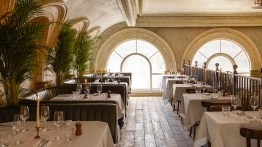
The Sessions Arts Club is a restaurant inside the Old Session House in Clerkenwell, a pale George III building where the criminals of Middlesex were once judged in splendour. It’s common for fine once-public buildings to become private buildings now: the old War Office on Whitehall will be, come summer, Raffles at the OWO. The acronym is not mine – it never is – and I doubt you could run a war from there, though you could try. You could throw a mojito at a laptop. I wonder if there is a connection between the ugliness of the new public buildings and the state of our public discourse: what is there to be proud of but rage?

Football’s growing shame

It would take a brave man to pick a fight with Roy Keane, and nobody could quarrel with his view of Liverpool’s Scotland fullback Andy Robertson after a skirmish at Anfield. Robertson appeared to be feebly elbowed in the face as he approached linesman Constantine Hatzidakis at half time. The Scotland captain reacted in the traditional way, as if he had been waterboarded. Keane’s view was as ever imperious: ‘You know what he is that Robertson? I’ve watched him a number of times – he’s a big baby.’ If a linesman can’t smack Andy Robertson for getting handsy and lippy, then the game has gone Anyone who has ever seen Liverpool should be all in favour of referees’ assistants sticking one on Robertson every now and again. Karma or what!

Nicola Sturgeon and the truth about motorhomes

Watching the narrative arc of the Sturgeon family campervan – removed from the drive of Nicola Sturgeon’s mother-in-law as part of an SNP fraud probe – is an opportunity to review the campervan. Or motorhome, if you prefer. The Mrs Murrell model is a stylish Niesmann + Bischoff ‘iSmove’, priced at £110,000 or thereabouts (her son, Peter Murrell, it should be said, has been released without charge pending further investigation). There’s an irony in being accused of embezzling money for an independence campaign and then supposedly spending it on driving away. Nationalism is about standing still, but campervans contain people and people contain multitudes.

How padel courts became hot property

Peloton has peaked and troughed, wild swimming has made its splash – and now, it seems, it's padel's turn for the prime spot. Said to be the world's fastest-growing racket sport, the game – a hybrid of tennis and squash, with a dash of ping pong – is fun and sociable (it’s played in doubles) and has been adopted by around 25 million people worldwide. Easy to get good at quite quickly, it’s also apparently the ‘new golf’ among retired footballers – David Beckham is a fan.  ‘Padel has become an obsession in the shires...

The secrets of London by postcode: E (East)

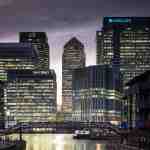
How Walford in EastEnders got its name, why Isaac Newton visited bars in disguise and what happened when the IRA parked on a double yellow line. Our tour of London’s postcode areas has reached its penultimate stop – who fancies an E? In the run-up to the 1997 general election, John Major visited the Mirror Group offices in Canary Wharf. One of the rooms he entered, high up in 1 Canada Square, was that of Kelvin MacKenzie, erstwhile editor of the Sun but by then boss of L!ve TV. Looking out of the window, the Prime Minister commented: ‘Incredible view you’ve got from here, Kelvin.’ ‘Yes,’ replied MacKenzie. ‘On a clear day, you can almost see a Tory voter.

The myth of atheist America

The American comedian Bill Maher is an intelligent man with a good sense of humour. When he's right, he tends to be very right. However, when he's wrong, he tends to be so wrong it leaves a person scratching their head in disbelief. He has a tendency to sometimes misrepresent the facts. This is true when it comes to weed. For the uninitiated, Maher loves weed. I mean, he really loves weed. He is forever talking about it (see here, here and here), arguing, repeatedly and unapologetically, that it's a largely harmless drug. As I have shown elsewhere, it’s not. It robs many people of motivation and happiness. Nothing good comes from smoking weed on a regular basis.  Maher has a reputation for being a truth teller, a voice of reason.

In praise of Prunella Scales

As I’ve got on in years I’ve been fairly successful in eliminating vices – most of the debauchery of my teens and twenties is a distant, hazy memory. But as I reached my fifties I found I had fallen into the grip of a compulsion that was as powerful and unshakeable as any drug. My name is John and I am addicted to Great Canal Journeys with Prunella Scales and Timothy West.  During my condition’s worst ravages I found myself staying up half the night binge-watching this endearing elderly couple navigating their way around the historic waterways of Britain at 2mph. The pottering about, the occasional prang while entering and exiting locks, the odd glass of wine in the afternoon ­­– it was the most addictive TV I’d seen since The Wire.

The case for remaking great films

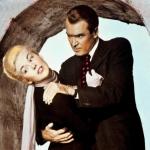
Afew weeks ago, news broke that Paramount was planning to embark on a remake of Alfred Hitchcock’s Vertigo with a starring role for Robert Downey Jr. You are forgiven if your reaction is one of deep scepticism. What can possibly be gained by remaking a film widely regarded as the apex of the art form? What director today can step into the shoes of the Master of Suspense? And who would ever mistake the star of Iron Man for Jimmy Stewart?  Gut reactions of this sort remind us of the scorn with which remakes in general are usually – sometimes unfairly – met. After all, remakes are considered by all fair observers to be inherently synthetic and unoriginal, right?

How common is your garden?

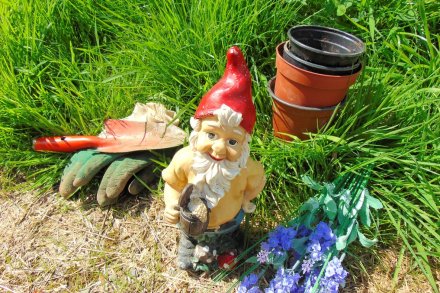
As spring (finally) arrives, it’s time to turn our attention back to what’s outside the back door. Helpfully, garden designer Isabel Bannerman (Highgrove, Houghton Hall, Arundel Castle) has written a memoir, Husbandry, in which she declares there is no such thing as ‘U and non-U’ in gardening. She then undermines her argument by immediately setting out her shibboleths: variegated leaves, curvy paths, statues, fountains, tidiness. Anything, in effect, that is ‘suburban’ (bedding plants) or reminiscent of municipal planting schemes (ibid. those big, blowsy King Alfred daffodils you’ll see blaring from roundabouts at this time of year).

The pipes are calling: confessions of a pipe-smoker

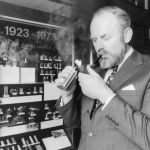
This morning, like so many other mornings, I spent at least half an hour, over coffee, staring at online pictures of pipes. This does not make me an aspiring plumber, or someone with a fetish for u-bends or draining units. I’m talking about briar pipes, tobacco pipes: for though I know I should quit the habit, I’m one of the dwindling band of pipe-smokers in the world. This isn’t an aesthetic choice, nor an activity I undertake outside the house. No one is more attractive with a 150mm briar-wood appendage sticking out of their mouths – apart possibly from Sherlock Holmes, Tony Benn or Gunther Grass, and I don’t want to look like I think I’m any of them. But it remains true that pipe-smoking, of all the vices and addictions I’ve explored, is my favourite.

Bring back sideburns!

Our collective Man Card is on the verge of being rescinded. The number of lonely, single men is rising – and testosterone levels are falling. The causes of our macho decline are myriad, but a quick fix is at hand: it’s time to bring back sideburns. It seems these days that the only facial hair options most men consider are beard or clean-shaven. Gone is the cheeky pencil-thin moustache sported so dashingly by Errol Flynn and the devil-may-care ’burns rocked by Harrison Ford’s Han Solo. The Lionel Richies and Tom Sellecks of the world still play their part in the strong whisker game, but that’s probably owed to the same reason members of ZZ Top could never shave.

The secret of perfect chocolate brownies: use a hairdryer!

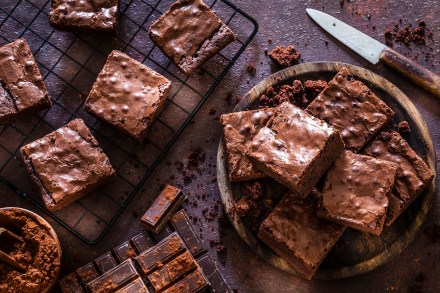
I'm standing in my kitchen aiming a hairdryer at a pan of uncooked brownie batter and feeling like I might have finally lost my mind. I’ve done a lot of strange things in pursuit of recipe perfection, but even for me, this is an odd one. Brownies are a funny old beast. We think of them as quite straightforward, both in the making and in the eating. But actually, that’s not fair. There are countless variables which can produce anything from a dry chocolate cake to uncooked fudge. And – more importantly – for a glorified traybake, they’re pretty damn expensive to make. A whole pat of butter, lots of chocolate, anything from three to five eggs, a boatload of sugar (rarely simple granulated). It’s a commitment.

Did Jesus visit Cornwall?

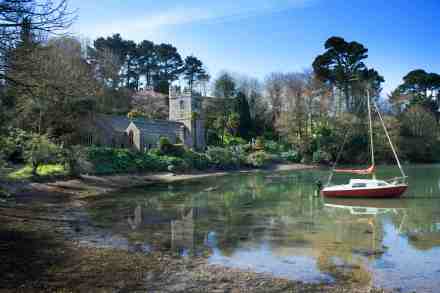
I remember the ephemera at the back of St Barnabas. The church stands in Oxford’s suburb of Jericho, near the University Press. It had proper church clutter: stumps of candles, dogeared pamphlets and reminders of long gone diocesan initiatives. St Barnabas – a beautiful Italianate monstrosity, plonked by the high Victorians, with their classic tact, amid a cluster of crabby little houses, once slums but now worth millions – is good at collecting this stuff. In the sacristy is a vestment made from the coronation hangings of Tsar Nicholas II, smuggled out of Petrograd at the revolution; now the double-headed eagle peeps through the incense, delighting porters, dons and motor workers alike on high days and holidays.

In defence of Melania Trump

Where is Melania? This was the question on many people's lips after the former First Lady was absent from the after-party at the Mar-a-Lago estate on Tuesday night following her husband’s quick trip to New York City. Trolls took to social media to ridicule Mrs Trump for 'not standing by her man' during his indictment; some even cracked jokes that she was moving on to pastures new with freshly single Rupert Murdoch. Wherever she was, I hope she was happy. In fact, I hope she was positively beaming while horizontal at a spa getting a deep-tissue massage with martinis flowing and charging it all to her husband’s credit card.

The style and substance of Michael Roberts

Almost 50 years ago, I was fashion editor of the Sunday Times and a man in his mid-twenties by the name of Michael Roberts was a junior editor. Born in Buckinghamshire in 1947 to an English mother and a father from St Lucia, he was handsome and stood very tall and straight. Even so, when he was named the world’s most elegantly dressed man under 30 at the International Male Elegance Awards, I was baffled. His habitual garment was a second-hand tweed coat done up with a piece of string… how could this be? But it wasn’t long before his creative genius became obvious – to me and to the rest of the world.

Are Queens Park Rangers cursed?

A dark cloud has descended over Queens Park Rangers, my beloved football club. On 22 October last year, when we beat Wigan Athletic 2-1 at home, we were top of the Championship table. Under our new manager, Michael Beale, we had won nine of our first 16 games, drawn three and lost four. Since then, it’s all gone Pete Tong – and not just a bit pear-shaped, but disastrously, catastrophically wrong. In the 23 games that followed, we have won twice, drawn six and lost 15, meaning we’ve only chalked up 12 points, the lowest tally in the division. We’re now just three points off the bottom three and look likely to be relegated. What in God’s name has happened?

In praise of Bellamy’s

Of all London districts, there is no more charming name than Mayfair. It makes one think of pretty shepherdesses, giggling and blushing as swains serenade them with garlands of spring flowers. But that would have been some time ago, even before the last nightingale sang in Berkeley Square. These days, the serenading would be courtesy of powerful sports cars, revving through the traffic to cock a snook at the cops. Yet there are survivals from a gentler era. Behind Berkeley Square in Bruton Place, you will find the Guinea Grill, which sounds cheerful and lives up to its name. Virtually next door is Bellamy’s, with more gastronomic ambition, but equally traditional and wholly reliable. In recent years, an elderly lady would sometimes arrive, without fuss or fanfare.

Help! I’m trapped in a 15-minute city

It’s a nasty moment when you receive a letter informing you that a fortnight ago, at a specific number of minutes past an hour, your car was photographed turning into a side road which, at the time, you had no idea you weren’t allowed to turn into.   You vaguely recall the junction. There was no ‘No entry’ sign: just a torrent of words (‘except’, ‘through’, ‘motor vehicles’, ‘access’) that you didn’t have time to read. That outing will now be forever sullied in your memory by the £65 fine. Protesting ‘but the sat-nav told me to do it!’ is as ineffectual, legally speaking, as Adam bleating to God that ‘the woman gave me fruit from the tree and I did eat’. The punishment is still enforced.

Simnel vs colomba: which is the best cake for Easter?

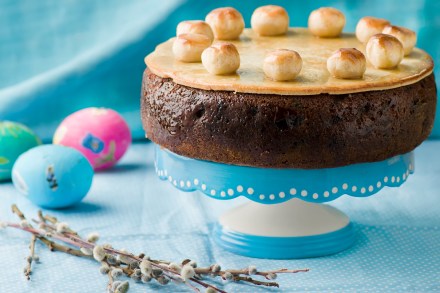
When it comes to Easter cake, there are two possibilities. From the home front, there’s simnel cake, which has 11 marzipan balls on the top – one for each of the apostles, apart from bad Judas. Or there’s colomba, the Italian dove-shaped panettone-style cake, with all its symbolic resonances. Not that the colomba actually looks like a dove, unless you try very hard – more like a cross with round ends (the wings and tail) and a wonky top (the head). Anyway, that’s the idea.  Colomba cake [iStock] So, which is the more perfect? Simnel cake is a lightly spiced and fruited cake, with marzipan in the middle as well as on the top. Made with homemade marzipan, which is easy, it’s a thing of beauty.

The joy of slow sport

Fans of long-form sport, rejoice. April is here, and it is our month. Not only does it see the first four-day matches of the county cricket season, it’s also when snooker stages its world championship. Long-form sport is always the best. A four-day cricket match (five for Tests) has way more scope for drama than a T20. And the snooker at the Crucible Theatre in Sheffield, where even the shortest match is the best of 19 frames, gives space for the twists and turns that characterise true sporting excitement. Both games have sought to recruit new fans in recent years by offering shortened versions. Cricket has gone from 50-over games to 20 and now ten (with the 100-ball version in there as well).

Home is where the art is: inside J.M.W Turner’s last house

Joseph Mallord William Turner continues to occupy a singular place in British cultural consciousness. The English Romantic artist, watercolourist and printmaker – often referred to as ‘the painter of light’ – elevated landscape painting to high art and, when he died in 1851, left a legacy of 550 oil paintings, 2,000 watercolours and 30,000 works on paper. When one of these surfaces at auction, it sells for tens of millions of pounds. However, most of his works – with the power of nature, the sea and the industrial revolution as central themes – were bequeathed to the nation.