Victoria Lane

Spectator Competition: Shrink away

From our UK edition

Comp. 3449 invited you to psychoanalyse, in the manner of Freud/Jung etc, a 2026 phenomenon. In a small but accomplished entry, there were no takers for Married at First Sight Australia, but Ralph Goldswain deserves praise for his Naked Attraction offering. (‘The selection of a partner by staged undressing appears as vulgar exhibition; yet this is merely the manifest content. Its latent meaning lies in the managed collapse of repression.’) The £25 John Lewis vouchers go to those below. The phrase ‘filthy lucre’ provides an initial clue, harking back on a subliminal level to the notion of bartering, let us say, a grubby pig for something else.

Spectator Competition: Ouch

From our UK edition

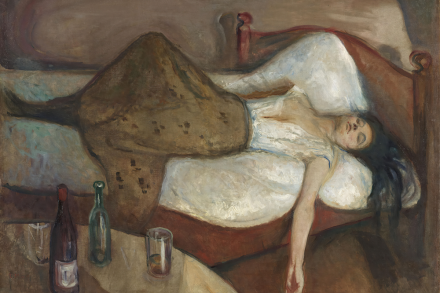
Competition 3447 invited you to outdo Kingsley Amis in detailing a hang-over from hell, but in the style of another writer. Obviously writing about hangovers is an ancient tradition, and the conundrum was that excess was demanded but an excess of excess threatened to be unpleasant reading. I was sorry not to have room for John O’Byrne’s and Janine Beacham’s Dickensian hangovers; Ralph Goldswain’s and Brian Murdoch’s Shakespearean ones, Simon Godziek’s Raymond Chandler (‘My eyes feel like they’ve been peeled, and there’s something bigger than my head inside my head’), Roger Rengold’s Somerset Maugham, Elizabeth Kay’s Hemingway, and many others besides. The £25 John Lewis vouchers go to those below.

Spectator Competition: Critics amass

From our UK edition

Comp. 3446 invited you to write a critic’s review of a fictional pub or restaurant or hotel etc. I bit off more than I could chew with this one perhaps. Some venues cropped up multiple times – Hotel California, Tolkien’s Prancing Pony, Hotel du Lac and Douglas Adams’s Restaurant at the End of the Universe – and in a large entry of a high standard there were too many runners-up to name names. The £25 John Lewis vouchers go to those below. The accommodation at Jamaica Inn is sadly lacking. While it offers a stripped-down, hipster vibe with peat fires, stone flags and pipe smoke, I had to endure creaking signs, bare floorboards, smelly turnips, noisy wagons at midnight, rowdy boozers and a locked room which I’m sure needs airing.

Spectator Competition: Take heed 

From our UK edition

Comp. 3444 invited you to submit a Hilaire Belloc-style cautionary tale for our times. This one was last set in 2009 and the world’s pitfalls have changed a bit since then. There were many very good entries, covering a lot of bases. Commendations to Bill Greenwell, Frank Upton, Basil Ransome-Davies, Sue Pickard, J.C.H. Mounsey, Duncan Forbes and George Simmers (‘Young Eric told such dreadful truths/ He was the most disliked of youths’). The £25 voucher winners are below. ‘But why,’ asked Osbert, ‘should I try To think when I can ask AI?’ Identifying Osbert’s need His chatbot fulsomely agreed.

Spectator Competition: Punning wild

From our UK edition

Comp. 3443 was inspired by Brian Bilston’s ‘Remembrance of Things Pasta’ which begins: She blew her fusilli,my pretty penne,when she found me watchingdaytime tagliatelle. You were invited to submit a poem containing repeated wordplay on a particular theme. There were cheeses, drinks, cakes, the shipping forecast, cars, technology… it was hard to choose. I must mention David Shields’s foot-ball teams and Sue Pickard’s fruity romance: ‘I knew that, kumquat may, I couldn’t let this mango.’ The winners are below. I’m a draw at the dance, a dab hand at romance,To the dames, I’m a ray of delight.I’m the true Cisco Kid, never short a few squid.I’m not koi, and my trousers are tight. I’m a dapper go-getter, and no one looks betta.

Spectator Competition: Budding poets

From our UK edition

Comp. 3441 invited you to use the opening of Philip Larkin’s poem ‘Trees’ as a starting point for your own. Deserving of a mention are D.A. Prince, Sylvia Fairley, Basil Ransome-Davies, Elizabeth Fry, David Blakey and Nick Syrett, whose second verse I enjoyed a lot: How self-possessed they are, the drug Of springtime setting all to naught; There’s something just a little smug About some trees, I’ve often thought. The £25 vouchers go to the winners below. The trees are coming into leaf Like something almost being said . Sergeant Prescott phoned me: ‘Chief, We’ve found the vicar, and she’s dead.’ The snowdrops fleck the river’s marge, Like a secret that I almost knew.

Spectator Competition: Hope stings

From our UK edition

Competition 3438 was inspired by the 1986 film Clockwise, in which John Cleese is constantly impeded in his attempt to get to the headmasters’ conference to make a speech. ‘It’s not the despair, Laura. I can stand the despair. It’s the hope!’ he wails to a pupil at one point. There were lots of A+ entries, but the £25 voucher prizes go to those below. Oh what is life if, full of care, We have no time for bleak despair? No time for wallowing in gloom, To tap and scroll our looming doom; To hail the mounted quaint quartet, Pale, baleful on their steeds all set, Apocalyptic cavaliers, Piaffing through our Vale of Tears? Abandon Hope unto the end! Hope’s an imposter, a false friend!

Spectator Competition: Wintry look

From our UK edition

Competition 3437 invited you to submit a passage or poem incorporating the line ‘Why, what’s the matter, That you have such a February face’, from Much Ado About Nothing. It continues ‘So full of frost, of storm and cloudiness?’ – rain, muck, drizzle and sludge would be more appropriate to 2026. There was a healthy and varied crop of entries, and Elizabeth Kay’s vision of the platonic ideal of February was uplifting: snowdrops, hellebores and crocuses; blue tits exploring nestboxes. Wheatears, woodlarks and chiffchaffs, returning from Africa. Birdsong, with robins competing for territories. Hazel flowers, catkins and daffodils. The days are lengthening… The winners are below.

Spectator Competition: Veg out

From our UK edition

Competition 3435 invited you to write a poem that included Wendy Cope’s immortal line ‘A happier cabbage you never did see’, from ‘Being Boring’. This was a popular competition with more entries than usual (it’s always a mystery) and you grappled heroically with the challenge of making cabbage interesting. A mention must go to Janine Beacham for her opening lines about another brassica: O fat white cauliflower few can love, Why do you taste like an oven glove? Cheese sauce helps, but Lord above, Your flavour’s not up to much. Too many runners up to name names but here are the winners of the £25 vouchers. Edgily-veggiely Brassicaracea – A happier cabbage you Never did see.

Spectator Competition: I’ll take Manhattan

From our UK edition

Competition 3434 was prompted by the 400th anniversary of the retrospectively controversial purchase of Manhattan island by the Dutchman Peter Minuit from a local tribe, supposedly for 60 guilders ($24). You were invited to write a poem on the subject. The standard was really high and the whittling process tricky: mentions must go to A.H. Harker, Sue Pickard, Brian Murdoch, Joseph Houlihan, Ian Allen, Richard Warren, Nicholas Lee, George Simmers and Helen Baty, and there were other good entries besides. The £25 vouchers go to the following. Come nether man from Nether Land,Brung purse of beads and guilder,And all us tribe, we took him bribe:Him Big Chief of this wilder.

Spectator Competition: Alternative facts

From our UK edition

Competition 3432 invited you to submit a passage containing some AI-style ‘hallucinations’ (it would be just as anthropomorphic to call them lies). These are false assertions delivered in a perky tone, often with a smidgeon of flattery, in an answer that may contain enough correct information to give the user misplaced confidence. The yield was small but amusing and several entries managed to capture AI’s encouraging tone; the winners of the £25 John Lewis vouchers are below. ‘An apple a day’ refers to a mobile phone or computer invented by Isaac Newton, who discovered gravity in 1666 when a phone fell on his head. The fall of the apple, which is never far from the Tree of Knowledge, was recorded by the Beatles, a British pop group, in 1999.

Spectator Competition: Write Christmas

From our UK edition

Competition 3429 invited you to tell the story of the Nativity in the style of a well-known writer. There were very many excellent passages, enough to fill this column three times over, but as it is the £25 vouchers go to the following. Thanks for all your lovely entries this year and happy Christmas one and all. To begin at a new beginning: he was birthed, berthed in a barn with gert bulks of shifting, breathy beasts. Joseph would sooner have been up the pub, sheets to the wind, but it was no more the establishment to encourage the fulfilment of dreams than prophecies. At his own wordless dreamings, the little wet racket of a tike in the crib scarcely noticed his visitors that long night. Pompous Kings and grumbly shepherds (it was cold out, man) came and went.

Spectator Competition: Frankenpoem

From our UK edition

Comp. 3428 was inspired by Rose Ruane’s Larkin/Shelley mash-up (many thanks to Bill Greenwell for flagging this up): They Oz you up, your Mandyias. They may not mean to, but they do. They give you vast and trunkless legs A sunken shattered visage too. But they were Ozzed up in their turn By Mandyias upon the sand Who half the time had wrinkled lips  And half in sneering cold command. Oz hands on Mandyias to man. Like mighty works atop a shelf  Look on them early as you can Ye mighty and despair yourself.    You were invited to create a fusion of two poems of your choosing. Some came out more like one poem commenting on another but that was OK. I’m very sorry not to have room for Paul Freeman, D.A.

Spectator Competition: Here and there

From our UK edition

Comp. 3426 was inspired by Stephen Vincent Benét’s 1927 poem ‘American Names’ (see Charles Moore’s Notes, 1 November): I have fallen in love with American names, The sharp names that never get fat, The snakeskin-titles of mining-claims, The plumed war-bonnet of Medicine Hat, Tucson and Deadwood and Lost Mule Flat.     You were invited to submit poems to do with place names. It was hard to whittle down the very good entries (too many runners-up to single any out) though certain places kept cropping up so I tried to avoid too much repetition. The £25 vouchers go to the following. Morning! After downing booze, Have a fryup, come the dawn – Chopwell, chipping.

Spectator Competition: A letter from Jane

From our UK edition

Competition 3425 was prompted by Gill Hornby, a biographer of Jane Austen, telling an audience at the Cheltenham Literature Festival that Jane’s sister Cassandra did the novelist’s reputation a favour by burning most of her letters, and if that hadn’t happened she might have been cancelled: ‘She has become this very vague, hazy figure, like God and Shakespeare…’. You were invited to ‘find’ a letter that had escaped the bonfire.     There was a strong response, though a few entries crossed into sacrilege. The best got something of the tone while casting her in an unexpected light. Tom Adam found her channelling thunderers de nos jours: ‘I grow quite weary of the Hampshire Chronicle.

Spectator Competition: Bad advice

From our UK edition

Comp. 3423 invited you to submit a passage about a command or suggestion from literature being taken too literally. I was sorry not to squeeze in Alan Millard’s riff on John Donne’s ‘Go and Catch a Falling Star’: ‘The object in question can reach temperatures of almost 3,000˚F when entering the Earth’s atmosphere…’. A popular choice was ‘Neither a borrower nor a lender be’; nods to Elizabeth Kay, Nicholas Lee, Simon Godziek, Max Ross.

Spectator Competition: Daylight saving

From our UK edition

For Competition 3422 you were invited to submit a poem or passage on the theme of ‘daylight saving’. In a very good batch, once again the poetry bubbled to the top. There are too many close runners-up to name names, and it seems best to maximise space for winners. The £25 vouchers go to the following.

Spectator Competition: Virtue-signalling

From our UK edition

For Competition 3420 you were invited to submit a poem or short story incorporating that sentence of Emerson’s: ‘The louder he talked of his honor, the faster we counted our spoons.’ Dr Johnson may have been the first to mention spoon counting, saying (according to Boswell) that ‘if he does really think that there is no distinction between virtue and vice, why, Sir, when he leaves our houses, let us count our spoons’. In a large and very good entry, in which poetry prevailed, Alex Steelsmith, J.C.H. Mounsey, Tracy Davidson, Frank McDonald, Brian Murdoch, Adrian Fry, Sylvia Fairley and a few others missed out by a whisker. Those below win the £25 vouchers.

Spectator Competition: what day is it?

From our UK edition

For Comp 3419 you were invited to write a poem to mark National Vodka Day (4 October) or another spurious designated day, actual or invented. There were several good vodka poems, by Adrian Pascu-Tulbure, D.A. Prince, Tanya Dixon--Clegg, and Helen Baty – I was sorry not to be able to fit them in. Ditto David Silverman’s celebration of National Crisp Day (the ‘Feast of Crispian’), John O’Byrne’s Baked Beans Day, Alan Millard’s Gobbledegook Day, Bill Greenwell’s National Plagiarism Day, Andy Myers’s Breakfast Wine Day, Jayne Osborn’s No Talking About Your Ailments Day, Frank Roots’s Self-ID Day, George Simmers’s Lemon Meringue Pie Day (15 August), and others besides.      The £25 vouchers go to the following.

Spectator Competition: Forget me not

From our UK edition

Comp. 3417 invited you to write an elegy to a piece of obsolete technology. This prompted a deluge of very good entries – too many to name all the runners up, though here are some of the lamented objects: mangles, steam engines, oil lamps, floppy discs, the trebuchet, cash registers, radiograms, gramophones, tape recorders, Ceefax, Betamax, proper cameras, the fish slice, the pipe knife and – most of all – the VHS and the typewriter. A special mention to Tom Adam’s relatable paean to the Nokia: I mourn that lump of plastic and its tiny little screen, With only ‘Snake’ to offer up a hit of dopamine. And Simon Godziek’s to the dial phone: Yes, you could receive and, yes, you could call But when all’s said and done, that’s about all.