Spectator Life

Spectator Life

An intelligent mix of culture, style, travel, food and property, as well as where to go and what to see.

Rock’n’romance is dead

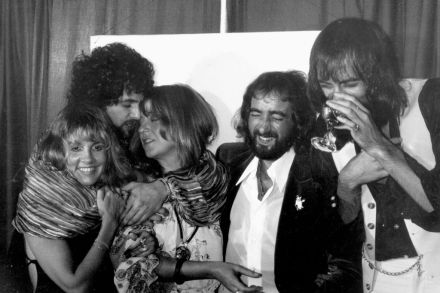
The alchemy wrought by a young man’s ability to gyrate and croon at the same time is notorious, turning shy mama’s boys from Presley to Rotten into love/hate machines. Something magical happens when someone – however unsightly – sings a song well, allowing him access to a quantity and quality of women undreamt of when he was just walking and talking like a normie. Two words: ‘Mick’ and ‘Hucknall’. The romantic image of the modern musician as tasty but troubled troubadour roving from town to town on his lonesome (except for his bandmates, backing singers, roadies, drug dealer and manager, of course) and taking sensual solace where he may is a powerful one, long propagated by he-sluts who would be intimate with a jack-in-the-box if it looked at them the right way.

The improbable genius of John Venn

There aren’t many mathematicians who can claim to have bowled out Australia’s number one batsman. But then John Venn, who died 100 years ago today, was no ordinary scholar. Born in Hull and brought up in Highgate, he was also an Anglican priest – the ninth consecutive one in his family – with a magnificent Victorian beard. He won gardening prizes for his roses and white carrots. He was a keen advocate of women’s rights. And as the founding father of Venn diagrams, still the world’s most beloved tool for representing set-relationships, he can probably boast greater name-recognition than any other modern mathematician.  John Venn [Alamy] Next time you’re in Cambridge, pop into Gonville and Caius College, where Venn was a Fellow and President.

How to take an iconic mugshot

So you’re going to be arrested imminently: how do you prepare? I’ve dwelled on this question often since my arrest at 16, the ugliest age you can be. You draw on thick eyeliner and have even thicker acne, which you think you can cover with even thicker layers of makeup and a back-combed barnet. The outcome was the world’s worst mugshot. My first pointer therefore: if you’re about to be arrested, brush your hair.  Luckily for Donald Trump, when he’s arrested and brought before a judge on Tuesday, he won’t be handcuffed. Chic, right? The Secret Service and court authorities have ‘mitigated’ that issue, apparently. His hair is also pretty good for a 76-six-year-old when it’s not being blown about in the wind.

Gentlemen’s clubs for all!

Is it a stage of life thing? Recently I’ve got a hankering to join a gentlemen’s club. It might be the creeping realisation that having put it off for so long – drifting in and out of London’s clubs over the years as a guest thinking ‘This is rather nice…’ – as I near 50, it’s a case of now or never. So here’s a question – have you been to a club recently? Have you settled into the tightly stuffed, wing-backed armchair at the Athenaeum, White’s, Buck’s, Boodle’s or the Carlton? Have you dined at the Garrick surrounded by the some of the finest things to drip off the paintbrushes of Zoffany, Millais, Hogarth and numerous others?

The other side of flamenco

When you hear the word flamenco you probably think of a lady dancing in a polka-dot dress, stomping her feet, accompanied by guitars and singing. And in the fair capital of Andalucía, Seville, you would have no problem finding such a sight. All across the old town, around the cathedral and in the lee of its 12-century minaret turned cathedral bell-tower, glamorous flamenco dancers are busy at it, stirring up passion on the cobbled streets and in the city-centre tourist shows. There’s no denying such flamenco demonstrations will raise your pulse and the tourists, not surprisingly, love them.

Why do conservative men love Lana Del Rey?

The chanteuse is back. Did You Know That There’s a Tunnel Under Ocean Blvd, Lana Del Rey’s ninth album, arrived ten days ago. It’s a lush, dreamy voyage through said tunnel, one best listened to on vinyl, but not one that doesn’t pose questions about life, love and how Del Rey found said tunnel. Del Rey herself also causes people, specifically men, to ask questions, and not just about life, love and tunnels. One of those questions, put forth by a young heretic, was not so existential, but instead a plea for understanding, specifically about the 37-year-old's appeal. It read: 'It is once again time for me to ask that heterosexual conservative men please explain lana del ray to me.' https://twitter.com/SpencerKlavan/status/1639330375452295168?

A 16-1 wager for the Irish Grand National

The new flat season and the Pertemps Network Lincoln at Doncaster (tomorrow 3.35 p.m.) will dominate the racing pages this weekend, and rightly so. The bookmakers have the correct horses at the head of the market for the Lincoln: two improving four-year-olds, Al Mubhir and Awaal, but both at cramped odds. I largely stay clear of betting on the flat for the first month of the season because it is hard to know which horses are fit and which are not after their winter break. If I was forced to have a bet, it would be an each-way play, many places, on Charlie Fellowes’s Atrium, another four-year-old improver who has won his last two races and will love the soft ground. A course and distance winner, Atrium is priced at around 12-1 which looks fair.

What Prince Harry gets wrong about therapy

Prince Harry’s endorsement of therapy will likely turn some of us off ever seeking it out. Insisting that therapy has changed him for the better, he is urging his family to partake so that they too can ‘speak his language’ of simultaneously loaded and empty terms – such as ‘authenticity’. ‘If I didn’t know myself, how could members of my family know the real me?’ he said. This non-sequitur subverts the conventional wisdom that sometimes others can know you better than you know yourself. Yet tiring as all the Prince’s interventions are, a peremptory dismissal of psychoanalytic practice would be a mistake. In fact, psychoanalysts would probably refuse to accept the Prince is speaking their language anyway.

A beautiful monster: the Aston Martin Vantage reviewed

The new Aston Martin Vantage is shorter and hotter than the DB11: a smaller, truer sportscar, though slightly less elegant. 'Gentlemanly' is what the copywriter calls the DB11, but this is a 'hunter' and 'predatory'. Ferraris, meanwhile, are a little too hot for me – though I accept that they are sublime, if Ferraris are your thing – and the Toyota Supra, which I love – even shorter, even hotter, much cheaper – doesn’t make quite the same impression on the A30. People (I mean men over 40) love Aston Martins. They view them as an expression of British pride, and coo over them like babies, by roaring past, overtaking, and slowing down, and then insisting you overtake them in turn. The whole encounter is managed by hand signals and engine snorts, and it is delightful.

The dark side of Ted Lasso

You’ll know where you are with Ted Lasso – the third season of which has just started on Apple TV – as soon as you hear the Marcus Mumford co-written theme song. It peddles a sort of sub-Coldplay uplift, with a lot of big, meaningless anthemic 'yeah's in the chorus. Bright, accessible, catchy and instantly forgettable, you still enjoy hearing it every time you watch a new episode. And that’s the show in microcosm: cheery, amusing and utterly inconsequential. Yet somehow the Jason Sudeikis vehicle has become not only Apple TV’s biggest hit to date, but the most Emmy-nominated comedy in recent years.

The new age of sleeper trains

It’s a fabulous combination: travelling by train and sleeping. And the good news is that the concept of sleeper trains is being revived. The bad news is that, like trams and trolleybuses, a wonderful form of travel was allowed to decline in the first place. The first sleeper carriages – as opposed to trains you happened to fall asleep on – were introduced in the US in the late 1830s, but these provided little more than hard wooden benches. It was George Pullman who built the first luxury sleeper coaches when he founded his eponymous company in 1867. America, with its vast expanses and a newly opened transcontinental line, was fertile territory, and Pullman coaches were soon being attached to long-distance trains.

In praise of Sharron Davies

It’s been quite a while since we celebrated any of Sharron Davies’s considerable achievements in the pool – well, a bronze and a silver in 1990 at Auckland was the last time – but I would bet a box full of brand-new Speedos to a secondhand pair of goggles that nothing has made her prouder than her part in World Athletics’ decision to ban transgender women from competing in female international events. She has campaigned for this for years with great courage and at considerable cost. Without her energy and bravery, it is possible that Seb Coe could have fudged the solution announced last week, when he ruled that he was following swimming and rugby rather than cycling and rowing, and there was no fair way to include transgender athletes in elite women’s sport.

Bring back the savoury!

For a while now, we’ve been living through a renaissance of classical British cooking: a whole host of restaurants have been embracing the joy of the old school, the pies and puddings, the traditional and the retro. But there’s something missing. Bring back the savoury! An Edwardian favourite, a ‘savoury’ was an extra course that came towards the end of the meal, either just before or after pudding, or as an alternative to it. A savoury should be small – a ‘morsel’ – and strongly flavoured. To this end, the main ingredients are usually cheese, smoked or salted fish, bacon, or spice in the form of devilling. It is often served on toast or with a small pastry croute, and with something creamy as a foil.

A toast to the old man pub

I’ve always preferred ‘old man pubs’ to bars, old man pubs being the kind decked out in mahogany and offering up a gin and tonic to anyone clueless enough to ask for a cocktail. Having just moved to Glasgow, I find myself surrounded by these sorts of places, Scotland practically being the home of pubs so wooden they’d float. There’s a joy in walking into a pub and the staff knowing your name. I’m 33 and I’d like to meet someone, but I also want to make friends. My initial idea was to use dating apps to contact people in Glasgow. I recced Hinge from Bath, where I last lived, and set up dates for the first week I arrived. It was all too easy – I only had to say I was new in Scotland and I was immediately offered a dozen tours.

In defence of musicals

You can always rely on theatreland to serve up drama off stage as well as on. Hopefully the spat between Lord Andrew Lloyd Webber and Sir David Hare over whether musicals are ‘killing’ theatre will run and run.  Writing in The Spectator last week, Hare moaned: ‘Musicals have become the leylandii of theatre, strangling everything in their path… are dramatists not writing enough good plays which can attract 800 people a night? Will well-known actors not appear in them? Or did producers mislay their balls during lockdown?

The new technocracy: who’s who in the chatbot revolution?

Decades are happening in weeks in the world of artificial intelligence. A fortnight ago, OpenAI released GPT-4, the latest model of its chatbot. It passed the bar exam in the 90th percentile, whereas the previous model only managed the tenth. Last week, Google introduced its own chatbot, Bard. Now, the British government is announcing plans to regulate AI for the first time, as well as to introduce it into hospitals and schools. Even some of the biggest technophobes are having to grasp this brave new world. We’re familiar with some of the technology by now, but we know little about the humans in the world of AI.

Why developers deserve to pay for the cladding crisis

In recent months, Michael Gove has been upsetting not only the house-building industry but its defenders, too. The Levelling-up Secretary has been accused of ‘blackmail’ by online newspaper Cap X, which compared his actions to ‘Putin’s Russia or Erdogan’s Turkey’. The Telegraph mocked him up on a wrecking ball Miley Cyrus-style, and several trade press articles have accused him of ‘declaring war’ on the industry. The reason? Gove has ordered housing developers to pay for ‘life safety’ remediation measures on blocks they built, which have been found to have serious fire safety defects in the aftermath of the 2017 Grenfell Tower fire – regardless of whether they were to blame for the flaws or still own the building.

In defence of the 15-minute city

At the end of last year, the subject of the ‘15-minute city’ began to creep into neighbourhood WhatsApp groups, interrupting the usual discussion of lost cats, car crime and blocked drains. Oxfordshire County Council had proposed a traffic-zoning scheme to reduce car usage in the city – and suggested that to address unnecessary journeys, every resident should have ‘all the essentials (shops, healthcare, parks) within a 15-minute walk of their home’. But critics up and down the country hit on the proposals as an example of the ‘international conspiracy’ and ‘tyranny’ of the 15-minute city – which, they warned, is probably coming to a neighbourhood near you soon.

Read all about it: 12 of the best novels about journalism

A recently published novel, Becky by Sarah May, is the latest in a long tradition of fiction based on journalism – and a good excuse to think again about the great books from that sub-genre. May’s is a curious hybrid of the life story of News UK CEO Rebekah Brooks and a repurposing of Vanity Fair. George Cochrane, reviewing it for The Spectator, called Becky ‘a good novel dwarfed by a great one’.  He was referring to the Thackeray, but he might just as easily have been talking about another classic English novel: Evelyn Waugh’s Scoop. That comic masterpiece from 1938 is the book against which all other fictional evocations of journalists and journalism are judged – and is almost invariably the first on any list of the best of such books.

Diary of a digital nomad

As the pandemic gently recedes into history, many of us have been embracing the liberties that have followed. For anyone whose work relied on a desk, a chair and a computer, video-conferencing services such as Zoom left us questioning long-held assumptions about the need for those increasingly anachronistic offices to which we once trudged. The thought of traipsing across town to sit in front of the same computer perched on a slightly different desk suddenly felt absurdly outdated.   But just as we became accustomed to typing in our slippers, more adventurous feet began to itch. Being stuck in a corner of the sitting room all day could be just as stifling as those open-plan offices we thought we'd escaped.

The romcom is dead

From bucket hats to Britney Spears, the 1990s and 2000s are back in vogue. Who could have predicted that the cringe-inducing baggy trousers and All Saints-esque crop tops that filled teenage wardrobes 20 years ago would be resurrected with such gusto by Gen Z? But there’s one part of turn-of-the-century culture that remains firmly consigned to the past. Unlike the clothing of the era, the romcom has proved remarkably resistant to modern reinvention – no matter how hard Hollywood tries. Last month, two romantic comedy veterans – Reese Witherspoon and Ashton Kutcher – reunited in a stoic effort to woo audiences back to the genre.

Why bother cooking?

In a world of ultra-convenience, I think making the argument for home cooking is important. Because a lifestyle of takeaway delivery apps, ready meals or eating out every day is not a recipe for health and happiness, no matter how easy the modern world makes it.   One of the downsides of the cult of the ‘foodie’ is that it can make food and cooking more intimidating than they need to be. If you’re a Londoner, invite friends over for a dinner of lasagne and garlic bread and you’ll have one guest asking if the pasta is fresh or dried and the other telling you to try roasting the garlic for 24 hours in a low oven next time to unleash its inner umami. It’s enough to put anyone off.

In praise of cruise holidays

While many travel addicts went into hibernation during the pandemic, as public health scolds around the world turned our joyful compulsion into a sin, I kept roving despite the hassles. On an Easter Week trip to the Dominican Republic in 2021, I watched police battalions forcibly remove masked people from the streets of Santo Domingo at the 8 p.m. curfew. I spent a fortune on Covid tests for visits to Germany, Azerbaijan, Ecuador, Brazil, Argentina, Uruguay and various Caribbean ports. And I was badgered about wearing masks, even outdoors, on three continents.

Baked custard pots: a sprightly spring alternative to crème brûlée

I am pretty capricious when it comes to puddings. I'm always ready to declare my most recent success the king of all desserts, swearing blind I will never make anything else, and just falling short of sending a newsletter to my entire address book informing them of the new love of my life – only for a new pretender to take its place a week a later. So you would be forgiven for feeling a little dismissive when I crow about my new favourite pudding. But listen, this really is my new favourite pudding. Maybe I will never make anything else again. Baked custard pots: richer than a crème caramel, but without the distinctive brittle ceiling of the crème brûlée, these are a make-ahead wonder, fantastically impressive, and really, completely delicious.

A 16-1 tip for the Topham Chase at Aintree

One of the keys to successful ante-post betting it to choose horses whose trainers are skilled at targeting big races. If you lead a horse to the well too many times, the well will eventually run dry. The trainers who pick up the biggest prizes season after season know that they can only get any one horse to peak form for two, perhaps three, big races in any given calendar year. It is for this reason that I have huge admiration for the talents of two men who share a trainer’s licence for the first time this season. That respect is not simply built on the fact that last week Oliver Greenall and Josh Guerriero provided me with a winning tip at the Cheltenham Festival: Iroko put up at 9-1 to win the last race on the final day.

Is Cote d’Ivoire the perfect place to have an affair?

‘Côte d’Ivoire, eh?’ said the businessman in the seat next to me on the Air France flight from Paris to Abidjan, as he flicked through the wine list. ‘Perfect place to have an affair.’ Seriously? I’d had endless friends prior to my departure sniggering that I – middle-aged white female – was tragically going to West Africa as a sex tourist, to patrol the bars and beaches, barnet possibly culturally appropriated into dreadlocks, in the hope of snagging a ripped Rasta (will I get cancelled for writing all that?) or two. And Mr 7A was now indicating it was an ideal destination for a planned romantic getaway too. Crikey! I pondered his words as he hesitated between the Chablis and the Pouilly-Fumé.

What the Cambridge dons drink

In June last year, King’s College Cambridge made more than £1 million from an auction of just 41 lots from its wine cellar. Not bad for a college that until just a few years ago had a hammer and sickle flag hanging in its student bar. But the Marxist sympathies of some of its legendary fellows and students stand little chance against the viticultural genius of the cellar’s buyer: Peter de Bolla, a scholar of 18th century literature and aesthetics. Included in the bonanza sale were 12 bottles of 1999 Echezeaux, an apparently legendary grand cru from Henri Jayer, for which someone bid £100,000. De Bolla had bought them on release and, to give some indication of the return on his investment, when he bought the 1996 vintage he had paid £31.11 per bottle.

The perverse and addictive appeal of Netflix’s You

In our risk-averse, deeply fearful age, the idea of one of the most popular shows on any streaming service being a black comedy about a serial killer who has an unfortunate penchant for murdering the women he falls in love with might be something of a tough sell. But the bloody exploits of Joe Goldberg, a bookstore worker-turned-university-professor, who has so far terrorised the denizens of New York, California and London, have run to four immensely popular seasons on Netflix, with a likely fifth and final instalment in the next year or two. Not bad for a series that – intentionally or otherwise – treads a fine line between hilarity and horror, its essential ridiculousness jostling against its near-nightmarish central conceit.