Ed Mead

The ‘noise cameras’ silencing the supercar show-offs

From our UK edition

As a motorcyclist, I’m used to hearing complaints about loud exhausts. Plenty of bikers revel in the roar of their motor – after all, a powerful engine is one of the main appeals of motorbiking. But for anyone living near a busy road, the sound of revving can be thoroughly stressful. Most people who spend time in towns or cities will have jumped at the distinctive noise of a tailpipe backfire, a couple of short explosive bursts that can sound like gunshots, or the drone of a clearly illegal exhaust note. The idea that someone has modified their car or motorbike to give the rest of us a fright is downright infuriating. One suspects that it is mostly a young male thing: adolescent drivers shouting ‘look at me!’ in the most juvenile way.

London’s car drivers are being bullied

From our UK edition

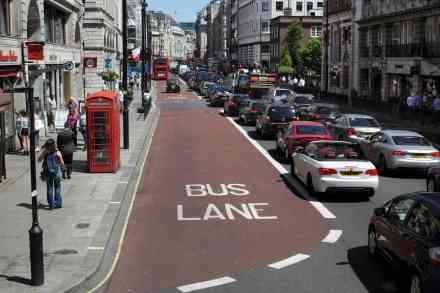
Any historic London footage inevitably features cars busily rounding Hyde Park Corner and shooting off up Park Lane, against the background of sky-scraping hotels and thriving offices. Have you seen the same bit of London now? It’s a giant car park, brought to a standstill by an administration with seemingly little idea how to promote a thriving capital. The city’s best-known thoroughfare has been reduced from three lanes to just one open for traffic northbound, one for bicycles (used sparingly in rush hour) and one for buses, usually empty. That’s just one lane for normal traffic, used by Londoners simply trying to get from A to B via one of the main routes across the capital. Any world capital needs to offer choice in the way its population gets around.

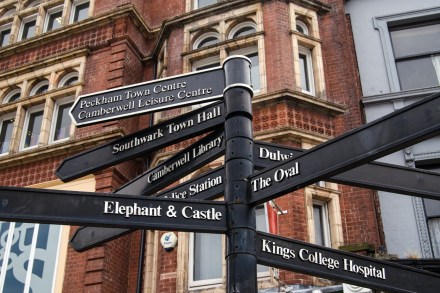
The truth about Camberwell – is Boris’s old haunt worth investing in?

From our UK edition

Like other areas of London, Camberwell suffered from having much of its modern town planning done by the Luftwaffe. As the original bridges over the Thames were built, particularly Blackfriars in the 18th century, the roads leading to them, wide and quiet, became lined with handsome Georgian and Regency houses. Victorian fillers came later along with grids of basic but reasonable housing for the many labour intensive businesses springing up. Modern Camberwell has become aligned with artists, perhaps trendily missing out on the over gentrification affecting some near SW postcode neighbours.

How to speed up buying a house

From our UK edition

Everyone has a story about the stress of moving house. For those buying a new home, the process of exchanging contracts is perhaps even more nerve-racking than loading their worldly possessions into the back of a van. When I started in the property game in the late 1970s, buying a property – that’s when you pay your 10 per cent deposit and your sale becomes irrevocable, not when your agent says ‘well done, your offer has been accepted’ – took roughly eight weeks. It now takes over 20, which is absurd. This extra time contributes the lion’s share of stress and seems to be getting worse.

Why are experts always wrong about house prices?

From our UK edition

Over the past two generations, those with property in the UK have been unwittingly transformed from owners to investors. This makes no sense, and has led to a lot of baby boomers feeling smug and clever when in reality they’ve just been lucky. However, the effect has been lasting and means property owners are now a politically valuable group – and that what your house is worth has disproportionately strong influence on how rich you feel. And of course, now that everyone has an interest in the value of their home, there are plenty of supposed experts willing to pretend they’re helping you look ahead to see what will happen in the market. It’s particularly prevalent at this time of year, i.e.

Why now could be the time to buy a bigger house

From our UK edition

The vast majority of people who move home do so because they need more space. In the good old days, the late 1970s, people moved often – on average every three years. The average is now nearer two decades (you can thank stamp duty for that). The same time period has seen a growing obsession in Britain about the value of our homes. If the value’s going up it feels good; if it’s going down we despair. But this has led to something of a blind spot about the advantages of a falling market to those wanting a bigger home. My experience is that many miss out on this advantage as they attempt to ‘call’ the market and wait for the very best deal to fall into their lap A tough market is the best time to trade up.

What the weak pound means for London property

From our UK edition

Having written recently about how Prime Central London is enjoying a time in the sun after almost a decade in the doldrums, buying a property there just got even more tempting – if, that is, you’re spending dollars. And 66 countries worldwide are linked to the currency and affected by fluctuations in its value. A property in Kensington and Chelsea will now cost dollar-based buyers two-thirds of what it would have cost them in 2014 Over more than four decades it’s been clear that the fortunes of PCL are affected more by geopolitical events and exchange rates than by domestic interest rates. Any global ‘black swan’ event – such as the removal of the Shah of Iran, the introduction of the euro, the LTCM collapse – has had an effect.

Why the global elite are buying London property again

From our UK edition

If you’re looking for a bellwether for the world economy, you could do worse than consider what’s happening at the very highest end of London’s property market. Over several decades, Prime Central London – or PCL – had become a repository for cash from wealthy foreigners, whether they actually wanted to live there or not. This had several side effects – namely that PCL became mostly lined with empty properties and prices went into ‘trophy’ mode. This is a world controlled by a cabal of high-end agents operating completely off the grid Then Brexit appeared on the horizon, and for some time rich international buyers avoided London out of fear of complications that might arise from being outside the EU.

Is London’s housing market faltering?

From our UK edition

Prime Central London has always been viewed as safe. It has some major plus points for the world’s wealthy – it’s on the Greenwich Meridian so can trade East and West, is an island considered geographically safe and geo-politically stable. Wherever you lived in the world you could stash a considerable portion of your wealth in this safe haven with the added bonus that, if a downturn were to grip your own country, you can relocate to London. The relative global stability of the last decade has led to empty properties. The heart went out of Prime Central London years ago.

The UK property boom looks set to continue

From our UK edition

If there is one thing I have learnt from working in the property market for over 40 years it's that any market prediction worth its salt takes into account the relationship between London and the regions. Sometimes the capital is a useful bellwether for the rest of the country but not always. In the early 2000s, the central London market was booming thanks to an influx of investment from abroad. Such was the popularity of London with foreign buyers that the property market bounced back quickly after the 2008 financial crash - this was as much because of exchange rates as interest rates, something simply not seen in the provinces. For various reasons, successive governments then sought to squeeze the Prime Central London piggybank and overshot.

The London property hotspots most likely to gain value

From our UK edition

The preponderance of publicity over the last 24 months exhorting Londoners to abandon ship has left some areas of the capital looking like relative bargains or at least lagging behind widely hyped price rises elsewhere in the UK. Indeed, the average property price in Cambridge is now higher than that of the capital. Anecdotally, the stress of moving under duress has meant a significant number of those recently ‘lost’ have now returned to areas like Wandsworth, Hammersmith and Fulham. Many buyers have rented for a time in order to attempt a rural purchase before deciding to return. According to data from propertymark, there were an average of 29 buyers for every available property in December, meaning many house searches no doubt ended in vain.

Where to buy along London’s new overground routes

From our UK edition

We’re forever reading about the transformative power of infrastructure projects. As house hunters contend with the lottery of which project is actually going to break ground, there’s a valuable lesson to be learned from Crossrail. Since Gordon Brown approved the plans in 2008 and building work began a year later, research from agent Benham & Reeves indicates postcodes with a Crossrail station show rises 17 per cent higher than surroundings, with some centrally placed stations adding over 140 per cent. Hamptons International investigated projections in 2012 that prices of properties close to Crossrail stations would rise by 25 per cent by 2021.

How to prevent house theft

From our UK edition

The heart breaking story of the Luton vicar who had his house recently ‘stolen’ from him by fraudsters has rightly touched a nerve with property owners everywhere. The horror of arriving at your own home to find your keys no longer work in the lock and the house now legally belongs to someone else might seem like a rare experience.  But unfortunately it's more common than anyone might imagine. Indeed the first time I can remember it happening was in the early 80s and involved a house in one of the most expensive streets in London and a foreign Princess. The major problem with investigating, let alone reporting, this sort of fraud is that victims and their advisors, be they estate agents or solicitors, are loathe to ‘fess up.

Where to buy along the Oxford Cambridge train line

From our UK edition

Year after year, Oxford and Cambridge vie with other world universities for coveted top dog status. Unsurprisingly for such a concentration of brainpower, science and tech industries have blossomed in both cities over the past two decades, bringing with them an influx of young professionals on the look out for houses. Both are within an hour of London with good links of their own into the capital. What has been missing, however, is a strong transport link between the two. As anyone who has done battle with the M25 or, worse, the maze of roundabouts surrounding Milton Keynes, will tell you, travelling between Oxford and Cambridge is far from straightforward, even by road.

Could the next property boom be in Battersea?

From our UK edition

I'm not quite sure what the average age of Spectator readers is, but for many a pink floating pig is their abiding memory of Battersea Power Station. Since 1983, when it stopped producing energy, there have been many unfulfilled promises and dreams for the building. I went inside it back then and it was immense. So vast and bleak was the space that the majority of Londoners simply couldn’t envisage anything happening there. 30 years of will it, won’t it, were brought to an end ten years ago when current shareholders SP Setia, Sime Darby Property and the Employers Provident Fund acquired it and started to make good on their vision.

Now’s the time to house hunt in Chelsea

From our UK edition

Every now and then the London property cycle creates an anomaly missed by the majority of property buyers until it’s too late. It started about 25 years ago when overseas buyers lobbed a rock into the prime central London property pond – created ironically by a Labour government. In the run up to the Euro, the demand for prime central London property went into overdrive. The reasons were many, but ultimately it came down to London’s unique blend of safety - both geographical and political, ability to look and trade East to West and its status as a world City. London always had that air amongst international buyers of a place where, if the balloon went up in your own country, you could safely go and live in your not insubstantial investment.

How London is reinventing retirement

From our UK edition

Even ten years ago you’d have been laughed at for suggesting it – but there are several reasons why a London retirement is becoming more palatable, even desirable for those approaching the end of their careers and the start of the leisure years. The number of people aged over 65 projected to rise by over 40 per cent in the next 15 years to over 16 million. By 2040, nearly 25 per cent of people in the UK will be aged 65 or over – according to AgeUK. Figures like these show how the city could grow in appeal for a demographic that have traditionally gravitated towards the well-worn seaside retirement towns of the South East and South West. It's not for nothing that Eastbourne is known as God's waiting room.

The commuter villages that combine town and country

From our UK edition

The rush to leave London has been a staple of property columns over the last twelve months. Built up, densely-populated urban areas were portrayed negatively in favour of remote locations, but as normal life begins to resume does that characterisation still hold? London is already back on the agenda for many professionals and will remain central to culture, creativity and commerce, especially when restaurants, bars, theatres, museums, music venues and galleries re-open. And yet the urge for green space is not going to disappear overnight. The pandemic may well have changed our relationship with the city permanently.

How to negotiate on a house

With Rishi Sunak announcing plans for a Stamp Duty holiday extension and floating the policy of 95 per cent mortgages, the boom in house sales looks set to continue apace. So, in an increasingly competitive market, what's the secret to securing the best possible price on a house? Firstly, your relationship with the agent is key, even as the buyer. Despite the fact that most agents are paid by the seller estate agents form their primary relationships with buyers. If you want to live in a certain area find the best negotiator - the person you think can persuade a seller to accept your price. And don't be afraid to badger them. They may not work for you but the squeaky wheel always gets the oil. They want the deal as much as you do.

Is now the time to invest in buy to let?

Buy to let remains a popular investment option for Brits, despite being the subject of major reform over the last three years. Government legislation since 2017 has been increasingly hostile towards buy-to-let owners but could the aftermath of the pandemic prompt a change? Figures from 2018 show that the Private Rented Sector [PRS] provides homes for over a fifth of the population, that’s more than 4.7m households, making it bigger than the Social Sector and it’s doubled since 2002.