Spectator Life

Spectator Life

An intelligent mix of culture, style, travel, food and property, as well as where to go and what to see.

Lost in Mexico: in the stumbling footsteps of Malcolm Lowry

I had been kicking my heels in a dusty two-star hotel on a dual carriageway in Leon, central Mexico, for days. One afternoon, I spotted a battered old English language hardback in a junk shop window: Under the Volcano by Malcolm Lowry.  I had read the book before, half a lifetime ago, in maybe 1985, when I knew nothing about Mexico, failed relationships or alcoholism. Almost 40 years later, with a more than working knowledge of all three, I felt better placed to appreciate Lowry's 1947 masterpiece. With nothing else to do or read, I bought it. I haggled the shopkeeper down to 100 pesos – about £4. Barely 24 intense hours later – the same time span that the novel unfolds in – I had finished it. Or had it finished me?

What happened to children’s hobbies?

Do kids still have hobbies? Maybe hobbies isn’t quite the right word. What I mean is a passionate interest in something fairly adult, something more than playing with toys. For example, a child might get precociously into theatre or birdwatching or medieval history and have a first taste of adult enthusiasm for something. I was into magic, meaning conjuring tricks. This seemed the most interesting thing about the world, the clear pinnacle of its complicated cultural array. Why wasn’t everyone fascinated by the fact that it was possible to perform acts of seeming wizardry? The magic bug bit me when I was about 11 – who knows why. Maybe it was my uncle doing a card trick, maybe Paul Daniels on television, maybe a basic magic set someone gave me. I had to know all about it.

Four bets at Ascot and Haydock

Evan Williams has not got as many ‘Saturday horses’ as he once had but he remains a trainer that I like to have on side when he targets some of the bigger handicaps. The form of his stable, with the Cheltenham Festival less than a month away, is good and he had a double at Hereford earlier this week with horses priced at 17-2 and 6-1. I am hoping he might have a winner or two at Ascot tomorrow as well because he brings two of his decent handicappers to the Berkshire course from his base in the Vale of Glamorgan, South Wales. PATRIOTIK, who will be ridden by the trainer’s daughter Isabel, bumped into a well-handicapped horse last time in the shape of Red Dirt Road.

The perfect genius of P.G. Wodehouse’s ‘never-never land’

Pelham Grenville (PG – or Plum) Wodehouse breathed his last on Valentine’s Day fifty years ago. As Evelyn Waugh saw it, Wodehouse inhabited a world as timeless as A Midsummer Night's Dream and Alice in Wonderland. Wodehouse himself said it was as though he was forever in his last year at school. It was, Waugh said, 'as if the Fall of Man had never happened'. In a letter to some admirers, Wodehouse wrote: The world I write about, always a small one – one of the smallest I ever met, as Bertie… would say – is now not even small, it is non-existent. It has gone with the wind... In a word, it has had it. But I have not altogether lost hope of a revival. Of course, that revival never came, and Plum died aged 93, just six weeks after he was so belatedly knighted.

Why are women so unromantic?

If you’ve bought a card for your partner this Valentine’s Day, I would guess you’re more likely to be a man. This is because men are generally more romantic than women, which is something that’s widely known but seldom acknowledged. It’s actually quite a serious issue. According to a female counsellor I once interviewed, one of the most frequent causes of marital discord – and sometimes divorce – is unromantic women. Not convinced? Think of heterosexual couples you know. Who would you say is the more romantic of the two? Now think of your favourite romantic songs. The vast majority will be paeans of love for a woman, written and sung by a man.

The great Valentine’s Day con

When a press release for solar-powered sex toys popped into my inbox on 3 January, it dawned on me it could only mean one thing: we were already in the build-up to Valentine’s Day. A few days later, it was followed by the new aphrodisiac version of the Knorr stock cube, Knorrplay, and a set of champagne glasses adorned with red hearts. A couple of years ago I found myself overnight in Newcastle, with a male colleague. We were working hard on a harrowing story and decided a nice meal out would cheer us up. Not a chance in hell: neither of us had realised that the dreaded Valentine’s Day was upon us. Every single restaurant, from low-rent kebab joints right up to Michelin-starred gaffs, was full to the rafters with courting couples.

Britain’s shopfronts are a national embarrassment

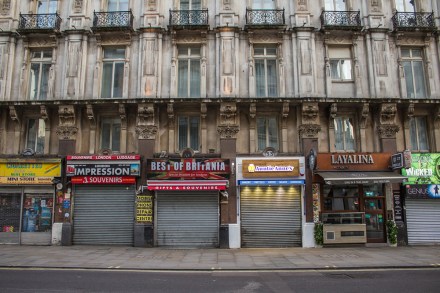
A few weeks ago, a couple of men with ladders started work on a former bridal boutique at the end of my road. I’ve no idea how old the building is. Its pitched roof and intricate gable and the sort of pattern brickwork no one seems to bother with these days suggest it’s Victorian, but it could be older. Beneath the first-floor windows was a decorative cornice. Under that, between a pair of attractive corbels, was a slim wooden fascia upon which the name of the shop was painted in stencilled letters. The chaps with the ladders got rid of all that. They ripped out the timber and chucked it in a skip. The building houses an estate agent now – a flat aluminium fascia, double the size of the old one, informs you of the fact.

Why Gen Z worships the pickle

If something can be squeezed into a jar with brine, Polish grandmas will do it. Walk into the kitchen of the average babcia and you’ll see jars lining the shelves filled with mysterious experiments, as if in an old-fashioned Slavic science lab. Here are pickled cucumbers, pickled peppers, pickled mushrooms, pickled cabbage and pickled beetroot. Babcia knows that pickles are tasty, cheap, versatile and great for your health. Dziadek (Grandpa) knows that they are great with vodka. British Zoomers love pickles as well. Pickles, according to the website Vox, are among 2025’s ‘hottest foods’. McDonald’s has even cashed in on the fad with an advertisement showing a husband affectionately donating pickles from his burger to his wife.

How to get a table at Audley Public House

The Audley Public House is on the corner of North Audley Street and Mount Street in Mayfair, opposite the Purdey gun shop where you can buy a gun and a cashmere cape, because the world has changed. The Audley is a vast pale-pink Victorian castle, and it meets Mayfair in grandeur and prettiness. If the Audley looks like it could puncture you with an ornamental pinnacle, it also seems frosted with sugar – but that is money. This is the tourist Mayfair of the affluent American imagination: the pharmacies and grocers have gone, replaced by fashion (Balmain, Simone Rocha) and the spirit of Paddington Bear. Woody Allen shot Match Point in the Audley, and that is the most normal thing about it now.

Emperor Trump and the spectacle of the Super Bowl

It’s easy to not quite get the Super Bowl. What exactly is it: a sporting event, a music show, a fashion parade for the world’s coolest pair of shades, a new version of the Chippendales with the hunks wearing tight trousers and skid lids? Or, in its latest incarnation, a chance for the world’s most frenetic law-maker to sink his last putt in a round of golf with Tiger Woods, board Air Force One and say: ‘Fly me to New Orleans.’ Or is it a chance to watch several vast and amiable black guys bulging out of their suits and bantering away about a possible three-peat, while Trombone Shorty plays a touching version of ‘America the Beautiful’ and an announcer calls for a moment’s silence to mark the importance of ‘faith, family and football’?

What kind of woman envies her daughter?

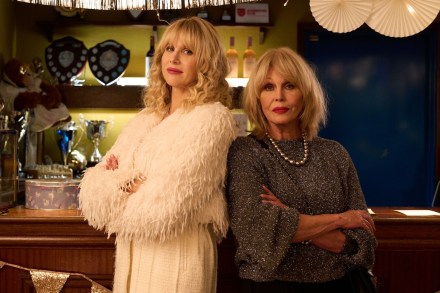
My mother hated Motherland, storming out after five minutes, saying Julia’s frantic school drop-off was too much like real life. She’d have loathed Amanda, the self-styled ‘alpha mum’. But I loved it – and was happy with the spin-off Amandaland, where Dame Joanna Lumley plays Amanda’s mother with gleeful froideur. When interviewed alongside her screen daughter, Lucy Punch, Lumley commented that one of the reasons for their characters’ taut relationship is how ageing women are resentful of their pretty daughters. Maternal envy, being rather destructive for all concerned, has provoked much debate in the papers (and no doubt consternation at dinner parties across Middle England).

Generation Bland: the inevitable rise of ‘Palentine’s Day’

As we approach with anticipation or dread 14 February, the day we traditionally celebrate love and all things amorous, a certain demographic will instead be observing a rather less passionate and altogether more bland occasion: ‘Palentine’s Day’. Commemorated on 13 February, this is apparently the date upon which to honour platonic friendships instead of romantic engagements – and it’s proving increasingly popular among Generation Z. It all started with ‘Galentine’s Day’, a celebration of female friendship invented by the character Leslie Knope in American political satire mockumentary Parks and Recreation in 2010. As the concept moved from comedy to real life it morphed into the gender-neutral ‘Palentine’s’ – lest anyone should feel left out.

Never write a book

I have just finished writing a book and am moping about the house at a loose end. The conventional advice to anyone thinking about writing a book is: don’t. Unless you’re one of the 1 per cent of authors who make 99 per cent of the money, it’s a mug’s game as far as making a living is concerned. Your cleaning lady earns more per hour. So my advice is only write a book if you have an alternative source of income. One of the hardest things about writing a book is stopping. The temptation to tinker persists until the publisher screams at you to stop and mutters that publishing would be a good business if it weren’t for the authors. Still, the end is in sight, and now I need something to do.

Michelin’s relaunch is a recipe for disaster

The Michelin Man is in trouble. In fact, his job is on the line. For 125 years, the Michelin Man, real name Bibendum, has been the face of the Michelin Guide: a coveted series of publications that award restaurants for excellence. But last week, news broke that the guide is attempting to reinvent itself in a bid to keep up with the world of online food reviews. Much like an aged B-list celebrity on a serious comedown, the guide is looking towards the internet for validation. In its endeavour to stay relevant, Michelin runs the risk of tarnishing the very thing that has kept it afloat for over a century: its reputation. And without its reputation, the Michelin Man’s next stop won’t be The Ledbury for flame-grilled mackerel – it will be the Jobcentre for a petrol station sandwich.

Why are music biopics so bad?

The Led Zeppelin singer Robert Plant was driving through America 20 years ago when he heard a radio station announce that if any listener donated $10,000, they’d never play ‘Stairway to Heaven’ again. Somewhat tired of the song himself, Plant rang up and pledged the cash. ‘It’s not that I don’t like it,’ he later said. ‘It’s just that I’ve heard it before.’ Rather the same attitude seems to have been taken in the band’s new biopic, Becoming Led Zeppelin, which was released in British cinemas last week. The trailer calls it the band’s ‘first ever authorised documentary’, but fans hoping that this means seeing rough cuts of ‘Stairway’ should beware: all that glitters is not gold.

I’m a ruthless declutterer. It has cost me

There are two types of people: the hoarders and those who are always chucking things out because they hate clutter. I fall into the latter category. In my view, a well-ordered environment makes for a well-ordered mind. So you’ll not see my desk buried beneath the usual office detritus, nor my car strewn with apple cores, empty crisp packets, and scrunched-up receipts. In moments of boredom, I enjoy going through a drawer or cupboard to weed out items no longer required. However, my long-standing urge to jettison useless stuff has led to trouble. One episode still haunts me. I was in the kitchen with my mother, who was cooking an elaborate meal.

There’s nothing toxic about centrist dads

‘Centrist dad’, a term that has been with us for a decade or so, has never exactly been a compliment. In 2017, even Tony Blair – then still pretty close to being political toxic waste – disavowed the label, declaring: ‘I’m not a centrist dad.’ In that same year a chap named Matt Zarb-Cousin, a spokesman for Jeremy Corbyn – who astonishingly was the leader of the opposition at the time – described centrist dads as ‘middle-aged men who cannot come to terms with the world and politics changing.’ Zarb-Cousin added hubristically: ‘They think they must know better because they are older and wiser.’ (Fortunately the centrist dads did know better, and so did the country, rejecting Corbyn in 2019.

The sad decline of stationery

The news that WHSmith is facing closure seemed inevitable. Good stationery may be one of the pleasures of life, but is anyone actually buying much any more? Of course, people will always need pens, string, bubble wrap and so on, yet the heyday of stationery has definitely passed. There was a time, when people still wrote letters to each other or used writing implements as a matter of course, that it was a large part of our shopping, especially if you were a school kid. We wrote in pen and ink (no biros), and for a child of the 1970s or 1980s, this usually meant the choice between a Sheaffer No Nonsense pen, chunky and with a screw-on top, or a Parker 25, stainless steel and, with its ‘stepped down’ barrel, faintly futuristic.

Who really lost when the Berlin Wall fell?

The fall of the Berlin Wall was meant to have been the crowning moment for the West, and for the principles of empowering liberation and freedom. Obviously so – I used to think. Now I’m more along the lines of, well, yes and no. The fall also seems in some ways to divide the former good times from the current bad times, both for Germany and for the rest of us. Such thoughts came to mind after I headed to Berlin to witness the New Year’s Eve fireworks display, during which the city is turned into the most attractive war zone you’ll encounter. I stayed with my brother, a creative type who, like many others artistically inclined, settled in Prenzlauer Berg, an area formerly in East Berlin. With the Wall down, people were drawn to the low prices and atmosphere of artistic liberty.

The delightful melancholy of an antiques shop

Antique shops are melancholy places. The deep leather armchairs, Anglepoise lamps and bamboo bookshelves. They ask questions: who sat, worked or read using these? Banal questions, possibly, but life is generally banal, and no less poignant for that. It’s not an unpleasant sort of melancholia. Quite the opposite. If I had to create a word to describe the feeling, I’d say it was melanphoria: ‘a state of intense excitement arising from a feeling of deep sadness’. One feels both a nostalgia for the lives of strangers and a sense of life’s possibilities. If this is abnormal, I would ask any amateur psychiatrists to write to The Spectator offices. I am physically unable to go into any antique shop without buying something. It is rarely a grand purchase.

Steve Coogan should stick to comedy

How amusing to hear Steve Coogan and Emily Maitlis pontificate about the dreaded ‘establishment’ on Maitlis’s News Agents podcast recently. During a discussion about Coogan’s role as Brian Walden in Brian and Maggie – Channel 4’s two-part drama about Walden's final, sensational interview with Margaret Thatcher in 1989 – the comedian admits that although he identifies with Thatcher’s lower-middle-class background, he had concerns that the script might make her seem too sympathetic. Heaven forbid. Coogan considers the drama to be as much about class as a lament for long-form interviews, suggesting that intelligent outsiders such as Walden, Thatcher and indeed Coogan himself will always struggle to break through the cut-glass ceiling.

Wagers for the weekend and the Cheltenham Festival

Trainer Rebecca Curtis has experienced plenty of challenging seasons since her successes in the early 2010s, when her owners included the legendary Irishman J.P. McManus and her numerous winners included four at the Cheltenham Festival. She eventually added a fifth Festival winner in 2020 when the 50-1 shot Lisnagar Oscar landed the Stayers’ Hurdle. As if to prove the old saying ‘form is temporary, class is permanent’, Curtis has showed signs of reviving the glory days with an impressive 18 per cent winning strike rate from her runners this season. Furthermore, I think that she has a massive chance of landing a sixth Festival winner next month with her horse HAITI COULEURS.

The brash shall inherit the Earth

As a girl, and later a woman, prone to barbs and punchy elocutions, I have encountered a great many repercussions for my words. My re-education began in primary school when the mother of a classmate angrily rang my mum to tell her that I had said this or that outrageous thing to her daughter. (A daughter who was herself tough as nails and a crafty little madame; I never picked on those weaker than me.) Over time, the pain of fallouts with school friends became the stress of getting communication wrong in the workplace, which carries its own, more formal and sinister consequences. Now I try to pause and be polite and ‘reasonable’ (one must be ‘reasonable’!) no matter how angry, anxious or upset I feel in the face of blatant foul play, falsity or injustice.

My great-grandfather gave his name to Grenfell Tower

In Dad’s Army, Lance Corporal Jones, played by Clive Dunn, fought in six campaigns, from the Sudan in 1884 to the second world war. Well, my great-grandfather, Field Marshal Francis Grenfell, 1st Baron Grenfell, can beat that. He joined up at 18 in 1859 and stayed in the army for 65 years, until his death at 83, 100 years ago, on 27 January 1925. And then, in a tragic coda to his extraordinary life, he gave his name to Grenfell Tower, where 72 lives were lost in a fire in 2017. This week, Angela Rayner told bereaved families that the tower is to be demolished. Lord Grenfell was the ultimate Colonel Blimp – he even looked like him, handlebar moustache and all. The Zelig of the British Empire, he saw everything.

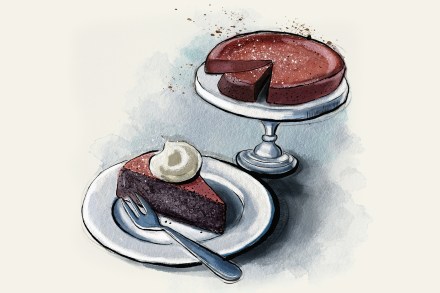
The time-poor woman’s perfect chocolate cake

Isn’t it awful that the older you get, the more you know yourself? It’s supposed to be a good thing, attributed to wisdom, experience and a deeper understanding of our place in the world around us. But good lord, self-awareness can be a cruel mistress. I have realised that my greatest culinary goal is simply unachievable. You see, I long to appear effortless. This is true throughout my life, but particularly so when it comes to cooking. Every time I invite friends round for lunch or dinner, I resolve that this is the time when everything will not only be easy but, crucially, I will make it look easy. That I will simply throw something together that everyone will adore; the gathered diners will be equally impressed by the food and by the nonchalance with which I’ve assembled it.

The best way to approach sake 

We were discussing civilisation, as one does, and its relationship with cuisine. Pasta in Italy, paella in Spain, the roast beef of Old England; wurst in Germany, burgers in the States –though with those latter examples we are moving away from the concept. What about Japan, a complex society which is full of paradoxes? For three-quarters of a century, the Meiji Restoration was the most successful revolution since the Glorious Revolution itself. It was part of a process which opened Japan to western influences and vice versa. Rather as in the UK, ancient forms were preserved, which helped to ensure social stability during a period of rapid change. Japan often bewilders westerners.

The exquisite vanity of the male sports writer

A good place to catch the highbrow sports journalist in action is the ‘Pseuds Corner’ column of PrivateEye, where he (and it’s always a ‘he’) regularly appears. Here you will discover that to contemplate Manchester City’s mid-season loss of form is ‘like sitting in Rome in 410 and watching the Visigoths pour over the horizon’, warm to the spectacle of Liverpool’s Virgil van Dijk ‘striding about the place like the 17th Earl of Egham with a quiver of pheasants over one shoulder’, or learn that the mothers of the former Everton manager Sean Dyche and the French national coach Didier Deschamps both worked in the textile industry, which may explain their sons’ ‘common emphasis on durability and craft over flamboyance and novelty’.