Mark McGinness

Gore Vidal was the Virgil of American populism

From our UK edition

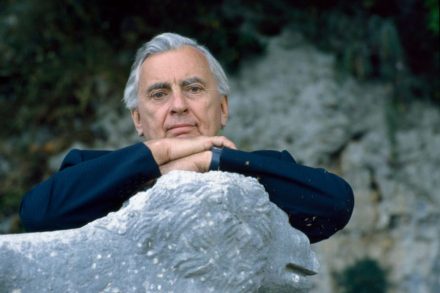
America’s Montaigne, Gore Vidal, was born 100 years ago today. Born Eugene Luther Vidal, this Virgil of American populism entered the world on 3 October 1925 (‘Shepherds quaked’, he later said, describing his arrival in his typical, wildly egotistical way). His father, Eugene Luther Vidal – after whom he was named – was a former quarterback, Olympian and the founder of three commercial airlines. While he worshipped his father, Vidal had a hateful relationship with his mother, Nina Gore, a beautiful monster who would go on to marry two more times following her divorce from Vidal senior. Vidal's formative friendship was with Nina’s father, Thomas Pryor Gore, the blind senator from Oklahoma. Young ‘Gene’ read him Voltaire, Gibbon, Shakespeare.
The enduring message of Anthony Powell’s work

From our UK edition

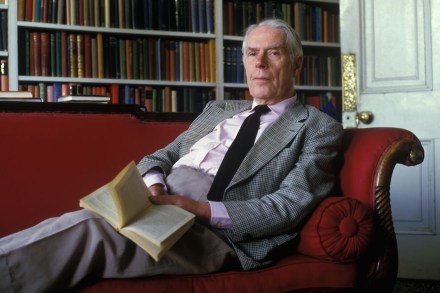
Anthony Powell died on 28 March 2000, twenty-five years ago today. It is also fifty years since he completed his 12-novel series, A Dance to the Music of Time, written over a quarter of a century. How well has this unique opus worn? With a title taken from Poussin's masterpiece of the four seasons, Dance, has been described as 'Proust Englished by P.G. Wodehouse'. But perhaps Powell's closely-observed study of 20th-century bohemacy has suffered from being too real: its texture a trifle tweedy; its colours slightly faded. Anthony Powell, the novelist, deserves to be read Powell was not an escapist like Wodehouse; a moralist like Orwell, nor a satirist like Waugh.

The perfect genius of P.G. Wodehouse’s ‘never-never land’

From our UK edition

Pelham Grenville (PG – or Plum) Wodehouse breathed his last on Valentine’s Day fifty years ago. As Evelyn Waugh saw it, Wodehouse inhabited a world as timeless as A Midsummer Night's Dream and Alice in Wonderland. Wodehouse himself said it was as though he was forever in his last year at school. It was, Waugh said, 'as if the Fall of Man had never happened'. In a letter to some admirers, Wodehouse wrote: The world I write about, always a small one – one of the smallest I ever met, as Bertie… would say – is now not even small, it is non-existent. It has gone with the wind... In a word, it has had it. But I have not altogether lost hope of a revival. Of course, that revival never came, and Plum died aged 93, just six weeks after he was so belatedly knighted.

The genius of Nancy Mitford

From our UK edition

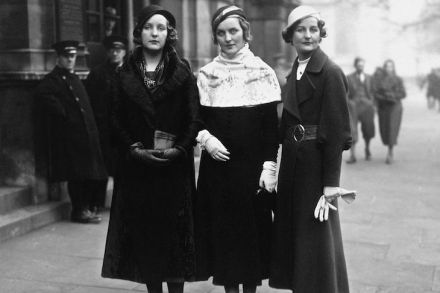
Nancy, the first – and perhaps most famous – of the six Mitford girls, died half-a-century ago on 30 June. The lives of the Mitford sisters seem as remote today as Jane Austen’s Bennett sisters. It is almost impossible to separate the family from their fictional equivalents. The books that made them so, Nancy's The Pursuit of Love and Love in a Cold Climate, have become classics, still in print today, creating cult figures of her already notorious family. The intensely autobiographical nature of her fiction might suggest a lack of creative imagination but the real-life models she was so brilliantly able to draw on – with little embellishment – made it all the more fascinating for appearing to be true.

Granada’s Brideshead Revisited remains the sine qua non of mini-series

From our UK edition

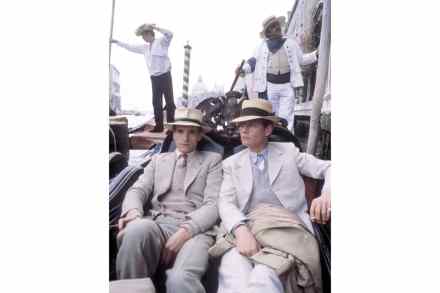
It is 40 years ago today since Granada’s masterly adaptation of Evelyn Waugh’s Brideshead Revisited first beamed into British homes. This 11-part serialisation of a book originally entitled A Household of the Faith soon gathered millions of faithful householders. The autumn of 1981 was an especially cold and wet one and it was still too soon in the Thatcher premiership for her patron saint, Francis of Assisi, to have worked his magic. So while ITV was not able to deliver harmony, truth, faith or hope, it certainly provided 659 minutes of romantic escapism.

James Bond and the Beatles herald a new Britain

From our UK edition

The word ‘magisterial’ consistently attaches itself to the work of David Kynaston. His eye-wateringly exhaustive four-volume history of the Old Lady of Threadneedle Street established him as a historian with a confident command of a huge body of information, as bloodless and dry as the subject was. Embarking on Tales of a New Jerusalem, a history of Britain from 1945 to 1979, he has undertaken another marathon and earned magisterial rank. Yet, from the first, Kynaston has shown that he is prepared to leave the bench to sweep the Ealing and Islington Local History Centres, Wandsworth Library, the East Riding Archives and especially that extraordinary resource, the Mass Observation Archive, kept in The Keep at the University of Sussex.

To the brownstone born: WASPS, by Michael Knox Beran, reviewed

From our UK edition

It was only in 1948 that the term WASP was coined — by a Florida folklorist, Stetson Kennedy. Yet White Anglo-Saxon Protestant never satisfactorily defined this all-but-extinct breed of American Brahmin. In his sweeping, teeming study of the WASP, Michael Knox Beran concedes that the acronym fumbles its origins. For one thing, it excludes the Celts and Anglo-Dutch Patroons, several of whom lent gravitas and grit to the term and tribe. For this reason too, ‘Wealthy English Episcopalians’ does not work. It may extract the sting but it is belittling, so why tinkle with it? It is sufficient to say that to be a WASP one should have been descended from the well-to-do classes of colonial and early republican America.

What would Alistair Cooke have made of Trump’s inauguration?

From our UK edition

Margaret Thatcher’s Lord Chancellor, Quintin Hailsham, himself half-American, once observed that the US system of government was 'an elective monarchy with a king who rules . . . but does not reign'. The British system was 'a republic with a hereditary life president who . . . reigns but does not rule'. And so, perhaps, it is unsurprising that the ceremony marking the beginning of the American king's rule is more coronation than induction. Who better than an Englishman to view this peculiarly American spectacle and pomp? Until his death in 2004, Alistair Cooke, the veteran reporter and legendary voice of the long-running radio broadcast, Letter From America, had followed every presidential election since 1936 and most of the inaugurations that followed.

Jessica Mitford and Esmond Romilly – crusaders, chancers, spongers

From our UK edition

Even ardent Mitfordians must quake at the sight of yet another biography of the sisterhood. There have been more forests felled in the name of Nancy, Pamela, Diana, Unity, Jessica and Deborah Freeman-Mitford than the Brontë sisters. Jessica alone produced two volumes of memoirs, Hons and Rebels (1960) and A Fine Old Conflict (1977); her collected letters (Decca, 2006) came in at a thumping 700 pages and in 2010, Irrepressible, Leslie Brody’s biography of Jessica’s years in the United States, appeared. ‘Enough already’, one can hear her American sisters cry. Yet with Churchill’s Rebels, Meredith Whitford, a South Australian author of historical novels, has brought a clear eye and a fresh pen to the early life of Jessica and her first husband, Esmond Romilly.

Deborah Devonshire: JFK’s friend, Hitler’s antagonist, The Spectator’s columnist

From our UK edition

The lives of the Mitford Sisters have riveted, and repelled, anglophiles since the thirties. Diana Mitford once wrote, 'I must admit "the Mitfords" would madden ME if I didn’t chance to be one'. Their hold on the public imagination can be attributed to a mixture of aristocratic eccentricity, romance, rebellion, devotion, betrayal, estrangement, tragedy, and loss; and through it all, a uniquely irrepressible wit. And although much of it will survive in the memoirs, biographies, novels, and collected letters they and others have written, the last living link has been lost with the death of Deborah, the youngest of that astonishing sextet.

Hitler’s Valkyrie: Unity Mitford at 100

From our UK edition

On 8 August 1914, four days after the declaration of war, Unity Valkyrie Mitford was born, the fifth child and fourth daughter of David and Sydney Freeman-Mitford, who admired the actress Unity Moore. Grandfather Redesdale suggested Valkyrie, after his friend Wagner’s Norse war-maidens. The fact that Unity Valkyrie had been conceived in the town of Swastika, Ontario, where her father was prospecting for gold, made it all the more portentous. A few weeks after her birth, Unity and her mother (‘Muv’) joined ‘Farve’, who was with his regiment in Newcastle. His quarters were so cramped that Unity was laid to sleep in a drawer.