Spectator Life

Spectator Life

An intelligent mix of culture, style, travel, food and property, as well as where to go and what to see.

Make Bond great again

One of the great recurring James Bond tropes is to make it look as though 007 has actually been killed before the film’s title credits. You Only Live Twice, From Russia with Love and Skyfall all begin with Bond in a position where his demise seems inevitable. Of course, he always turns up alive. (Quite what the rest of the film would consist of if he didn’t is anyone’s guess: perhaps Moneypenny dealing with probate or M arranging one of those ghastly direct cremations.) Now, however, we may have reached a danger from which even Bond cannot wriggle out. Amazon, the company responsible for one of the biggest flops in TV adaptation history, the Middle-earth prequel series The Rings of Power, has paid more than $1 billion to take ‘creative control’ of the Bond franchise.


The changing smell of Britain’s streets

The other day, while on my lunchtime walk, I passed a woman on a mobility scooter holding an impressive-looking doobie. Later, on my bus home, a bloke got on having just extinguished a joint, bringing the overpowering stench with him. Some commuters don’t even bother to put them out. All you can do is sit and tut passive-aggressively, hoping they’re only going a few stops. While cannabis use has slowly declined over the past 25 years, it seems that you can’t escape it in public. Perhaps part of the reason is that so few people now smoke at all, even tobacco. It makes weed far more noticeable. The other reason is that the police don’t bother punishing those caught. Most are either let off with a verbal warning or a fine.

Boring jobs are good for you

More than one in five people in the UK is out of work at the moment. As lockdowns lifted, many people developed anxiety and depression – most of which can be alleviated by companionship, routine and having your own cash. What I can’t understand is young, fit people not working. From the age of 13, I stood in a cake shop every Sunday, boxing pâtisserie for affluent customers. The old lady who owned the shop would mutter for us to hurry up as there was a queue. It was a knackering job, being on my feet all day, and the owner didn’t trust her charges to work the till. So we had to hand the money to her, she would hand us the change, which we would then pass on to the customer.

Can happiness be found in the gut?

I share little in common with the royal family, but like certain members of that beleaguered group, 2024 turned out to be a particular annus horribilis for me. With sorrows coming at me, not as single spies but in bloody great battalions (I won’t bore you with the details), I decided to take action by spending a week at a specialist clinic in Austria being pickled, pricked, pummelled and poked. It’s been 50 years since the eccentric German entrepreneur Rolf Deyhle founded a permanent centre for what became known as the ‘FX Mayr Cure’. He bought the impressive property from a golf club and a former student of Franz Mayr, an Austrian gastroenterologist who focused on the regeneration of the intestines.

Edinburgh has a snobbery problem – against the English

When I was at Edinburgh University a decade ago, a girl with a thick Surrey accent stopped me as I walked back to my room in halls. ‘Rah, have you been to the reeling society?’ she asked. ‘What makes you think that?’ I replied. ‘You’ve acquired a slight limp.’ ‘It’s the cerebral palsy, luv.’ They’re very forward, these English, I thought. Last week, Peter Mathieson, principal of the University of Edinburgh, claimed that Scots students were facing snobbery from the English. An alumnus, Dr Neil Milliken, had asked what Edinburgh was doing about ‘racial discrimination and class ridicule by self-perceived superior English incomes against native students’. He sounds jolly.

The naked truth about French health care

Faithful readers will know of my journey through the French health care system. I have not shared these histories because anyone should be particularly interested in my aches and pains, or to complain. If I wanted to moan about a health system on the verge of a nervous breakdown I would return to Britain. No, I drone on because it’s worth repeating the astonishing discovery that it is actually possible to have a health system that isn’t crap. And I have made some other discoveries along the way. In previous episodes, I have covered the remarkable behaviour of French GPs, who actually answer the phone – and will see you the same day if necessary or tomorrow if less immediately urgent.

What Sandhurst teaches you about self-care

Anyone who attended the Royal Military Academy Sandhurst will never look at a shaving razor in the same way. Ever since my officer training days, when you had to shave on exercise at 4 a.m. in a cold, wet forest, unable to feel your fingers, shaving has been an important topic. Having escaped those dank woods, I’ve tried to embrace shaving at its most comfortable and alluring: using a stylish cut-throat razor, aided by rose-scented shaving cream whipped into a lather by a badger-hair brush. That doesn’t cut it in airport security, where even a lone razor blade could get you pinned down on the floor. So I have tried to find a happy medium, reverting to the type of Gillette razor I used at Sandhurst. But good luck trying to find a two-bladed Gillette Excel blade.

The real benefit of wind power? Lobster for all!

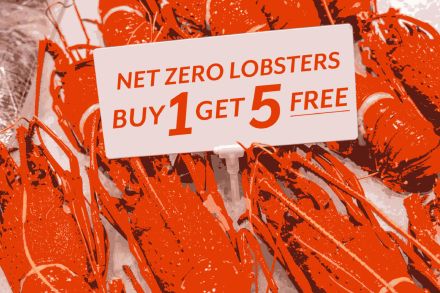
In a world of bewildering uncertainty and breakneck change, where a pack of butter now costs about the same as a small family saloon in the 1950s, there is at last some good news to cheer the soul. It concerns the lobster, that culinarily appealing crustacean which has sustained us nutritionally since the Stone Age – albeit in recent times mainly for the wealthier sort. Suddenly, the lobster has got the wind in its sails. It’s thanks in no small part to Britain’s rather quixotic, headlong dash to become, seemingly, the only net-zero country in the world, and the enormous wind turbines that have been springing up off our shores to help this take place. Because – would you believe it?

Tim Peake makes me cringe

He’s the best-known Briton ever to have boldly gone into space: the first to board the International Space Station, the first to carry out a space walk. Major Tim Peake even ran a marathon while in orbit. So why do I wince every time I hear his name?  When I was growing up, shortly after the Apollo moon landing, the portentous language of that mission – ‘The Eagle has landed’, ‘One small step’ etc – had permeated global consciousness. So when space travel was depicted in popular culture, in music and film, it was often with the atmosphere of an existential psychodrama – in Space Odyssey (Kubrick), Space Oddity (Bowie), ‘Rocket Man’ (Elton).

Why the London exodus is over

During the course of last year, Alex Greaves and his wife Sarah seriously considered moving out of London. The couple, who live in Southfields in the south-west of the city with their sons aged two and five, were tempted the idea of a new life in the country – inspired largely by friends’ idyllic tales of moving to the sticks and into a home far grander than anything they could possibly afford in the capital. In the end, though, Alex and Sarah decided to stay put. And they are not alone. In the past year the number of Londoners leaving the city has dwindled dramatically. Research by estate agent Hamptons found that during 2024, Londoners purchased just 5.7 per cent of all homes sold beyond the city limits. This is a decade-long low, and down from a peak of 8.

The comedy genius of John Shuttleworth

There is a certain comic archetype that is particularly British. The likes of Pooter, Mainwaring, Hancock, Fawlty and Brent are in a tradition – going back to Falstaff, perhaps further – of hopelessly optimistic yet socially oblivious dreamers. One such character is John Shuttleworth, created and played by Graham Fellows. For the uninitiated, John Shuttleworth is a retired security guard and aspiring singer-songwriter from Sheffield who lives with his dinner lady wife and two children, Darren and Karen. He performs mainly at hospices and drop-in centres, often for no more than his travel money. His career is inexpertly managed by his next-door neighbour with whom John enjoys a generally warm, though occasionally fractious, relationship.

Thank goodness for the Six Nations

The first months of the year are a tough time to inhabit this corner of the planet. First there’s January to contend with – darker than Himmler’s sock drawer and full to the rafters with post-festive self-flagellation. Then we’re into February, which is just more of the same: January by another name. No wonder the powers-that-be decided to shave a few days off it. Fortunately, salvation has arrived – as it does every year, just when we were nearing breaking point amid the relentlessness of winter. I write, of course, of the Six Nations, a great sporting festival devoted to genial national rivalry and daytime binge-drinking in equal double measures.

Ante-post bets for the Cheltenham handicaps

The entries for the Cheltenham Festival handicaps races were announced this week and so now seems a good time to try to steal a little value from bookmakers, with the four days of elite jump racing just around the corner next month. We still don’t yet know the weights that each horse has been allotted for these races but, in most cases, that’s fairly easy to predict given that official ratings for every horse on both sides of the Irish Sea are updated weekly. As usual, the British handicapper is going to give several of the Irish-based horses a slightly higher rating – and therefore weight – than his Irish counterpart.

There’s something sinister about the Mustique mafia

It’s half-term and instead of the Baftas and Anmer Hall in Norfolk, the Prince and Princess of Wales have decamped en famille to Mustique. Old pictures of Kate and Wills walking along the Caribbean seafront hand in hand and a young Prince George in a green polo shirt are accompanied by newspaper commentary detailing how Kate deserves a rest in what is thought to be her favourite place. So far, so very lovely.   Mustique itself, though, has always struck me as a rather sinister place.

A pint, a punch and a scotch egg

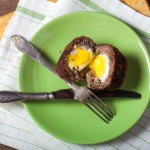
My local gastropub, which is very popular, serves a hot, freshly made and runny-yolked scotch egg. It's billed as a ‘Cackleberry Farm Scotch Egg with Maldonado Salt’ because part of hospitality is marketing. If you just chalk up ‘scotch egg’ on a board, it doesn’t entice the appetite in quite the same way. But call it ‘œuf écossais enrobés de chair à saucisse’ and serve it on a cracked slate tile – you’ve got yourself a stampede. A couple who live in the village visited the pub and ordered two of them. Shortly after being served, the husband of the couple returned the plates to the bar and asked the staff to reheat their partially eaten scotch eggs. The landlord explained that he could not reheat them once they had been partially eaten.

I was convinced by the cholesterol sceptics

It’s never a good thing when your cardiologist sounds alarmed on the phone. Come in tomorrow, he said: we’ll get you on the table. He wasn’t talking about cracking my chest, thank Christ, but threading a wire in through a vein to get a look at the heart, blow up a tiny balloon to stretch the artery, and maybe leave behind a metal tube or three. I wasn’t keen on that last part. Then I thought: serves me right. I should have avoided all those bacon sandwiches and steaks fried in butter. ‘The wages of sin is death.’ Probably should have taken the statins, too. But if you are, understandably, unwilling to take a fistful of pills every day for the rest of your life, there are some medical mavericks to confirm your decision.

Should you bother decanting wine?

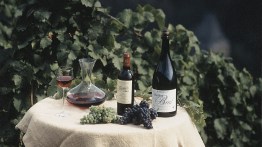
We were almost having a symposium and I was invited to define Toryism in one sentence. I replied that one book would be easier: the late Roger Scruton’s On Hunting, which ought to be subtitled: ‘From Horse-Shit to Heaven: the Search for Love, Order and God.’ ‘But what if you leave out God, and therefore heaven?’ said one fellow: ‘What would be left?’ ‘What indeed. Many learned Tories – Dr Johnson, Salisbury and Quintin Hogg being obvious examples – would have given a simple answer: nothing.’ Those of us who have to do without God and yet avoid the abyss of nothingness can only fall back on eupeptic pessimism. Edward Fitzgerald’s Omar points the way: ‘A jug of wine and thou.

The secrets of the perfect potato rösti

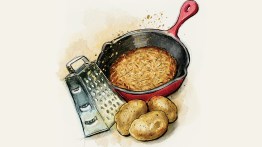
You may be forgiven, if you are a regular reader of this column, for thinking that my primary motivation in cooking is showing off. I’m always banging on about lovely dishes you can serve to unsuspecting guests that will guarantee plaudits and amazement. But while there is more than a kernel of truth in this, I think that it’s actually simpler than that: what I crave from cooking is satisfaction. And I don’t mean satiation of hunger (although that too: I am greedy), but the sense of achievement that cooking – almost – invariably brings. True, this achievement can often be found in presenting a beautiful cake to an assembled group of people, or your new friend saying ‘You know, I think these are the best brownies I’ve ever tried’.

How to ski when you can’t ski

I was 30 when I first went skiing, and up for absolutely anything. I was a successful party caterer who had just opened my first restaurant. I had a food column for the Daily Mail, and I was about to open Leith’s cookery school. I was sporty, played tennis every Tuesday, rode polo ponies on Ham Common on Fridays and I loved to dance. I thought I could do anything. Why wouldn’t I make a skier? So when Harold Evans, renowned editor of the Sunday Times, was looking for journalists over 30 to report on learning to ski, I was a gung-ho volunteer. Harry had learnt to ski late, loved it, and as a result was on a mission to get everyone, however old, into the sport. Each of us was sent to a different resort, at different altitudes, and stayed in different accommodation.

We need a cat lockdown now

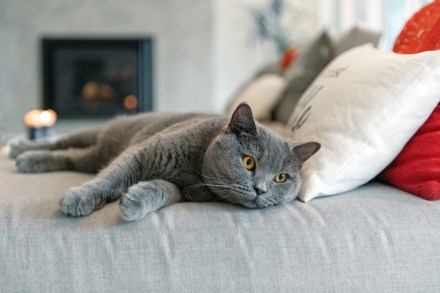
I have always marvelled at the attitude of cat owners who point to bloodied arms or dramatic scratches and explain – with docile, almost apologetic acceptance – that Jasper or Bella just got a bit annoyed. It was all the human’s fault for patting them in the first place. Violent animals are a form of domestic abuser and should be treated as such. Why would anyone allow something to attack them – or their children – rather than simply removing the animal from their home? Sure, they are unlikely to maul you to death, unlike the technically banned XL Bullys, but it’s a different story for wildlife. Domestic cats, the wily rotters, are thought to kill around 270 million birds, mammals and reptiles per year across the UK. They’re the nukes of the animal kingdom.

My own personal peasant

It was when the peasant didn’t move for the second hour that I became suspicious. I was in an ultra-expensive hotel in southern Thailand. It was built to resemble a sequence of exquisite villas from some ancient Thai dynasty, arranged around tropical gardens and meadows. I was staying in my very own, beautiful, teak-and-mahogany mini-palace, which came with a grand piano and butler – all the usual things I’d come to expect as a luxury travel correspondent. Yawn. The only thing really unique about this five-star hotel (they tend to blur, eventually) was the fact my own villa, the best of the best, the jewel in the crown, came with its own paddy field. And in that paddy field was a singular peasant in a charming conical hat, next to an ox.

Britain is facing a rubbish crisis

We have a pied-à-terre in Soho, which is convenient when I am in London, even if the street outside our tiny house is sometimes a little raucous at night. The neighbourhood is lively and fun, but my visits come with the difficulty that, in Soho, so far as I can tell, there is nowhere to dispose of your rubbish. I saw recently that Bristol City Council wants to limit collection of its wheelie bins to once a month. In much of Britain, it is already fortnightly. But at least they have wheelie bins. Westminster doesn’t allow wheelie bins in Soho; the pavements are too narrow. I assume this is the case also in other constrained neighbourhoods. Our shiny new Labour-controlled Westminster City Council seems to have given up collecting rubbish.

Anxiety is good for you

These are some of the things I worried about this morning. Should I brush my teeth while drawing the curtains, to save time? Should I get out of the bath at 7.40 a.m. or 7.45 a.m. to be fully clothed for the Tesco home delivery between 8 a.m. and 9 a.m.? Should I instantly pick up the coat hanger that fell off the door handle as I left my bedroom or wait till I return this evening? These are mind-staggeringly boring things to think about. They’re even more boring to write down. That is the life of the worrier: a new worry dropping into the brain roughly every five seconds. Life is one huge to-do list for us worriers.

Of course my dog sleeps with me

It's 4 a.m. and my German shorthaired pointer, Percy, is lying on top of me. This isn’t a giant infraction on his part. Percy and I have long shared a bed. We start the early evening as we always do – me reading and he beside me at my invitation, the light on his side of the bed is on too, in case he wants to read as well; something German perhaps, like Thomas Mann. Later, when I decide to go to sleep, I turn out both of our lights and we glide off – his paw often in my hand – into the great unconscious. At some point during the night, he leaves his designated strip and inches towards me, which is probably why my dreams always seem to orbit around being strangled with a velvet ribbon.

How Star Trek invented DEI

Values. Whenever some poor soul gets cancelled, sacked, scalped etc., there’s almost always a bland, impersonal statement from the institution carrying out the scalping. In third-person corporatese, from the moral high ground, such pronouncements will conclude with the sentence: ‘The comments of Person X do not align with the values of Institution Y.’ Where do these mysterious values originate? From which particular pile of decomposing matter were the spores of these holy secular values spontaneously generated? Frankly, for a lot of this, I blame Star Trek. It seemed so innocent back in the day, this story of the crew of a massive space warship in the 23rd century.

Keep your paws off our cats!

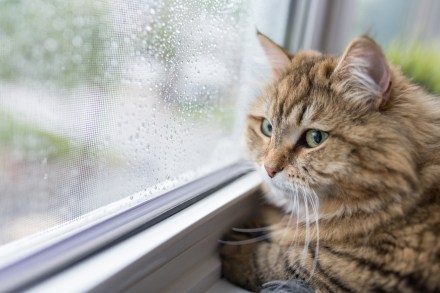
It’s open season on cats. Last month the Scottish Animal Welfare Commission (SAWC) floated the idea of 'compulsory containment of cats in vulnerable areas', and added that in some new housing developments felines could be banned altogether.  The report prompted a deluge of what I am going to call catphobia, for no other reason than that I’ve always wanted to coin a new word. There is an existing word for fear of cats (ailurophobia) but this isn’t that. What’s emerged since the SAWC report was published has, rather, been more like what I might call, if I were woke, a form of anti-cat racism. But that would be silly, and I’m not woke, so I’ll just call it cat hatred.

Love is blind? The truth about dating with a disability

Dimly lit bars are great first-date venues for most people: the seductive ambience, the candles, the gentle clink of a martini shaker. But they couldn’t be worse for a visually impaired dater such as myself. I was born with ocular albinism and nystagmus, which renders me blind in one eye and severely partially sighted in the other. Yet, stubborn to the end, I have persevered with sepulchral bars for well over a decade now. The results have been mixed. I’ve sat down next to the wrong woman when returning from the bathroom, got lost on the way to the very same bathroom and, on one occasion, spilt an entire Bloody Mary down the front of my date. Funnily enough, she didn’t want to see me again.

Confessions of a ‘gazunderer’

'John' has a dirty little secret – one so shameful that he has insisted on anonymity in order to tell his story. Last year, while in the process of buying a three-bedroom family house in Whitchurch, Hampshire, the 42-year-old office worker committed an act which, while perfectly legal, could kindly be described as ruthless. ‘We made an offer for the house, a bit below the asking price, and it was accepted,’ explains John. ‘But over the weeks that followed we started to have second thoughts. A few friends and family members were surprised at how much we were paying for the property. ‘It got to the point where I was hoping the survey would show something bad, so we could renegotiate, but it didn’t.

In defence of lard

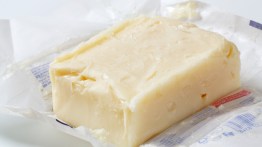
It’s somewhat risky to make the case for lard for a publication whose cookery columnist is the author of a book on butter. But so be it. Because lard has generally been at best overlooked and at worst openly maligned, and that is madness. The cost of cooking oils has rocketed in the past couple of years – sunflower oil has trebled in price, olive oil doubled. Butter is much dearer too. Yet inexplicably no one has suggested lard might step in to save the day. The cheapest pack of butter at Tesco will currently cost you £1.99. A block of lard is 50p. It has long been a slight object of ridicule. A ‘tub of lard’ is somehow crueller an insult than the Shakespearean ‘fat as butter’.