Spectator Life

Spectator Life

An intelligent mix of culture, style, travel, food and property, as well as where to go and what to see.

Drama at Lord’s: Stumped is a treat for cricket fans

So farewell to cricket’s The Hundred tournament, or what seemed by the end to be beefy South Africans in ‘Butterkist’ shirts belting sixes over cow corner off some fairly inoffensive county seamers. Does anyone remember a single result? Or really have any loyalty? Fine, have it as a marketing exercise to raise a few quid for the game, but there aren’t enough great players. It felt a bit like some upgraded pub cricket – and it’s going to be with us for years. What could be massively more significant for the game in the long term is over the Atlantic, where the former England star Liam Plunkett is one of many former players attached to a new £100 million plan for a professional T20 league in America next summer, in six big cities.

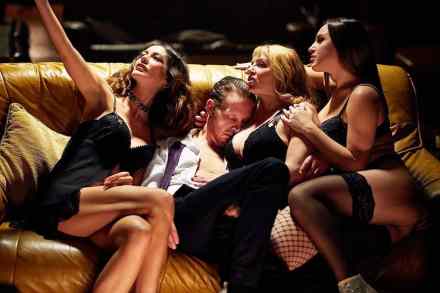
How do you screw up a movie about Hunter Biden?

Hunter Biden is a great cinematic character: the loser son of an elite career politician who bounces between semi-powerful jobs on the strengths of his contacts and his name while inhaling mountains of drugs and banging prostitutes. How can you make a bad film about that? Well, somehow the creators of My Son Hunter have pulled it off. Produced by filmmakers Phelim McAleer and Ann McElhinney, directed by Robert Davi, starring British actor cum right-wing commentator and Reclaim party founder Laurence Fox and distributed by Breitbart, the movie will please only people whose politics have compelled them to do so. https://www.youtube.com/watch?

Amazon’s The Rings of Power is a betrayal of Tolkien’s vision

I had been so looking forward to seeing The Rings of Power. For all the wrong reasons, of course. In the months leading up to its release on Amazon, it had been hailed – largely on the basis of rumours and trailers – as an epic disaster, perhaps the most cherishably dreadful travesty in the history of screen fantasy. Sadly, in this, as in so many other areas, The Rings of Power is a massive disappointment. For example, if you were hoping to see the world’s least funny comedian Lenny Henry die a death as the Tolkien realm’s first ever black hobbit, you’re going to feel cheated: his acting is perfectly OK and anyway you’re so distracted by his Irish accent you don’t really notice the gratuitous diversity casting.

Why must film delight in making us feel stupid?

‘What did the rampant chimp have to do with any of it?’ I squawked in bewildered disappointment to a friend at the end of Nope, the long-awaited third film from Oscar-winning writer-director Jordan Peele. I had hastened in great excitement to see Nope on the first day of its cinema release, hoping for a work that would rival Peele’s sparkling debut Get Out in its idiosyncratic mash-up of razor-sharp social commentary and horror. Instead, I paid £14.20 to sit through 130 minutes of barely explained peril that were resolved in a manner that was even less clear. Peele, I concluded sadly, had crossed over to the dark side of artists who appear to believe that it is fashionable to be incomprehensible.

How to spend a weekend in Riga

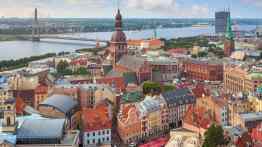
In Ratslaukums, Riga’s central square, there is an ugly brutalist building which encapsulates the contested history of Latvia’s beautiful, battered capital. This modernist eyesore was erected in 1970, when Latvia was part of the Soviet Union. It was built as a museum dedicated to Lenin’s crack troops, the Red Latvian Riflemen, who helped him overthrow the Tsar and win the resultant civil war. Without them, the Russian Revolution might have been stillborn. Today the content of this museum is completely different. The only relic of the Latvian Riflemen is the Soviet statue in the street outside.

The rise of the ‘neo-Geo’ country pile

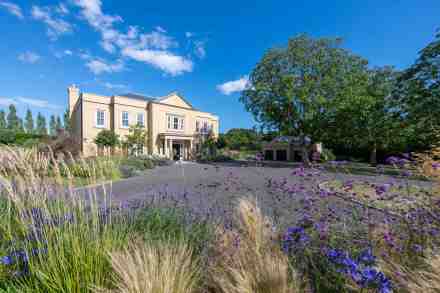
The Queen’s wedding gift to Prince Andrew and Sarah Ferguson in 1986 was a brand new 12-bedroom house in the Berkshire countryside. Sunninghill Park was an unfortunate mash-up of architectural styles, from its Tudor-ish chimneys to its vaguely Arts and Craftsy roofline and the monumental columns flanking its entrance. And how we laughed. It was the first time a royal had lived in a new build since Queen Victoria’s son Prince Albert moved into Bagshot Park in Surrey in 1879. The Duke and Duchess of York’s property was instantly nicknamed ‘SouthYork’ thanks to its resemblance to Southfork, the Ewing family ranch in Dallas.

Trump and the art of compromising material

When the FBI raided Donald Trump’s Mar-a-Lago estate, they found a file titled ‘Info re: President of France’. Many have speculated (with no little encouragement from Trump himself) that it contains illicit details of Emmanuel Macron’s sex life.  Whatever the truth about this particular cache, political kompromat has long been a source of great drama – both on and off screen. Some bring it upon themselves – Gary Hart blew his chances of securing the US Democratic presidential nomination in 1988 by inviting reporters to dig up dirt on him (‘Follow me around, put a tail on me. You'd be very bored’).

Order, order: MPs’ favourite restaurants

Westminster is often described as a village, and like most villages it has a clutch of good pubs and a decent curry house down the road. But beyond that the area isn’t overly blessed with places to eat, drink and be merry. There’s little in the way of bars (except in hotels and the Palace of Westminster itself), let alone nightclubs. The closest of those is in Embankment – Players and Heaven are favourites (though such is the paucity of choice that Michael Gove clearly felt the need to go all the way to Ibiza to bust his moves). As for restaurants, the slim choice means there is a small group of favoured haunts, and you can be confident that there’ll be a table of political friends (or rivals) a mere onion bhaji’s throw away.

The problem with Netflix’s Indian Matchmaking

On a recent trip from London to New Delhi, I found out that an acquaintance I see once or twice a year had pulled out of her wedding just 24 hours before the ceremony. An almighty row? Infidelity? Good old-fashioned cold feet? No – her family had simply decided they weren’t happy with the groom and decided to pull the plug. Welcome to the world of arranged marriages. As a woman who was born and grew up in India, arranged marriages – those planned and agreed by the families of the couple, rather than due to the romantic inclinations of the couple themselves – have never made sense to me. But they remain the norm in many South Asian communities. In a 2018 survey of more than 160,000 Indian households, 93 per cent of married couples said theirs was an arranged marriage.

I’ve seen the future of AI art – and it’s terrifying

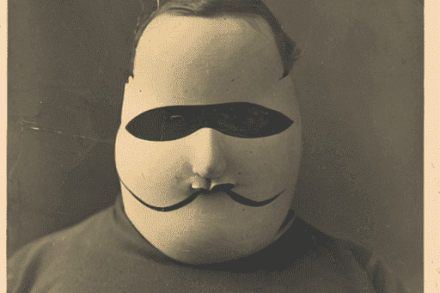
A few months back I wrote a Spectator piece about a phenomenal new ‘neural network’ – a subspecies of artificial intelligence – which promises to revolutionise art and how humans interact with art. The network is called Dall-e 2, and it remains a remarkable chunk of not-quite-sentient tech. However, such is the astonishing, accelerating speed of development in AI, Dall-e 2 has already been overtaken. And then some.  Just last week a British company called Stability AI launched an artificial intelligence model which has been richly fed, like a lean greyhound given fillet steak, on several billion images, equipping it to make brand new images when prompted by a linguistic message.

Why shouldn’t men date younger women?

Toyboys are back, apparently. Over the past few months there has been a flurry of middle-aged women crowing about the joy of dating younger men. One author in her mid-forties extolled the virtues of having not one but three lovers half her age. In a piece explaining that ‘younger men are having a cultural moment’, a thirty-something writer described a first date apologising for his scruffy appearance because he’d ‘cycled straight from school’. These women claim it’s liberating, empowering, confidence-boosting and a lot of fun, and even brag about younger men being far better in bed than their older counterparts. And presumably all of this works both ways – so why are we less understanding when men choose younger partners?

In praise of British lamb

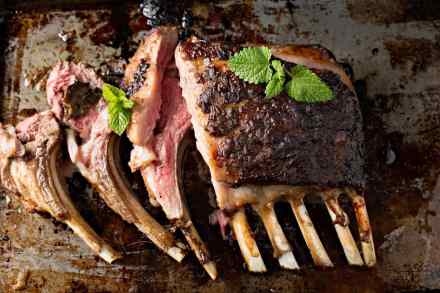
In one of Roald Dahl’s lesser-known short stories, ‘Lamb to the Slaughter’, the guilty Mrs Maloney tempts police officers into enjoying a spot of supper while they’re at her house hunting for the weapon used to kill her husband. That's the hell of a big club the guy must've used to hit poor Patrick, one of them was saying. The doc says his skull was smashed all to pieces just like from a sledgehammer.That's why it ought to be easy to find.Exactly what I say.Whoever done it, they're not going to be carrying a thing like that around with them longer than they need.One of them belched.Personally, I think it's right here on the premises.Probably right under our very noses. What you think, Jack?

How to make a true apple strudel

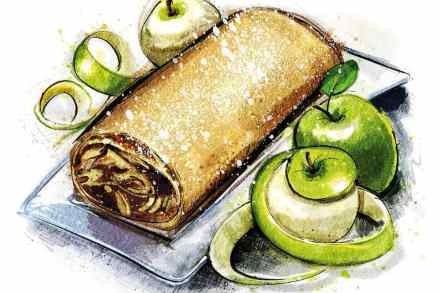
It’s possible that, like me, your first encounter with the Grande Dame of the Austrian pastry world, the apfelstrudel, was not in fact in one of the famed Viennese grand cafés, but rather from the freezer aisle at the supermarket. If it was anything like mine, it was probably a latticed, puffed version; the one I remember from childhood had blackberries mixed into the apple, which peeked through the holes in the pastry. I have no interest in denigrating our Sunday lunch pudding staple. In fact I loved it, served with thick, cold custard, straight from the carton. But it is fair to say that a true apple strudel is a little different. Strudels – meaning a filled, enclosed layered pastry – can be sweet or savoury, but the apple version is by far the most famous.

Carol Vorderman: My maths manifesto for the nation

A glittering TV career, an MBE, various honorary degrees, tens of thousands of TikTok followers and the only person to win the (now cancelled) Rear of the Year award multiple times. There are many accolades that Carol Vorderman has been afforded during her 40-year career, yet few mean more to her than her claim to having possibly taught more people alive in Britain than anyone else. Through books, tapes and online classes, the former Countdown star has – according, at least, to my remedial fag-pack maths – educated more than a million people since the late 1980s. She started when the national curriculum was introduced in 1988 with instructional classes on VHS, and she’s subsequently taught generations of adults and children.

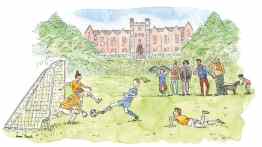
The long game: independent schools are coming round to football

Until recently, football was viewed with suspicion in independent schools – the poor relation to its big-hitting step-brother, rugby. That well known saying about football being ‘a game for gentlemen played by hooligans’ seemed to sum up independent schools’ attitudes perfectly. Well into the new millennium, promising young players would be cajoled into playing rugby or hockey: anything rather than – shock, horror – football. This aversion helps explain why professional footballers are usually state-educated. England’s rugby coach, Eddie Jones, may have lambasted public schools for ruining English rugby; he could never have said the same for football.

Why I’ve quit teaching

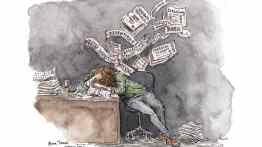
For the past four years I have worked at an academy in Hackney. I was deputy head of maths for three of those years, and head of maths for the final term, managing 16 staff. After nearly a decade teaching in the state sector, I’d finally worked my way up to a well paid and respected position. But this summer I walked away from it. I’m not alone. The profession is haemorrhaging talent: data from the National Education Union published earlier this year revealed that 44 per cent of teachers intend to leave the profession by 2027. Retention in London schools is particularly poor. The reasons why teachers quit are complex, but there are a few common themes. One is exhaustion.

School portraits: snapshots of three notable schools

Trinity School, Croydon Headmaster Alasdair Kennedy says he wants students to leave the school ‘without any sense of entitlement, but with a humility that acknowledges the fact there is always more to learn and others to learn from’. The former grammar school, which accepts boys from the age of ten, now offers a co-educational Sixth Form, in a state-of-the-art building opened by Boris Johnson in 2012. More than half of parents do not pay the full fees of £20,437 per year due to scholarships and bursaries. This summer, 84 per cent of students got into their first choice university, with almost half of all grades awarded being A*s.

How to get through a school reunion

T here’s no need for a mirror at school reunions. Just look all around you to see the cruel effects of anno domini on your old contemporaries – and don’t fool yourself that you alone have miraculously dodged the hair-thinning, waist-expanding horrors of middle age. Is that really the semi-divine girl who scored a modelling contract in her first term in the sixth form and was in a Nivea advert in Elle? Can that be the Brad Pitt of the Remove – the one who had sex before first lesson every morning? Where has the plumpness in her dewy lips fled to? How far back along his scalp have the golden ropes of hair retreated? I’m certainly not one to speak.

The struggle of summer with a disabled child

Day one of the school holidays this year set the tone for the sprawling six weeks ahead. My teenage son rolled out of bed at a leisurely 1.05 p.m., by which time my daughter had smashed her head repeatedly against the kitchen wall, bitten my leg and trashed our living room. And so began a typical ‘summer break’ for a family with a disabled child. The gap between holiday provision for children with, and without, special needs and disabilities (SEND) during summers has long played out under my roof because I have one of each. Before my non-disabled son reached an age when he could sleep in all morning, I would enrol him in play schemes and clubs or lean on loving grandparents to entertain him while his dad and I worked; the typical summer juggle of so many parents.

Primary dread: the horror of school plays, fêtes and trips

Primary school drama has a rule which is a variation on Chekhov’s gun principle: if your child has a part in the school play they won’t get to speak until the end of the final act. And you’ll have to sit through the part of every other child before their moment finally comes. You will have to go. You will have to go and sit on a very small chair for a very long time, watching other people’s children perform ineptly before you get your ten seconds of joy at your own darling’s turn (which you won’t get to see properly anyway as you’re tasked with filming it).

Gift of the gab: all children should learn public speaking

What is the secret to a billionaire’s success? When Warren Buffet was asked how young people could mimic his wealth, he said: ‘Hone your communication skills, both written and verbal… You can have all the brainpower in the world, but you have to be able to transmit it, and the transmission is communication.’ Buffet knows this is easier said than done. Early in his career he’d vomit before every speech. After graduating from Columbia Business School and the New York Institute of Finance, he took a public speaking course from Dale Carnegie. ‘It changed my life,’ he says. It’s the only diploma displayed on his office wall. Other businessmen also rank public speaking as a key driver of success.

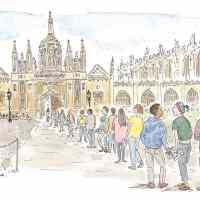
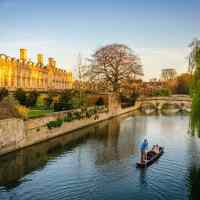
The truth about getting into Oxbridge

Liz Truss suggests that all students who score straight A*s at A-level should be interviewed by Oxford or Cambridge. They, and their parents, might well wonder why they would not be summoned for an interview if they can achieve such impressive results. But it’s not that simple. Post-A-level candidates are much fewer in number than pre-A-level ones, with most students offered places on the condition that they achieve the required grades. So various options have now been offered to address this. In one, all pupils predicted such grades would be eligible for an interview ahead of sitting their exams. However, it’s hard to see how teachers would resist the temptation to make generous predictions in order to catapult their pupils into interviews.

The Oxbridge Files: which schools get the most pupils in?

Oxford and Cambridge have released figures showing how many offers they gave to pupils from schools in the 2021 Ucas application cycle. We have combined the figures in this table. It shows how well state grammars and sixth-form colleges compete with independent schools. Over the years, both universities have increased the proportion of acceptances from state schools: 69 per cent, up from 52 per cent in 2000. Of the 80 schools, 35 are independent, 21 grammar, ten sixth-form colleges, seven selective sixth-form colleges, six comprehensives or academies, and one is a further education college. (Schools are ranked by offers received, then by offer-to-application ratio.

A toast to the field marshals

August may not be the cruellest month but it is often the most dangerous one. Now that it is over, and rosé is giving way to grouse, we can console ourselves. There has not been a world war. We merely face a number of middle--ranking crises. Over fortifying bottles, I was chatting about such matters with friends who had known the late Peter Inge, a dominating figure even by field marshal standards. It was said that in his company, brigadiers’ coffee cups would rattle with tension. I once taxed him with the contrast between his reputation as a martinet’s martinet and his geniality in private life.

Women artists have been ignored for far too long

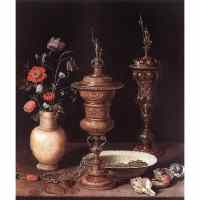
At first glance, Clara Peeters’s ‘Still Life with a Vase of Flowers, Goblets and Shells’ (1612) appears to be just that. Carefully arranged on a wooden tabletop, the collected objects are in conversation, the nubby curves of the shells echoing the ribbed neck of the stone vase, their dusky and rosy hues matching the open and squeezed shut buds. But look closer at the gleaming gilt goblet on the right and you’ll notice that the Flemish artist has smuggled tiny self-portraits into the polished roundels – a clever bid to avoid the misattribution of her painting to a man, perhaps, and a form of self-assertion in the male-dominated art world.

‘Good’s never going to triumph’: the makers of BBC show Industry on bad bankers

Finance in screen fiction is a realm of monsters. From Gordon Gekko in Wall Street and Patrick Bateman in American Psycho to the crazed party animals of The Wolf of Wall Street, the arena of deal-making is portrayed – particularly in America – as winner-take-all without trace of empathy or redemption. Industry – the British-made television drama that follows a group of young bankers competing on a City trading floor whose second series airs on BBC1 later this month – is a more subtle example of the genre. Its characters are not monstrous but they are all flawed, ruthlessly transactional in their dealings with each other, and frankly hard to like. There aren’t any nice guys.

The rise of the ‘Denis dad’

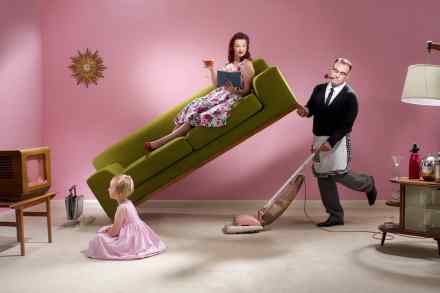
Pity the ad man of 2022. Jokes about men and women and the differences between them are so very tempting, but can easily get a brand into trouble. Until not so long ago, the safest way to poke fun at family dynamics was through the figure of the incompetent dad. A 2012 American ad for Huggies nappies challenged five dads to ‘the toughest test imaginable’: looking after their babies solo. It must have seemed like a good idea at the time, given that the useless dad appears in almost every sitcom of the past half century. But Huggies was forced to pull the campaign after complaints from insulted fathers and, ten years on, my guess is that no other brand would attempt anything similar.