Louise Perry

Louise Perry

Louise Perry is the author of The Case Against the Sexual Revolution and host of the podcast Maiden Mother Matriarch.

Should we fear falling birth rates more than overpopulation?

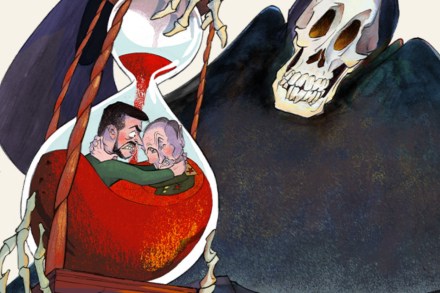
In 1980, two American academics made a bet. Julian Simon, professor of economics at the University of Illinois, predicted that the prices of chromium, copper, nickel, tin and tungsten would fall over the coming decade. Paul Ehrlich, professor of population studies at Stanford University, predicted that prices would rise. What Simon and Ehrlich were really betting on was the future of humanity – specifically, how many souls could the good ship Earth carry without running aground? By 1980, the global population had seen a period of enormous growth: doubling between 1800 and 1930 to reach two billion people, and then doubling again to reach four billion by 1975. Every sign suggested that this rate of growth would only accelerate, and Ehrlich was among those who saw catastrophe looming.

Porn Britannia, Xi’s absence & no more lonely hearts?

From our UK edition

47 min listen

OnlyFans is giving the Treasury what it wants – but should we be concerned? ‘OnlyFans,’ writes Louise Perry, ‘is the most profitable content subscription service in the world.’ Yet ‘the vast majority of its content creators make very little from it’. So why are around 4 per cent of young British women selling their wares on the site? ‘Imitating Bonnie Blue and Lily Phillips – currently locked in a competition to have sex with the most men in a day – isn’t pleasant.’ OnlyFans gives women ‘the sexual attention and money of hundreds and even thousands of men’. The result is ‘a cascade of depravity’ that Perry wouldn’t wish on her worst enemy.

Why OnlyFans has young British women in its grip

From our UK edition

The porn star Bonnie Blue offers a straightforward explanation for her decision to join OnlyFans. She was in her early twenties, married to her teenage sweetheart, pursuing a career in recruitment and living in Derbyshire, the county of her birth. As she told an interviewer last year: ‘I used to work an office job, nine to five, sit in rush hour, get given 20 days’ annual leave. And for a while I’d accepted that. I was like “OK, this is what life is. This is as good as it can get.”’ But Blue (whose real name is Tia Billinger) wondered if life might not have more to offer her.

Chambers of horrors, the ‘Dubai-ification’ of London & the enduring obsession with Diana

From our UK edition

37 min listen

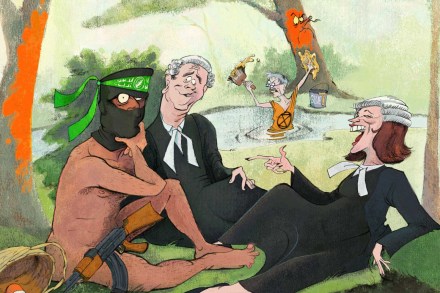
This week: the left-wing radicalism of Garden CourtGarden Court Chambers has a ‘reassuringly traditional’ facade befitting the historic Lincoln’s Inn Fields in the heart of London’s legal district. Yet, writes Ross Clark in the cover article this week, ‘the facade is just that. For behind the pedimented Georgian windows there operates the most radically effective cell of left-wing activists in Britain’. Ross argues that cases taken on by Garden Court lawyers raise questions of impartiality. Is this just another example of ‘law’s expanding empire’ over the domain of elected politicians, as former Supreme Court judge Jonathan Sumption has warned? The Spectator’s editor, and former Justice Secretary, Michael Gove joined the podcast to discuss.

Where the young rich flee to

From our UK edition

If Elon Musk gets his way, and Mars becomes our newest New World, I had always assumed that the people who emigrated there would be rather like the Pilgrim Fathers – ascetic, homogenous, insular and highly religious. The sort of group that has historically had the psychosocial qualities necessary for withstanding a long voyage to a dangerous frontier. My money is still on the Pilgrim-types to lead the way, at least in the early waves. But I did wonder, while sitting in its airport last week, if interplanetary human civilisation might one day end up looking something like Dubai. Dubai operates rather like a space colony. It depends on desalinated sea water and imports almost all of its food.

The Rotherham cover-up

From our UK edition

You all know what I mean by the word ‘Rotherham.’ In The Spirit of Terrorism, Jean Baudrillard observes that there is no true synonym for ‘9/11’ – no one refers to the ‘World Trade Center and Pentagon attacks’ or the ‘Bin Laden attacks’, but just to the date itself, typically in its abbreviated form. Perhaps, he suggests, this is because the events of that day were so shocking, and so significant, that they must be described abstractly. We cannot find the right words.  There is no true synonym for ‘Rotherham’, either. ‘Child sexual exploitation’ (CSE) is the sterile term favoured by most institutions. ‘Child sexual abuse ring’ or ‘grooming gangs’ is more common in the media. None of these terms are satisfactory.

The quiet return of eugenics

From our UK edition

Here follows a non-exhaustive list of my genetic flaws. I am short-sighted, more so as I age. I have bunions, dodgy knees and even dodgier shoulders. I have asthma. My skin blisters easily. My hair started going grey when I was in my late teens. I have zero talent for foreign languages, running or music. I am prone to nightmares, as well as to depression and anxiety. Relatively mild flaws, as they go. But still, these aren’t traits I’m eager to pass on. Our three-year-old already shows a tendency for nightmares that sometimes makes me wince with guilt. Not that it’s my fault, of course. We don’t get to choose which of our genes we pass on. Every conception is a roll of the dice.

Should the ‘Waspi women’ be compensated?

From our UK edition

13 min listen

The Parliamentary Ombudsman's report on raising women's state pension age in line with men's has been published. It details that women born in the 1950s hit by the state pension age change are owed compensation and has advised that the government should 'do the right thing'. Will the 'Waspi women' end up disappointed?  Michael Simmons speaks to Isabel Hardman and Louise Perry, host of the Maiden Mother Matriarch podcast.

Britain is soft on crime

From our UK edition

I’m not actually a journalist, although I’m often described as such. Along with all the other critics, polemicists, and columnists, I should more accurately be described as a ‘commentator’, since my job is to sit around and opine.  Real journalists do exist, but they are a dying breed. When newspapers and magazines started to move online at the beginning of this century, it was discovered that the public weren’t very interested in journalism. Outlets realised that it was the commentary that actually attracted clicks, along with porn and funny cat videos, and so the commentators were rewarded while many of the journalists lost their jobs.  Over the last two decades, even big legacy outlets have ditched their investigative teams and foreign bureaus.

Alexa, do you love me?

From our UK edition

My husband and I got a Peloton bike for the usual reasons: because we were time-poor, money-rich and feeling fat. And we kept using it for the usual reason: because we wanted to please the gorgeous ghosts in the machine. The American fitness brand Peloton employs some of the most beautiful, athletic and charismatic people ever to have lived. Their job is not actually to teach an effective class to the viewers at home on their stationary bikes, or to make their users healthier and slimmer (I have accomplished neither). Rather, it is to give an impression of warmth and intimacy while staring at a silent camera lens in an empty room. My favourite coaches (since you asked) are Tumi, Ally, Emma and Denis, the last of whom has a particularly passionate following among older ladies.

Young people don’t even know they’re being taken for a ride

From our UK edition

Travelling home on the train last week, I heard the dulcet sounds of political discourse drifting towards me across the carriage. The words ‘social housing’ were followed soon after by the word ‘moron.’ I removed my headphones and attended more closely.  The speakers were two men aged about 30, whipping themselves up into a lather over the suggestion that there ought to be less social housing in central London. They seemed to be genuinely astonished by an argument they'd come across which pointed out that social housing tenants are dependent on the state for subsidy. ‘Moronic!’ they said, ‘insane!

Barbie’s world: the normalisation of cosmetic surgery

From our UK edition

39 min listen

This week: Ahead of the release of the Barbie movie, Louise Perry writes in her cover piece about how social media is fuelling the cosmetic surgery industry. She argues that life in plastic is not, in fact, fantastic. She joins the podcast alongside the Times’s Sarah Ditum, author of the upcoming book: Toxic: Women, Fame and the Noughties, to discuss the normalisation of plastic surgery. (01:11) Also this week: In anticipation of the BBC Proms Philip Hensher writes in The Spectator that classical music has gone from being a supreme cultural statement, to just another curious musical genre.

Barbie’s world: the normalisation of cosmetic surgery

From our UK edition

If Barbie were a real woman, she wouldn’t be able to walk. Her enormous head would loll forward on her spindly neck, her tiny ankles would buckle under her elongated legs, and she would be forced to move about on all fours. In the upcoming Barbie film, Margot Robbie nails her character’s toothy smile and blonde bouffant, but even she cannot come close to imitating Barbie’s monstrous proportions. More adventurous imitators have tried. It’s rumoured that the so-called ‘Eastern Bloc Barbie’ – a 37-year-old Moldovan by the name of Valeria Lukyanova, one of several plastic surgery addicts dubbed ‘human Barbies’ – had ribs removed and her eyelids trimmed in her efforts to look as much as possible like the real (or, rather, unreal) thing.

The men who fell to earth: the tragedy of Sheen’s stowaways

From our UK edition

Early one Sunday in 2012 a man fell out of the sky over Sheen, an affluent suburb of south-west London, and landed in the middle of a quiet residential road. ‘I heard a monstrous bang. I thought someone had been hit by a car,’ one resident told a local newspaper. ‘Two fellows going to church said there’s a dead body in the street.’ The man was José Matada, a 27-year-old from Mozambique, although it would take several months for the police to discover his identity. Matada had a small sum of cash in his pocket and a mobile phone. The only message the police were able to extract from it was a single text: ‘I need a favour.’ Matada’s was not the first body to fall on Sheen, which lies directly underneath the Heathrow flight path.

Modernity is making you sterile

From our UK edition

Cassava is a woody shrub native to South America. For people living in drought-prone tropical regions, it is a godsend: delicious, calorie-dense, and highly productive. The indigenous peoples of the Americas who first cultivated cassava are reliant on it and have developed an arduous, days-long process of preparation that involves scraping, grating, washing, and boiling the plant before it is eaten. At the beginning of the 17th century, the Portuguese introduced cassava to the Old World. But they did not import the ancient methods of processing, assuming that indigenous people were wasting their time. Progress swats away benevolent traditions because the usefulness of traditions can be subtle and hard to understand We do not always know why we do the things we do.

Womb service: the politics of surrogacy

From our UK edition

37 min listen

On this week's episode: In her cover piece for The Spectator, journalist Louise Perry questions whether it is moral to separate a newborn child from their surrogate. She is joined by Sarah Jones, head of SurrogacyUK and five time surrogate mother, to debate the ethics of surrogacy (01:07). Also this week: In the books section of the magazine Olivia Potts reviews several recent books all of which seem to warn against the dangers of our food system and what we are eating. She is joined by Henry Dimbleby, author of Ravenous: How to Get Ourselves and Our Planet Into Shape, to ask if anything is safe to eat these days (14:29).

Womb service: the moral dangers of surrogacy

From our UK edition

Last month, the Law Commission published its long-awaited report on the legal status of the surrogacy industry. It contained – as expected – one particularly alarming recommendation. Alongside various tweaks to payment and regulation processes, the Commission suggests a crucial change to the parental status of a baby born by surrogacy. At present, the woman who gives birth to the baby is considered to be that child’s legal parent, and the intended parents are obliged to apply for a parental order following birth. But if the Law Commission gets its way, the situation will be reversed. Although the surrogate will still have the right to object, the default presumption in law will be that she is not the child’s mother.

Why the next wave of feminism is conservative

From our UK edition

At a recent dinner, an MP told me a story that reveals a great deal about the current state of feminism. One of her constituents had come to her surgery in some distress. She had children at a local primary school, she said, and had been alarmed to discover that the school’s sex education curriculum contained explicit details that she considered wildly inappropriate. She was aware of the prevailing culture in which adolescents – particularly girls – are sexualised at an ever younger age, and she did not want that for her own children. But parents are increasingly powerless in the face of progressive schools, and not having been to university, this woman felt anxious. She was intimidated by the prospect of speaking with her children’s headteacher.

The Louise Perry Edition

From our UK edition

30 min listen

Louise Perry is a journalist, campaigner and author of The Case Against the Sexual Revolution. It offers a new guide to sex in the 21st century – rather than herald sex positivity as a good thing for women, she argues it has had negative consequences. Her work has been published in multiple news outlets including The Spectator, Daily Mail and the New Statesman. As a campaigner, Louise began her career working in a rape crisis centre and most recently, co-founded the think tank, The Other Half, a non-partisan organisation that champions the voices of women and families not heard in Westminster.