Andrew Cunningham

Dr Andrew Cunningham is a former GCSE examiner and has taught English at Bradfield College, Charterhouse, Radley College and North London Collegiate School.

What teachers really do over the summer holidays

From our UK edition

Already we’re deep in the school summer holidays. Hell for parents, who still have to keep their kids occupied for weeks on end; heaven for teachers, with all those weeks off. The biggest danger with so much time off is that, after a few weeks, your brain becomes addled For those of us fortunate enough to teach in independent schools, the holidays began on 1 July, which by now seems an age ago and we don’t go back to school until September. Two whole months off, on full pay. Long enough to forget about troublesome teenagers; long enough to dream dreams of new careers. A sense of space and peace that lasts... well, until A level results day on 17 August, when reality bites again. So what do we do with all that time?

Admit it, English wine isn’t worth it

From our UK edition

Sales of English wine are booming, soaring by nearly 70 per cent over the least two years, at least according to the industry body. There are now shelves devoted to English wine in just about every large supermarket.   I even tried a red wine by a local producer, who had better remain nameless. It tasted like a cross between cough medicine and Vimto Since I live in West Sussex, the heart of one of the English wine-growing regions, I feel I ought to like it. No fewer than three of the major wine-producers – Nyetimber, Nutbourne and Kinsbrook – are nearby. The daily dog-walk takes me through their huge vineyards and I try to take some interest in the grapes and how they’re faring (they currently look like tiny green berries).

How to see world-class opera for £11

From our UK edition

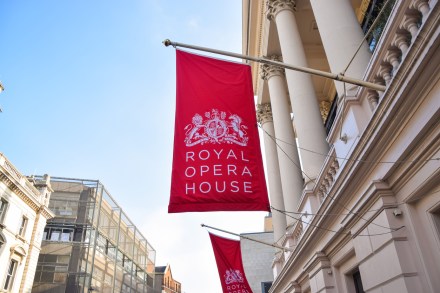
I’ve always been happy to splash out on attending all sorts of events – £80 on tickets for run-of-the-mill Premiership football matches; £120 for the ghastly experience of watching rugby in Twickenham’s concrete jungle; £60 to attend a concert by ancient rockers who’ve seen better days. As an English teacher, I’m also an avid theatre-goer – despite the fact that the last time I went to the theatre, to see a woke version of Henry V full of gratuitous swearing and cheap jibes at Brexit, it cost £55 for a restricted view.   But I’d always avoided opera, put off by its somewhat elitist image. And I’m not the only one – a survey for Classic FM revealed that many of us have never considered going, dismissing it as ‘too posh’ or too expensive.

Are boys’ schools a thing of the past?

From our UK edition

First Charterhouse, then Winchester – now Westminster. In the past two years alone, three of Britain’s most famous schools have recently turned, or are planning to turn, fully co-educational. How many more boys’ schools will follow?  One popular argument for the change is, as ever, that girls will be a ‘civilising influence’ upon teenage boys – especially in the light of the sexism exposed by the ‘Everyone’s Invited’ scandals. The more that teenage boys learn to study with girls and respect them, the less likely it is such scandals will be repeated. I taught at two traditional schools which turned co-educational in the 1990s, Uppingham and Cranleigh. Then, it was usually a shortage of numbers which triggered the move to take girls.

How to succeed in exams

From our UK edition

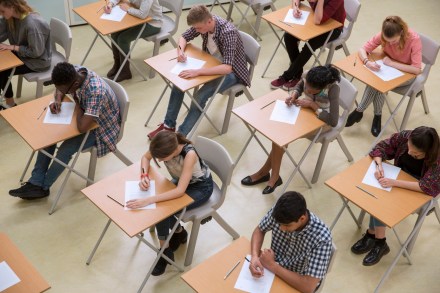
Exams start on Monday. Thousands of A-level and GCSE pupils will be swotting hard for them right now. Some will do well; others won’t. Knowledge and ability are the two obvious keys to success. But there’s another factor that’s often overlooked: exam technique. Having taught thousands of students of all abilities at several leading schools, I know this is a vital reason why some teenagers are more successful than others: they use the right exam techniques under pressure. So what are these techniques?  First and foremost, arrive early. Exams need a clear head and turning up at the last minute is certain to be stressful.

Bring back the handwritten school report

From our UK edition

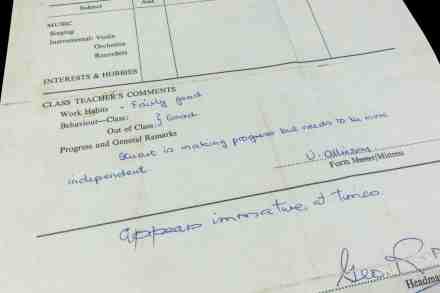
The end of term is here and parents up and down the country will be awaiting the arrival of their child's end-of-term report. But I hope they won’t be expecting too many pearls of wisdom from the impersonal emails that will ping into their inboxes shortly.   Ten or a dozen years ago (the exact date varied, school by school), in an act of educational vandalism, handwritten school reports were abolished. Edicts were issued by school ‘senior management teams’ and grudgingly, reluctantly, teachers put their fountain pens and little bottles of Quink back into their desks, never to be taken out again.   The personal touch in the reporting process disappeared with them.

What teachers really want for Christmas

From our UK edition

As the end of term approaches parents may be wondering what to buy their child’s teacher for Christmas. It’s the season of goodwill, after all. It’s also a golden opportunity to win a way to Sir or Miss’s heart, so they’ll continue to take good care of little Olivia or Oliver in the new year. The days of apples left on desks are long gone, so what to give teacher might cause some confusion. Money is tight this year, an added complication – although at some of the independent schools where I’ve taught gifts seem to become more extravagant each December. So what kind of presents do we teachers really want? The short answer, especially at the end of a long, tiring term is: ‘Something alcoholic, of course – preferably wine or designer gin.

The long game: independent schools are coming round to football

From our UK edition

Until recently, football was viewed with suspicion in independent schools – the poor relation to its big-hitting step-brother, rugby. That well known saying about football being ‘a game for gentlemen played by hooligans’ seemed to sum up independent schools’ attitudes perfectly. Well into the new millennium, promising young players would be cajoled into playing rugby or hockey: anything rather than – shock, horror – football. This aversion helps explain why professional footballers are usually state-educated. England’s rugby coach, Eddie Jones, may have lambasted public schools for ruining English rugby; he could never have said the same for football.