Spectator Life

Spectator Life

An intelligent mix of culture, style, travel, food and property, as well as where to go and what to see.

The books Spectator readers take on their summer holidays

Recently, Spectator writers shared their all-time favourite summer holiday reads. In response, Spectator readers have been offering their own recommendations for what books to take to the beach… 'You might try Helen Thompson’s Disorder: Hard Times in the 21st Century, a history of oil politics. It starts with the simple fact that in evolving from the steam to petroleum age, the old western powers no longer had direct access to fuel and faced a growing dependency on oil from Russia, initially, and then the Middle East. The US, of course, is an exception as it has domestic resources – but foreign policy errors led to it being the guarantor of petroleum resources to the rest of Nato.


What I learnt on my grown-up gap year

Earlier this year, quite unexpectedly (and for personal reasons too tedious to share), I was forced to be outside the UK for ‘a while’. At the outset, I had no idea how long my exile might be: maybe weeks, maybe months. To add to the ambiguity, I had no particular place to go, except two already arranged travel writing trips of a week each (in the USA and Greece). So I decided: why not make a pleasing virtue of necessity? Why not, at the age of 58, do a geriatric version of a gap year, wandering freely about the globe? And that is exactly what I did. I packed my suitcase, headed out, and let whimsy and the weather dictate where I went next.

We haven’t heard the last of Johnny Depp vs Amber Heard

The last thing I wanted to do was write about the Johnny Depp and Amber Heard circus. Really. For months I’ve done everything humanly possible to avoid the social media cults, the TikTok clips and my mother – who was so enthralled by the case that she cancelled numerous plans so that she could watch the live trial, and was temporarily banned from Facebook for commenting that she would give Heard a slap if she ever came across her, which is probably unlikely. But after the latest development in the story, which happened after the judge ruled that Heard was in fact defamatory towards Depp, awarding him around £12 million in damages, I couldn’t stay quiet any more. And neither could a number of celebrities.

Why Harry Hill’s little green aliens are popping up all over London

Sitting in a posh office overlooking the Royal Academy, the comedian Harry Hill is deploying one of his lesser known modes: introspection. ‘I suppose I’m one of a growing number of celebrities who do art,’ he says, one hand fiddling with his trademark oversized shirt-cuff. His point – which he returns to several times – is one of definition: as much as he enjoys making art, and as much art as he makes, he can never quite see himself as an artist. In his defence, he isn’t alone. After more than a decade as the face of one of the most-loved comedy shows this century, Hill can probably count himself among the ten most recognisable comics in Britain.

Beware the cocktail bore

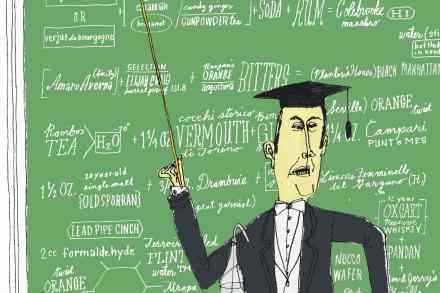
The man at the posh London bar stood with our drinks but wouldn’t give them to us. He had a lecture to deliver first, for cocktail culture – or ‘mixology’ as the craft is now known – is nothing if not didactic. As I looked enviously out at the people with pints of beer across the way, I wearily reflected on how the message to the customer has hardened in the years since cocktail bars with American ambitions crossed the pond. It is: the £19 you’re paying for the drink isn’t enough. You need to be quiet and listen, for you’re not just a drinker: you’re a supplicant. Be that as it may, I felt my eyes violently glaze over as the man redescribed, in even more verbose detail, what we had already pored over on the menu.

The £15m Surrey mansion where Rudolf Hess was held prisoner

The restoration of any run-down English country mansion is likely to involve extensive re-roofing, re-plumbing and re-wiring. Only one, however, is likely to uncover microphone wires hidden deep within walls by MI6, or involve the polishing of a grand, three-storey oak staircase over which Hitler’s top henchman, dressed in full Nazi regalia, tried to throw himself (failing when he got his leg stuck in the balustrade). Mytchett Place, between Ash Vale and Frimley Green in Surrey, is a sprawling 23,000 sq ft Victorian house that has just hit the sales market for £15 million.

London’s best martinis with a twist

The martini is experiencing something of a renaissance. This old standard is appearing front and centre on menus across London, reworked to showcase new flavours and techniques. Within the simple framework of clear spirit, vermouth, an optional dash of bitters and an olive or twist, bartenders are finding infinite room for creativity. Not only is this a refreshing antidote to the tiresome orthodoxy that has historically dogged the martini – ‘Just wave the gin in the direction of France!’ – it’s further proof that London is the global capital of the cocktail. The martini may not have been invented here, but our bartenders are certainly showing the world what this old classic can do.

Who needs a hosepipe? The watering cans worth investing in

In the hot, dry summer of 1976, I was working as a gardening student at Arboretum Kalmthout in Belgium. The temperatures in July were frequently 40°C by lunchtime, so we worked in the early mornings and through the evenings. My job was to drive a tractor pulling a trailer, on to which were placed dustbins full of water drawn from a borehole. These were ferried around the grounds so we could water rare, precious and drought-hating rhododendron and tree species. The owners of the garden were white-faced with apprehension all that month but the stratagem worked and we saved the lot. Something of that anxiety comes back to me, for my garden is at risk of losing plants from drought. We have had a measly 0.

The bizarre history of London’s private members’ clubs

At the height of the IRA’s terrorist campaign on mainland Britain in December 1974, a bomb was lobbed through the front window of the In & Out – the Naval and Military Club, then in Piccadilly. Exploding, it knocked everyone off their feet, including the barman Robbins, and trashed the Long Bar. But in the silence that followed came the unwavering request of senior member Commander Vaughan Williams: ‘Another pink gin please, Robbins.’ A subsequent cartoon in the London Evening Standard depicted the scene of devastation (no one was injured or killed) with a mess-jacket-wearing member calmly wondering what the barman had put in his pink gin: ‘But I’ll have another!

How the travel industry convinced us we needed holidays

In September 2019, Thomas Cook filed for compulsory liquidation, leaving 600,000 customers stranded abroad. It was a sorry end to a company that had lasted 178 years and survived both world wars. Founded by a Baptist preacher who began organising railway trips to Midland cities for local temperance societies, the company grew into one of the largest travel agencies in the world, thanks to the transformation of tourism from an activity for the idle rich to an experience open to all. This opening up of travel is the story Lucy Lethbridge tells in Tourists, taking the reader from the last years of the Grand Tour to the first years of the package holiday.

What Richard Thompson can do for English cricket

Well alleluia, English cricket doesn’t seem able to put a foot wrong these days. After hitting three cherries with Rob Key, Brendon McCullum and Ben ‘Bazball’ Stokes, they may well have struck the jackpot with the appointment of Richard Thompson, the Surrey chairman, to take over as head of the English Cricket Board, something this column has long advocated. Thompson has plenty going for him: uniquely perhaps among the game’s administrators he is both traditional and forward thinking. Traditional enough to have realised the Texan conman ‘Sir’ Allen Stanford, with his million-quid pile of money on the Lord’s outfield, was a wrong-un.

In defence of Fergie

My first reaction to anyone buying even a bog standard two-up-two-down terrace in London is a fake congratulations through gritted teeth. So when it was reported last week that the Duchess of York, ex-wife of disgraced Prince Andrew, had bought a £5 million mews house in Mayfair, I was surprised that I didn’t share the outrage of the general public. Sure, she does very little, spending her days lounging around in Royal Lodge, the Grade II-listed Windsor property she shares with her ex. But there’s a part of Sarah Ferguson that is totally relatable, and as she has tried – and often failed – to navigate the inner workings of the royal establishment, I have watched her with admiration.

A diplomatic sweetener: the power of marmalade

It took Paddington Bear to solve the age-old mystery of what the Queen keeps in her handbag. When Her Majesty pulled out a marmalade sandwich during the pair’s sketch at the Platinum Jubilee concert this summer, it did more than just tickle the audience. It also served to remind us of our national love affair with marmalade. Long before Paddington developed a taste for it, the preserve had been a stalwart of British popular culture, from Jane Austen (where Lady Middleton applies marmalade as balm for her daughter’s scratch) to Evelyn Waugh (where, in Brideshead Revisited, Charles Ryder eats ‘scrambled eggs and bitter marmalade with the zest which in youth follows a restless night’) – not to mention Samuel Pepys, Agatha Christie and Ian Fleming.

Off the books: there’s more to Hay-on-Wye than the literary festival

Chances are you will have heard of Hay-on-Wye. You might even have been. It’s the town on the Anglo-Welsh border where more than 30 years ago a man called Peter Florence began what has become the world’s most famous literary festival. Now some 200,000 people descend on the place each May and June, and for 11 days it feels like the centre of the literary universe, with hordes carrying tote bags traipsing hither and thither and pubs and restaurants overflowing like Venice in high summer. If that’s what floats your boat, then get stuck in. But for my money, Hay is worthy of a visit in its own right – and preferably when all those other visitors (not to mention ex-presidents and Booker prize-winners) aren’t there.

Yours for £45,000, the car that drove Margaret Thatcher into history

‘A new girl drops in at the palace,’ announced the London Evening News on the front page of its ‘election special’ of 4 May 1979. The accompanying image showed a beaming Margaret Thatcher (pre-implant teeth in evidence) waving from the rear seat of a ministerial car, on her way to meet the Queen and receive her official invitation to form a new administration. Another ‘new girl’ (or boy?) might be dropping in at the palace soon – but if he or she wants to do it in the same car, it will cost them.

Heat 2 is a classic of the crime genre

Of all the things in the world of entertainment that might get me excited, 'a new Michael Mann project' tops the list. A film writer and director, Mann not only is a talented storyteller, but has mined the criminal underworld for his subject matter, from his debut feature in 1981, Thief. Since then, he’s rarely veered from criminal elements in his subject matter (Last of the Mohicans and Ali being the two notable exceptions). He is the great auteur of the crime genre; in other words, he makes arthouse films for dads. In 1995 Mann released what many consider to be the greatest crime film ever made.

Beyoncé and the pornification of pop

Beyoncé Knowles has always been sexy: naturally and consciously so. But her sexiness – those astonishing bottom-swooshing dance moves; the gleaming, undulating chest; the ever-changing, lustrous locks – sat alongside a moral substance that grew as her career progressed. She weighed in on politics, raising $4 million for Barack Obama and singing at his first inaugural ball. She weighed in on sexual morality, telling women in one of her most iconic songs that their man ought to, if he was to be taken seriously, ‘put a ring on it’. She is a committed Christian, having grown up in a Methodist household and frequently spoken of her faith.

From jellyfish crisps to sea moss smoothies: are you brave enough to eat the new sea food?

Dipping my toes in the Irish Sea on a family holiday last week, I encountered something slimy, muddy-brown and decidedly squelchy. I managed to flick it off my foot with minimal squealing and thought no more of it. But, looking back, perhaps I missed a lucrative opportunity – or a tasty treat for the kids’ dinner. For my beach find was in fact Irish moss, also known as ‘sea moss’ or ‘carrageen moss’ – the latest cult ingredient among experimental foodies, health-conscious celebrities and social media aficionados.

Has the Edinburgh Fringe lost its edge?

Every August, thousands of comedians make the pilgrimage to Scotland for the Edinburgh Festival Fringe. By the end of the month, those who manage to stand out in this crowded field (and it is a very crowded field) might have Live at the Apollo or Netflix calling, or maybe even a sitcom commission. But this year, with performers facing hefty registration fees, rent more expensive than a luxury foreign holiday and exorbitant marketing campaigns, all in the midst of a cost of living crisis, more and more are asking: has the Fringe lost its edge? As the festival kicks off for its 75th year, comedian Vittorio Angelone says its culture seems to have changed.

The art of learning to breathe properly

I thought I knew how to breathe properly. My years of studying dance at various institutions have all involved tuition on breathing and its relationship with movement and posture. So I was sceptical when I joined my step-sister Octavia’s online breathwork classes – what more was there to learn? My first class was in lockdown, at a time when many of us felt in a continual state of anxiety. We were guided through various techniques that manipulated the rate and depth of our breathing. It was dynamic and intense, much harder than I imagined. But nothing much happened at first. I started to think that maybe this wasn’t for me.

How to blend your own beard oil

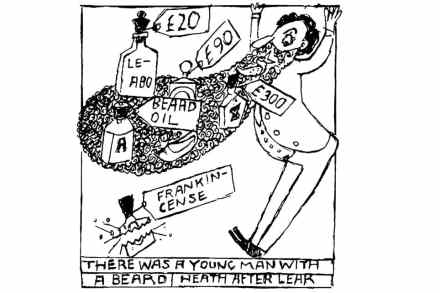
Every few months I take out a box of essential oils and carefully lay them out on my kitchen table, organising them in order from sweet-smelling to musty. On the left will be scents like juniper berry, lime, frankincense and bergamot; in the middle, woodish fragrances such as sandalwood and cedarwood; on the right, the darker stuff of patchouli and pine needle – and occasionally, when I’m feeling brave in my endeavour to make the perfect beard oil, lavender. Next I fill several large vials with a mixture of carrier oils, usually almond, jojoba and argan (and normally with almond making up the bulk as it’s the cheapest). I then begin mixing in various essential oils: a dash here, a dash there.

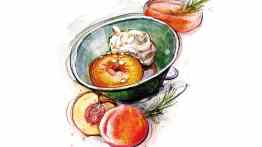
How to poach peaches (and why you should)

I’ve never been very good at leaving things be. I tend to gild the lily. I may plan to do something simple, but I always find myself adding to it, primping, faffing. This is true in every area of life, but never more so than when I’m cooking. For that reason, this time of year can make me a little uncomfortable. When summer arrives in earnest – as opposed to those brief, misleadingly sunny weekends of late April and mid-May – we are inundated with beautiful fresh fruit. Right now, it’s strawberries, gooseberries, peaches and cherries; raspberries, blackcurrants and figs are just around the corner. And we are told over and over that it is impossible to improve on ripe, raw fruit, fresh from the tree.

Iceland’s scenery takes your breath away – but so do the prices

I’m writing this on the plane back from Iceland, a fact that fills me with relief. Not because I didn’t enjoy my trip to the land of fire and ice – far from it – but because there was a serious risk I might be stuck there indefinitely with Caroline and my three sons. In the 24 hours before our departure, nearly 4,000 earthquakes were detected in the southwestern region known as the Reykjanes peninsula, which is where the international airport is located. Such unusual seismic activity is often a sign that a volcano is about to erupt and that, in turn, can create an ash cloud that necessitates the grounding of all aircraft, as happened in 2011. There are worse places to be stranded, of course.

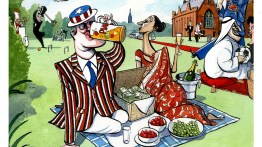
Should you really pair Pimm’s with oysters?

Imagine a camel train, crossing the great desert. The remaining water is rancid; the beasts’ humps are shrunken. Death looms. Then suddenly, there is the sound of a fountain plashing and the scent of sherbet. Old Abdullah, who has done the journey often, as he has been reminding everyone for ten days and making his companions increasingly homicidal, is vindicated. The oasis is at hand. Although Londoners, afflicted by heat, may feel affinity with those sons of the desert, our conditions are not so dire. For a start, there are many more oases, in the form of bars or clubs. That brings us to Pimm’s, that admirable method of rehydration. According to the sources, Mr Pimm invented the drink to accompany oysters. Eh?

What Spectator writers read on their summer holidays

The flights are booked, the passports are dusted down and it’s time to pack. But which books deserve space in your suitcase? Here, Spectator writers share their all-time favourite summer holiday reads… Matthew Parris My all-time favourite re-read at any time of year is Thornton Wilder’s The Bridge of San Luis Rey. A very short novel with the kind of perfection a geometrical proof may command, it starts with the death of a group of travellers crossing a Peruvian rope bridge who are linked only by the fact that they were on the bridge when it snapped, and traces the life of each up until that point. Wilder’s quest is to discover whether there exists any divine plan. Toby Young For pure escapism, I Am Pilgrim by Terry Hayes is hard to beat.

In defence of Beyonce

People complaining about supposedly offensive pop lyrics is hardly anything new. It’s as old as the form itself; never-ending proof that everyone is offended by something and that every era has its own set of taboos. But the speed with which music stars appear to be acquiescing to other people's hurt feelings today is surely something new. Take Beyonce. She’s one of the biggest stars in the world. A genuine living legend. And yet because a handful of disabled charities and irked right-on tweeters have complained about one word in one of the songs on her new album Renaissance, her ‘team’ has almost immediately promised to scrub and re-record the offending lyric as soon as possible. The word that has caused so much offence?

The curious rhythm of life in Spain’s Santiago de Compostela

Surely no other city can claim to have so many backpacks and walking sticks on its narrow cobbled streets. In Spain’s Santiago de Compostela it always looks like there is a giant hiking convention going on. These aren’t your average ramblers, though. They are pilgrims, as the city marks the end of the famous Camino de Santiago pilgrimage. The Camino, or the Way of St James, is most associated with the 500-mile route from the base of the French Pyrenees westward though Pamplona, Burgos and Leon.

Why now is the time to be spontaneous

I am not naturally a spontaneous person. I relish neatly laying out projects and plans in my Moleskine diary. It was out of character, then, when on the second Monday of the Wimbledon fortnight I decided on the spur of the moment to head to the All England Club and join the queue for a day ticket. If I didn’t get in, I reasoned, I could always have a nice meal in a nearby restaurant and watch the action on a big screen, content in the knowledge that I was at least sharing the air of the SW19 postcode. My back-up plan wasn’t needed. When I joined the ‘queue’, I was the only person in it. I was ushered straight into the grounds to enjoy six glorious hours of sun-drenched tennis. Perhaps there was something in this spontaneity lark after all.