Spectator Life

Spectator Life

An intelligent mix of culture, style, travel, food and property, as well as where to go and what to see.

How to eat and drink your way around the Dubrovnik Riviera

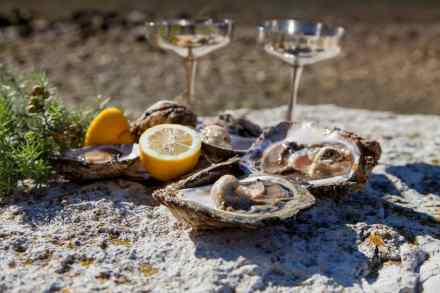
‘I hope you’re hungry,’ crows a fisherman, setting down a plate piled high with freshly shucked oysters. They say you should face your worst fears head on. Well, here I am addressing mine – but I never thought it would be done in quite so idyllic a spot. I’m in Mali Ston, a small, picturesque town on Croatia’s Pelješac peninsula, about an hour’s drive from Dubrovnik. It’s 9.30 a.m. and many shops are still shuttered, but already Game of Thrones fans are out in force, taking selfies along the hillside’s 14th-century network of towers and fortresses. (The three-and-a-half-mile walls doubled as King’s Landing and the Eyrie in the fantasy drama.

The politics of topless sunbathing

I’m pretty certain that what I’m about to say is essentially unsayable. So here goes: we need to have a frank conversation about boobs. Bare boobs. Because on my recent holiday to Majorca, I have to confess to being a little astonished to see quite so many topless women on the beach. But what a simple joy it was; old, young, lithe, voluminous, ponderous – there they were in all their glory, glistening or wilting in the sun, or simply splashing about in the sparkling water. Boobs. I know, I know… as a straight, white, privately educated man in the raw good health of middle age this is not territory that I’m completely comfortable venturing into. And perhaps I shouldn’t. But I feel this needs to be said.

London’s best tasting menus

Once the preserve of only the fanciest of fancy restaurants, the tasting menu has come into its own post-pandemic. Set menus make economic sense for cost-cutting restaurateurs and their harried staff, of course – but customers benefit too, with no nasty surprises or bust-ups when the bill arrives. And for those of us who suffer from perennial food envy, tasting menus remove the gut-wrenching anxiety of having to choose between the 'succulent hand-glazed cod' and the 'succulently foraged kobe beef' – both it is. But pairing multiple dishes with distinctive wines and then placing them in some kind of coherent order takes real skill – so who does it best?

How to join the Greenwich set

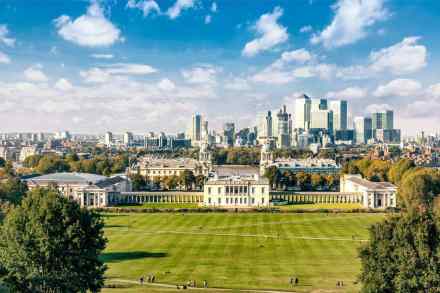
The steamy Netflix period drama Bridgerton might not immediately put you in mind of the Tory inner circle. (Liz Truss for one has professed to be fan of grittier TV dramas such as Scandi crime thriller The Bridge.) Yet the two have some common ground – and it can be found in Greenwich, south-east London. Forget the Notting Hill set of the Cameron era and the Islington mafia of the Blair years. It seems that a verdant corner of the (Labour) royal borough has turned blue, with Truss, potential chancellor-in-waiting Kwasi Kwarteng and former Brexit minister Lord Frost (now tipped to head up the Cabinet Office) all living in the period streets of West Greenwich – where Bridgerton has been filming on their Regency doorsteps.

‘Christmas creep’ has gone too far this time

For sale in the village shop last week: punnets of locally-grown strawberries, multicoloured bucket-and-spade sets, postcards featuring British beach scenes… and no fewer than 14 varieties of Christmas bauble. Down the street at the Post Office, you can buy Christmas cards, tinsel – in green, red or sparkly silver – and wrapping paper festooned with candy canes. The garden centre, meanwhile, is doing a roaring trade in tins of festive shortbread (expiry date: 26 October). Christmas, so the saying goes, comes but once a year. And this year, it seems to have come during a baking hot August. Before you suggest I live in a sort of Yuletide wormhole, it’s happening nationwide.

The scourge of the beach tent land grab

‘Ah,’ says my husband at the top of the cliff path at Overstrand, ‘it’s just like a Shirley Hughes illustration.’ There are sandcastles, wooden groynes, children and dogs running in and out of the waves. Then his eye falls on the first land grab of the day. Three generations of the same family are hard at work constructing their citadel: popping up polyester tents to form a wide arc, shovelling shingle into the flaps to secure them, unfurling windbreaks across either end to mark the outer limits of their encampment. We – like the family in a favourite Hughes picture book from my childhood, Lucy and Tom at the Seaside (1976) – have travelled with just ‘the picnic things and bathing bags and buckets and spades’.

The utter misery of BBC’s Marriage

‘Who are these people and why should we care about them?' This is the most important question any screenwriter must ask before committing pen to paper. Sadly it's a question I failed to come anywhere near answering during the interminable 'realism' of the BBC’s much discussed (and much praised) Marriage. Sean Bean and Nicola Walker play Ian and Emma, an uptight midlife couple caught in the tedium of marital graft after 27 years together. The four-part 'drama' has been widely commended for showing the profound inanity of ordinary people's domestic lives. While I consider myself to be pretty ordinary, I failed to recognise either of these dullards as anything other than famous actors trying to appear real and failing miserably.

Why George Orwell’s ‘perfect pub’ deserves to be saved

Eleven days after turning 45, I sent my first ever letter of complaint to the council. A real coming of (middle) age. The topic of my complaint? My local pub. I followed the British protocol for complaining – I made it clear I’m ‘dismayed’ and ‘appalled’ and hope people can ‘see sense’ – about an issue that has instilled such rage in me that a stiff drink is required. You see, my local, the Compton Arms in Islington, north London, is under threat of closure. This is no ordinary pub. Tucked away from the busy stretch of Upper Street, on a picture-perfect back road, is an establishment that has been serving the public since the 16th century, open near continuously since the 1800s.

Neckerchiefs are a sartorial risk worth taking

Neckerchiefs are an oddity. Once the cowboys' sweat-wiping tool, they are now a key accessory in the glamour – or camp and borderline tack – of a flight attendant’s uniform. My approach to them tends to sit somewhere in the middle. Neckerchiefs are useful, stylish, rebellious, but comforting – a rare choice for men’s fashionwear. A neckerchief can spice up a dull-coloured shirt without imprisoning your neck in a collar choked by its distant relative, the tie. But before becoming the fabric embodiment of smart-casual, the neckerchief was wholly utilitarian. Sailors began wearing them in the 16th century to combat the discomfort caused by dripping sweat rubbing against their stiff-collared shirts.

Sixteen cathedrals to see before you die

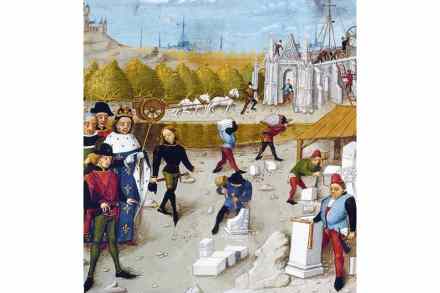
There can be no clearer illustration of the central role that great cathedrals continue to play in a nation’s life than the outpouring of grief that greeted the catastrophic blaze in Notre-Dame in 2019. President Macron described the building as ‘our history, our literature, our imagination, the place where we experienced all our greatest moments’. Indeed, it is impossible to conceive of any major European city without a cathedral at its heart. Emma J. Wells has written an accessible, authoritative and lavishly illustrated account of the building of 16 of ‘the world’s greatest cathedrals’.

Among the best puddings I’ve ever eaten: Richoux reviewed

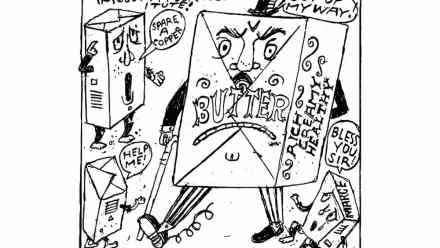
Cakeism is offering the voters everything they desire, knowing you will never give it to them because you live in a haunted mirror in which the only thing that matters is your survival. This duplicity is important to understand, because the road from Cicero to Caesar is so short it may lack potholes. Cake is less urgent, but at least cake won’t lie to you. And here is Richoux, still filled with cake, if you can afford it. It is, for many people, marvellous and theoretical cake. Richoux was a cake shop on Piccadilly – a street I can never eat in without thinking of Alexander Litvinenko sitting, doomed, in Itsu, when it still pleased Vladimir Putin to kill people individually – for so long it was forgotten. It is 113 years old, or one seventh of Yoda.

I fancy Emma Raducanu’s chances at Flushing Meadows

British tennis fans famously only acknowledge the sport exists for a couple of weeks in the middle of summer in SW19. But they ought to think about changing the habit of a lifetime over the next couple of weeks, as Emma Raducanu prepares to defend her US Open title at Flushing Meadows. It’s been a dizzying year for Bromley’s best. Her journey from star-struck ingenue when she went to New York a year ago to her arrival back there this week as the champion and the face of a thousand magazine covers must have felt like a rocket ride to the Milky Way. But now she has to prove herself all over again. Since winning the US Open a year ago at just 18, she has failed to win another singles title and has won just 12 matches out of 28 on the WTA tour.

In praise of Birmingham, Britain’s maligned second city

During my gap year in 1981, I worked on the 24th floor of Birmingham’s Alpha Tower for the Regional Manpower Intelligence Unit. The city below, with its express ways racing past the Venetian Gothic of Joseph Chamberlain’s house and the Roman Revival of the town hall, were the realisation of the city planner Herbert Manzoni’s dream of creating a Midlands Motown. The Rotunda, the acres of systems-built tower blocks, even the inverted ziggurat of a modernist central library, together amounted to the antithesis of the smoky, tweedy, horse-powered, cut-throat Birmingham the world now knows from Peaky Blinders. That year, though, was the one which went wrong for Birmingham, Richard Vinen argues.

Confessions of a lawn obsessive

For the past few days I’ve been frantically watering my lawn in anticipation of the London hosepipe ban. True, there are other things in the garden that need watering – the roses, the magnolias, the rhododendrons, as well as the tomato plants, the rosemary bushes and the olive tree. But I can probably manage to get round them with my watering can once the ban kicks in and in any case it’s the lawn that’s my pride and joy. Gazing at the stripes after it’s just been mown is one of life’s great pleasures as I settle into late middle age. When Caroline and I first looked round our house in Acton as prospective buyers, the lawn, measuring about 45 feet by 30, was a selling point, but only as a space for our three boys to play in.

Help, I’ve been seduced by Meghan Markle’s podcast

Meghan Markle, if she was minded to, could easily corner the erotic ASMR market – that weird bit of the internet in which women breathily relate fictitious experiences with their mouths too close to the microphone for the gratification of lonely nerds everywhere.It’s impossible to listen to her latest self-glorifying venture into podcasting, Archetypes (get it?), without understanding this is something of which the Duchess herself is keenly aware.At the outset of the first episode, released on Tuesday, she explains with a deliberately pleasing huskiness how the podcast would be concerned with exploring a ‘dirty, dirty word’.

Paradise lost: the decline and fall of Hampstead’s ladies’ pond

‘We’re surrounded by sociopaths,’ I whispered to my friend as I scanned the scene before me. We were sitting on a bench overlooking the meadow at Kenwood Ladies’ Pond on Hampstead Heath, and for the first time in my 20-odd years of visiting, I felt a sense of detachment: like I was an observer rather than a participant. A lot’s changed since the pandemic, but nowhere have I felt it more keenly than when I go for a swim at my beloved pond. This last, precious corner of paradise in our smog-filled city has been desecrated, and I am heartbroken. The ladies’ pond opened in 1925, and nearly 100 years on it’s still the sole women-only outdoor swimming amenity in the country. For most of that time it was a fun, free and flexible delight.

The enduring wisdom of Robert Baden-Powell

I do not yet have any children of my own, but a large extended family means plenty of young nieces and nephews to buy presents for come birthdays and Christmas. Those moments provide an opportunity to indulge in some pedagogic guidance: I’ll be damned if you're getting the latest Fifa game for the PlayStation 5 – you can have a real football to kick around outside. Ditto the inevitable requests for Nintendo virtual reality headsets and Frozen merchandise. Happily, I’ve got at least one Christmas present this year sorted already – and I’m quietly confident my nephew is going to enjoy reading it as much as I just have. Lord Robert Baden-Powell’s life-guide book Rovering to Success is a century old this year.

In praise of Jodie Comer

She’s got all the trappings of superstardom: killer looks, a clutch of awards and £4.5 million in the bank. But mention ‘Jodie Comer’ to your friends and you’re bound to get a few blank stares. The British actress, best known for playing super-stylish assassin Villanelle in the BBC series Killing Eve, has yet to become a household name. And, like many in her growing legion of fans, I want to know why. This month I saw Jodie, 29, in Prima Facie, her debut West End play. It’s a masterpiece of a monologue in which she confronts gruelling issues including sexual assault, misogyny and bias in the criminal justice system – and she was nothing short of astonishing. When the curtain fell, I could barely speak.

What’s new in New York City

‘It is ridiculous to set a detective story in New York City. New York City is itself a detective story,’ said Agatha Christie. More than 60 years later, the Queen of Crime’s words still hold true. The Big Apple is a constantly changing beast: an enigma that, just as you think you’ve cracked it, coils itself into a new form for you to get your head around once more. That is what makes it the ideal return city break. Each time you travel there’s a new restaurant, hotel or show to try. And with many launches delayed by Covid-19, this year has brought an even greater glut of openings – making it the perfect time to visit. So, whether it’s your first time in New York or your 100th, which of the latest additions are worth seeing?

The funny truth about life as a diplomat’s wife

In the early 2000s my husband, a diplomat for the EU, was posted to Kazakhstan, a vast empty steppeland next to Siberia. It was winter and the place was covered with thick snow. My family were in England, my husband was mostly in the office; I was 61 and I didn’t know a soul. Our previous posting had been to Damascus and I had occupied myself by writing a book about the old palaces there, but here there were no old buildings as the Kazakhs had been nomads. I had nothing to do. Everyone spoke Russian – I didn’t. As my husband was a senior diplomat we qualified for a cook, but she and I could only communicate using animal noises: chicken was cluck-cluck, beef was moo and lamb was baa. The main foods available seemed to be cabbage, onion and potatoes.

Is Netflix losing the battle of the streaming giants?

From time to time, Netflix’s marketing brains like to get a bit cute with the company’s past. ‘Don’t give up on your dreams – we started with DVDs,’ read one recent viral post. But while the streaming giant happily references its most famous transition, it’s much more coy (and probably wisely) when it comes to its latest one. It isn’t hard to see that 2022 Netflix is a very different beast to the one most of us signed up for. If you joined Netflix during its peak – e.g. somewhere in the long window between House of Cards and Tiger King – you would have likely bought into the idea of it being a one-stop shop for all things streaming. But has it really kept that promise?

Wiltons vs the Ritz: who wins the great grouse race?

‘Bang! Bang! …Thud.’ It’s Friday 12 August, better known to tweedy types as the Glorious Twelfth, and the inaugural grouse on the West Allenheads estate in Northumberland has met its maker. The 26°c temperature yields a slow morning, with the moorland birds reluctant to come out of the shade and the beaters and guns mopping their brows, yearning for elevenses. After the first drive, the bagged game is slung in the back of a Defender and divvied up in the gun room. And now the real challenge begins. Imagine a sort of Beaujolais Run, except instead of getting Gamay wine from France to Fleet Street, our mission is to dispatch grouse from Hadrian’s Wall to SW1. The destination for ten brace – i.e. 20 birds – is Wiltons on Jermyn Street.

The complicated history of English wine

Hugh Johnson’s classic World Atlas of Wine, first published in the early 1970s, is now up to its eighth edition. My edition, the sixth, was published in 2007. It is 400 pages long and has exactly one page devoted to the wine of the United Kingdom. The latest edition is 16 pages longer but it, too, devotes only one page to British wine. Wine has a long history in the British Isles. Like so many good things (q.v. Monty Python’s Life of Brian), wine was brought by the Romans, who planted vines wherever they could grow (and some places they couldn’t). The Domesday Book, William the Conqueror’s big tax-planning guide, lists 40 vineyards in England.

Sole Véronique: there’s no need to fear fish and grapes

One of the joys of writing about old-fashioned food is coming across dishes that are new to me, and turn out to be such a delight that they gain a recurring role in my cooking. Of course, some I’ve encountered were already among my established regulars – boeuf bourguignon, coq au vin. Others were childhood staples – shepherd’s pie, proper rice pudding. But a few of the dishes I take into my kitchen to work with I’ve never even tried before. The first recipe I wrote for The Spectator was for blancmange. Having grown up during the brief period when milk jelly was fashionable, I’d avoided blancmange like the plague. I was sure it must be rubbery, flavourless and a bit, well, creepy.

Why I still love the Edinburgh Festival

When I was in my twenties, exactly 50 Edinburgh Festivals ago, Frank Dunlop directed the first professional production of Joseph and the Amazing Technicolor Dreamcoat which Andrew Lloyd Webber and I had written for a primary school concert in 1968. In the first four years of the work’s existence, it began to burrow its way into educational musical syllabi at a modest pace. This we appreciated, but in 1970 we stumbled into overnight success with our double album of Jesus Christ Superstar, and we did not thereafter give our earlier piece the attention it perhaps deserved.

The brutal truth about holiday packing

The general flying advice this year, with airports resembling cattle markets and when you can’t be sure if you’re ever going to take off, is: only travel with hand luggage. Packing a fortnight’s holiday into the tiniest of bags has become an art form. Social media is awash with tips on minimalist packing and dedicated websites on travelling light have sprung up, with experts advising what you should, and shouldn’t, pack. It’s depressing. Yes, the lighter the plane the less fuel it uses, which is no bad thing for the environment. But a holiday is meant to be an indulgence, a chance to experiment with new outfits. Instead, the less-is-more principle is being abused to such an extreme that we’re having to do clothes-washing while away on holiday.

At least we still have wine

Even in recent heat, the English summer can be magical. As long as there is shade, a pool and a steady supply of cooling wine, there is so much to enjoy. Trees, flowers, songbirds, butterflies: dolce far niente works here too. But thinking can be the snake which insinuates itself into Eden. Susan Hill’s Simon Serrailler books are always excellent train reading and the latest was no exception, even if the principal character always puts one in mind of Turner’s supposed reply to someone who said that they had never seen a sunset like the one which he had painted. ‘But don’t you wish you could?’ It is hard to believe that there are many actual policemen like Simon Serrailler – more’s the pity. There are other reasons for pity.

The lost charm of London’s St Giles

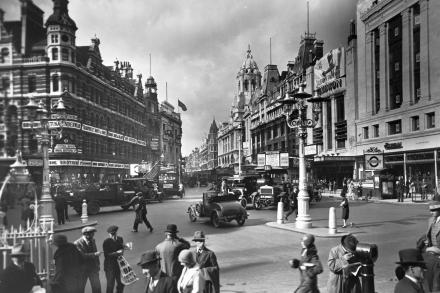
London's architectural landscape is changing at such a pace that it's hard to remember what's been lost beneath the acres of tarpaulin. Buildings I must have walked past a thousand times and that I could have sworn were important landmarks have been disappearing at an alarming rate. Despite the devastation there appears to be little in the way of pushback from harried, post-pandemic Londoners. How quickly we forget what our eyes once took for granted; the familiar razed without a second glance. The area known as St Giles, just east of Charing Cross Road and south of New Oxford Street, has suffered more ignominy than most.