Spectator Life

Spectator Life

An intelligent mix of culture, style, travel, food and property, as well as where to go and what to see.

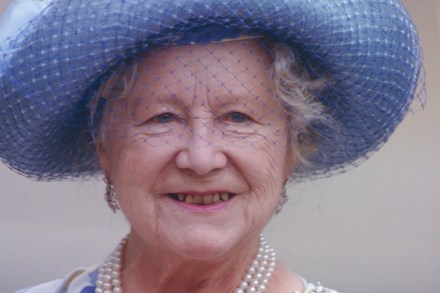
The Queen Mother’s tipsy bons mots and other stocking fillers

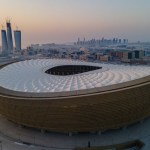
The standard complaint of anyone doing a Christmas gift books guide is that the books aren’t up to much. I myself may have moaned to this effect in the past. But either they are getting better or my critical faculties are beginning to fail. I think it’s the former, but if I’m wrong don’t be surprised if I’m sucking on milky rusks by this time next year. My daft picture book of the season – a vital category – is Ryan Herman’s Remarkable Football Grounds (Pavilion, £25), which is exactly what it seems to be: a collection of colour photographs of some of the most spectacular football grounds in the world. There are all the usual suspects, such as Anfield and Old Trafford, and others that resemble a crocodile, an armadillo or a chocolate box.
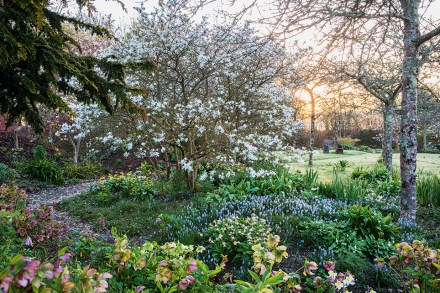
A choice of gardening books for Christmas

Do you ever think about the ground beneath your feet? I do. Having read a number of popular science books on this most precious of natural resources, I am now obsessed. So much has recently been discovered about the invaluable symbiotic relationships that form between microbes, fungi and plant roots in the soil that it feels perverse to turn one’s head away. Lately, the book that has most influenced my thinking (perhaps because it is a rattling read) is Soil: The Incredible Story of What Keeps the Earth, and Us, Healthy by Matthew Evans (Murdoch Books, £14.99). It’s the work of a no-nonsense Australian farmer and former restaurant critic who has bothered to read the latest research. And what he writes should astonish every gardener.

My Twelve to Follow over jumps

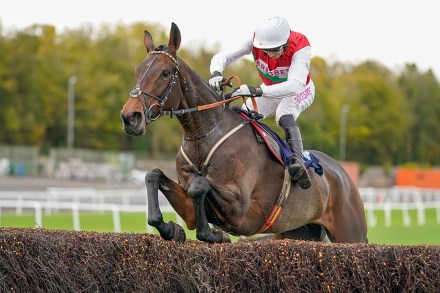
We all tend to put a value on what we haven’t got. Talking to a West Indian friend, Mrs Oakley, a foodie to her core, envied her the fresh pineapple, mangoes and bananas of her Caribbean childhood compared with our post-war canned fruit. ‘Oh no,’ said her friend, ‘it was the rare canned fruit treats we yearned for.’ Through the final weeks of the fading Flat season, I yearn too for the mud-spattered glories of the full jumping season, contests as much about courage as class.

I’ve found the only gastropub worth eating at

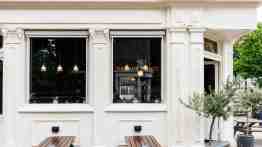
The gastropub, an invention of the early 1990s, is a terrible idea. They burst on to the scene when breweries were made to sell off many of their pubs for a song to make way for competition, encouraging Marco Pierre White wannabes to snap them up and replace cheese sandwiches and pork scratchings with kidneys on toast and anything that could be put together in a kitchen the size of a shoebox. Many of them have food prepared off-premises but charge restaurant prices. There are no proper tablecloths, the glasses are made to survive if dropped on concrete floors and it all feels a bit like going round to your friend’s house for a substandard dinner party.

The secrets of London by postcode: EC (East Central)

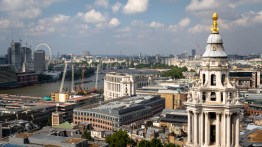
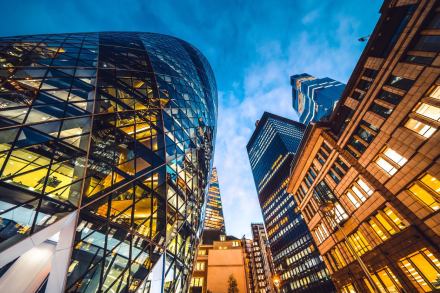
Golden pineapples, hotel rooms named after spies and the only curved piece of glass in the Gherkin – yes, it’s EC, the second in our series looking at the quirky history of London postcode areas. Step this way for some Square Mile trivia… There is only one curved piece of glass in the Gherkin – all the others are completely flat, the building’s famous shape achieved by the angles at which the panes are joined. The curved one is the horizontal one right at the top – if you want to see it up close and personal, book yourself a table at Searcys at the Gherkin, the restaurant and bar at the building’s summit. Having viewed the curved pane, look out of the flat ones for some incredible views of the capital. gherkinreception@searcys.co.

Why househunters are heading to Royal Berkshire

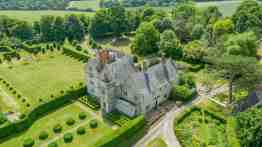
When the Prince and Princess of Wales announced they were moving their family to the Royal County of Berkshire this summer, estate agents reported a ‘flurry’ of enquiries about properties around Windsor and the village of Bucklebury, 50 minutes west on the M4. The Middleton family had already been increasing their interests in and around Bucklebury, where they have lived since Kate was young. James Middleton and his French wife, Alizée, own a farmhouse there, and Pippa Middleton’s husband, James Matthews, has acquired Bucklebury Farm Park. Pippa and her husband also bought a £15 million mansion nearby this year. And where royals and their relatives lead, it seems others follow.

It’s a lonely life for Wags

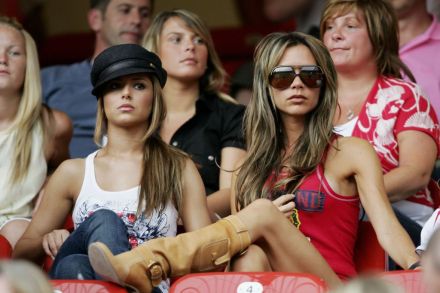
As ocean-going metaphors go, the news that a £1 billion cruise liner (usually charging £2,434.80 – love that 80! – for a nine-night jaunt, complete with a shopping mall, 14 jacuzzis, six swimming pools and the longest ‘dry-slide’ at sea) will host England’s Wags during the World Cup in Qatar could not have been more splashy.  This is a particularly bad time for football. The England players are off to Qatar, along with LGBT-friendly football personalities – led by ‘gay icon’ David Beckham – to shill for a country where migrant workers are treated like chattels, women are treated like children and homosexuals are treated like criminals.

On the trail of Gomorrah in Naples

‘Isn’t Naples beautiful? I’ve always dreamt about it. I always wanted this city all for myself; I didn’t want to share it… I alone deserved it because of everything I lost and I would have done anything to get it.’ So says Ciro Di Marzio – nicknamed ‘the immortal’ because he has survived so much mafia bloodletting – in the hit TV crime drama Gomorrah.   He is not talking about the churches or castles, the arcades or theatres or museums. He may have been out on the bay at night when the words are uttered, but the Naples he knows, grew up in and by then controls is the Naples of Scampia and Secondigliano, places up on the ridgeline of the city: the Naples of high rises and concrete, the Naples of drugs and murder.

‘Luxury’ cinemas are a horror show

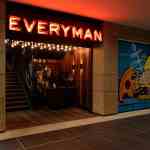
‘I know,’ I said to my friend recently. ‘Let’s see a film!’ We booked the Everyman Kings Cross, the only cinema that happened to be showing what we wanted to watch at a convenient time and location. You might already be familiar with the Everyman concept. According to the chain, it’s ‘redefining cinema’ with an ‘innovative lifestyle approach to our venues, where you swap your soft drink for a nice glass of red wine and a slice of freshly made pizza served to your seat’. And apparently it's popular – an Everyman opened in September in Egham, Surrey, bringing the total to 38, and another one is announced for Durham early next year. But after my latest visit, I found myself marvelling at the success of what might be the most annoying cinema concept on earth.

In defence of instant coffee

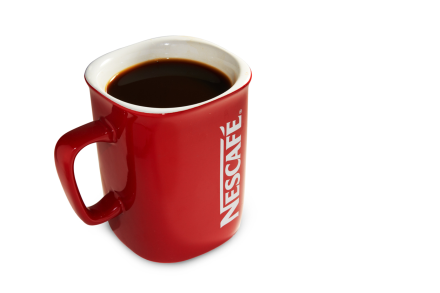
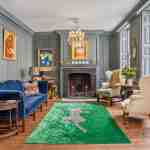
The past is a foreign country; they do things differently there. Ten or 20 years ago no one would have thought twice about enjoying Nescafé or its equivalent. There is soothing ritual in spooning, pouring, stirring and sipping the mud-brown concoction in a mug. But nowadays, for a generation nourished on slow-roasted Colombian cashew-milk cortados, instant coffee seems as primitive as campfire cookery. I recently stayed at Brownsover Hall, a grand Gothic mansion house near Rugby: a place where you can sit for a whole weekend in a Georgian wingback chair, gazing out at Warwickshire. In a wood-panelled bedroom, with ceilings loftier than millennial expectations, by the mini kettle and the branded writing paper, was the familiar tray of Nescafé sachets, PG Tips and milk thimbles.

The truth about the curse of the pharaohs

George Edward Stanhope Molyneux Herbert, 5th Earl of Carnarvon, was bitten on the cheek by a mosquito some time in early March 1923. The bite became infected. By April he was running a high fever, had pneumonia in both lungs and his heart and respiratory systems were failing. He died in a Cairo hospital on 5 April. His death came less than six months after Howard Carter, the Egyptologist whose excavations Carnarvon was funding, first discovered evidence that there was an undisturbed tomb in the Valley of the Kings in Thebes. That was on 4 November 1922 – 100 years ago this month. A few days later, Carter, Carnarvon and his daughter, Lady Evelyn Herbert, had squeezed through a roughly-hewn hole in the wall of the burial chamber of Tutankhamun, uncovering its glittering treasures.

Yours for £3k a week, the townhouse with royal history woven into it

The 34 early Georgian houses that line Fournier Street, in the heart of Spitalfields, are a perfectly preserved microcosm of East London life through the centuries. Since it was built in the 1720s, the street – which runs between Brick Lane and Commercial Street, in E1 – has variously been home to the city’s wealthiest and poorest. With many of its first residents Huguenot weavers escaping religious persecution in France, the street is characterised by its series of highly glazed lofts, harnessing the light vital for the skilled textile work, with many of the houses subsequently bought by those in the silk trade. Arguably one of the finest houses on the street, No.

Why I’m giving electric cars a second chance

In April 2021 I wrote a piece for The Spectator which became the most-read article I have ever had published here. It began with the words: ‘I bought an electric car and wish I hadn’t.’ It was the story of my ill-judged decision to get a Hyundai Kona Electric. I had hoped to use it to virtue-signal, but it turned into the car from hell. Many readers were kind enough to laugh at my self-deprecating jokes. I’ve always had a soft spot for gadgets. When electric cars started to become available in 2018, I ordered the Kona because it seemed to have a reasonable range of around 400km. It was a hatchback. With the rear seats folded down, it had plenty of room for the dogs. It was delivered a year later – and it proved to be not just the ultimate lemon, but a ticking time-bomb.

How to master mezcal

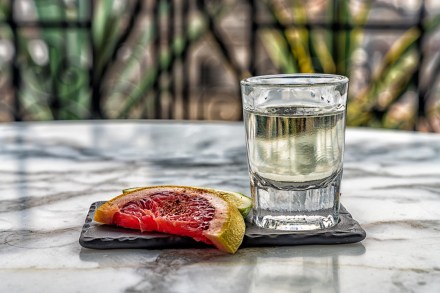
Long before there was tequila, before there was a state of Mexico, there was mezcal. The agave plant – which is roasted, fermented and distilled to produce this traditional spirit – has been a part of life in the region for millennia. When the first stills arrived there in the 16th century they were quickly set to work distilling the local fermented agave wine, and mezcal was born. Today, these intensely characterful spirits are being embraced by bartenders, natural wine types and foodies of every stripe across the world. This is partly due to the fact that mezcal offers a fascinating connection to the place it was made. A good bottle is the sum total of a single species of agave, grown in a single region, and shaped by the hand of a single master distiller.

Why David Bowie was the model of a Renaissance Englishman

It’s hard to imagine how baffled the British public must have been by the arrival of David Bowie on to TV screens in the early 1970s. With his saffron hair, make-up and androgynous clothes, superficially he looked like a rejection of everything his post-war south London childhood had taught him. One of the most pivotal scenes in Moonage Daydream, the recent film about his life, is his 1973 interview with chat show host Russell Harty. Throughout this awkward cross-examination, Harty searches for a label he can stick on Bowie for the benefit of discomfited viewers. ‘Are those men’s shoes? Or women’s shoes? Or bisexual shoes?’ Harty inquires, looking down at Bowie’s strappy red and gold platform sandals. ‘They’re shoe-shoes, silly!

What a PM’s podium says about them

Farewell, Truss’s twisty lectern. Last week in Downing Street Rishi Sunak used one with a straight column. If he follows recent Tory tradition, he’ll have one made to his own design, paid for by the party (£2,000-£4,000 a pop) and loaned to the government. [Getty Images] Each lectern (from the Latin legere, ‘to read’) has sent a message.

Theme of despair: Drop’N Chicken at Chessington reviewed

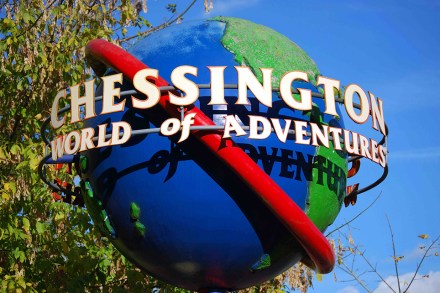
Chessington World of Adventures sits in a bowl near the A3. I went in the 1970s when it was a zoo, home to some unhappy orangutans who lived in a cage which made me scream. Being a lonely sort of child, I hugged concrete dinosaurs in the rain. Now it is owned by Merlin Entertainments – a sort of National Trust for people who prefer rollercoasters to country houses – which is owned by a hedge fund that employs teenagers. We are here to feel fear because my son, who is nine, has never really felt it, which is a good thing: and Merlin Entertainments monetises this, offering fear for a price, with parking. I am Jewish, and queuing for fear isn’t my thing, but I like to consider myself a loving mother so here we are.

What to do about the Equality Act

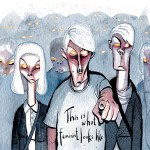
Among people of a conservative disposition, it’s long been accepted that the Equality Act needs to be repealed. This legislation, passed in 2010 in the dying days of Gordon Brown’s premiership, was designed to embed Labour’s egalitarian ideology into the fabric of the British state, yet none of Brown’s successors have done anything about it. In July, Rishi Sunak told a group of Conservative party members at a leadership hustings in West Sussex that he would ‘review’ it if he became prime minister, but don’t expect major surgery. The most we can hope for is a bit of light cosmetic work. One thing about the Equality Act not widely understood is that it didn’t create much in the way of new law.

The future of sport is in the Middle East

When the burly honchos of the Rugby League World Cup gushed about taking the game to new heights, no one was actually thinking about the Golan Heights – but that’s where we are. What sounds like a fascinating quarter--final takes place on Friday (as I write) when the dominant team in global rugby league, Australia, take on Lebanon in Huddersfield – the birthplace of the game. Amid the blizzard of sporting world cups currently taking place across the globe, this match has it all. The Lebanese team, known as the Cedars, are coached by Australian Michael Cheika, one of the world’s most eminent coaches and a former boss of the Wallabies’ rugby union side. That’s an awful lot of rugby in the mix already.

Why I’m paying to lock myself out of the internet

First comes disbelief that I have done something so extreme, followed by denial as I pick up my phone repeatedly to check it’s not just a bad dream. But no – it's really happening. Panic segues into frustration; then, finally, I arrive at acceptance. For the next three hours I will not be able to log on to social media or my favourite websites, and there is nothing I can do about it. In a last-ditch attempt to stop myself compulsively scrolling, I have spent £70 on a lifetime membership of the internet blocking software Freedom. When activated, it prevents access to specified sites across my devices until a set amount of time has elapsed.

How to escape Clarkson’s crowd in the Cotswolds

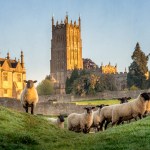
It’s harder than ever to get away from it all in the Cotswolds. Come Friday night, west Londoners pack their bags and descend on the countryside. Many ‘up from Londoners’ head to places such as Soho Farmhouse. The success of Clarkson’s Farm, a hit TV show based at the former Top Gear presenter’s Cotswolds patch, has only added to the chaos. The Cotswolds’ blessing – its proximity to the capital – has become its curse. Trudging around the area’s beautiful towns and village isn’t what it once was. Fortunately, though, there is a way to escape the hordes and still enjoy the Cotswolds. You could do worse than follow a simple tip: steer clear of the four Bs – Bibury, Burford, Broadway and Bourton-on-the-Water. Instead of these tourist traps, head north.

The remarkable success of the East African Asians

When Idi Amin’s voice crackled through the radio on 4 August 1972 with his fateful ultimatum, my family paid little notice, save for wondering briefly why a government announcement had interrupted the blaring Bollywood tunes. My father’s two sisters were getting married the next day (both tying the knot at the same time meant half the wedding cost) and preparations were in full flow. In any case my family – like many of Uganda’s 76,000-odd Asians who were subject to Amin’s expulsion, giving them 90 days to leave the country – thought the President could hardly be serious. Despite being a small minority of the country’s population, the Asians were responsible for 90 per cent of Uganda’s tax revenues. To expel them would be madness. But madness came easily to Amin.

The case against book clubs

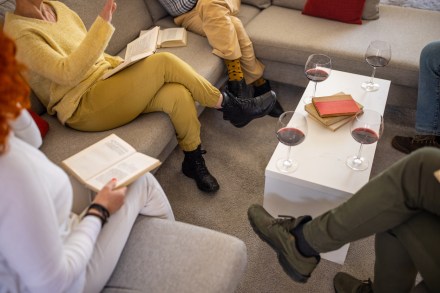
Picture the scene: it’s 8 p.m. on a Tuesday. You’re sitting on the sofa in the home of someone you barely know, gulping supermarket wine, making inane chitchat with friends of friends as you all put off the inevitable: discussing a book only a third of the women – always women – in the room have actually bothered to read. In your head, you’re counting the minutes until you can excuse yourself for the last train home, wondering what’s happening on tonight’s Bake Off and engineering a strategy to quietly remove yourself from the group WhatsApp without appearing rude. You stifle a yawn and subtly check your watch while necking yet more wine. Sound familiar? Welcome to book club.

Who wants to live in the Square Mile?

Mixing business with pleasure can be risky business. For decades the City of London has upheld this doctrine, religiously prioritising office space over new homes to preserve its reputation as a global financial centre. In his 29-year tenure as the City of London’s planning chief, Peter Rees famously allowed only one new residential tower to be built in the Square Mile: The Heron, a 285-apartment building which was completed in 2013. But the aftershocks of the pandemic – recent data suggests that the number of workers at their desks in the Square Mile’s offices is down by around a third; office vacancy rates stand at almost 10 per cent – have forced a rethink.

What visitors to the Qatar World Cup can expect

In his first interview since being reappointed, Foreign Secretary James Cleverly laid down some clear diplomatic water between his party and Labour – confirming that, unlike Keir Starmer, he would attend this winter’s Qatar World Cup. The Foreign Secretary won’t be alone. The Football Association expects that some 10,000 England fans will make the journey to a World Cup widely regarded as the most controversial in history (though Prince William, the FA’s president, will reportedly not be among them). So what awaits them when they get there? If the headlines so far are anything to go by, they could be in for a rude awakening.

In defence of booze

Once upon a time, well within living memory, a free-born Britisher could drink as much as he or she liked and smoke with a carefree abandon – all within working hours, and even without leaving their desk. You may remember elevenses – immortalised in those moments when M briefs Bond in the 007 films and the decanter comes out. That’s how people did a business meeting once, before Starbucks and 15 types of coffee. And then there was lunch. This could begin with a pint of beer or a steep gin and tonic, before some wine, and then perhaps a glass of port or brandy. Water? Kah! That’s for rinsing the glasses, not going in them. Nowadays, if you suggest having a glass of wine at a work lunch people will look at you like you’ve just offered their toddler a line of cocaine.

Time to check out: hotel horrors on screen

From Fawlty Towers to Psycho, hotel horrors have long provided a rich seam of material for big screen and small. HBO’s The White Lotus, which returns to Sky Atlantic tonight for its second series, swept the board at last month’s Emmys, with ten wins in the limited series category for its sharp social satire set at an upmarket holiday resort. Visiting the establishments you’ve seen on screen isn’t always a good move. I was excited to check in to Rome’s Grand Hotel Plaza, which has been used as a location for movies including L’innocente (1976), Gangs of New York (2002), Ocean’s Twelve (2004), The Man from U.N.C.L.E. (2015) and John Wick: Chapter 2 (2017). But I soon discovered why my suite was so heavily discounted.

Canada’s forgotten capital: why Ottawa is worth a visit

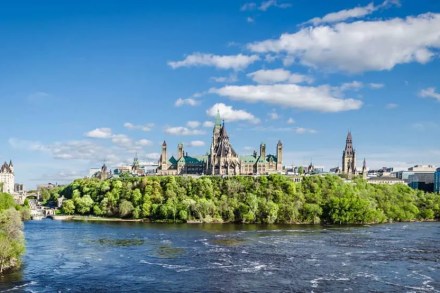
Ziplining and beekeeping may not be your typical city break activities – but then again, Ottawa is not your typical city. Sandwiched between the more sought-after Toronto and Montreal, it’s also not typically at the top of travellers’ wish-lists. When I started planning my visit, the question I kept being asked was ‘why go there?’. But by the time I came back, I was asking ‘why don’t more people go there?’. With its history, architecture, museums, river walks and cycle paths, Ottawa offers the best bits of both a city break and countryside retreat. The Canadian capital is best described as a rural metropolis – imagine picking up the City of Westminster and putting it in the middle of the South Downs.

In the dog house: how pets are reshaping the property market

Since the pandemic, the UK's dog population has boomed to more than 12 million, with a third of households owning one. But while once we might have been content to kit them out with their own kennel, now it seems they’re dictating what sort of home we want for ourselves.  Buyers are increasingly seeking out properties with high-end creature comforts such as built-in dog showers or dog beds integrated into kitchen units. Clare Coode of Stacks Property Search says: ‘Thirty per cent of my clients mention their dogs in our first conversation. Their priorities are dog walks from the door, a dedicated dog room with external access or having a section of the utility room for a sleeping area, low wash basin and underfloor heating.