Spectator Life

Spectator Life

An intelligent mix of culture, style, travel, food and property, as well as where to go and what to see.

In defence of Shakespeare’s Globe

Off to my old manor, the Globe theatre, to join a celebratory gathering of thems and theys for I, Joan, a non-binary telling of the Joan of Arc story. The show has caused no shortage of outrage in various communities on the left, centre and right, and has had the Globe labelled as misogynist by feminists of a certain generation. It is a great compliment to the Globe that even though it only opened in 1997, it is already held so dear that whatever happens there is quickly amplified into a broader debate. In my time as artistic director, we had one Sun front page ridiculing our engagement with foreigners; then later a concerted pile-on from left and right when we had the temerity to invite both Israelis and Palestinians to an international festival.


Roger Scruton’s philosophy of wine

The philosopher Roger Scruton died in January 2020 just a few weeks shy of his 76th birthday. He left behind a large circle of admirers and a correspondingly large shelf of books in a variety of genres – novels, opera libretti, volumes of occasional journalism, cultural and architectural criticism, and various philosophical works, popular as well as technical. He wrote and wrote about music, hunting to hounds and politics. He also wrote about the subject that brings us together: wine. Roger was a gifted teacher, always on the lookout for opportunities to educate the ignorant, enlighten the benighted and expand the horizons of those cramped by bigotry and parti pris. His missionary work extended to the pages of the New Statesman, in whose pages his wine columns appeared.

Inside the recharged Battersea Power Station

At its peak, Battersea Power Station supplied a fifth of London’s electricity, including to Buckingham Palace and parliament. Today, the most electric thing about it is the virtual reality gaming venue on site. Times have changed – but the reopening of the power station allows us to rediscover one of our finest pieces of industrial heritage and to take stock of the neighbourhood's £9 billion makeover. The iconic Grade II*-listed building was decommissioned and shut down in 1983. Over the past ten years, in Europe's largest urban regeneration project, it has been restored and repurposed. The project reaches its climax today when the power station reopens as a residential, retail and hospitality development.

This old thing: the new fashion brag

The skirt I’ve worn most often recently is long, blue and as comfortable as it is flattering. ‘Why, thank you,’ I reply with a satisfied smile when I’m complimented on its delicate floral print and the way it swishes as I walk. ‘It’s Dorothy Perkins, 2011.’ I may not be able to distinguish Dolce & Gabbana from Dior or have set foot in a clothes shop fitting room since 2020, but when it comes to the newest form of fashion bragging, I excel. Nowadays, you see, it’s not the number on the price tag that counts, but the number of years you’ve owned the garment you’re wearing – and my wardrobe is stuffed with clothes that predate Megxit, Brexit, Instagram and half of Madonna’s children.

Old Fashioned values: a cocktail recipe to live by

Take your time. Measure twice. Finish what you start. How will you have time to do it again if you don’t take time to do it right the first time? Work hard at work, then come home. Loosen your tie and relax. Make a highball or mix a cocktail for your wife and yourself. Share the end of the day. We are brothers and we write here of a drink and the man who taught it to us, our father. Teaching us how to make it, he also taught us something of how to live. He was a chemical engineer, and so the formula was important. The drink was the Old Fashioned (or Old Fashion; it doesn’t matter), and this is how he made it.

Make rail travel great again

Since I took the Golden Arrow to Paris and back in 1965, I have always thought of that train journey as one of the great joys of life. I cannot remember how many pre--tunnel trips to the City of Light I made, via Dover and Calais, Folkestone and Boulogne or (best of all) Newhaven and Dieppe. My great regret is that I never took the old Night Ferry, a special set of blue and gold sleeping cars designed to run on both French and British railways, on which you could (in theory at least) slumber your way between the two capitals – though perhaps not while it was actually being shunted on and off the boat.

Hard to swallow: the unjustified hype around Japanese food

Tokyo After 23 years in Japan, having tried everything from yatai (street food) to deep-fried globe fish in a kaiseki (traditional) restaurant, I have come to the conclusion that Japanese food is overrated. It is rarely less than perfectly presented, and it can be superb – but it can also be bland and homogenous. Part of the problem is that much of what delights the Japanese about their food is unrelated to its actual taste. If British food, in the bad old days at least, was simply fuel, Japanese food has always been, to some extent, art. A high-end Japanese meal is the equivalent of a Wagnerian gesamtkunstwerk, with the colours, the choice of bowls, utensils, tablecloth, room, and tinkling water from a nearby stream, if available, part of the all-encompassing sensory experience.

The genius of bottomless brunch

I’m rather fond of the many service stations on the M4, since I am convinced they are all named after Jane Austen characters who never made it into the final drafts of the novels. But as an alternative, west of Lord Chieveley and Lady Membury and just east of Sir Leigh Delamere, you can try the Three Trees Farm Shop & Café just south of Junction 15. There is a bank of four car chargers outside, which is what drew me there. The farm shop is wonderful, with charming staff, and stocked with the kind of high-margin artisanal goods you can buy as presents for the people you are visiting or, better still, for yourself.

Moules mouclade, as big a hit as Beyoncé

Mussels were probably the first thing I ate as a child that I knew at the time was ‘an acquired taste’. They made me feel impossibly grown up, coming with a brigade of bowls, one for the mussels themselves, one for chips, one for bread, one for empty mussel shells, and a little lemon-scented bowl of water to dip my fingers in. My dinner alone must have taken up half the table. From then on, I ordered mussels every time they were on the menu, knowing they would transform me from a gawky 12-year-old girl wearing cargo pants into a veritable sophisticate. But I never once tried moules mouclade. Like Socrates, Casanova and Beyoncé, mouclade is usually known only by its first name, la mouclade – the ‘moules’ implied by the ‘mouclade’.

A wine company after Roger Scruton’s heart

‘Golden’ is often used to describe the hue of some wines in the glass. But there is another resemblance. Gold is a beautiful metal as well as a store of value. Wine, covetable for its taste, can also be a store of value, at least for many years. So it inevitably attracts the attention of investors, the best of whom want to deploy expertise partly in order to finance their drinking. The late Roger Scruton, no less, once wrote a piece explaining how it was possible to drink Château Lafite free. You estimate your future needs and then buy twice the quantity. Within a few years, you should be able to sell half your bottles for the cost of the whole. I never asked him whether he had tried this out. But there is a firm based in London which is run on Scrutonian lines.

Battles royal: how Charles has influenced British architecture

It is the evening of 30 May 1984. The country’s leading architects have assembled at Hampton Court to celebrate the 150th anniversary of the body that represents their interests, the RIBA. It is a sea of black polo necks, masculine chit-chat and clinked glasses. Given that the ‘R’ in RIBA stands for ‘Royal’ – albeit an honour actually awarded by William IV in 1837, three years after the Institute of British Architects’ founding – it is perhaps no surprise that a royal has been drafted in to politely murmur some congratulations over dinner. Yet what happened next was most certainly not expected.

The delicious joy of cooking for one

I like to think of myself as the hostess with the mostest. A combination of my Type A personality, Jewish feeder tendencies and coming of age at the peak of Nigella’s Domestic Goddess era means I can’t resist pulling out all the stops if I'm having people over. (A theme! Welcome cocktails! Ingredients sourced from far-flung corners of Waitrose!) And yet the truth is, there’s no one I’d rather cook for than myself. It wasn’t until my late teens that I properly learnt my way around a kitchen. My mum always did all the cooking at home, so it was only when I moved 100 miles up the M1 to university that I finally had the impetus to explore.  My early attempts were pretty dismal; raw-in-the-middle jacket potatoes stand out as a particular low point.

Lost property: where have London’s overseas buyers gone?

It has been almost a decade since the first apartments at Battersea Power Station went on sale. Such was the excitement about its redevelopment that buyers queued in the chilly dawn for the chance to pick up a £343,000 studio flat or a £6 million penthouse. Most were from overseas, and in four days in January 2013 they collectively spent £600 million. These kinds of scenes are something London’s housebuilders and estate agents can today only dream of. Although we have moved on from worst ravages of the pandemic, and traveller numbers are very much in recovery, many foreign property buyers – for years the mainstay of prime London’s property market – remain missing in action.

Why Antwerp should be your next city break

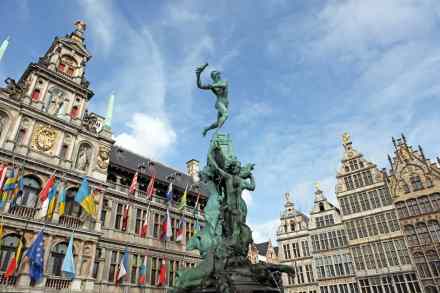
In a sleepy side street around the corner from Centraal Station, there’s a restaurant I return to whenever I’m in Antwerp. From the outside it doesn’t look like much – a perfunctory shopfront, more like a takeaway café – but inside it’s charming, like eating in someone’s home. Welcome to Hoffy’s, a cosy Yiddish enclave renowned for comforting, nourishing cuisine in the centre of this flamboyant, unruly city. For me, this kosher restaurant sums up the spirit of Antwerp, a cultural crossroads since the Middle Ages, a refuge for outsiders of every sort.

How the coffee subscription ruined Pret

I have a deep-seated hatred of the hospitality QR code. It ripped through the industry as part of questionable social-distancing initiatives during the pandemic, taking the place of menus and human interaction – and has stubbornly refused to disappear, making my heart sink when I find one sellotaped to the table of a bar or restaurant. However, there’s one hospitality QR code that I found myself developing a fondness for – the one that comes with Pret a Manger’s coffee subscription. Launched in September 2020, the scheme is a financial godsend for coffee addicts.

Is Will Smith too toxic to be taken seriously?

After 9/11, American comedians found themselves in a tricky situation. Make fun of any of the usual standbys of their trade – politicians, authority figures, Rudy Giuliani, anyone who wore a badge for a living – and they were liable to be shouted down in an angry chorus of: 'Too soon!' Yet if all the jokes they could tell were sanitised and tame, their reputations would decline in an instant. It was a bold comic who tried to argue that telling jokes was a natural human response to disaster; many audiences simply refused to find things funny. Will Smith now finds himself in a similar position. The one-time Fresh Prince of Bel-Air has been a Hollywood pariah since he assaulted Chris Rock on stage at the Oscars in March.

What a greasy spoon in West London tells us about the threat of nuclear war

All-day diners feasting on the full English, the cheese omelette or the celebrated sausage sandwich (£3.80) at George’s Café, at 36 Blythe Road, Hammersmith, probably don’t realise they are dining at an address which is pivotal in global cultural history. So pivotal, in fact, that it might just tell us whether human civilisation is about to be extinguished in a nuclear holocaust. A claim like that needs fleshing out. Here it is.

Does House of the Dragon hate its male viewers?

Mark Millar, creator of series including Netflix’s forthcoming American Jesus, has a theory that movie and TV fashions work in 11-year cycles and that we’re just starting a new one now. If he’s right – and I think he is – then it would explain a lot about the second-most disappointing series currently on TV, House of the Dragon.Up till now, I have been giving huge quantities of benefit-of-the-doubt to House of the Dragon. But having endured episode six, I think my patience is finally exhausted. Any TV episode that begins with a protracted and graphic childbirth scene is going to sorely challenge the interest of at least half of its potential audience: most blokes can’t even stomach the thought of watching their own children being born, let alone someone else’s.

The return of the speakeasy

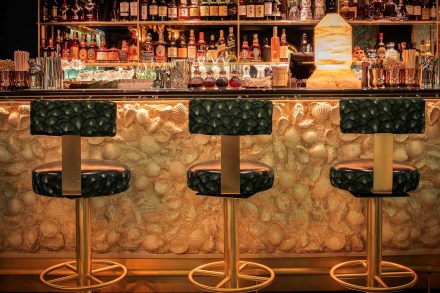
A global pandemic, a booming stock market giving way to painful economic shock, a technological revolution… there are many parallels to be drawn between the 1920s and the 2020s. But if you look very closely, you might find there is another thread linking the two eras: the rise of the speakeasy. These clandestine drinking holes rose to prominence during America’s Prohibition era (1920-33). Following the hardships of the first world war, speakeasies provided a sense of raucous escapism – where jazz music boomed and genders and races mixed freely.The same search for escapism (and nostalgia) is what draws drinkers to them today, says Marco Matesi, bar manager of Downstairs at The Dilly, one of London’s newest speakeasies.

The hateful sterility of new-build houses

Where do you stand on new houses? You know, the little red boxes you see massed along the sides of motorways or clustered on what used to be flood plains? They’re hateful, aren’t they? Now, I know many people (my mother included) who own perfectly lovely new houses – and these houses are indeed all very lovely, and I bow to their pragmatism in putting basic necessities such as effective heating and draught-free corridors above the concerns of taste or aesthetics. But I can’t do it. Whether it’s down to the fact that the windows are a funny shape and as impossible to open as those on an Airbus, or that there are fire doors everywhere with nasty brass handles, or that the ceilings are too low, I could not tell you.

The best hotels for bookworms

It’s hard to beat escaping into a book – but for bookworms looking for an escape that jumps off the page, there are plenty of hotels that cater to a love of all things literary. From a Cornish coastal retreat that’s been immortalised in fiction to a book-strewn adults-only resort on a South Pacific island, here are eight of the best hotels in the world for book-lovers. The only question that remains is what holiday reading to take with you. Carbis Bay Hotel, Cornwall A luxury beachfront resort just outside St Ives, Carbis Bay Hotel appears as The Sands Hotel in two of Rosamunde Pilcher’s novels, The Shell Seekers and Winter Solstice.

If Blairism were a carvery: the Impeccable Pig reviewed

Labour is 30 points ahead, and in honour of this I review the Impeccable Pig in Sedgefield (Cedd’s field), a medieval market town and pit village south of Durham. It is Tony Blair’s former constituency and Camelot, but nothing lasts for ever. Blairism had pleasingly flimsy beginnings. Sedgefield had yet to choose a Labour parliamentary candidate when a young lawyer sat in a borrowed car outside the house of John Burton, head of the Trimdon Labour Club, on 11 May 1983, thinking he should drive back to London.

Fellowship of the Lamb: how we’re saving Tolkien’s pub

I’ve just bought Tolkien’s pub in Oxford. Well, to be more precise, I and more than 300 fellow drinkers have bought the Lamb and Flag, the 400-year-old Oxford pub where the Inklings group of writers – including J.R.R. Tolkien and C.S. Lewis – drank. Like so many pubs across the country, the Lamb and Flag closed, in January last year, thanks to the pandemic trading slump. Across the road, the Eagle and Child pub also closed, in 2020, because of Covid. Tolkien and Lewis drank there, too – they called it ‘the Bird and Baby’. It remains shut. What rare survival stories these two pubs are – or were. The Eagle and Child, owned by St John’s College, opened in 1650.

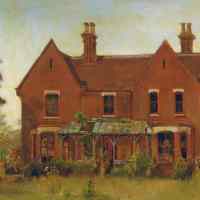
The truth about ‘the most haunted house in England’

Place and story are little remembered now. The rectory in Essex was severely damaged by fire in 1939. But any old house with an unpleasant atmosphere, especially isolated, damp, dark and unmodernised, was once described as ‘like Borley Rectory’. Judging by this long ‘story of a ghost story’, the place showed its true nature from the beginning. Many of the incumbent rectors, their families, servants and guests heard and felt ghosts, always malevolent. Crockery flew about and hit people; candlesticks tumbled down stairs; there were whisperings, cries, thumps and bumps. The usual. Well, odd things do happen in old houses. I have entered rooms which I was immediately desperate to leave.

English rugby is in crisis

Make no mistake: the game of rugby, which many of us love so much, is in serious trouble: it will have to change or die. The game’s scarily existential issue on the field – especially the brain health of those who play it – is one thing. But what is going on inside the heads of those who run the sport? The financial clouds hovering over English rugby are as menacing as Billy Vunipola coming on to the ball at full speed from the back of the scrum. Worcester Warriors are just the start: Wasps are in trouble, and Bristol could be next. There will be more. Only Leicester, Northampton and Harlequins seem out of the woods. Too much money is going out from the clubs and not enough coming back in. It’s as simple as that.

Dress like Macron to cut your energy bills

The French Finance Minister Bruno Le Maire has urged civil servants to trade shirts and ties for woollen polo necks under their suits. It’s part of a drive to heat ministries to no warmer than 19°C – a policy that is compulsory in all government buildings except hospitals and care homes. French petit fonctionnaires can take inspiration from President Emmanuel Macron, who has been leading by example in a classic black polo neck. Ca chauffe! Le Maire’s suggestion has been criticised right and left. The leader of the opposition, Marine Le Pen, tweeted ‘Don’t have enough heating? Let them wear cashmere’, and Gaspard Gantzer, a former adviser to the socialist president Francois Hollande, labelled the idea ‘grotesque and paternalistic’.

Good riddance to long books

As soon as I picked up the parcel, my heart sank. The sheer weight of it gave the game away. Already I could unhappily picture myself struggling to hold it in one hand without straining a wrist while standing on the Piccadilly Line. I’d ordered it after coming across a couple of positive references to it in quick succession: Lonesome Dove by Larry McMurtry. Written in the 1980s, set in the 1870s, it’s a cowboy story that won a Pulitzer in its day and still has its enthusiasts. I just hadn’t thought to check its length. In fact the paperback isn’t much smaller than a box of Kleenex and runs to 839 pages. That’s scarcely less than my paperback of Ulysses and more than other whoppers I’ve read lately, The Magic Mountain and Our Mutual Friend.