Jon Morrison

The surprising second life of Colonel Seifert

From our UK edition

There was a time, not so very long ago, when the skyline of London was dominated by the work of one architect: not Sir Christopher Wren, but Colonel Richard Seifert. But while Wren is universally admired, Seifert has been reviled. Architects hated his success; the public his uncompromising brutalist aesthetic. Yet now, more than two decades after his death, that appears to be changing. Seifert – who did a spell in the Royal Engineers during the second world war and then insisted on being addressed by his military rank throughout his life – was often said to have had more of an impact on the capital than anyone bar the creator of St Paul’s.

What it takes to build a modern home high on the Dorset cliffs

From our UK edition

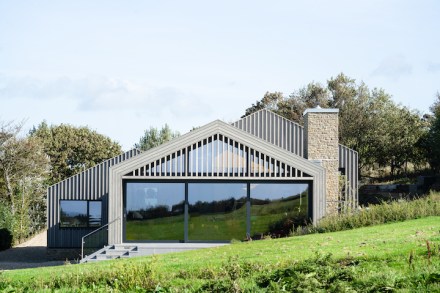
With its golden sand sweeping along the bay towards Lyme Regis, the young river bubbling into the surf and the weathered limestone cliffs rising and falling along the Jurassic coast, there are few more picturesque beaches in the country than the one at Charmouth. And it was, of course, that view that Allan and Ali fell in love with. Ali, who works as an advisor on catastrophic injury awards, and Allan, a retired KC who had spent most of his working life travelling around the north of England dealing with criminal cases, just happened to be passing an estate agents and saw a picture in the window. It wasn’t just love, it was love at first sight. 'We weren’t even looking for a house,' Allan says. All the rooms except two have cathedral ceilings.

What Japanese cities can teach us about architecture

From our UK edition

There are three things that occur to you when you travel the length of Japan: that kimonos are surprisingly good for any occasion; that the country’s reputation for cruelty may partly derive from breakfasts comprising tea porridge and prawn soufflé; and that the hordes of camera-wielding Japanese tourists taking thousands of snaps – a comic trope in the 1980s, at least – were really just ahead of their time and the rest of us are only now catching up thanks to our iPhones.

The architecture of the Elizabeth Line

From our UK edition

There was much to celebrate last year on the architecture front – the end of the pandemic brought the opening of long-delayed projects ranging from the Academy Museum of Motion Pictures in Hollywood to the Taipei Performing Arts Centre in Taiwan. But there was one construction project that stood head and shoulders above the rest in size and ambition, and that was the transport link formerly known as Crossrail.  The Taipei Centre may have been seven years late and the Academy Museum (now home to Judy Garland’s red slippers and R2D2, among other artefacts) more than a couple of decades in gestation, but that is nothing compared with London’s Elizabeth Line, which was first proposed in the 1940s.

Hot property: 10 buildings to look forward to in 2023

From our UK edition

Every year produces a number of ‘firsts’ and ‘mosts’ in architecture – and 2022 was no different. Most obviously, at least for residents of New York, the world’s skinniest skyscraper, with sixty storeys of single apartments stacked to a height of 435 metres, was completed on ‘billionaire’s row’ in Manhattan, perhaps becoming the ultimate example of ‘form following finance’ in the construction annals.

On the trail of Gomorrah in Naples

From our UK edition

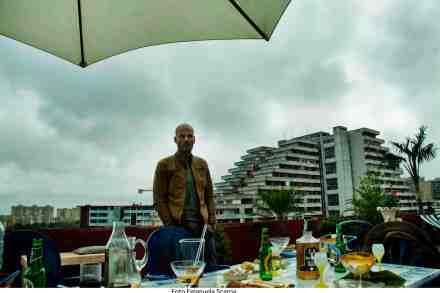
‘Isn’t Naples beautiful? I’ve always dreamt about it. I always wanted this city all for myself; I didn’t want to share it… I alone deserved it because of everything I lost and I would have done anything to get it.’ So says Ciro Di Marzio – nicknamed ‘the immortal’ because he has survived so much mafia bloodletting – in the hit TV crime drama Gomorrah.   He is not talking about the churches or castles, the arcades or theatres or museums. He may have been out on the bay at night when the words are uttered, but the Naples he knows, grew up in and by then controls is the Naples of Scampia and Secondigliano, places up on the ridgeline of the city: the Naples of high rises and concrete, the Naples of drugs and murder.

The £14m Hyde Park mansion with an extraordinary story

From our UK edition

When Joachim von Ribbentrop, Hitler’s hapless roving emissary, descended on London in 1936 with orders to negotiate an Anglo-German alliance, one of his first ports of call was the elegant mansion just off Hyde Park owned by Sir Roderick Jones, chairman of the Reuters news agency, and his wife Enid Bagnold, the writer of National Velvet. Wangling an invitation to dinner was a surprisingly astute move – the parties at 29 Hyde Park Gate were legendary, usually attracting a gilded mix of aristocrats, politicians, journalists and writers, such as H.G. Wells and Vita Sackville-West – and Ribbentrop had convinced himself that by schmoozing luminaries he could persuade Britain to side with the Nazis. It did not go well.

Battles royal: how Charles has influenced British architecture

From our UK edition

It is the evening of 30 May 1984. The country’s leading architects have assembled at Hampton Court to celebrate the 150th anniversary of the body that represents their interests, the RIBA. It is a sea of black polo necks, masculine chit-chat and clinked glasses. Given that the ‘R’ in RIBA stands for ‘Royal’ – albeit an honour actually awarded by William IV in 1837, three years after the Institute of British Architects’ founding – it is perhaps no surprise that a royal has been drafted in to politely murmur some congratulations over dinner. Yet what happened next was most certainly not expected.

The rise of the eco-mansion

From our UK edition

In a wide clearing in woodland in a county of southern England that shall remain unnamed, a very unusual property is being built from brick and wood. When complete in a couple of years’ time, a lost rambler who stumbles across it may think he has found an old country house dating from the early 18th century, perhaps even the late 17th. With its classical proportions and time-honoured elegance, the building could be mistaken for an unadvertised outpost of the National Trust, the ancestral home of minor gentry, or even the setting for Bridgerton or some other regency drama. Yet this will be a thoroughly modern home, albeit one that embraces certain ancient methods to achieve its agenda: being as eco-friendly as possible.