Spectator Life

Spectator Life

An intelligent mix of culture, style, travel, food and property, as well as where to go and what to see.

How to survive the party season

December is here and it's going to be murder out there from now until the new year. Spectactor Life writers explain how to get through it – from swerving bores and turning down invitations to lining your stomach and crashing with panache... Swerve bores Celia Walden When trying to escape the party bore, pick an excuse that’s as close to the truth as possible: ‘So sorry – just seen a man with a tray of bellinis,’ or ‘Be right back: I love pigs in blankets!’ It took me decades to work out that only the most realistic line won’t hamper the rest of your night.


What teachers really want for Christmas

As the end of term approaches parents may be wondering what to buy their child’s teacher for Christmas. It’s the season of goodwill, after all. It’s also a golden opportunity to win a way to Sir or Miss’s heart, so they’ll continue to take good care of little Olivia or Oliver in the new year. The days of apples left on desks are long gone, so what to give teacher might cause some confusion. Money is tight this year, an added complication – although at some of the independent schools where I’ve taught gifts seem to become more extravagant each December. So what kind of presents do we teachers really want? The short answer, especially at the end of a long, tiring term is: ‘Something alcoholic, of course – preferably wine or designer gin.

Indiana Jones and the absurdity of Hollywood de-ageing

This week, in homes across the land, there is one guarantee: somewhere, someone will be watching one of the Indiana Jones films, and it’ll likely be the first or the third in the series. Raiders of the Lost Ark and Indiana Jones and the Last Crusade are little less than perfect seasonal comfort food: witty, exciting, stuffed full of indelible characters and unforgettable set-piece action scenes. These films stand as those rare pictures that, however many times you watch them, continue to be fabulously entertaining. The others in the franchise – Temple of Doom and Kingdom of the Crystal Skull – are less effective, and the latter has become a byword for mediocrity.

The office Christmas party is back with a vengeance

I’m bad at Christmas. I hate turkey, wrapping presents and the idea of forced, planned fun. My family – mostly – shares the same view. Extra shifts are picked up and presents are sent with time to spare to avoid actually having to see each other. Fortunately, even if I’m no fan of Christmas itself, there is one saving grace: the office Christmas party. No other work event can compare. Leaving drinks are strained, after-work drinks are pedestrian and inviting colleagues to things like birthdays often just feels wrong. The office Christmas party is the opportunity for a night of true debauchery before you all head off for the festive break, leaving just enough time to live down anything embarrassing you might have done.

How to make a profit on the horses

Welcome one and all to this new weekly column on horse racing. The industry is facing some challenging times – low prize money, small fields, rising costs for trainers/owners, a lack of cohesive leadership and more.  But it is not all doom and gloom and Penworthy – the name derives from a character in P.G. Wodhouse’s short story The Purity of the Turf – will try to lift the spirits of those passionate about the so-called Sport of Kings.   This will hopefully be achieved not by solving, or even addressing, any of the above important topics but instead providing some winning bets. For this is a tipping column – it will try to ensure that those who enjoy a bet actually make money from their hobby too.

Extreme E: how motor racing turned green

Prior to kick-off, Fifa declared the World Cup in Qatar to be ‘a fully carbon-neutral event’, triggering enough spluttering, snorting and involuntary cackles to feed an entire wind farm. Seven giant brand-new stadiums, open-air air-conditioning in the desert, goodness knows how many long-haul flights in and out, and an armada of cruise ships to store the Wags. Righto, Mr Infantino. The Fifa president is the poster boy of talking tripe – the Comical Ali of sports-washing. Football is losing the climate fight like Costa Rica lost against Spain (7-0). Instead, the world’s most eco-friendly sport is motor racing. I’m serious. Let me introduce you to Extreme E. Extreme E, or XE for short, is like Mad Max meets The Blue Planet.

The full English is a breakfast to be proud of

The British playwright Somerset Maugham once said that ‘to eat well in England you should eat breakfast three times a day’. I think he meant it as a jibe, but we should take it as a compliment. Our breakfast is as powerfully evocative of England as any part of our cultural heritage. In The Lion and the Unicorn, stirred to patriotism amid the country’s daily bombardment in the Blitz, George Orwell opined that English civilisation was ‘somehow bound up with solid breakfasts and gloomy Sundays, smoky towns and winding roads, green fields and red pillar-boxes. It has a flavour of its own’. That flavour is of sizzling bacon, straight from the pan. Rare is the Englishman who doesn’t have strong views on how they like it: toasted bread or fried? Mushrooms or tomatoes?

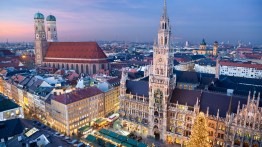
Why Munich is the ideal Advent destination

Ambling through the Christkindlmarkt, Munich’s biggest Christmas market, feeling distinctly tipsy after my third (or maybe my fourth?) mug of Glühwein, I experienced a strange sensation, something I hadn’t felt in ages. For the first time in a long while, I realised I was feeling rather festive. Back in Britain, I’m the archetypal Christmas grouch – but leave me in a German Christmas market for a few hours and I become a big kid again. This is the first year since Covid that Munich has been able to mount a proper Christmas market season. That might not sound like such a big deal to Brits, but it’s headline news in Bavaria.

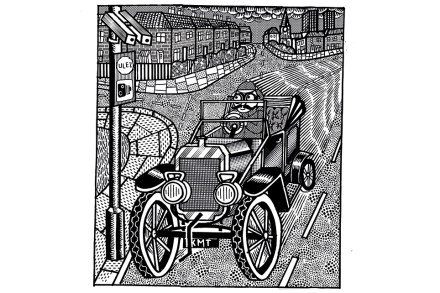
How to avoid paying London’s Ulez charge

It’s getting hard to escape low emission zones. In Birmingham, Oxford and Bristol – and pretty soon the whole of London – unless your vehicle is squeaky clean, you are going to have to pay every day that you drive. London--based readers probably know by now of Transport for London’s plans to expand its £12.50-a-day Ultra Low Emission Zone (Ulez) to every single borough, from Hayes to Hornchurch, Cheshunt to Caterham, and with a sticky-out bit which I think has been deliberately designed to include Chessington World of Adventures. For many, this is an outrage. The Conservative MP for Carshalton and Wallington, Elliot Colburn, has described himself as ‘very, very angry’, calling the expansion a ‘disgusting move’.

Michael Beale has broken my heart

Most football fans have had their attention riveted on Qatar for the past couple of weeks, but for those of us who support Queens Park Rangers there’s been an unwelcome distraction at home. Our manager Michael Beale, who’s only been in charge for 21 league games, announced on Monday that he’s leaving us for Rangers, the Glaswegian football club. Having spent a huge amount of time and effort recruiting a manager in the summer – and seemingly picking a winner – QPR’s top brass will have to start again. Beale was one of the few people in authority (me included) who hadn’t disappointed my children Such behaviour isn’t particularly unusual in the modern game.

Eddie Jones must go

So should he stay or should he go? That’s Eddie ‘I don’t really care what other people think’ Jones, currently ruling the roost over England rugby at Twickenham. Though for how long is another matter. Clearly the language around Jones is changing: the announcement of a review of England’s dismal recent performances very clearly avoided any of the usual ‘We stand right behind the coach’ and ‘We are pleased with the team’s steady progress’ guff that normally sugarcoats such statements. The review of course is largely anonymous, in keeping with English rugby’s characteristic transparency.

My Advent vinousness

Some simpering bishops are urging their clergy to make sure that carol services do not interfere with the ship of football. That leads to an obvious conclusion: Christmas is too important to be left to the Church of England. The vulgarities of commercialisation are distressing, but survivable. Last year, one friend became fed up with his brats’ lust for presents and upbraided them: ‘If this goes on, you’ll be given nothing but bibles and prayer books.’ He remembered his father saying the same to him. No doubt his grandparents delivered similar thunderbolts in their day. Thus life rolls on.

A daily shower is money down the drain

When did it become an inalienable human right to have a shower every day? I ask the question because pretty clearly it wasn’t always so. Yes, the Romans had showers – of course they did (they probably had the internet, too, but archaeologists can’t see it). A potter about online will tell you that we got the first mechanical shower here (hand pumped) thanks to the ingenuity of a plumber from Ludgate Hill named William Feetham. That was in 1767, which means that by the time Jane Austen was getting ink on her fingers a shower was an option for some. So the answer to my question is somewhere between 1767, when I expect a monthly bath was de rigueur for most of us, and around 1990, by which point it become common for Britons to take a daily shower and regard it as essential.

How to eat frites the Belgian way

Many things about Belgium are impenetrably mysterious to the incoming foreigner: the commune system, which language to use, how to politely eat moules. But few are as cryptic as the menu of sauces that accompany Belgian frites. Ketchup, tartare, barbecue and mayonnaise seem fine. But what is Samourai? Andalouse? Mega?  Unlike many great Belgian things that have successfully been exported (Trappist beer, chocolate, Tintin, speculoos biscuits, Audrey Hepburn), frites can only be experienced on home turf. And my, aren’t they so Belgian. First, the friteries or fritkots in Dutch – chip shop kiosks found wedged on to street corners and in city squares – are totally egalitarian and the service is totally grumpy.

A house-hunter’s guide to Somerset

It’s famed for cider, cheese and Glastonbury, but there’s much more to love about Somerset.  Alongside a popular private members' club (Babington House) and a global gallery outfit (Hauser & Wirth), its most in-vogue country house hotel (The Newt) has helped to attract a steady stream of creative emigres. Among those embracing the county's way of life are internationally known designers such as Alice Temperley and Bill Amberg and landscape gardeners such as Lulu Urquhart and Adam Hunt, whose rewilding garden won best in show at this year's RHS Chelsea Flower Show (which happened to be sponsored by The Newt).

The tyranny of card-only payments

Even though being a right-centre comedian accords me default outsider status, I am not in any way an edgy bloke. Consequently, I find myself surprised at just how unnerved I’ve become by the drift towards a cashless society. I’m not yet at the stage where I’ve started using phrases like ‘the great reset’ or renaming my first son ‘Crypto’, but I have become a bit twitchy about yet another huge change concerning the fundamentals of how we live (and the way we all ignored it when we realised we could go to a restaurant with a built-in reason to not tip). The perils around the exclusive use of contactless payments are – like most things – something I hadn’t thought about much until it affected me. I was doing a couple of gigs in Dublin.

How to see Switzerland by train

As we all know, the Swiss love their clocks, their cheese and their chocolate. They also adore their railway. The trains are clean, comfortable, convenient and you can set your (Swiss) watch by them.  The system is 175 years old this year, a fact recently celebrated by the running of the world’s longest train through the Swiss Alps. It was quite a feat and took years to plan. The 1.2 mile-long train comprised 100 carriages and passed over 48 bridges and through 22 tunnels during its 15-mile journey, setting a new Guinness World Record as it did so. If you’re exasperated by British trains with the constant strikes, delays, cancellations, melted rails, frozen points, leaves on the line or the ‘wrong type of sunlight’ (do you remember that one?

In defence of supporting both England and Wales

Michael Sheen has had a problem with the royal family for some time – and it’s only got worse since William was appointed Prince of Wales. The actor, best known for playing Tony Blair but somewhat to the left of him politically, has criticised the notion of an Englishman being nominal head of the principality. Sheen has lately carved out a niche as a pound-shop Richard Burton addressing motivational monologues to the Welsh football team, to little effect thus far. And he predictably stepped up his campaign ahead of the World Cup: how could William, he asked, reconcile his role as President of the English Football Association with his position as Prince of Wales – particularly when the two nations have been drawn to play each other tonight?

The best out-of-print books (and where to buy them)

Those overstuffed shelves of the latest releases aren’t always the best place to start when you’re shopping for a book to read (or to give as a Christmas gift). You can find plenty of out-of-print books with timeless appeal that are worth snapping up – if you know where to look.   Elizabeth von Arnim’s Introduction to Sally, for example, is almost 100 years old, but is a very enjoyable read if you can find a copy. Mr Pinner is a shopkeeper and he and his wife have longed for a child for years, so they are thrilled when their daughter is born. Mr Pinner wants to call her ‘Salvation’ but they compromise on ‘Salvatia’ (shortened to Sally). Sally grows up to be the most beautiful girl anyone has ever seen.

Is North London’s housing market recession-proof?

Of all the suburbs in Britain none has become quite so politicised as North London. This slightly leafy (and lefty) swathe in and around Islington – with Hampstead Heath marking its northern edge and Regent’s Park its southern boundary – is treated by our recent political leaders as a kind of shorthand for, to borrow a phrase from Suella Braverman, the ‘tofu-eating wokerati’. Liz Truss took a dig at her privileged metropolitan enemies who ‘taxi from North London townhouses to the BBC studio’ to criticise her, ignoring the fact that Islington is not all Upper Street boutiques and multi-million pound homes. Islington is one of London’s most deprived boroughs, and more than a third of children in Camden live in low-income families.

The myth of the career woman

The image of the single, childless ‘career woman’ is drawn so sharply in our minds, so deeply ingrained in culture and overused in media, it obfuscates the real story. Contrary to popular belief, most working women are not putting their careers ahead of love, marriage and motherhood. Never mind that there are no ‘career men’ – no one accuses a single, childless man of prioritising career over love and family just because he’s single and can pay the rent. But women are made to wear this label – though I have yet to meet a woman who has declined a date with a guy she’s interested in because she’d rather be on a Zoom call.

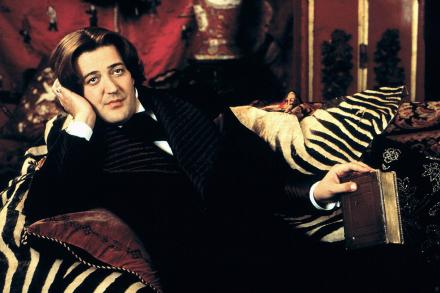
The best Oscar Wilde films

It is 122 years this week since Oscar Fingal O'Flahertie Wills Wilde died – in exile, poverty and disgrace – at Paris’s shabby St Germain Hôtel d'Alsace. His last words were said to be: ‘My wallpaper and I are fighting a duel to the death. One or the other of us must go.’ Despite Wilde’s precipitous fall from grace and the ignominy heaped upon him (his children had to change their surname to Holland), within a relatively brief time his plays were revived and books reissued to renewed popular acclaim. And more than a century later, that appeal hasn’t faded: this year in England alone, The Importance of Being Earnest toured the north and Richard Strauss’s adaptation of Salome was performed at the Royal Opera House.

The curse of Belo Horizonte

When England play the USA this evening in Al Khor, Qatar, it will be the twelfth time the two sides have met. England have had the upper hand in most of the previous 11, winning eight and recording scores as comfortable as 10-0, 8-1, 6-3 and 5-0. We easily beat them 3-0 at Wembley just three years ago.  And after their respective opening games in this tournament – England thumping Iran 6-2 in their best-ever start to a World Cup, the USA nervy and stuttering by the end of a 1-1 draw with Wales – most neutrals would expect nothing other than a routine win for England. The bookies make England comfortably odds-on too. But all of this is overlooking one factor: the Americans are English football’s bogey team.

The rise and fall of the Sealyham terrier

‘What breed is he?’ is the question I hear most when I’m walking my six-month-old Sealyham terrier, Murray. Most of the time my answer is met with blank looks or ‘I’ve never heard of that’. But just once in a while, someone will recognise the breed – and when they do, they usually have a Sealyham story to tell. The Sealyham is a breed that has a few stories of its own. It was developed between 1850 and 1891 by the eccentric sportsman Captain John Edwardes. While he didn't leave many notes of what breeds went into it, it's thought that the now-extinct Old English terrier, the West Highland terrier, the corgi and the Dandie Dinmont terrier all contributed.

Three cheers for Branston Pickle

There is no shortage of foodstuffs (or people) jostling for admission into the hallowed hall of ‘national treasures’. Perhaps the best litmus test for right of entry is time-proven popularity, and appeal across class and generational divides. No mere passing flavour of the month or millennial indulgence. Something that unites us all in affection. Branston Pickle ticks the boxes. Branston and cheddar cheese were made for each other. Like jam and clotted cream, or rhubarb and custard; brought together they become more than the sum of their parts. One brings fruity tartness in perfect juxtaposition to the other’s creamy richness. Many a grand dinner party features an elaborate cheeseboard accompanied by membrillo and pickled figs.

Bread pudding is the perfect bridge from autumn to winter

I am incapable of throwing anything away in the kitchen. In my fridge, there must be at least half a dozen pots of bits and bobs, dishes of leftovers and scraps. In my freezer, a bag of parmesan rinds has filled slowly, each intended to be chucked into a pot of soup or stew to bring savoury depth, and there’s even an optimistic box of pea pods that I’m convinced I will one day turn into a stock to make an authentic risi e bisi. All await a future transformation, some kitchen wizardry that will rescue something that is a little past its best. Although I confess I sometimes find myself buying a bunch of ingredients just to use up something I’ve squirrelled away, or plain forgotten about and left a touch too long.

The overlooked brilliance of Branaire-Ducru 

At the end of last century, when there were grounds for optimism about Russia’s future, an increasingly popular word expressed this: stabilnost – stability. Russians would roll it round their mouths as a Texan would use ‘goddam’, or an English after-dinner drinker of an earlier vintage might evoke his enjoyment of the beverage by letting the word ‘port’ linger across his palate. I do not suppose that there is much talk of stabilnost in Moscow these days, and we could do with some of it here. Still, there are ways of banishing dull care, if only for a few hours, and drinking fine claret is one of them. The other evening, I was at a tasting of Branaire-Ducru and my first conclusion was that I had not drunk it nearly often enough. It is a St Julien.

The beauty of gaslights

Turn down an alley off St James’s Street (the east side), lined with old painted panelling, and you are in Pickering Place, which pub quizzers say is London’s smallest public square. It is certainly charming, with stone paving, wrought iron railings, Georgian windows and a sundial on a pedestal. A gaslight on a wall bracket used to glow sympathetically in the space. Now Westminster Council has replaced it with an LED. It had threatened to do the same for all its 299 gaslights still under council control, but a rearguard action has halted its plans. The beauty of gaslights may depend on your starting point. They were, at a crucial moment of his life, anathema to John Ruskin.