Spectator Life

Spectator Life

An intelligent mix of culture, style, travel, food and property, as well as where to go and what to see.

The secret to a good marriage is drink

Many years ago, when entertaining my then girlfriend (now wife) for our first Valentine’s Day, I spent a considerable amount of time and effort preparing an authentic beef bourguignon. With more than one bottle poured in during the slow-cooking process, it did not offer the lightness one might desire on such an occasion. After pushing it around the plate for an hour, she was less than delighted to then be presented with pudding – a sherry trifle. In the years since, not unreasonably, she has insisted on planning the menu. I have been left in charge of drink. For an excellent white wine, I would suggest Bodega del Abad’s San Salvador Godello 2021.

The horror of the male wig

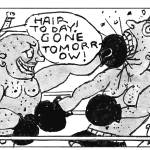
Horrible injuries are commonplace in boxing but none, surely, has been quite so devastating as that sustained by the heavyweight Jarrell Miller. In the moment it took for an uppercut to land, the Brooklyn boxer’s life changed forever. Miller went from professional athlete to, well, ‘the man who got his wig punched off’. I have rewatched Miller’s hairpiece getting punched off countless times, my hand clamped to my mouth. Why didn’t his team throw in the towel? Why didn’t the referee just stop the fight? Why didn’t Miller, his wig flipped up at 90 degrees like a kitchen bin lid, simply step out of the ring, exit the arena and start a new life several thousand miles away under an adopted identity?

The hellish side of Bumble

Valentine’s Day is upon us. I’ve never liked it. As an ugly ginger kid with a beautiful – much older – half-Indian sister, it was torture. Helen was a glamorous air stewardess and never short of cards or flowers. While I sat in my room listening to David Bowie and staring at the Starsky & Hutch posters I’d saved up for, Helen would be getting whisked away in a Mercedes to Joanna’s or some other club in Glasgow. In the run-up to Valentine’s Day 1976, age 12 and desperate for a card, I asked 11-year-old George next door if he would be my boyfriend. He said no. I shrugged and we resumed our den-building with his wee sister Lorna.

How ‘chicken yoga’ came to the Cotswolds

Halfway through a downward dog, red-faced and breathing a little too hard, a hen stops about 18 inches from my face. It squats, and lifts its a tail a fraction. There is a brief, unmistakable pause. Something warm and biological drops onto the mat beside me. It is not an egg.  From the front of the class, the instructor’s voice calls out, instructing us to inhale deeply.   To my side, another chicken wanders into the danger zone just as a pose collapses and someone nearly brings an arm down on it. The bird emits a short, offended squawk.   How have I ended up here?

Would you be friends with a Reform voter?

Most of us have had disagreements with friends over politics at some point in our lives. Or worse. One of the constant threats to friendships is that such differences could one day spill over into acrimony or result in a full-blown falling-out. In my youth, the election night parties held by my parents seldom ended without raised voices and tearful eruptions – aided, admittedly, by the vast consumption of alcohol – and who could forget the divisions and severed friendships occasioned by the EU referendum in 2016?  At least most folk above a certain age have been able to establish and sustain friendships with those of contrasting political persuasions. The same can’t be said for Gen Z.

Rediscovering Dylan Thomas, pint by pint

It was the longest pub crawl of my life – visiting numerous boozers across 250 miles over ten days – in homage to one of Britain’s most infamous drinkers, Dylan Thomas. I’m not, I must qualify, a Thomas obsessive, as this enterprise might suggest. If exposed to Thomas at length, I find myself recalling Private Eye’s 1980s characterisation of Neil Kinnock: ‘The Welsh windbag.’ Although, in fairness, even Thomas himself described his own verse as ‘a steaming pile of Welsh whimsy’.

Am I allowed to find Tom Stoppard boring?

I didn’t breathe a word of my true reaction while filing into the top-floor bar of the Old Vic theatre last week after the three-hour production of Tom Stoppard’s Arcadia was over. It would have been mortifying to be overheard muttering any adverse comments, when swaths of intellectual Stoppard-lovers from all over London and the Home Counties were crowding on to the staircase. Stoppard is a national treasure and to say anything rude about his work, especially in the three months after his death, would be heresy.   It was only on the pavement walking towards Waterloo that I dared to say to my husband: ‘I must say, I wasn’t moved by it.

The puerile fantasy of Bridgerton Britain

There is something inherently embarrassing about watching Bridgerton in Britain. It is so palpably, monstrously, uninhibitedly woke; an American fever dream of England in which an all-English (and the odd Australian) cast cavort as members of the ‘ton’ for money they’d probably never get from the BBC. In front of the great Bridgerton mood board scrawled with such words as ‘Downton Abbey’, ‘Jane Austen’, ‘Upstairs Downstairs’ and – of course – the most Shondaland touch of all, ‘Diversity!’, the likes of Adjoa Andoh and Lorraine Ashbourne do their thing while (one imagines) the suits at Shondaland clap with pleasure. Shondaland is the woman (Shonda Rhimes) and production company behind Netflix’s adaptation of the Julia Quinn novels.

rome

Don’t bother visiting Rome

As a general rule, once a city erects turnstiles to tourist attractions which were once free to visit, it is time to go elsewhere. Never more so than in the case of Rome. Last week the Italian capital introduced a €2 charge to visit the Trevi Fountain. Tight-fisted tourists like me will still be able to see the Trevi from a distance – it happens to stand in a public street. The charge will be only for sad Instagrammers who want to get close enough to chuck their coins in the water. The city’s tourism department has suggested the fee is needed to manage the throngs of vacationers. Even then, God forbid, they won’t be able to take off their sandals and take a dip – that will earn them a €500 fine. Which raises the question: why bother visiting the fountain at all?

A Vermeer of a car – the Rolls-Royce Ghost Series II

A Rolls-Royce press trip is like being taken by Mary Poppins – Mary of the novel, not the film, she is more savage and interesting – and shown a thing you would not otherwise know. When you arrive at the destination – it is Provence today, but it could be California or Ibiza tomorrow – you find the cars at the airport, laid out in blue and lilac and grey. Among them stand smiling men, whose job it is to help you drive the car: during the self-drive part they stand at roadsides smiling at you, though I think they have had weapons training. If you know this is a Rolls-Royce press trip, fair enough.

Is Industry the Brideshead Revisited of our times?  

At first glance, there are few similarities between Brideshead Revisited, Evelyn Waugh’s classic 1945 novel – later adapted into an equally classic ITV series – of prelapsarian bliss in Oxford and Industry, the BBC’s adrenaline-fuelled show that exposes the dark iniquity at the heart of the financial industry. The one is a languid examination of (discreetly portrayed) same-sex love and Catholic guilt, and the other is a profane, sexually charged and palpitation-inducing dive into hedonistic self-indulgence. Brideshead is plover’s eggs and Meursault; Industry class A drugs and group sex. They would seem as distinct from one another as chalk and (Comté) cheese.

Auctions speak louder than words

Can’t get an appointment with your GP? Nowhere to sit in surgeries crammed with the ill and infirm? Spare a thought for your local auctioneer who is also dealing with the effects of a long winter of discontent. The cost-of-living plague, from which almost nobody is immune, has prompted people to rummage around in their cupboards for treasure and to wonder whether they really want to continue to insure that Raeburn or Lawrence at vast expense. Throw in the epidemic of rocketing gold and silver prices, and you’ll struggle to get an appointment with an auctioneer, busy as he is weighing Georgian candlesticks and making house visits to inspect the family portraits.

A Brit’s guide to Mexican food

I’m in Mexico City and spoilt for choice as to where to go for a lunchtime taco. Taquerias are everywhere, each entrance best described as a hole in the wall: you step in from the street into a dark, cavernous stone vault and go past the bar, stocked with dozens of bottles of spirits and a fridge full of beer. I honestly feel like I’ve never had Mexican food before, except once in San Francisco. On that occasion, I went to a canteen close to the border with a friend, where we were the only two non-Mexican people eating. The salsas were bright as traffic lights and there was charred corn doused with chilli and lime salt, fresh white cheese and lime butter. The tortillas were the soft corn ones, unlike any I’ve seen in UK outlets, with hard, U-shaped shells made of wheat.

The gentrification of British crime novels

Eighty years ago this month, in February 1946, the left-wing Tribune magazine published George Orwell’s essay ‘The Decline of the English Murder’ in which the writer identified a certain class of crime as most appealing to the tabloid-reading British public – and contrasted the ‘cosiness’ of this type of early 20th-century domestic murder with the brutal sadism of killings committed in Britain during the second world war.  Two years previously, in 1944, while war still raged, in another essay entitled ‘Raffles and Miss Blandish’, Orwell specifically contrasted the ‘hard-boiled’ school of crime fiction with the gentlemanly Raffles stories of E.W. Hornung, featuring a well-mannered upper-crust jewel thief.

Back mudlarks at Newbury tomorrow

With more rain to come, the ground at Newbury tomorrow is going to be really testing for the William Hill Handicap Hurdle (3.20 p.m.). That will make the result more of a lottery because several of the horses at the top of the market would not ideally want it looking like a bog. Those preferring a sounder surface may include my long-term tip for the race, Dance and Glance, put up each way at 20-1. He does have form on soft ground but Newbury 'heavy' is a different kettle of fish altogether. Hot Fuss did this column a good turn, winning at a double-figure price at Windsor three weeks ago and he is capable of defying a 5 lbs penalty tomorrow.

We don’t need to see radio DJs’ faces

In a week in which embarrassing and damaging revelations about past misdemeanours are very much in vogue, let me reveal one of my own. When I was seven years old, I wrote in to Jim’ll Fix It. My request was to play a giant Wurlitzer organ, preferably the one in the Blackpool Empress Ballroom. To my retrospective relief, Savile didn’t respond to my letter. But I did purchase a second-hand, two-tier Hammond organ when I was at university, which I played as part of an acid jazz group. No tapes of our band’s songs or gigs survive I am delighted to state. I was reminded of my rather strange and atavistic early love of organs last week when I read of the death of Nigel Ogden, the presenter of the long-running Radio 2 show The Organist Entertains.

Bring back hats!

I saw a chap walking down the road the other day looking, unusually for my part of town, the very quintessence of sartorial elegance: polished brogues, tailored pin-striped suit, rolled umbrella. He was a modern-day Beau Brummell. But what really topped off his ensemble – literally and figuratively – was a bowler hat. I haven't seen anyone wearing one of those for decades. In fact, the last time was about 35 years ago when a girl arrived at a party in one. Cruelly, I pointed and said: 'Ha! Charlie Chaplin!' The awkward silence that followed shamed me rather than embarrassed her.  Since the bottom dropped out of the officewear market during Covid, making an effort with daytime dress is unusual enough.

Don’t write off Wales just yet

My friend Tim Andrew has admirable priorities. When I told him I had tickets for this week’s Six Nations opener at the Stade de France, he texted back: ‘Final whistle to a restorative glass in the 6ième arr: 40 minutes. Can’t even get to the station at Twickenham in that time.’ That’s the attitude you expect from a former chairman of the P.G. Wodehouse Society. I last saw Ireland play in Paris 14 years ago, as a reporter, when the first attempt at holding the match was called off at the last moment. I arrived at Gare du Nord at noon with the temperature already below zero. There is no undersoil heating at the Stade as it was built on a gasworks. It had dropped to -10°C by the scheduled 9 p.m. kick-off.

Beloved by Chinese tourists – and the Labour party: Phoenix Palace reviewed

The exterior of the Phoenix Palace is cream with golden letters like the napkin and the Laffer curve, and it is squeezed below an Art Deco mansion block in Baker Street. The street is self-effacing, stuck between the Marylebone Road and the Sherlock Holmes museum, which exists because London is, among other things, morbid. The cuisine is Cantonese. Understatement is a feint here, though; the Phoenix Palace is famous, and always on the best dim sum lists. It is beloved by Chinese tourists and students, and, weirdly, the Labour party, whose grandees smile uneasily from photographs, like hostages to the economy, and rice. The food comes near instantly.

Cheese and onion pasties: how to make a Greggs classic at home

‘That’s not a pasty!’ my husband declares loftily, eyeing up what most definitely is a veritable clutch of cheese and onion pasties emerging from my oven. Handsome, puffed up, golden brown (the pasties, not the husband), filled with a cheese, potato and onion filling, contents threatening to splurge. The steam rises from them like in a cartoon, almost beckoning us towards them. ‘Oh, OK,’ I reply, sweetly. ‘I shan’t trouble you with them.’ He backtracks. No, no, perhaps he was hasty. What did he know about pasties? Shouldn’t he just try them anyway?

Is perimenopause a myth?

I was born in London in 1982 and my parents were neither hippies nor part of the Women’s Liberation Movement. As a result, frank talk about body parts, functions and sexual development was generally non-existent. The arrival of my period was not something I remember having any feelings about whatsoever, and it certainly wasn’t something the womenfolk in my family celebrated. Hormones were rarely invoked in the culture more widely apart from in a general 'raging' way to explain the wildness of teens. Flash forward 40 years and the cultural tides have turned in quite a startling way. Now it often feels like women talk about nothing but their periods, or the dwindling thereof.

Why Gen Z are singing the praises of community choirs

‘Screenagers’, ‘lonely’, ‘boring’ – all words used to describe Gen Z. Born between 1997 and 2012, we are the first generation to grow up with omnipresent technology and are often maligned as phone addicts and loners. But things are changing. Now the first tech-native generation is actively seeking out the most analogue hobby of all: community choir.  Community choirs have boomed across the UK following the pandemic, and the country’s youngest adults are clamouring to get in. Some Voices, a non-audition choir in London which started as six friends singing in 2010, has grown to more than 1,200 members since 2020. Many of these newer members are Gen Z, searching for a connection which is more reliable than the wifi.

Don’t bring back cassette tapes

The nicest thing anyone has said to me recently is: ‘But surely you’re far too young to remember cassettes?’ Sadly, I had to break it to my new neighbour that, as a child of the 1980s and a 1990s teen, I’m not – which is why I’m bemused to learn that tapes are the latest piece of retro tech to make a comeback.  Taylor Swift, Billie Eilish and Charli XCX are among artists who’ve released new music on cassette, fuelled by Gen Z’s apparently insatiable appetite for nostalgia and clunky devices long since sent to landfill.

I’ve fallen back in love with Kemi Badenoch

Two years ago, I wrote an essay here called ‘In praise of Kemi Badenoch’. To say it was admiring is like saying that Abelard quite fancied Heloise. She sent me a nice message on X; I went mildly berserk one evening when drunk and sent her a poem I’d had ChatGPT write, basically saying that she was going to save the world. Our communication understandably dwindled after that, as she probably came to believe I was a crazy person. To be fair, I also became increasingly taken with Reform; the re-nationalisation plan in particular grabbed me. I wrote about my turncoat ways in the i Paper: ‘When I and millions of other former Labour voters choose Reform at the next general election, it’s not because we’re rabid right-wingers.

The solace of spring

By the calendar it is winter, but the days are longer and the birds are singing. Snowdrops are scattered around the front door, and crocuses have already broken through on my lawn. Mostly they are slim and pale, but when the sun has shone they have opened their purple cups to its warmth. Virginia Woolf compared the yellow anther within to a lit match.  In defiance of the calendar, spring shows its face. Hellebores droop with dappled flowers. Kneeling in damp earth to trim back their old leaves reveals their profusion. Catkins are on the trees, magnolia buds are splitting with promise, the scent of the daphne cuts the cold air, and the blade-like leaves of spring bulbs, ‘the green fuse that drives the flower’, push up along the grass bank beside the road.

The strange economics of Japan’s all-you-can-drink pubs

Imagine going into an English pub and slapping a tenner down on the bar. ‘All I can drink, please,’ you say. ‘Certainly sir,’ says the barman. ‘You’ve got two hours.’ ‘Right then,’ you say. ‘I’ll start with a pint.’ Ten minutes later: ‘Whisky, please, no ice.’ Shortly afterwards: ‘I think I’ll have a Bloody Mary.’ Then: ‘Pint of that there. The green one. Please.’ Shortly afterwards. ‘Large white wine.’ And so the night wears on. You can have absolutely anything you like: cocktails, double G&Ts, rum and coke, Jack Daniels and Jack Daniels. Two hours is enough to render you senseless. You have drunk the equivalent of £100 of booze for £10, and you need a taxi, a chicken fajita and an urgent visit to the toilet.

The streaming model is broken

‘Do you want to stream something?’ my girlfriend asked me. It was 5 p.m. on a Saturday and I’d had a horrendous week. I’d caught one of those mutant viruses that you learn about in nursery rhymes or at the London Dungeon. The cough was the worst part. It was the sort of cough that evacuates a Tube carriage. It was the sort of cough you hear in a western before the protagonist says: ‘Old Billy Boy got consumption. There ain’t a darn thing we can do ’bout it. Doc says he got weeks. Poor bastard. He ain’t never gon’ make it to Montana.’ In short, I was feeling out of sorts. And as such, I was ready for some mind-numbing television. ‘We can watch something,’ I said. ‘What do you fancy?

Do the British appreciate Ralph Fiennes enough?

If you had been fortunate enough to see the first night of Tchaikovsky’s opera Eugene Onegin at the Opéra National de Paris last week, then it might have been with a slight jolt of surprise that you saw a familiar face take to the stage as the cast took their bows.  Ralph Fiennes, the award-winning actor, was not appearing in the opera – although he took on the role of Onegin in a 1999 film that his sister Martha directed – but instead he made his operatic directorial debut with the production. The reviews so far have been mixed rather than laudatory.

Have we reached peak ‘curation’?

Are we all curators now? From the hotel chef offering an artfully curated cheeseboard to the fashion world’s curated capsule collections, the sound curators (DJs) and the luxury tour operators flogging seamlessly curated travel experiences – and don’t forget the curated (actually, algorithm-generated) lists from Substack – nowhere is safe from the scourge of the contemporary curator. The actor Idris Elba sees himself less as a conventional musician, ‘more of a curator of music’. In 2023, he curated the Nigerian musician Fela Kuti’s Box Set 6, in case you’re not up to speed on your Afrobeat vibes. The American rapper and songwriter Kanye West identifies as an ‘inventor or maybe curator’, possibly not clocking they’re quite different things.