Spectator Life

Spectator Life

An intelligent mix of culture, style, travel, food and property, as well as where to go and what to see.

Inside the world of Wes Anderson

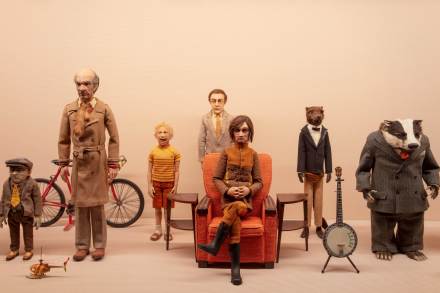
If you make your way to the Design Museum, which occupies the horned modernist structure that was once home to the Commonwealth Institute in Kensington, you are in for a surprise. And not just because it’s one of those buildings that is far more inspiring on the inside than its rather Stalinist exterior would have you imagine. No, the biggest surprise is that our national temple to design has decided to dedicate its ground floor to Wes Anderson, the American filmmaker (‘auteur’ is the word film types like to whisper) behind such idiosyncratic gems as The Royal Tenenbaums (2001) or, probably his biggest hit, The Grand Budapest Hotel (2014), which starred Ralph Fiennes, Adrian Brody, Saoirse Ronan and Willem Dafoe, among many others.
How to drink (and not drive) in Arizona

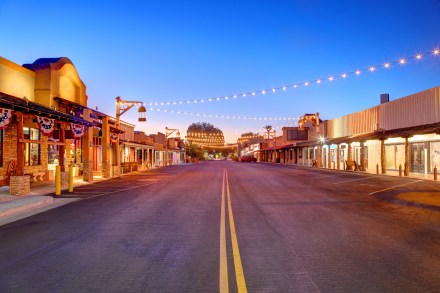
I was in Scottsdale, Arizona and, to put it mildly, a little squiffy. Most folk go there to play golf (yawn) but I’d gone there to drink and, after a lengthy tequila masterclass in La Hacienda and several cocktails at Platform 18 (‘best US cocktail bar’ in the 2023 Spirited Awards, incidentally) in nearby Phoenix, I was also more than a little disorientated. No, don’t laugh. Firstly, La Hacienda – a fancy bar in the Fairmont Scottsdale Princess resort – has more than 240 different tequilas and mezcals on its list and, thanks to the resort’s resident Tequila Goddess (its term, not mine), they just kept on coming.

Heard the one about the MP who thought he was a comedian?

There are so many ways to mangle brilliance. If you’re a present or former member of Take That, you’ll know what I mean when it comes to taking the sweet essence of the Bee Gees and turning their hits into something as bland and devoid of colour as an Ikea Billy bookcase. And if you’re James Cleverly, you may have learnt last week that members of parliament using comedy catchphrases invariably turns the gag from gold into something that floats at the top of a storm drain.  Referring to Housing Secretary Steve Reed, Cleverly asked in the Commons: ‘What was it about the Labour party’s collapse in the opinion polls that first attracted him to the cancellation of local elections?

How dirty is your Michelin-starred restaurant?

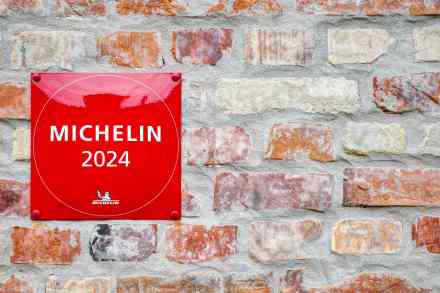
Michelin stars were pitted against hygiene scores when Gareth Ward, chef-patron of the two-Michelin starred restaurant Ynyshir, was recently given a hygiene rating of… one.  Ynyshir, which sits on the edge of Eryri national park near Machynlleth in Ceredigion, has held its second Michelin star since 2022, making it the first restaurant in Wales to receive two of the accolades. The restaurant offers a single 30-course tasting menu, to which changes cannot be made for allergies or preferences, at a cost of £468 per person. Its most recent food hygiene inspection found that its management of food safety required ‘major improvement’.

Why I took my eight-year-old son wine-tasting

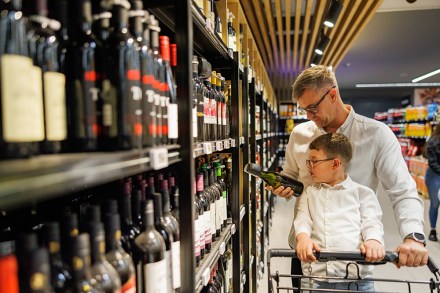
My eight-year-old son’s eyes widened when I unwrapped a Christmas present I got from my parents: a bottle of cherry brandy from the Lyme Bay winery in Axminster. ‘Can I have some?’ Humphrey asked, for he had been hitting the cherry brandy hard over the summer. Not the alcoholic kind, of course, but the cherry brandy-flavoured lollies sold by the ice-cream van that parks outside his school on a hot afternoon. How could I refuse? Ashley Dalton would be scandalised. The junior health minister said this month that the government is looking into banning the sale of non-alcoholic versions of booze to teenagers in case it ‘normalises drinking’ and becomes a ‘gateway’ to the real thing. Children will be allowed to vote at 16 under this government, but not drink a Lucky Saint.

How to drink like you’re at the Savoy – from your sofa

There are two great American bars in London. One is perfect to escape the winter chill, the other to embrace summer sun. In winter, the American Bar at the Savoy – London’s oldest surviving cocktail bar – is ideal. There is a reason why this warm and welcoming spot has courted popularity for so long and is considered the spiritual home of modern mixology, at least in this country. In the summer months, head for the American Bar at the Stafford. There you can enjoy the large terrace just a stone’s throw from St James’s Street, where similarly skilled bar staff are able to mix up pretty much anything one desires. You know you’re in a great American bar when the bartenders are able to sling together on-menu or off-menu mixes while maintaining good conversation.

How we all got hooked on Calpol

At the present count, we have 14 syringes. Some are stuffed in kitchen drawers, but I have also found an alarming number under my eight-year-old daughter’s bed, suggesting heavy recreational use. But this isn’t a crack den. It’s simply your average British household with small children who take – need? – the family-favourite brand of paracetamol, Calpol. Formulated in 1959 and administered to children for nearly 70 years, Calpol is a part of British life. And this is set to continue: more than five tons of Calpol are sold every day and more than 12 million units each year. With more than 70 per cent of the market share, Calpol is the family narcotic of choice. Nothing conjures up childhood memories quite like that little brown bottle.

What happened to the National Portrait Gallery?

When did you last visit the National Portrait Gallery? If, like me, you haven’t darkened its doors since it reopened following a £43 million makeover and expansion in 2023, stand by for a shock. Instead of being just a selection of the famous faces featuring in our island story – the politicians, poets, scientists and showbiz giants who did their bit to make Britain great – the NPG’s collection is being deliberately diluted to provide a portrait of ‘ordinary people’ who make up the tattered fabric of the nation today. I made my first visit to the gallery since it reopened this week.

Five things to do in Crowborough

For the first time in almost a century, when Arthur Conan Doyle was buried in a Turkish carpet in his garden, my hometown of Crowborough is in the news.  For those fortunate never to have been, Crowborough is a small place in the Weald of about 20,000 souls. The cadet training camp, where my school pals and I endured a week of army exercises and tinned rations, has been turned into a migrant hostel for more than 500 asylum seekers, sparking a furious reaction from the local residents. I have much sympathy with them – but also for the young men who have been sent to live there.  Kim Bailey, leader of the protest group Crowborough Shield, calls the decision to house migrants in the town ‘disgusting’ and a ‘disgrace’. ‘There is nothing to do in Crowborough,’ she adds.

A Boomer’s guide to ‘grannycore’

‘Grannycore’, the latest TikTok trend beloved of Gen Z, seems to be about a nostalgic aesthetic centred on the comforting style and hobbies of a ‘traditional’ grandmother. In real life, however, things could hardly be more different for us Boomer grannies.  Yes, we cook and possibly do needlework if we feel like it. We might even knit. But if you’re expecting a storybook grandmother – a stooped, doughy figure with a wispy white bun held in place by kirby grips, clad in a twinset and pearls and wearing sensible shoes – then you’re definitely barking up the wrong tree. As a Boomer granny born in 1956, my early life was profoundly influenced by the 1960s – when sex, drugs and rock ’n’ roll first appeared on the scene.

Robbie Williams and the allure of homoerotic pop

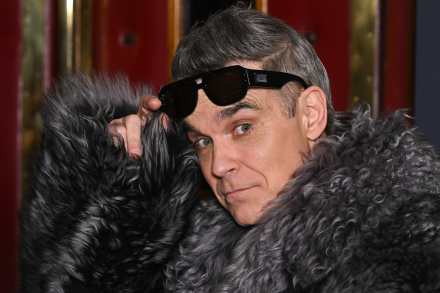
When I heard that Robbie Williams had written a song called ‘Morrissey', I didn’t know whether to be delighted or irate. It’s no secret that I idolise Moz, and the idea of a somewhat seedy showman attempting glory by association made my hackles rise somewhat.  But on the other hand, Williams has co-written several songs which have caused my toes to tap over the years and has a history of acting gay when it suits him. (Indeed, Take That’s appeal might be crudely summed up as four lads who looked like rent boys and their concerned social worker, Gary Barlow.) Then there was the ‘Shame’ video of 2010 by Robbie and Gary, in which the two principals start by exchanging copious meaningful glances in a shopping mall.

How to solve the birth rate crisis: lower standards

There comes a moment, a few weeks after you give birth, when your baby outgrows their Lilliputian clothes and you’re obliged to replace ‘newborn’ with ‘0-3 months’. At which point, usually while still absolutely steaming with hormones, you find yourself sitting on their bedroom floor, staring at these teeny garments, trying to decide if you’re going to keep them (have another baby) or give them to the charity shop (start leaving leaflets about vasectomy around the house).  Historically, this was a major decision for you, but one which had almost no relevance to anyone else.

The vivid legacy of Martin Parr

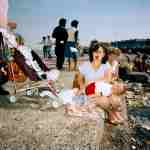
Four decades ago, a man took lots of photos of some working-class people having a day out at the seaside. The resort was New Brighton on Merseyside, and the photos showed that the sun shone, the ice creams were runny and lots of people fell asleep in their deckchairs, resulting in their faces turning fire-engine red. What ‘The Last Resort’ – the most famous photography project by Martin Parr, who died last month at the age of 73 – also showed, and continues to show, is that there is nothing that the liberal-artistic-media-elite loathe more than seeing ordinary people having a good time and not giving a hoot what anyone else might think of them.

British pubs are booming… just not in Britain

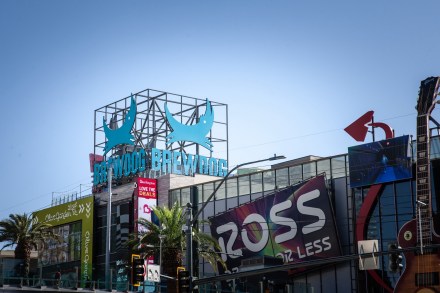
British pubs are having a moment. Not in Britain: you can blame Keir Starmer’s rise in business rates for that. Instead, they are branching out overseas. Take Wetherspoons, the granddaddy of British boozers, set to open next month in Alicante airport, or BrewDog, which has opened its doors in Dubai and many other international outposts besides.  Perhaps British pub chains will prove to be our next big export market. No doubt there will be the obvious jokes about arch-Brexiteer Tim Martin opening pubs in Europe. But would you really bet against him? Whatever you think of Wetherspoons, I can assure you that you’ll never find an empty one. Just imagine the kind of trade they could do in Barcelona or Rome. Which brings me to Dubai. Did you know there was a BrewDog in Dubai?

Take Back Power is no Robin Hood movement 

The biggest rebel in my year at school (a pretty raggedy state comprehensive near Chester) was a guy called Paul. He had very long hair, wore a trench coat and was regularly told to ‘have a bath’ by the more boorish elements of the playground. Paul railed against the system in the way that only teenagers who have experienced nothing of life but have read at least half of The Catcher in the Rye and The Outsider can. The more militaristic tranche of our teachers also hated him for the permanent odour of weed that followed him around and the crude drawing of Che Guevara on his rucksack. He was one of my best friends. Paul cut his hair and stopped reading Noam Chomsky in his mid-twenties.

Should trains have child-free carriages?

Amid the distractions of Donald Trump and Davos, France’s state-owned railway operator decided last week was the opportune time to slip out some news. Welcome to ‘Optimum’, the new and exclusive area of the train where kids are not welcome. Business people and misopedists travelling to and from Paris on the weekday high-speed TGV services will no longer have to tolerate the under-12s. The operator, SNCF, justified its ban on children by stating it would enhance the travelling experience of those who cherish ‘exclusive comfort in a fully dedicated first-class carriage, with seating arrangements designed to preserve your privacy, for a calm journey, ideal for working or relaxing’.

Japan, the land of the rising wine industry

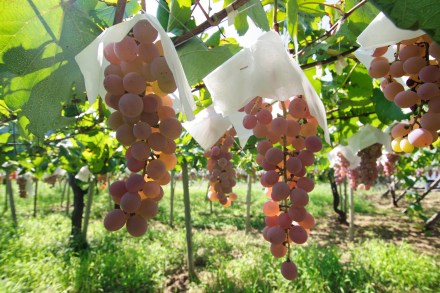
Travel to Hokkaido, Japan’s northernmost island, and I imagine one of the last things you’d expect to find is a Frenchman making wine. But tucked away in Hakodate, Etienne de Montille, a ninth-generation winemaker from the 300-year-old Domaine de Montille in Burgundy’s Côte de Beaune, is challenging preconceptions about Japanese wine. The de Montille family has been synonymous with Burgundy for centuries, but Etienne decided in 2016 to try something different, setting up vineyards in both Hokkaido and Santa Barbara, California.  ‘I was touched by what I saw,’ Etienne told the Japan Times last year.

Was Hunter S. Thompson murdered?

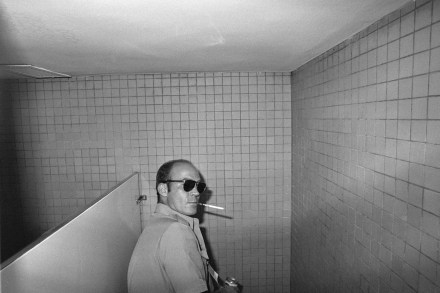
Gonzo journalist Hunter S. Thompson is best known for his 1972 narcotics-fuelled fantasia Fear and Loathing in Las Vegas. In some ways, his is a story of life imitating art. Thompson lived large, once saying: ‘I hate to advocate drugs, alcohol, violence, or insanity to anyone, but they’ve always worked for me.’ He killed himself in 2005, at the age of 67, fearing that health problems would ruin what was left of his life. His funeral was a grand, set-piece affair, costing $3 million and paid for by Johnny Depp with the swag from his Pirates of the Caribbean movies; it ended with Thompson’s remains being shot out of a cannon to Bob Dylan’s ‘Mr Tambourine Man’. He went as he lived, in a blaze of glory. Except members of Thompson’s family are now telling a different story.

Two tips for Cheltenham races plus three ante-post bets

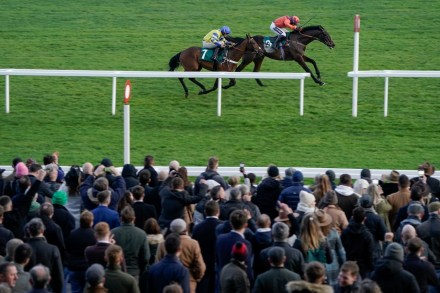
With two of the big races on Cheltenham Trials Day tomorrow attracting four runners, I am looking at the lower-profile contests for my suggested bets. Without each-way betting, I have no desire to take on odds-on shots Grey Dawning in the Grade 2 Betfair Cotswold Chase (2.25 p.m.) or Sir Gino in the Unibet Hurdle (3 p.m.). If Jagwar is as good as connections think he is – the horse’s ultimate aim is the Grade 1 Ryanair Chase at the Cheltenham Festival – then he will need to win tomorrow’s Betfair Exchange Handicap Chase (1.15 p.m.) off an official mark of 149. He’s probably the right favourite on form and expectation but his joint trainers Oliver Greenall and Josh Guerriero have still not peaked with their horses this season and I would prefer to look elsewhere.

In praise of Elizabeth Taylor (no, not that one)

On 15 November 1975, Elizabeth Taylor died. No, not that Elizabeth Taylor – she had many more years, and many more husbands, to get through. I mean Elizabeth Taylor the author, whose 12 novels and four volumes of short stories so piercingly and hilariously chronicle the quietly desperate lives of middle-class women in and around the sleepy towns and villages of the Thames Valley in the middle part of the last century. Kingsley Amis thought her ‘one of the best English novelists born in this century’. Anita Brookner considered her ‘the Jane Austen of the 1950s and 60s’. Despite such accolades, Taylor never quite achieved the status she deserved. She was never a bestseller; she never won a prize. In fact, a faintly patronising air bedevilled her throughout her writing life.

The joy of the jukebox

One of the peachiest moments in a life of unrepentant tavern-dwelling was my introduction to P.J. Clarke’s on Third Avenue. Here was a bar from central casting – Billy Wilder mocked it up, after a fashion, in The Lost Weekend – and the dollop of cream on this peach was the jukebox. P.J. Clarke’s was described to me by one regular as ‘a midtown saloon for the tasselled-loafer set’. It remains the glory of Manhattan, which will never run short of places to hang one’s hat. And its jukebox had plenty of hits, but not the obvious ones. Americans love their jukeys. One of the most generous belonged to Sterch’s, in Oak Park, Chicago, where a couple of bucks bought a dozen plays. Chicago is a famous music town, so you didn’t struggle to find something decent.

A restaurant so perfect I hesitated to review it

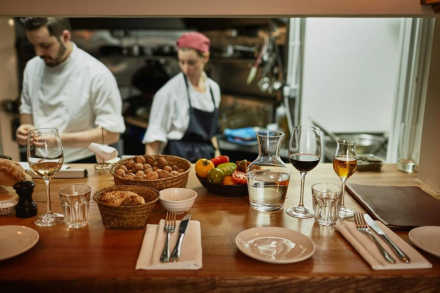
Sometimes you find it, H.G. Wells’s door in the wall, but to tapas: a restaurant so perfect you hesitate to review it. Each critic kills the thing she loves, because to love it is to change it. But I can’t just review palaces for psychotics containing lamps that should not exist, comforting though the idiocies of the very rich are. So here is a review of 28 Church Row, Hampstead. I will try not to make it read like a Hampstead novel about the unreliability of memory, but I might forget to do this. Church Row is the prettiest street in Hampstead: a ragtag of Georgian houses beloved by television stars who wake up one day, understand they are vulgar and buy a house that isn’t. I can’t afford one, but I saved a man from death in Church Row once, which is unusual for this column.

Cocklebarrow gives Cheltenham a run for its money

The second-best day of the year is finally here. Obviously, nothing beats the opening day of the Cheltenham Festival – and it will be even better this year when Mambo-numberfive wins the Arkle – but Cocklebarrow Races in the Cotswolds are a short-head runner up. You can rely on the weather to be foul: if there isn’t mud up to your knees, the ground will be frozen solid. But the dogs love it and as your car sinks up to its axle, you have plenty of time to be proud to be British – while you wait for the tractor to pull you out. An extraordinary amount of planning by our volunteer committee goes into the day.

Class is melting on the ski slopes

It’s that time of year again. No sooner have you recovered from Christmas than the posh start talking about their skiing jaunts planned for the February half-term. But let’s use the term posh advisedly, because – make no mistake – skiing is now anything but. Where once flinging yourself down the Cresta Run may have been a solid-gold toff signifier or ‘the Sloanest sport’, according to class anthropologist Peter York, now it simply means that you’re rich. No snow cannon pumping out snow on the low slopes can fool anyone. The fact that ski resorts are now melting before our eyes seems to be where this social morality tale ends. Skiing and British class have long been caught in a complicated embrace.

It’s all been downhill since Concorde

Half a century ago today, the Duke of Kent, Anthony Hopkins and 97 other diners had a meal of caviar and lobster canapés followed by grilled steak, all washed down with Dom Perignon. There was nothing too unusual about this slightly ostentatious menu, one that was a typical example of 1970s British fine dining. But it was a lunch that cost more than £1 billion to serve up. It was the first meal on board the very first scheduled flight on Concorde – the plane that, for close to three decades, made it possible to have breakfast in Belgravia, a meeting in Manhattan and still be home for supper in Soho.  That’s not a schedule that appeals to me (there’s nowhere decent to eat of a morning in Belgravia).

In defence of Robbie Williams

I write this piece while listening to an album that I suspect will be widely regarded as one of the best of the year. That it is by Robbie Williams may come as a surprise to many. After all, Williams has often been mocked as a cruise ship entertainer who got lucky, a Butlins redcoat who has somehow become Britain’s most successful solo pop star. If his new album, Britpop, goes to number one in the charts – and he deliberately delayed its release from last autumn so that it could avoid being trampled by Taylor Swift’s The Life of a Showgirl – it will be his sixteenth chart-topper, thereby setting a record that even the Beatles were unable to equal.

Why are sports trophies so ugly?

There is a short video on the internet in which the late football commentator Hugh Johns reminisces about what the game had in the 1970s that made it great. He starts making a list – ‘skill, entertainment, cut-throat football’ – and then pauses for a disparaging comment about what came after. The disparagement is mild, though; this is a genial, nostalgic soliloquy, not a rant. Then the list, delivered in a soft Welsh accent, restarts: ‘There were characters, there were elegant players, and there was fun.’ Everything you could want, as far as Hugh Johns was concerned. Johns died in 2007, but I can’t imagine there have been any developments in football since then that would have caused him to knock the Seventies off the perch he built for them.

Does it really matter if Grok undresses us all?

I’ve been fat and I’ve been thin; I’ve been pretty and I’ve been plain – ugly, even. Throughout this, my self-esteem has stayed generally constant, as if you’re going to base it on something as ephemeral as physical beauty, you’re going to run out of road very quickly indeed. This objective attitude to my own appearance reminds me of a funny story from the infant days of the internet. Imagine my surprise one morning to receive a message from an unknown recipient informing me that they had film of me masturbating to online pornography which they would make available to a wider audience should I fail to pay a ransom. (Don’t judge – I was young-ish and frisky and it was all so new – I soon grew out of it.

Britain’s fatal good manners

One of the guilty pleasures of the patriotic British travel writer is encountering yet another country, city or island that we invaded, occupied, colonised or just menaced into submission with a couple of gunboats. For example, did you know we casually took out Uruguay back in the day? It’s true – we demolished the walls of Montevideo in 1807, during the Battle of the River Plate, as I discovered on my first visit there last year. I’ve had the same experience all over. The Maldives. Kefalonia. The Colombian coast (we were so punchy and piratical half the Colombian nobility decamped 200 km inland). Also, Menorca, the Faroes, Haiti, Iceland, Bolivia (our economic colonisation is the reason women in La Paz wear bowler hats).