Spectator Life

Spectator Life

An intelligent mix of culture, style, travel, food and property, as well as where to go and what to see.

Let’s bring back elevenses

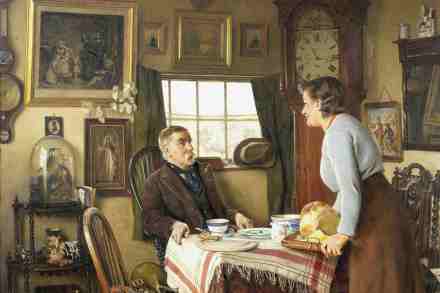
Join me, if you will, for a short stroll down the Charing Cross Road, back in the days when it was festooned with bookshops and Morris Oxfords. At Cambridge Circus, there was a large catering equipment shop owned by my great-uncle, Bill Farnsworth. He made it big when he sold water coolers to the American military. Above the enormous ground-floor showroom was his counting house, where men in tailored suits laboured over ledgers on high sloping desks, dipping their nibs into ink pots. This would have been about 1960. Were you to have a meeting with Bill in his office, say in the late morning, he would invariably turn to his walnut drinks cabinet and offer you a glass of something reviving and strong; a sherry, port or brandy, perhaps. Armagnac? It’s very good.

The many faces of Houston

If Greta Thunberg ever docked in Houston, it wouldn’t be for long. Freeways stretch to 26 lanes, flaring oil refineries light the night sky and sports stadiums are sealed against the humidity with year-round refrigeration. At an Astros baseball match, a poster bluntly reminds attendees ‘TODAY’S GAME IS MADE POSSIBLE THANKS TO NATURAL GAS & OIL’. Between quarters at a Texans NFL match, a handful of fans score Chevron gift cards – ‘You’re going home with extra gas money!’ The crowd roars. Welcome to oil country. When fossil fuels enter Britain’s national conversation these days, it’s behind abstractions of net zero.

The great rail ticket swindle

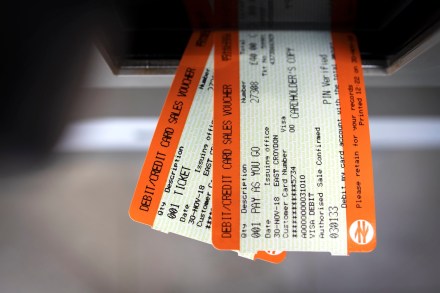
Normally rail ticket prices are raised in line with the Retail Prices Index (RPI) plus 3 per cent. This January, unusually, they didn’t increase. But that is not how it will feel if you fancy a short break in Edinburgh. In that case, you may well find yourself paying double what you used to pay. Say, on the spur of the moment, you fancy a short trip to the Scottish capital from London this weekend, but you are not quite sure which train you can leave on and when you want to come back. In the past, you could have bought a Supersaver Return, which allowed you to take any off-peak train there and back.

Three bets for the weekend

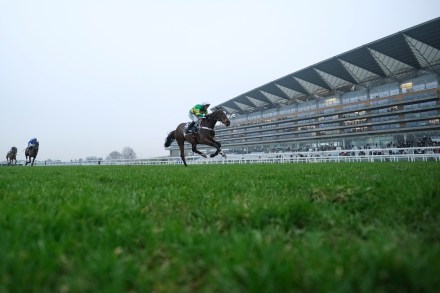
Lambourn trainer Jamie Snowden continues to enjoy a stellar season in which he has landed some big-race prizes. His general statistics are impressive too: 62 winners from just 218 runners for a strike rate of 28 per cent. Snowden has plenty of interesting runners at Ascot and Windsor this weekend and I would be surprised if he did not have a winner or two over the next three days. One of his Ascot runners tomorrow, in the in the BetMGM Holloway’s Handicap Hurdle (2.53 p.m.), is MARCHE D’ALIGRE who looks overpriced even though this is a competitive contest. This five-year-old gelding was backed into favouritism last month for a handicap hurdle at Sandown and, although he was only second that day, his run can be upgraded given he made a terrible hash of the third obstacle.

Long live the joint bank account!

My husband and I share a bank account, and I don’t care who knows it. This detail lumps us in with many Boomer couples who have typically shacked up together financially – for better or worse, richer or poorer – for the duration of their married life. As (geriatric) millennials, our joint bank account therefore renders us something of an anachronism, but we’re used to this by now. We are outdated and unfashionable in our approach to many things, including (but not limited to) childcare, housework and car management.

Amol Rajan never quite suited the Today programme

The fairground attendant has stepped off the carousel. Amol Rajan, with all his honours on, is standing down from Radio 4’s Today programme, the breakfast show that sends us out into the world feeling a little bit braver, to set up his own company. What took him so long? Many listeners may think he established that business many moons ago, for Rajan Enterprises (Me Me Me) is not exactly a secret in metropolitan media world. In the past two decades the Cambridge-educated south Londoner has plucked some of the juiciest plums in the journalists’ orchard. Editor of the Independent, BBC media editor, and for the past five years a Today host. Presenting University Challenge on BBC2 is a mere bagatelle to pay a few bills.

The quest for the perfect January red wine

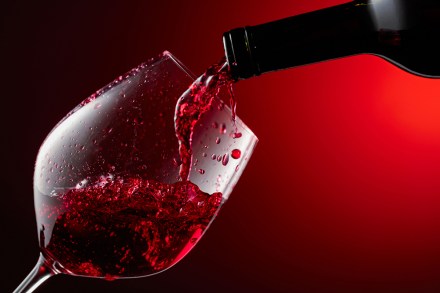
There are different ways to approach the tyranny of Dry January. One is to drink in secret. Another is to indulge only on feast days. Personally I have always refused to make January a miserable and puritan month, which means finding excellent red wine to transition from Christmas exuberance to the long, drawn-out evenings of the new year. And so the quest to find the perfect January red begins. It should not be too expensive, but nor should it be a false economy. After the excesses of December, value is key. Readers are forgiven for pursuing a bargain in the January sales – we have all done it. But the truth is many discounted offerings represent exactly the kind of wines one should not be drinking. They are the rejects, the failures, the lesser vintages.

Yes, gyms are conservative

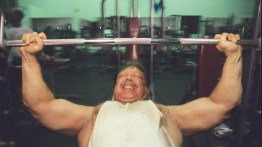
This new year, you may find yourself in the gym. The aim, of course, is to mitigate the effects of the gallon of brandy butter consumed over Christmas. But you may also be trying to build the ‘new you’ (clichés abound when it comes to fitness). Yet as a Spectator reader, you might soon find yourself strangely at home. That’s because the gym is a curiously conservative space. Partly that’s down to the kind of people it attracts, but also because of its existing clientele: disaffected young men. Last year, a Guardian columnist was mocked for stating this, but anyone who’s spent time in a squat rack knows it’s true.

Why I’m keeping my Christmas decorations up until February

It feels like the 57th day of January. Last week the coldest temperature of the winter so far (-12.5°C) was recorded about 20 miles west of my house. And according to every newspaper and social media feed I have scanned since new year, I should be purging my body of toxins by eating ‘plant-based meals’, abstaining from alcohol or otherwise giving up any semblance of comfort and joy. But there is another way. This may be ‘the worst time of the year… the very dead of winter’, as T.S. Eliot described the season in ‘Journey of the Magi’, but we are still in Christmastide – right up until 2 February, or Candlemas.   Twelfth Night used to be about fun and misrule, incorporating elements of the Romans’ midwinter festival Saturnalia.

Is this the end of the French croissant?

Occasionally, a French person reveals – without any malice or superciliousness – that they run on an alternative operating system from us Brits. Over the years, a surprising theme has emerged in my conversations with Frenchmen: butter. Take my first visit to Paris, more than 30 years ago. I innocently asked for butter with my croissant. Simple answer: ‘Non.’ Naturally, I remonstrated. The waiter retorted: ‘A croissant eeez butter!’ He had a point. Upon biting into said viennoiserie, I had to concede: it was nothing like the dry grocery store versions I was used to. Moments later, a small pot of raspberry confiture was graciously placed on my table. (To this day, it remains the best service I’ve ever received in Paris.

Why was this stranger in my friend’s house?

I was walking my dog when a WhatsApp message and photo came through from Simon, an old school friend of more than 50 years. His kids had sent him a picture of a man who had turned up unexpectedly at the family home. The accompanying message said simply: ‘Your friend Andrew from Epsom College is here?’ Simon, who was out shopping, didn’t recognise him. Did I? No, I replied, but he looks familiar. But then again he was white, rotund and greying and thus a 99 per cent DNA match for one of our social circle: i.e. a well-fed 60-something with a 20-something handicap. The more I studied the photo the more worried I got. For Simon and his family. Who on earth was this mysterious visitor standing in the middle of his kitchen? What did he want?

The doctor who wanted me dead

On New Year’s Eve, at about 3 p.m., I phoned for an ambulance. The pressure sore on the weight-bearing surface of my right amputation stump – one of three on that stump – had torn open, exposing bone: specifically, the cut end of the fibula. Although it was a pain to have to go into A&E, it wasn’t unusual. I had last been discharged from hospital a week before in Glasgow for infection of said pressure sore. The first two of my armoury of autoimmune illnesses – scleroderma, antiphospholipid syndrome, hypothyroidism, autoimmune uveitis and Sjögren’s syndrome – have caused me to have hundreds of hospital admissions over the past 26 years, and around 45 to 50 operations in theatre.

I’ll take a country walk over the gym any day

Despite having eaten my own body weight in chocolate over Christmas – and vowing to do better in the new year – my inner Augustus Gloop means I still feel duty-bound to finish what’s left. Self-control when it comes to eating has never been one of my strengths. My New Year’s resolution about a healthier diet will have to wait. In addition to buying the usual tubs of festive favourites – Heroes, Quality Street and Roses – I got a ton of confectionery as Christmas presents. I reason that it would be ungrateful not to enjoy it. My New Year’s goals are perennial: eat less and exercise more. I fail every time. I mean, I do a reasonable amount of exercise anyway: at least 10,000 steps a day with the dog, yoga every evening and a martial arts class once a week.

John le Carré was boring and unpleasant

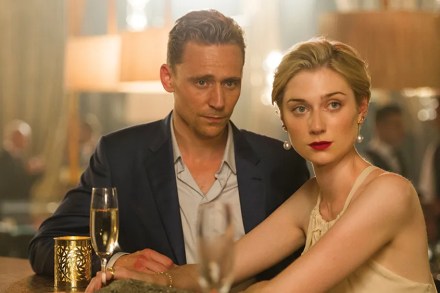
I have been having a John le Carré holiday. Five years after the great master of the spy thriller went to his final safe house in the sky, I spent chunks of the festive season watching two of his series on TV, and reading a slim volume called The Secret Life of John le Carré by his biographer Adam Sisman. BBC1 and Amazon Prime’s big New Year drama offering is The Night Manager, a sequel series to one of le Carré’s later stories, and simultaneously BBC4 has been re-running le Carré’s 1970s masterpiece, the seven-part mole hunt Tinker, Tailor, Soldier, Spy, starring the late, great Alec Guinness as spymaster George Smiley. Sadly, on two successive nights I found myself falling asleep in front of the dramas.

Northern pride is becoming a parody

The Ship of Fools lies rigged and masted, awaiting departure for Cloud Cuckoo Land. But lo! here come a few stragglers. They’re wearing cloth caps and clogs, and carrying buckets of coal. By ’eck, they must be northerners! Clamber aboard, noble savages, we are ready to cast off. Steerage, purser. You can’t beat a good old stereotype, and when it comes to stereotypes it appears you can’t whack those northern students at the University of York who feel, boo hoo, they are surrounded by intruders from the south. ‘We’re being overrun’ is the gist of it, so they have revived the university’s Northern Society to assert their independence. Nor are they alone.

Cutting the drink drive limit won’t save lives

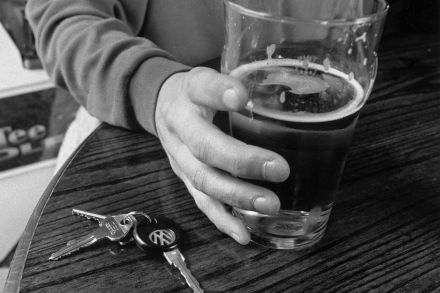
‘Evidence-based policy-making’ is very much in vogue – until, that is, the evidence doesn’t quite support what the government wants to do. Then governments tend to plough on ahead anyway, evidence or not. Just why is the government proposing to lower the drink-driving limit in England from 80mg/100ml to 50mg/100ml? To many people, government ministers included, it just feels the right thing to do. England does, after all, look a bit of an outlier in Europe, where most countries have a 50mg limit. And then there was a 2010 study by Sir Peter North which concluded that lowering the blood-alcohol limit from 80mg to 50mg would save between 43 and 168 lives in the first year alone, and prevent between 280 and 16,000 injuries. Who, then, could possibly oppose the reduction?

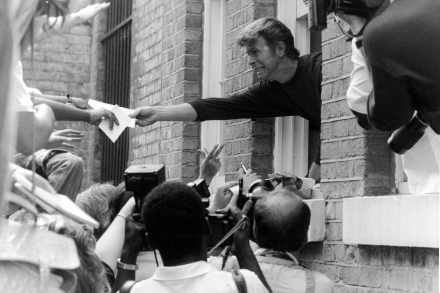
David Bowie and why we love working-class pop stars

The only time I ever saw David Bowie live was at a ropey festival in an old airfield near Stratford-upon-Avon in the latter half of the 1990s. Frankly, I thought he was pretty awful. It was the peak of Britpop, electronica and trip hop were in the ascendency and the campsite and smaller stages that weekend were fervent with fast beats, French crops and chemical ingestion. Bowie, to my late-teenage eyes and ears, seemed like an embarrassing dad, attempting to remain ‘with it’ via his recent drum and bass-infused song ‘Little Wonder’. I sloped off before the end to go and watch Goldie instead. I’ve listened to much more Bowie since then, and although I maintain that at least 50 per cent of his vast output is distinctly average, the best bits are transcendent.

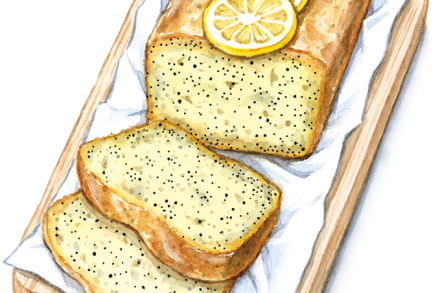
When life gives you lemons

As always, I begin my year with lemons. Regular readers must forgive me for my citrus evangelism. But, as the spice and richness of Christmas fare gives way to the drudge of the diet industry and the reality of the back-to-work routine, all framed by short, dark days and cold, icy pavements, the cobalt yellow orb is a literal light in the darkness. What began as a way of bringing brightness and culinary optimism to the new year now feels like a battle cry. Lemons are magical: they come into season during the winter months, their vibrancy at odds with the drab mornings, a flash of lightning in your fruit bowl. Their zipply zest and bracing sourness remind you that you are alive. I, for one, need that reminder.

Two ante-post bets for the Cheltenham Festival

With the cold snap likely to play havoc with the weekend race cards in Britain, it seems more sensible for me to take an early look at the Cheltenham Festival from an ante-post point of view. It is stating the obvious but the number one rule of ante-post betting is to do all you can to back a horse that is going to run in your chosen race – in this case one of the contests at the Cotswolds racecourse in two months’ time. For me that rules out most of the high-class novice hurdles and novice chasers in which Irish trainer Willie Mullins and other top yards like to shuffle their pack with different horses being allocated to different races of different distances right up to the 48-hour declaration stages. I will look elsewhere for two ante-post bets.

The imposters who pretend to be heroes

‘Every man thinks meanly of himself for not having been a soldier, or not having been at sea,’ wrote James Boswell of Samuel Johnson in his biography of his friend in 1778. Evidently Jonathan Carley did. The retired teacher was found guilty on Monday of impersonating a rear admiral without permission. The 65-year-old was fined £500 by Llandudno magistrates’ court, and ordered to pay £85 prosecution costs and a £200 surcharge. Carley was arrested last November, days after he had appeared at the town’s Remembrance service in naval uniform with a dozen medals pinned to his chest. He told police that he had carried out the deception to have a sense of ‘belonging and affirmation’.

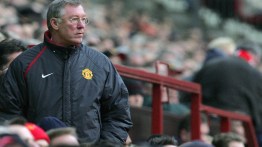
Do football managers still matter?

It is testament to the decline of Manchester United that the sacking of their manager, Rubin Amorim, on Monday has been treated as a second-order story. True, rather dramatic events in South America have put such things into their perhaps proper perspective, but you do feel that even if it were an especially slow news day, this once momentous event at English football’s second most successful – and some would still say greatest – club wouldn’t have elicited much more than a shrug. Amorim has gone out with a bit of a whimper, though the unkind might say he never really arrived. His departure, it appears, was precipitated by a confrontation with director of football Jason Wilcox over a clash of responsibilities.

Why are roast potatoes so hard to get right?

Roast potatoes shouldn’t be complicated. We’re talking two ingredients, plus some salt and maybe herbs if you’re feeling fancy. It’s just shoving some parboiled potatoes in a hot oven, right? Yet I can count on one hand the number of times that I’ve had a decent roast potato in a pub or restaurant. Bad ones are to be found all over the place. I don’t just mean school dinners, mass-catering, hospital-canteen potatoes here. The most carefully prepared Sunday roasts at charming establishments feature beautiful melting meat and thoughtfully cooked veg, all sitting alongside miserable roasties. Clammy. Dark brown. Soft (but not in a good way). A waste of a good potato. No one doesn’t like a roast potato; they’re practically our national dish.

Make mine a Moka pot

It’s strange the things that can trigger amity or affection. At the beginning of the capsule/pod coffee-maker craze, when George Clooney, with his come-to-bed eyes, was seducing the world with Nespresso machines, I bonded with my eldest daughter’s Italian boyfriend over the Bialetti Moka pot. Notwithstanding the expense and waste of the capsule coffee-makers, I need at least three pods to get the lights on in my head in the morning. I’ve never had a good coffee from any of them. Contrast that with the cute, economical, environmentally friendly little Moka, the smallest of which – one cup – costs about £20 and, depending on the quality and freshness of the coffee used, makes a better cup than any café or restaurant.

Don’t blame Ben Stokes

So what was the best bit of this dispiriting Ashes series? Lucky you if you’ve found one, but for me – at the time of writing, before Jacob Bethell was belatedly allowed to unfurl his brilliance – it was the moving homage to the heroes of the Bondi massacre at the start of the Sydney Test. It was flawlessly executed, unlike a great deal of the cricket: a group of first responders, including paramedics, lifeguards, police and Ahmed al-Ahmed, the shopkeeper who disarmed one of the terrorists, were given a guard of honour as applause and cheers flooded the ground. If it didn’t bring a tear to the eye, check your pulse. Otherwise, what have we learned?

The death of personality

My late mother was a kind woman – who I treated badly in adolescence, as teenage girls are often inclined to do – so the few times she said nasty things to me stick in my mind. In fact, I can only think of one: when I was 11, she told me that I had ‘no personality’. I remember sitting in my bedroom, staring at a poster of David Bowie, my eyes practically crossed in crossness. What did she mean, ‘no personality’? I was a right weirdo, already well under way with the process of changing myself from a wholesome working-class Bristolian schoolgirl into a total freak, thanks to growing immersion in the works of the Velvet Underground and Oscar Wilde.

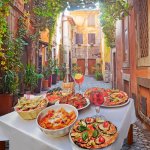
Italian food is revolting

About a week into an open-ended early pandemic stay in Ortigia, the antique, tourist-beloved spit off Siracusa on Sicily’s eastern coast, I had an epiphany. I hated the food. I’d just had a few bites of a clammy aubergine parmigiana, and a plate of oily tuna steak dressed with a bit of lemon was on its way to me. I felt sick and couldn't face another bite – and yet, supposedly, I was right in the heartlands of the finest continental gastronomy. This, at least, is the orthodoxy of the world, of tourists low- and high-end and home cooks everywhere – and especially in Italy itself.

George Clooney has been seduced by a French fantasy

Bonjour and bienvenue to the Clooneys. Gorgeous George, his wife Amal and their eight-year-old twins have been granted French citizenship. The Hollywood actor has long had a deep streak of Europhilia, owning luxury properties in Berkshire and Lake Como, Italy, as well as his pad in Provence. Located near the village of Brignoles, the Clooneys’ €9 million wine estate spans 425 acres, including an olive grove, swimming pool and tennis court. In an interview last month with a French radio station, 64-year-old Clooney declared (in English) that ‘I love the French culture, your language, even if I'm still bad at it after 400 days of courses’. He also praised France’s privacy laws, citing them as the principal reason he and his wife want to raise their children there.

Life is more complex than we like to admit

In this strange new world we inhabit, where many people appear to struggle with nuance, the oversimplification of complex problems means that any shades of grey are ignored. This informal logical fallacy, in which every situation is presented as having only two possible options when, in reality, more exist, is now standard in politics and across mainstream and social media. However, rather than being seen as a sign of intellectual weakness, taking entrenched positions is considered perfectly reasonable. Think 7 October was depraved and insane? You’re Zionist sympathising scum. Appalled by images of children in Gaza made homeless by the conflict, struggling to lift a spoon to their mouth because they’re shaking so violently from the cold? You’re a pathetic Hamas apologist.

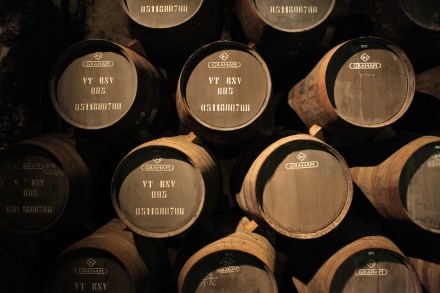
January is the time to drink

Of all the months to choose for abstinence, January seems the strangest. May is intoxicating by itself; winter, when life feels threatened by the silent ministry of frost, needs cheer. Christmas and New Year are past, the birds are already singing loudly in the early mornings, snowdrops push up their green fuses, hellebores grow fresh leaves, and the magnolia buds swell. They will bloom on sunny but cold days and look perfect for a moment, before frost burns their scarlet and white edges to brown. Spring is coming, but winter retains its hold. January is the time to drink port. Dickens understood this. He mentioned drinks of all kinds a great deal, and port more than any other wine.