Matthew Wilcox

Matthew Wilcox is a freelance journalist, editor, and travel writer based in Wiltshire. 

The sinister future of AI toys

From our UK edition

There is a moment in a recent University of Cambridge study into Artificial Intelligence in children’s toys that unintentionally recreates one of the most disturbing scenes in film history. The report, AI in the Early Years, published earlier this month, involved observing 14 children aged three to five as they played with a conversational AI soft toy called Gabbo, a device that looks like a Nintendo Game Boy that has been embalmed in pastel fur.  During one interaction recorded in the study, a five-year-old tells its stuffed companion: ‘I love you.’ Where Kubrick gave us ‘I’m sorry, Dave. I’m afraid I can’t do that.

Britain is broken but the parking tickets keep coming

From our UK edition

I live on a road where parking is forbidden. This has not stopped any of us from needing cars. Instead, we crowd each evening into the small cul-de-sac opposite, where ten vehicles can park legally, and 15 can park optimistically. The sign is unambiguous: ‘Three hours. No return within two.’  Most days I manage to comply. Some days I even set an alarm. The cruelty is that nothing happens for ages. Weeks pass. Months. You begin to suspect you have cracked the system or even that the sign is entirely ornamental, the sort of bluff recognisable to anyone familiar with the steady arrival of ‘Final’ notices.  Then, without warning, that little yellow envelope appears on your windscreen. The wardens have descended like a pack of seagulls on an unattended tray of chips.

Why is Greggs trying to sell me a matcha latte?

From our UK edition

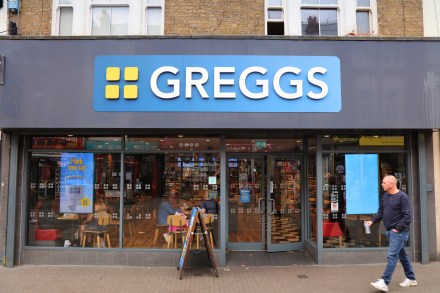
Last week I was in a branch of Greggs, in the small market town in north Wiltshire where I live. Behind the sausage rolls, steak bakes, corned beef pasties and trays of vanilla slice was something that almost made me drop my Tesco meal deal in shock. A machine dispensing matcha lattes.  Greggs, the last bastion of brown food in the post-Ottolenghi era is now retailing aspirational green, radioactive TikTok slurry … in Wiltshire. A cheerful, democratic, brute-force provider of cheap calories in culturally legible form has collided with a beverage whose main function is performative wellness. It felt less like innovation than a stitching error. Two incompatible worlds roughly bolted together, animated despite never quite cohering.

How ‘chicken yoga’ came to the Cotswolds

From our UK edition

Halfway through a downward dog, red-faced and breathing a little too hard, a hen stops about 18 inches from my face. It squats, and lifts its a tail a fraction. There is a brief, unmistakable pause. Something warm and biological drops onto the mat beside me. It is not an egg.  From the front of the class, the instructor’s voice calls out, instructing us to inhale deeply.   To my side, another chicken wanders into the danger zone just as a pose collapses and someone nearly brings an arm down on it. The bird emits a short, offended squawk.   How have I ended up here?

What rewilders don’t understand about the British countryside

From our UK edition

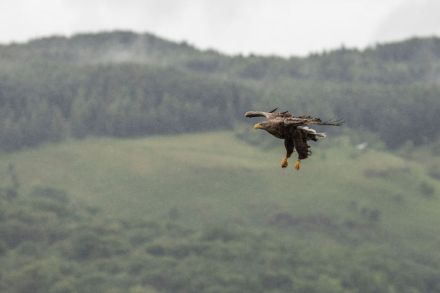
It comes without warning. A black shape shearing out of the sky, a clap of wings like a sail breaking. The foal has no time to startle. Talons hit, the ground shakes, and in the next breath it is gone, dragged upward into the light. Rewilding is the countryside’s answer to cosplay This summer on South Uist, a Scottish island in the Outer Hebrides, crofter Donald John Cameron says he lost five Shetland pony foals from his hillside farm, each one vanishing between May and July. He believes they were carried off by white-tailed eagles, reintroduced to Scotland in the 1970s after the species had been hunted to extinction. The foals, he told STV News, were more than livestock: part of his agritourism business and family pets, named by his four-year-old daughter.

Bored of Banksy

From our UK edition

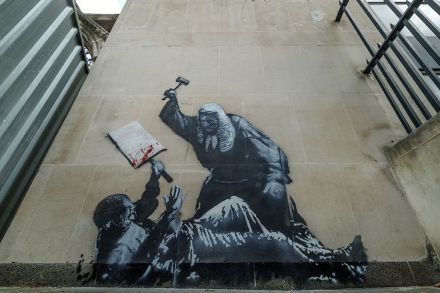
Another Banksy appeared this week, this time on the flank of the Grade I-listed Royal Courts of Justice in London. Naturally, the world’s news agencies leapt to attention. Not because of the image – a judge walloping a protester is the sort of wit you’d find on a novelty birthday card – but because the press can’t resist its favourite pantomime revolutionary. Within hours, it was boarded up and placed under guard. It was later scrubbed off the wall – a rare moment of good sense from the authorities. If only the same fate could befall the rest of Banksy's wretched oeuvre.

Life isn’t good for everyone in the Cotswolds

From our UK edition

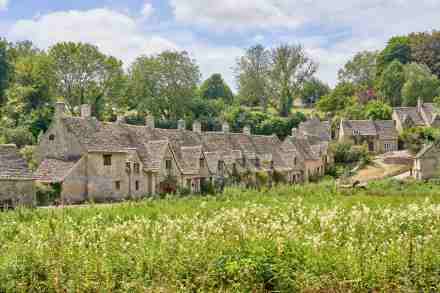
On paper, Charlbury is everything the Cotswolds is supposed to be. Stone cottages the colour of anaemic butter. Sash windows in a riot of Farrow & Ball sage. A train station that survived the Beeching cuts and gets you to London in an hour. 'People talk about the Chipping Norton set, but that disguises how rough parts of Chipping Norton and Witney can be.' It looks like the kind of place where nothing ever happens. And in many ways, it has worked hard to stay that way. While the setting – close to where US vice president JD Vance recently rented a manor house – may look like postcard England, locals say the reality, especially for those on the margins, is far more complicated. 'There are three Charlburys,' says the Reverend Fergus Butler-Gallie, the local vicar.

Church of England abuse survivors have been failed – again

From our UK edition

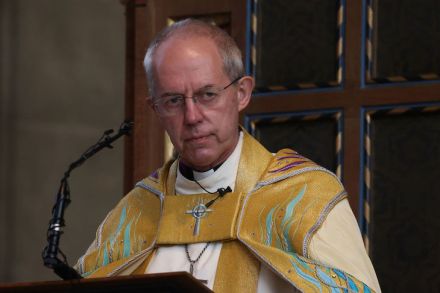
The Church of England’s abuse Redress Scheme was set up to help survivors of abuse, but a serious data breach last night led to the email addresses of dozens of survivors being unwittingly revealed. More than 180 people were openly copied into an email update about the project sent by a law firm tasked with administering the scheme. The Church of England has expressed 'profound concern' about what happened. These words offer little comfort to those caught up in this latest debacle. The Church of England has expressed 'profound concern' about what happened One survivor told The Spectator they had opened the message expecting long-awaited details on how the compensation programme would function.

The Norman Conquest wasn’t a disaster for England

From our UK edition

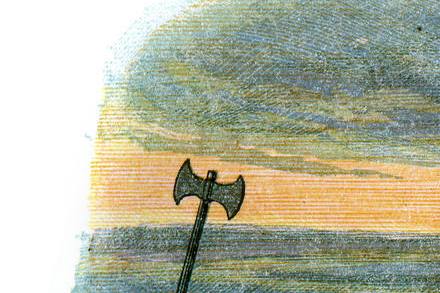
For a certain kind of amateur historian there is a moment, fixed in the imagination, endlessly revisited: it is still not yet late on that bright October afternoon in 1066, the shield-wall locked and braced, the hill still theirs, the horses floundering on the slope below, Harold upright, the sun sinking but not yet gone, the field not yet lost. You can stop it there if you wish: it is all still possible, still unspoiled, the arrow not yet loosed, the shadow not yet crossing the light. England unbroken, the language uncorrupted. All of it, still possible. And then – a shadow descends from the blue sky. Nearly a millennium later, the Normans are back in the spotlight.

Unesco status is killing Bath

From our UK edition

Last month, the Trump administration announced that the United States would once again withdraw from Unesco, the Paris-based UN cultural agency responsible for World Heritage Sites, education initiatives, and cultural programmes worldwide. The official line? Unesco promotes ‘woke, divisive cultural and social causes’ and its ‘globalist, ideological agenda’ clashes with America First policy. Predictably, the Trump administration framed it as a culture-war grievance. But, set aside the politics, and it soon becomes clear that Trump might not be entirely wrong.

The Cotswolds is a Potemkin England

From our UK edition

Have you heard the one where the vice president of the United States and a lesbian former talk show host walk into a farm shop in Gloucestershire? No, it’s not the set-up to a joke – it’s just another Tuesday in the Cotswolds in 2025. The Cotswolds still looks like England – hedgerows, pubs selling Sunday roasts – but what it offers now is something different Ellen DeGeneres has confirmed that she’s staying put in the Cotswolds, where she’s been holed-up since the 2024 US presidential election. JD Vance – now vice president under Donald Trump – is also planning on spending part of the summer there too. Two Americans, worlds apart, wind up in the same tiny sliver of England. One wants to grow heritage carrots.