Spectator Life

Spectator Life

An intelligent mix of culture, style, travel, food and property, as well as where to go and what to see.

Dawson’s Creek was cheap therapy for millennials

If you were a teenager anywhere in the vicinity of the late 1990s, the opening bars of Paula Cole’s ‘I Don’t Want to Wait’ will only ever mean one thing: Dawson’s Creek. Airing on The WB from 1998 to 2003, and broadcast in the UK on Channel 4’s teen-oriented T4 block, the adolescent angst fest starred James Van Der Beek, who died last month aged 48 from colorectal cancer. In a crowded field of literate pop culture, the smart, sexy soap opera stood out for its appeal to young adults who found in its storylines of mates, dates, and heartaches an echo of their own emotional turmoils.

The cask ale revival is here

Anyone paying attention to the pumps at their local recently might have noticed something peculiar: a swathe of old-school logos. There’s the red triangle of Bass, the red right hand of Allsopp’s, the yellow bees and barrel of Boddingtons.   Despite fighting long-term decline, cask ale is having a moment. At some of London’s trendiest new pubs, like the Robin in Stroud Green, McIntosh Ales in Stoke Newington or the Pocket in Angel, cask makes up a significant portion of available beers.

Crufts holds the key to the British psyche

France is holding local elections and the candidates are falling over themselves to appeal to a peculiar demographic: dog lovers. A candidate in the south-west city of Albi is promising shared human-dog drinking fountains, with the upper level for the owner and the bottom level for the pet. Her opponent has bitten back with a plan for a pet cemetery. Other hopefuls are proposing dog-friendly parks, food banks for needy mutts and dog-friendlier policies on public transport.   Dog ownership is up in France, particularly among the country’s ageing electorate, so canines have become an indirect electoral force. I can’t help thinking that British politicians may be missing a trick.

Tracey Emin’s victimhood is a poor foundation for art

It was a given that the critics would indulge in emotional onanism when they covered the Tracey Emin retrospective at the Tate Modern – apt enough when you consider the sexual content of so much of it. But what surprised me was that it wasn’t just women. For the art is almost entirely about Being Tracey: her abortions, her sexual abuse as a teenager by horrible men, her diaries, her cancer with pictures of the bloody stoma, her famous unmade bed, with its used condoms, granny slippers and teddy (it sold in 2014 for £2.5 million) and her death mask, which was done in life … obviously. That, you might have thought, would put off the men.

Two bets for Sandown before Cheltenham next week

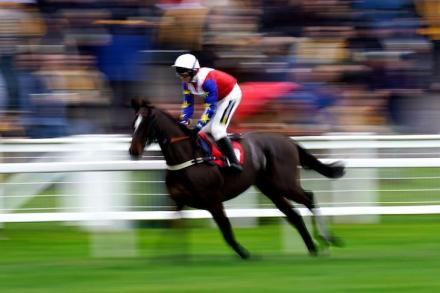
Mondo Man and Wreckless Eric head the market for tomorrow’s big race at Sandown, the Betfair Imperial Cup Handicap Hurdle (2.27 p.m.), and a good case can be made for each of them landing the spoils. Mondo Man, trained by the father and son Moore team, is well handicapped over hurdles based on his flat form and, as a five-year-old gelding, his best days are surely ahead of him. However, odds of around 3-1 for a 22-runner handicap make zero appeal. Wreckless Eric, trained by the father and son O’Neill team, is well handicapped based on his run in this race a year ago when he was beaten only half a length by Go Dante, who will also be in the field tomorrow.

We don’t need Islamo-fashion

When the ghastly Lynda Snell of The Archers ‘did’ fasting last year at Ramadan to suck up to the new Muslim family in town, I thought this kind of thing had got about as silly as it was possible to be. But reading about what happened last week at London Fashion Week took the gluten-free cake.  Non-Muslims either choosing or being compelled to celebrate Muslim holidays has been going on for some time. Understandably if disagreeably, with its Muslim mayor, London splurges on the celebration of Ramadan, decorating Piccadilly – the heart of the city – with 30,000 (sustainable) lights.

The impoverished aristocrat’s guide to the cost-of-living crisis

According to a YouGov survey earlier this year, the cost of living tops the list of public concerns at 54 per cent before immigration and asylum (49 per cent), health and the NHS (43 per cent) and the economy (33 per cent). According to the Independent, half of Britons have under £25 left at the end of the week and 79 per cent say the cost-of-living crisis has negatively affected their wellbeing. But here – at long last – is where the impoverished aristocrat comes out on top. Often found lurking in the depths of rural England, the impoverished aristocrat is more than used to weathering bad economic climes. Both they and their ancestors have dealt with a fair few cost-of-living crises in the past.

My take on marry me chicken

I am not in the habit of bringing viral TikTok recipes here. It is a safe space, away from digestive biscuits submerged in yoghurt masquerading as cheesecake, baked oats, or sugary instant coffee whipped up like foam (if you don’t know what I’m talking about, ignorance is bliss). No, here we are in the realm of tried-and-tested vintage recipes. So why am I letting marry me chicken into this sacred place? For the uninitiated, it first popped up a decade ago on an American food website called Delish, but it became the most-searched recipe on the New York Times in 2023. It’s a simple concept: chicken cooked in a creamy, tomatoey sauce that is so delicious that the person to whom you serve it will get down on one knee.

The endearing Englishness of Harry Kane

There’s something ineffably endearing about Harry Kane (though I am sure plenty of Bundesliga defenders would disagree), a sort of old-fashioned Englishness that was apparent in Captain Mainwaring. But unlike Mainwaring, he clearly gets on well with Germans. Even more important, he combines an apparent guilelessness with a canny understanding of how to do his job with distinction, which has made him the second most famous old boy of Chingford Foundation School after David Beckham.

The sword of Damocles is hanging over Cheltenham

What better way to limber up for the Cheltenham festival than lunch with Richard Phillips? Thirty years ago, Richard was heralded as the next big thing. From his yard in Adlestrop, he trained his first Cheltenham winner, La Landiere, in the Cathcart Chase in 2003. He also won big races with Noble Lord, Time Won’t Wait and Gnome’s Tycoon. But fate had other ideas for him. Richard, a brilliant speaker and raconteur (think Ben Pauling crossed with Rory Bremner), was beset with problems. Tricky owners and repeated bouts of viral infections in a yard drags you down, as I know all too well. Still, his loss is our gain. The racing world now has a wonderfully rounded observer, and he is my all-time favourite to shoot the breeze with over lunch.

The ‘slimmed down’ monarchy is fast disappearing

Reports that Princesses Beatrice and Eugenie have been banned from the Royal Ascot carriage procession raise an important question: what is the optimum fighting weight of the Royal Family?  For years now, we’ve been hearing about King Charles’s plans for a ‘slimmed down’ monarchy. Prince William, too, has declared that ‘change is on my agenda’ — which presumably means fewer floppy hats and chests stuck with improbable numbers of medals on the balcony at Buck House.   In the current torrid climate, few would demur that removing titles, cash and crash pads at Kensington Palace for the freeloading grifter elements of this extended family is a bad thing.

Was Picasso a Catholic artist?

There’s a new exhibition on Picasso which is actually transgressive: Picasso and the Bible. That promises to stir things up among worshippers of the great man, who was known for being Republican, Communist and atheist.   The premise of the exhibition – which was opened this week with great fanfare at Burgos Cathedral in Spain – is that an artist can leave the Church, but the Church never really leaves him. The real theme of the exhibition isn’t Picasso and the Bible; it’s Picasso and Catholicism, a more explosive subject.

The decline of Oxford University’s sartorial traditions

The Black Death tore its way through Europe between the years of 1346 and 1353, believed to have killed half of the continent’s population. The Great Plague came in 1665, wiping out nearly a quarter of all Londoners. 1918 brought the Spanish Flu, infecting roughly one-third of the global population. And now, in the aftermath of Covid-19 — spreading through the streets of Oxford with a virulence that none of the above could rival — comes the latest instalment in highly infectious diseases: the college puffer jacket.  Historically, Oxford's sartorial traditions have been (Bullingdon Club attire aside) relatively understated. The college scarf was a go-to, and whose demise is worth mourning.

Serge Gainsbourg would not survive modern France

Yesterday marked the 35th anniversary of the death of Serge Gainsbourg at 62 from a heart attack. The only real surprise is that he ever made it to such an age. Gainsbourg, whose unlovely but strangely beguiling countenance can best be likened to a garden gnome left outside in the rain for too long, was a performer and composer who epitomised French popular music of the 1960s and 1970s in all its bizarre contradictions. Compared to such wholesome British figures as Cliff Richard and Tom Jones, Gainsbourg was a seedy, almost sinister figure whose demeanour gave off an odour of stale aftershave, Gitanes and day-old red wine.  That he was also a songwriter of genius who has influenced countless other musicians – everyone from Jarvis Cocker and Radiohead to R.E.

Your AI Granny will speak to you now

There’s a trend on YouTube at the moment for videos in which older people give advice. They speak directly to camera, frankly and without pretension. One can almost sense the care home staff hovering in the background, coaxing their barely extant charges into making one last testament of their time on Earth. The videos have titles such as ‘Things I’d tell my 30-year-old self’, ‘Harsh realities of being an 85-year-old woman’, ‘A girl and a woman talk about life’, ‘Lessons learned’ and ‘How to deal with loneliness.’   The commenters below the videos respond, largely, with gratitude and a surprising lack of trollery. ‘I’m terrified of dying,’ one commenter writes. ‘I fear many things, but nothing scares me as much as death does.

How Gen Z became indebted to ‘doom spending’

Man on the television says you’ll never pay off your student loan. Lady on social media says the UK has the worst unemployment crisis since 1932. Politician says you’re off to war. Sally from HR says the company is ‘restructuring’ and fires you over a Microsoft Teams meeting. Science guy on Instagram says there’s a new disease in India. Ex-girlfriend says you’ve let yourself go and your body looks like dropped yoghurt.  In short, you’ve got a lot going on. So, what can you do about it? Well, according to some, the answer is simple: spend. Spend what you don’t have. Spend on what you don’t need. Spend until your overdraft is gasping for air, and then spend some more.

Will Bradford survive Britain’s curry house crisis?

Bradford, West Yorkshire, is not known as the curry capital of Britain for nothing. The city is home to more than 200 Asian restaurants. In the main, these are Kashmiri and Pakistani – driven by the city’s Pakistani-Muslim population which is one of the most concentrated in the country – and much of the local economy relies on them for jobs and income. My memories of Bradford curry houses go back to the late 1990s when I worked at the university. Commuting from London and therefore living in student digs meant I would eat out more often than not. That meant curry almost every night I was in the city as it cost little more than a sandwich.  Bradford’s curry houses are known for their homestyle cooking, rather than fancy, westernised, Instagram-aesthetic grub.

The joy of a launderette

A broken-down washing machine is generally regarded as definitely a Bad Thing. There is the expense and hassle of repairing or replacing the machine, the prospect of a flooded kitchen, and the sudden realisation that your underwear stock is … less abundant than you hoped.   But when our washing machine expired recently, I was secretly thrilled because it gave me an excuse to go to one of the few places on the planet that always makes me happy: the launderette.  I feel soothed from the moment I walk into one of these womb-like environments. I love the warmth, the smell of detergent and the air of cleanliness.

Ice and identity in Lublin, Poland’s forgotten city

A Real Pain was one of my favourite films of recent years, a tragicomic exploration of family, history, place and identity featuring two Americans in Poland - specifically in Warsaw and Lublin.  My wife was also quite smitten - with Lublin as much as the film - and on the back of this began planning a weekend in the eastern Polish city. I was a little wary of such an overtly fan-like step - this felt one notch down from trying to emulate an influencer, of all the awful modern things. But she’s very good at arranging interesting weekends overseas on a miniscule budget so on this question I relented.

The curious case of the Fabergé egg theft

The story must have been a sub-editor’s dream. The Telegraph could barely resist with its headline, ‘Bag snatcher poaches £2 million Fabergé egg’, while the Times opted for the less playful: ‘Police on a Fabergé egg hunt after pickpocket strikes at West End pub.’ Frankly, I’m disappointed: a story about a stolen Fabergé egg appears during Lent and that is the best they come up with? Pressure on The Spectator’s sub-editor for this article aside, the story is glorious clickbait, teasing as it does with the terms ‘Fabergé’, ‘millions’ and ‘theft’. One can’t help but think of Octopussy, museum heists, fast car chases and suitcases full of cash. The public is crying out for the glamour of it.

Food influencers aren’t going anywhere

At Gordon Ramsay’s launch party for his new Netflix show, Being Gordon Ramsay, influencers could be found in every corner of the room. Soon after getting another ‘lemongrass cha’ and walking past Victoria Beckham, I came face-to-face with Eating With Tod, a man whose wide-eyed hand rubbing and hyperbolic cries for enormous dinners has earned him 2.3 million followers and counting – impressive however you bill it.   Next to Ramsay, near the pulled pork bao station, was Jesse Burgess, one half of Topjaw and the presenter on another one of the chef’s food programmes Knife Edge on Apple TV.

Horse racing wagers for Kelso and Doncaster

Kelso’s hurdles course is a specialist track – left-handed, sharp and undulating. Some horses handle it well, others do not. Cracking Rhapsody most definitely falls into the former category because tomorrow he will try to win the bet365 Morebattle Hurdle (2.55 p.m.) for the third year in a row. His form this season is modest but Ewan Whillans looks to have trained him to peak tomorrow and he can race off an official mark of just 4 lbs higher than his winning rating from last year. He has every chance of landing the hat-trick but he is likely to go off at around 5-1 favourite so he is not for me at those odds.

How much will Mandelson pay for a good barrister?

When the cops came calling to arrest Peter Mandelson this week, he was already lawyered up. And he’s secured the services of the best – and most expensive – lawyers in town. Mandelson is now staring down the barrel of a legal bill running into the hundreds of thousands of pounds – very possibly the millions, given the mammoth number of documents in the Epstein Files his lawyers will have to trawl through. Add in the forensic examination of government emails swapped in the build-up to Mandelson’s catastrophic appointment as British Ambassador to Washington – and the lawyers’ tills will be cheerfully ringing away.

Off-piste skiing is a middle-class folly

An avalanche in the French Alps claimed the lives of two skiers this week. In total, 30 skiers have lost their lives in one of the most deadly Alpine winters in memory. Like the majority of victims this season in France, the skiers had ignored avalanche warnings and ventured off-piste.  Among the fatalities are two British skiers who were caught in an avalanche earlier this month in Val d’Isère. Twenty-four hours before their deaths, the avalanche warning in the resort had been raised to red for only the second time this century.    One of the dead Britons was in the habit of posting clips of his off-piste adventures on social media.

Hell is Dry January

‘Earth has not anything to show more fair.’ I have always believed that the notion of a Dry January must have been launched on the world by von Sacher-Masoch: one of his more obscene fantasies. I would no more subject myself to it than to any of the other 11 months. They all deserve better. This year, however, malign fate intervened. On 3 January I was strolling along (as it happens, stone-cold sober) when I suddenly felt rotten. I sat on a fence to work out what was wrong and promptly passed out, falling a few feet while bumping and bashing on the way. A neighbour spotted the fall and dialled 999 virtually before I landed. A few days later, on the phone, he told me: ‘When I first saw you, mate, I thought you was fucking dead.

‘It was making me think like a Latin American dictator’: why my moustache had to go

Iloved my moustache. Unfortunately, my fondness for it seemed inversely proportionate to its popularity among my peers. After much unsolicited feedback from friends (‘You look like a young Peter Mandelson’) and online strangers (‘You look like a 1970s porn star’), I put a poll on my Instagram asking my followers whether or not I should scrap it. Four-fifths said I should. After a brief consideration of my options (ignore the results? Rerun the vote? My moustache was making me think like a Latin American dictator), I reluctantly shaved. God how I miss it. There is something intoxicating about a moustache – a small hedgerow on his top lip can convince even the dowdiest man that he looks like a Battle of Britain pilot.

Does The Spectator hate the Welsh?

This St David’s Day weekend, I devote this column to a celebration of the world’s most under-appreciated ethnic group. Under-appreciated, certainly, in the pages of The Spectator, whose editorial policy suffers from a Pictish delusion that its readers are eager to hear of the appointment of a new procurator fiscal in Ayrshire, or political divides on Pitlochry council, while having zero interest in the finer country to the west. Sometimes mere exposure to Wales may be enough to inspire greatness, as in the work of Alfred Russel Wallace or Led Zeppelin Now in celebrating Wales, we need some ground rules. Since the Welsh are much more agreeable than other Celtic tribes, they are widely content to have sex with people from other cultures and ethnicities.

Eurovision has become a culture wars contest

Until around a decade back, most of us either watched the Eurovision Song Contest because it was extremely camp, or for what passed for the ‘politics’ – Greece and Turkey not voting for each other over Cyprus, and that exquisitely rebuking nul points the UK invariably got from Germany and France, for being an uppity little island nation which was still celebrating winning Second World War.   The campness is still there, but it now sits uncomfortably with real politics – that of the culture wars. 'Trans' and Israel are the flashpoints, with the supporters of the first and the opponents of the latter overlapping in a vicious Venn diagram. This was summed up in 2024’s Irish entrant, one Bambie Thug, who offered ‘I’m queer!

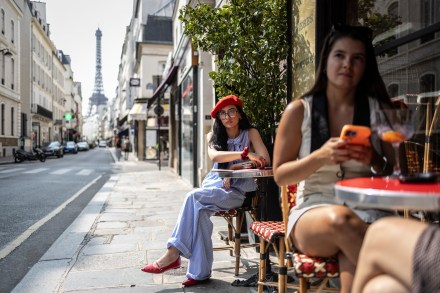
Why are Parisians so awful?

I have recently returned from a fleeting visit to the City of Light. As usual, Paris itself was a delight. It is an architectural and historic marvel that nevertheless manages to offer the best food and wine in the world at all kinds of prices, and somehow also has a respectable number of quirky and interesting independent shops and boutiques amidst the more anticipated international names. In other words, any trip to the French capital should be an alloyed pleasure. So why, when I arrived back at St Pancras, did I all but sink to my knees in gratitude that I was once back in rainy old Blighty, and that the land of the Belle Époque was a distant memory?