Spectator Life

Spectator Life

An intelligent mix of culture, style, travel, food and property, as well as where to go and what to see.

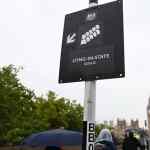
How to survive the queue for the Queen’s lying-in-state

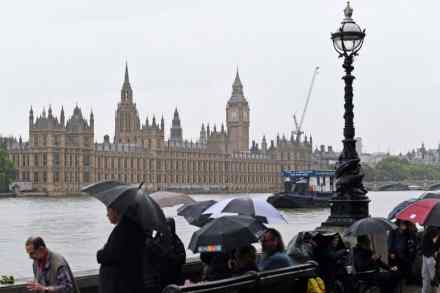
The news that mourners may have to line up for 35 hours to pay their respects to the late Queen has made headlines – and unsurprisingly so. They say we Brits love queueing, but surely that love affair has its limits.  Elizabeth II's lying-in-state in Westminster Hall is open to the public 24 hours a day, from 5 p.m. today until 6.30 a.m. on Monday. Last night Whitehall released the details of the military-style logistics operation that they hope will see the event run as smoothly as possible – with more than 300,000 mourners expected to form a five-mile human line stretching from SW1 along the South Bank and past HMS Belfast into the borough of Southwark.  https://www.youtube.com/watch?
Dear Mary: Can I save someone a spot in the queue to pay respects to the Queen?

Q. I plan to travel up from Gloucestershire to pay my respects to Queen Elizabeth, and I’m happy to stand in the queue for however long it takes. My husband is only free from work a little later, but is it OK for him to join me in the queue? Or will his cutting in attract hostility? – Name and address withheld A. It will be fine as long as you warn the immediate cluster around you to expect your husband at a later stage. Bear in mind that the prevailing atmosphere in this historic queue will be civilised, in keeping with the spirit of our former Queen, and that scuffling is unlikely to break out. This is an extract from Dear Mary. The full article is available in this week's issue of The Spectator, out tomorrow.

The unsettling business of painting the Queen’s portrait

In March 1995, I entered the Royal Society of Portrait Painters annual exhibition with a portrait of the Right Revd Michael Adie CBE, Bishop of Guildford. A new prize had been created that year to be awarded to the best portrait in the show. Unusually, the reward was in the form of a commission to paint someone in public life. The identity of the sitter was a secret. The evening before the opening, I was informed, to my astonishment, that I had won and the sitter would be Her Majesty the Queen. I had to wait nearly six months before my first sitting. During that time there was very little I could do to prepare apart from think about how it might go.

How to cope with pest season in the countryside

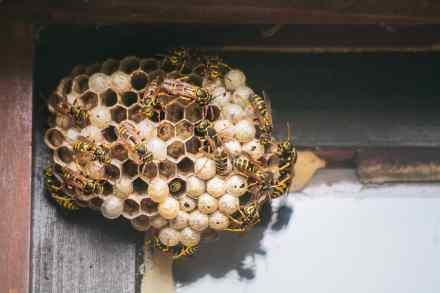
The first sign that something was awry was what sounded like an electrical crackling noise coming from the corner of our downstairs hallway and growing louder every day. Having ruled out our dodgy wifi (for once), I eventually turned my attention outside, where I found the cause. Wasps – hundreds of them – were swarming into a hole under the wall. My husband suggested we hire an expert to get rid of their nest. I said we should save money and that I was perfectly capable of doing it myself. So I waited until nightfall, armed myself with a wasp-killing foam I’d bought on Amazon and covered up in as many clothes as possible. Tiptoeing to the hole, I squirted foam into it. It was, I thought, a job well done.

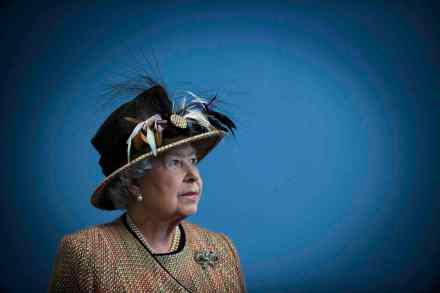
Elizabeth II was our greatest diplomat

The grief is still raw and the news has barely sunk in. I feel quite heartbroken. But I know that many the world over feel the same. The death of Queen Elizabeth II has special resonance here in this country, in the Realms and in the Commonwealth. Yet there is barely a corner of the world that her smile did not touch. There is quote in The Great Gatsby I have always liked, and now it makes me think of her. For she ‘had one of those rare smiles with a quality of eternal reassurance in it, that you may come across four or five times in life. It faced, or seemed to face, the whole external world for an instant and then concentrated on you with an irresistible prejudice in your favour.

Where do we go when we dream?

Should we pay more attention to our dreams? Are they signs from our subconscious, guiding and pointing us in certain directions? Perhaps that would explain why we often feel the need to describe them to others: to help make sense of them. Since being pregnant my dreams have got wilder. They are vivid and often haunting. I was told that you can’t dream about a face you’ve never seen, but strangers regularly pitch up in mine. Some people say it’s boring when others talk about their dreams. I disagree. I think it’s fascinating to hear where minds go at night; our parallel lives. Whether they cover frightening or familiar territory, dreams are stories.

The moral inspiration of Tolkien’s universe

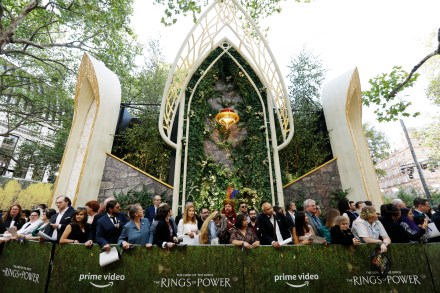
The Lord of the Rings: The Rings of Power, the new Tolkien-inspired TV series on Amazon Prime is already the most expensive television series in history. Amazon paid $250 million up-front for the rights, and has reportedly committed a billion dollars to future production. The fact a business as canny as Amazon would commit that much money to develop the appendices of a novel — which is what The Rings is based on — shows just how much cultural heft Tolkien’s works continue to have. The wild success of the Lord of the Rings and Hobbit film trilogies is matched by the popularity of the books behind them. Tolkien’s books and their adaptations have never attracted the scale of controversy that became attached to the Harry Potter saga, ever since J.K.

Lessons for life from the Queen

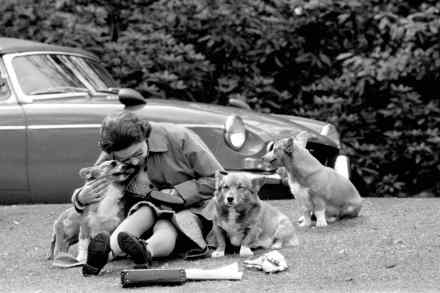
Having taken the Queen’s remarkable longevity, good health and work ethic for granted right until the end, might her subjects now appreciate her approach to life? Because through her combination of sheer graft – she received Liz Truss to kiss hands two days before she died – and her attitudes towards health, leisure and emotional resilience, Queen Elizabeth II bestowed on us an invaluable guide to living well. The problem is that most of us haven’t spotted it. It begins with some obvious don’ts: don’t smoke – the Queen had that lesson first-hand from her father George VI (albeit her sister Margaret didn’t listen).

A single meal in Rome is a lesson in Italian history

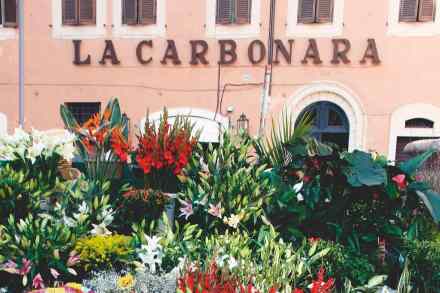
Farmer, restaurateur, critic, foodie activist, traveller (he’s worked in Zimbabwe as well as South Africa), cookery book writer, longtime TV presenter of New Scandinavian Cooking, food columnist for a couple of Norwegian papers as well as formerly for the Washington Post, Andreas Viestad’s belt has many notches. He lives between Oslo and Cape Town and for 25 years has been a regular visitor to Rome. His favourite restaurant there is La Carbonara, by the Campo de’ Fiori, and he has had the strikingly good idea of writing a foodie history of the world by examining a single meal eaten there. Early in the narrative we get a few lessons in geography, economic history and even contemporary mores.

How do you screw up a movie about Hunter Biden?

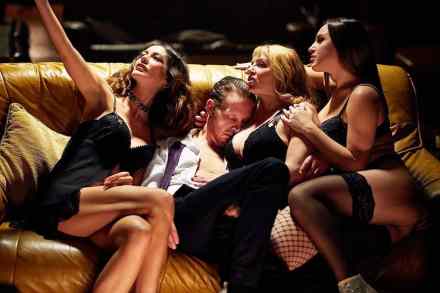
Hunter Biden is a great cinematic character: the loser son of an elite career politician who bounces between semi-powerful jobs on the strengths of his contacts and his name while inhaling mountains of drugs and banging prostitutes. How can you make a bad film about that? Well, somehow the creators of My Son Hunter have pulled it off. Produced by filmmakers Phelim McAleer and Ann McElhinney, directed by Robert Davi, starring British actor cum right-wing commentator and Reclaim party founder Laurence Fox and distributed by Breitbart, the movie will please only people whose politics have compelled them to do so. https://www.youtube.com/watch?
Amazon’s The Rings of Power is a betrayal of Tolkien’s vision

I had been so looking forward to seeing The Rings of Power. For all the wrong reasons, of course. In the months leading up to its release on Amazon, it had been hailed – largely on the basis of rumours and trailers – as an epic disaster, perhaps the most cherishably dreadful travesty in the history of screen fantasy. Sadly, in this, as in so many other areas, The Rings of Power is a massive disappointment. For example, if you were hoping to see the world’s least funny comedian Lenny Henry die a death as the Tolkien realm’s first ever black hobbit, you’re going to feel cheated: his acting is perfectly OK and anyway you’re so distracted by his Irish accent you don’t really notice the gratuitous diversity casting.

Why must film delight in making us feel stupid?

‘What did the rampant chimp have to do with any of it?’ I squawked in bewildered disappointment to a friend at the end of Nope, the long-awaited third film from Oscar-winning writer-director Jordan Peele. I had hastened in great excitement to see Nope on the first day of its cinema release, hoping for a work that would rival Peele’s sparkling debut Get Out in its idiosyncratic mash-up of razor-sharp social commentary and horror. Instead, I paid £14.20 to sit through 130 minutes of barely explained peril that were resolved in a manner that was even less clear. Peele, I concluded sadly, had crossed over to the dark side of artists who appear to believe that it is fashionable to be incomprehensible.

Trump and the art of compromising material

When the FBI raided Donald Trump’s Mar-a-Lago estate, they found a file titled ‘Info re: President of France’. Many have speculated (with no little encouragement from Trump himself) that it contains illicit details of Emmanuel Macron’s sex life.  Whatever the truth about this particular cache, political kompromat has long been a source of great drama – both on and off screen. Some bring it upon themselves – Gary Hart blew his chances of securing the US Democratic presidential nomination in 1988 by inviting reporters to dig up dirt on him (‘Follow me around, put a tail on me. You'd be very bored’).

The problem with Netflix’s Indian Matchmaking

On a recent trip from London to New Delhi, I found out that an acquaintance I see once or twice a year had pulled out of her wedding just 24 hours before the ceremony. An almighty row? Infidelity? Good old-fashioned cold feet? No – her family had simply decided they weren’t happy with the groom and decided to pull the plug. Welcome to the world of arranged marriages. As a woman who was born and grew up in India, arranged marriages – those planned and agreed by the families of the couple, rather than due to the romantic inclinations of the couple themselves – have never made sense to me. But they remain the norm in many South Asian communities. In a 2018 survey of more than 160,000 Indian households, 93 per cent of married couples said theirs was an arranged marriage.

I’ve seen the future of AI art – and it’s terrifying

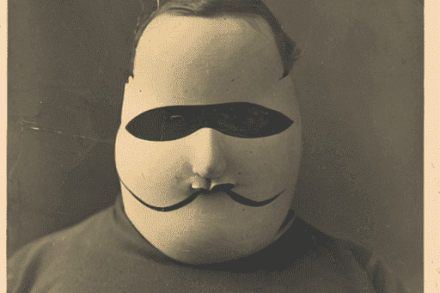
A few months back I wrote a Spectator piece about a phenomenal new ‘neural network’ – a subspecies of artificial intelligence – which promises to revolutionise art and how humans interact with art. The network is called Dall-e 2, and it remains a remarkable chunk of not-quite-sentient tech. However, such is the astonishing, accelerating speed of development in AI, Dall-e 2 has already been overtaken. And then some.  Just last week a British company called Stability AI launched an artificial intelligence model which has been richly fed, like a lean greyhound given fillet steak, on several billion images, equipping it to make brand new images when prompted by a linguistic message.

Why shouldn’t men date younger women?

Toyboys are back, apparently. Over the past few months there has been a flurry of middle-aged women crowing about the joy of dating younger men. One author in her mid-forties extolled the virtues of having not one but three lovers half her age. In a piece explaining that ‘younger men are having a cultural moment’, a thirty-something writer described a first date apologising for his scruffy appearance because he’d ‘cycled straight from school’. These women claim it’s liberating, empowering, confidence-boosting and a lot of fun, and even brag about younger men being far better in bed than their older counterparts. And presumably all of this works both ways – so why are we less understanding when men choose younger partners?

Women artists have been ignored for far too long

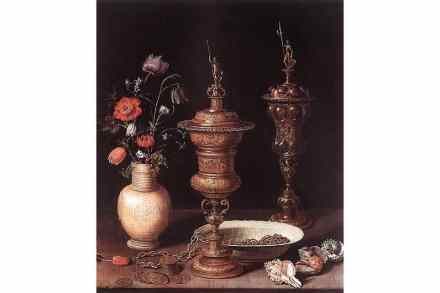
At first glance, Clara Peeters’s ‘Still Life with a Vase of Flowers, Goblets and Shells’ (1612) appears to be just that. Carefully arranged on a wooden tabletop, the collected objects are in conversation, the nubby curves of the shells echoing the ribbed neck of the stone vase, their dusky and rosy hues matching the open and squeezed shut buds. But look closer at the gleaming gilt goblet on the right and you’ll notice that the Flemish artist has smuggled tiny self-portraits into the polished roundels – a clever bid to avoid the misattribution of her painting to a man, perhaps, and a form of self-assertion in the male-dominated art world.

‘Good’s never going to triumph’: the makers of BBC show Industry on bad bankers

Finance in screen fiction is a realm of monsters. From Gordon Gekko in Wall Street and Patrick Bateman in American Psycho to the crazed party animals of The Wolf of Wall Street, the arena of deal-making is portrayed – particularly in America – as winner-take-all without trace of empathy or redemption. Industry – the British-made television drama that follows a group of young bankers competing on a City trading floor whose second series airs on BBC1 later this month – is a more subtle example of the genre. Its characters are not monstrous but they are all flawed, ruthlessly transactional in their dealings with each other, and frankly hard to like. There aren’t any nice guys.

The rise of the ‘Denis dad’

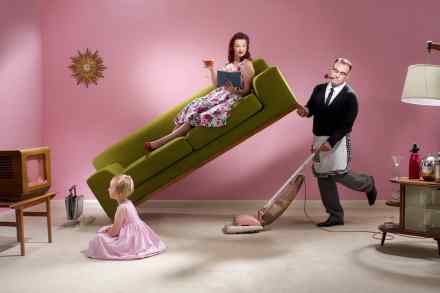
Pity the ad man of 2022. Jokes about men and women and the differences between them are so very tempting, but can easily get a brand into trouble. Until not so long ago, the safest way to poke fun at family dynamics was through the figure of the incompetent dad. A 2012 American ad for Huggies nappies challenged five dads to ‘the toughest test imaginable’: looking after their babies solo. It must have seemed like a good idea at the time, given that the useless dad appears in almost every sitcom of the past half century. But Huggies was forced to pull the campaign after complaints from insulted fathers and, ten years on, my guess is that no other brand would attempt anything similar.

The politics of topless sunbathing

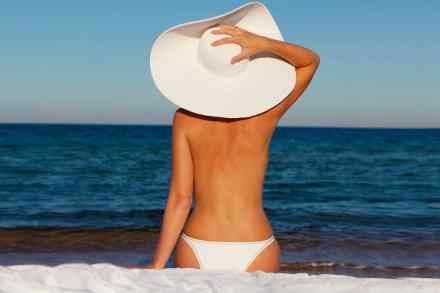
I’m pretty certain that what I’m about to say is essentially unsayable. So here goes: we need to have a frank conversation about boobs. Bare boobs. Because on my recent holiday to Majorca, I have to confess to being a little astonished to see quite so many topless women on the beach. But what a simple joy it was; old, young, lithe, voluminous, ponderous – there they were in all their glory, glistening or wilting in the sun, or simply splashing about in the sparkling water. Boobs. I know, I know… as a straight, white, privately educated man in the raw good health of middle age this is not territory that I’m completely comfortable venturing into. And perhaps I shouldn’t. But I feel this needs to be said.

‘Christmas creep’ has gone too far this time

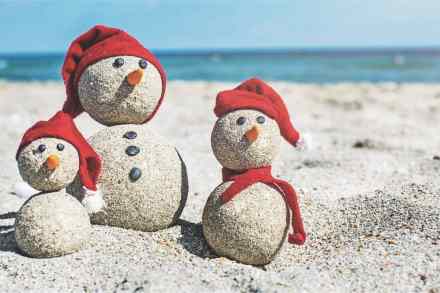
For sale in the village shop last week: punnets of locally-grown strawberries, multicoloured bucket-and-spade sets, postcards featuring British beach scenes… and no fewer than 14 varieties of Christmas bauble. Down the street at the Post Office, you can buy Christmas cards, tinsel – in green, red or sparkly silver – and wrapping paper festooned with candy canes. The garden centre, meanwhile, is doing a roaring trade in tins of festive shortbread (expiry date: 26 October). Christmas, so the saying goes, comes but once a year. And this year, it seems to have come during a baking hot August. Before you suggest I live in a sort of Yuletide wormhole, it’s happening nationwide.

The scourge of the beach tent land grab

‘Ah,’ says my husband at the top of the cliff path at Overstrand, ‘it’s just like a Shirley Hughes illustration.’ There are sandcastles, wooden groynes, children and dogs running in and out of the waves. Then his eye falls on the first land grab of the day. Three generations of the same family are hard at work constructing their citadel: popping up polyester tents to form a wide arc, shovelling shingle into the flaps to secure them, unfurling windbreaks across either end to mark the outer limits of their encampment. We – like the family in a favourite Hughes picture book from my childhood, Lucy and Tom at the Seaside (1976) – have travelled with just ‘the picnic things and bathing bags and buckets and spades’.

The utter misery of BBC’s Marriage

‘Who are these people and why should we care about them?' This is the most important question any screenwriter must ask before committing pen to paper. Sadly it's a question I failed to come anywhere near answering during the interminable 'realism' of the BBC’s much discussed (and much praised) Marriage. Sean Bean and Nicola Walker play Ian and Emma, an uptight midlife couple caught in the tedium of marital graft after 27 years together. The four-part 'drama' has been widely commended for showing the profound inanity of ordinary people's domestic lives. While I consider myself to be pretty ordinary, I failed to recognise either of these dullards as anything other than famous actors trying to appear real and failing miserably.

I fancy Emma Raducanu’s chances at Flushing Meadows

British tennis fans famously only acknowledge the sport exists for a couple of weeks in the middle of summer in SW19. But they ought to think about changing the habit of a lifetime over the next couple of weeks, as Emma Raducanu prepares to defend her US Open title at Flushing Meadows. It’s been a dizzying year for Bromley’s best. Her journey from star-struck ingenue when she went to New York a year ago to her arrival back there this week as the champion and the face of a thousand magazine covers must have felt like a rocket ride to the Milky Way. But now she has to prove herself all over again. Since winning the US Open a year ago at just 18, she has failed to win another singles title and has won just 12 matches out of 28 on the WTA tour.

In praise of Birmingham, Britain’s maligned second city

During my gap year in 1981, I worked on the 24th floor of Birmingham’s Alpha Tower for the Regional Manpower Intelligence Unit. The city below, with its express ways racing past the Venetian Gothic of Joseph Chamberlain’s house and the Roman Revival of the town hall, were the realisation of the city planner Herbert Manzoni’s dream of creating a Midlands Motown. The Rotunda, the acres of systems-built tower blocks, even the inverted ziggurat of a modernist central library, together amounted to the antithesis of the smoky, tweedy, horse-powered, cut-throat Birmingham the world now knows from Peaky Blinders. That year, though, was the one which went wrong for Birmingham, Richard Vinen argues.

Confessions of a lawn obsessive

For the past few days I’ve been frantically watering my lawn in anticipation of the London hosepipe ban. True, there are other things in the garden that need watering – the roses, the magnolias, the rhododendrons, as well as the tomato plants, the rosemary bushes and the olive tree. But I can probably manage to get round them with my watering can once the ban kicks in and in any case it’s the lawn that’s my pride and joy. Gazing at the stripes after it’s just been mown is one of life’s great pleasures as I settle into late middle age. When Caroline and I first looked round our house in Acton as prospective buyers, the lawn, measuring about 45 feet by 30, was a selling point, but only as a space for our three boys to play in.

Help, I’ve been seduced by Meghan Markle’s podcast

Meghan Markle, if she was minded to, could easily corner the erotic ASMR market – that weird bit of the internet in which women breathily relate fictitious experiences with their mouths too close to the microphone for the gratification of lonely nerds everywhere.It’s impossible to listen to her latest self-glorifying venture into podcasting, Archetypes (get it?), without understanding this is something of which the Duchess herself is keenly aware.At the outset of the first episode, released on Tuesday, she explains with a deliberately pleasing huskiness how the podcast would be concerned with exploring a ‘dirty, dirty word’.

Paradise lost: the decline and fall of Hampstead’s ladies’ pond

‘We’re surrounded by sociopaths,’ I whispered to my friend as I scanned the scene before me. We were sitting on a bench overlooking the meadow at Kenwood Ladies’ Pond on Hampstead Heath, and for the first time in my 20-odd years of visiting, I felt a sense of detachment: like I was an observer rather than a participant. A lot’s changed since the pandemic, but nowhere have I felt it more keenly than when I go for a swim at my beloved pond. This last, precious corner of paradise in our smog-filled city has been desecrated, and I am heartbroken. The ladies’ pond opened in 1925, and nearly 100 years on it’s still the sole women-only outdoor swimming amenity in the country. For most of that time it was a fun, free and flexible delight.

The enduring wisdom of Robert Baden-Powell

I do not yet have any children of my own, but a large extended family means plenty of young nieces and nephews to buy presents for come birthdays and Christmas. Those moments provide an opportunity to indulge in some pedagogic guidance: I’ll be damned if you're getting the latest Fifa game for the PlayStation 5 – you can have a real football to kick around outside. Ditto the inevitable requests for Nintendo virtual reality headsets and Frozen merchandise. Happily, I’ve got at least one Christmas present this year sorted already – and I’m quietly confident my nephew is going to enjoy reading it as much as I just have. Lord Robert Baden-Powell’s life-guide book Rovering to Success is a century old this year.