Spectator Life

Spectator Life

An intelligent mix of culture, style, travel, food and property, as well as where to go and what to see.

Why I couldn’t wait to buy a Twitter blue tick

I’ve just given Elon Musk $8 a month to get a blue tick by my name on Twitter. The fact I haven't been able to secure one of these ticks on merit like so many other nonentities has been a source of near-constant irritation for the past half decade, particularly given how much time I spend on the site. My assumption had been that a Spectator-reading Twitter employee would eventually accept my brilliance – perhaps after reading something rude I'd written about Meghan Markle – and press the required button to make it happen. But when I finally accepted this wasn't likely, about two years ago, I decided to take matters into my own hands. I began filling out the website's online verification request form.


The joy of B-sides

Paul Weller releasing a collection of solo B-sides is cause for mild celebration. After all, the Jam were one of the great B-side bands. ‘Tales From The Riverbank’, ‘The Butterfly Collector’, ‘Liza Radley’ – all A-list songs, relegated to the subs’ bench. Remember the B-side? That bijou, creative safe space which didn’t merely permit but positively encouraged artists to write parallel narratives of exploration, experimentation and extemporisation. I still remember the first B-side I fell in fascination with. It was called ‘Christ Versus Warhol’, a queasily psychedelic, wilfully odd indulgence on the wrong side of the Teardrop Explodes’ determinedly poppy ‘Passionate Friend’. I felt like the protagonist in Gregory’s Girl.

The Queen Mother’s tipsy bons mots and other stocking fillers

The standard complaint of anyone doing a Christmas gift books guide is that the books aren’t up to much. I myself may have moaned to this effect in the past. But either they are getting better or my critical faculties are beginning to fail. I think it’s the former, but if I’m wrong don’t be surprised if I’m sucking on milky rusks by this time next year. My daft picture book of the season – a vital category – is Ryan Herman’s Remarkable Football Grounds (Pavilion, £25), which is exactly what it seems to be: a collection of colour photographs of some of the most spectacular football grounds in the world. There are all the usual suspects, such as Anfield and Old Trafford, and others that resemble a crocodile, an armadillo or a chocolate box.

A choice of gardening books for Christmas

Do you ever think about the ground beneath your feet? I do. Having read a number of popular science books on this most precious of natural resources, I am now obsessed. So much has recently been discovered about the invaluable symbiotic relationships that form between microbes, fungi and plant roots in the soil that it feels perverse to turn one’s head away. Lately, the book that has most influenced my thinking (perhaps because it is a rattling read) is Soil: The Incredible Story of What Keeps the Earth, and Us, Healthy by Matthew Evans (Murdoch Books, £14.99). It’s the work of a no-nonsense Australian farmer and former restaurant critic who has bothered to read the latest research. And what he writes should astonish every gardener.

The secrets of London by postcode: EC (East Central)

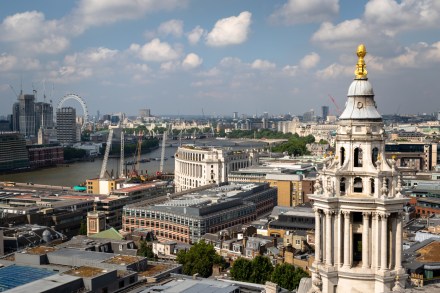
Golden pineapples, hotel rooms named after spies and the only curved piece of glass in the Gherkin – yes, it’s EC, the second in our series looking at the quirky history of London postcode areas. Step this way for some Square Mile trivia… There is only one curved piece of glass in the Gherkin – all the others are completely flat, the building’s famous shape achieved by the angles at which the panes are joined. The curved one is the horizontal one right at the top – if you want to see it up close and personal, book yourself a table at Searcys at the Gherkin, the restaurant and bar at the building’s summit. Having viewed the curved pane, look out of the flat ones for some incredible views of the capital. gherkinreception@searcys.co.

It’s a lonely life for Wags

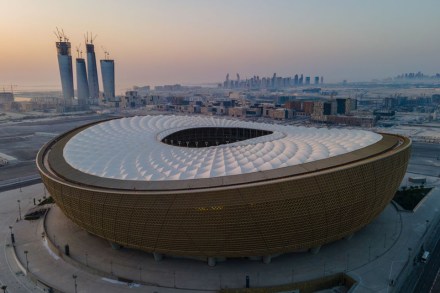
As ocean-going metaphors go, the news that a £1 billion cruise liner (usually charging £2,434.80 – love that 80! – for a nine-night jaunt, complete with a shopping mall, 14 jacuzzis, six swimming pools and the longest ‘dry-slide’ at sea) will host England’s Wags during the World Cup in Qatar could not have been more splashy.  This is a particularly bad time for football. The England players are off to Qatar, along with LGBT-friendly football personalities – led by ‘gay icon’ David Beckham – to shill for a country where migrant workers are treated like chattels, women are treated like children and homosexuals are treated like criminals.

On the trail of Gomorrah in Naples

‘Isn’t Naples beautiful? I’ve always dreamt about it. I always wanted this city all for myself; I didn’t want to share it… I alone deserved it because of everything I lost and I would have done anything to get it.’ So says Ciro Di Marzio – nicknamed ‘the immortal’ because he has survived so much mafia bloodletting – in the hit TV crime drama Gomorrah.   He is not talking about the churches or castles, the arcades or theatres or museums. He may have been out on the bay at night when the words are uttered, but the Naples he knows, grew up in and by then controls is the Naples of Scampia and Secondigliano, places up on the ridgeline of the city: the Naples of high rises and concrete, the Naples of drugs and murder.

‘Luxury’ cinemas are a horror show

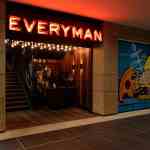
‘I know,’ I said to my friend recently. ‘Let’s see a film!’ We booked the Everyman Kings Cross, the only cinema that happened to be showing what we wanted to watch at a convenient time and location. You might already be familiar with the Everyman concept. According to the chain, it’s ‘redefining cinema’ with an ‘innovative lifestyle approach to our venues, where you swap your soft drink for a nice glass of red wine and a slice of freshly made pizza served to your seat’. And apparently it's popular – an Everyman opened in September in Egham, Surrey, bringing the total to 38, and another one is announced for Durham early next year. But after my latest visit, I found myself marvelling at the success of what might be the most annoying cinema concept on earth.

The truth about the curse of the pharaohs

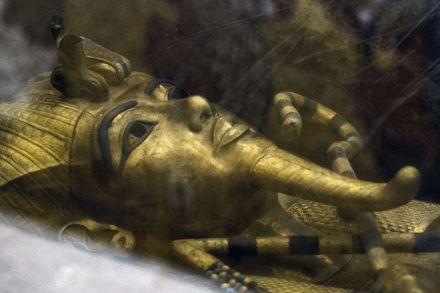
George Edward Stanhope Molyneux Herbert, 5th Earl of Carnarvon, was bitten on the cheek by a mosquito some time in early March 1923. The bite became infected. By April he was running a high fever, had pneumonia in both lungs and his heart and respiratory systems were failing. He died in a Cairo hospital on 5 April. His death came less than six months after Howard Carter, the Egyptologist whose excavations Carnarvon was funding, first discovered evidence that there was an undisturbed tomb in the Valley of the Kings in Thebes. That was on 4 November 1922 – 100 years ago this month. A few days later, Carter, Carnarvon and his daughter, Lady Evelyn Herbert, had squeezed through a roughly-hewn hole in the wall of the burial chamber of Tutankhamun, uncovering its glittering treasures.

Why David Bowie was the model of a Renaissance Englishman

It’s hard to imagine how baffled the British public must have been by the arrival of David Bowie on to TV screens in the early 1970s. With his saffron hair, make-up and androgynous clothes, superficially he looked like a rejection of everything his post-war south London childhood had taught him. One of the most pivotal scenes in Moonage Daydream, the recent film about his life, is his 1973 interview with chat show host Russell Harty. Throughout this awkward cross-examination, Harty searches for a label he can stick on Bowie for the benefit of discomfited viewers. ‘Are those men’s shoes? Or women’s shoes? Or bisexual shoes?’ Harty inquires, looking down at Bowie’s strappy red and gold platform sandals. ‘They’re shoe-shoes, silly!

What a PM’s podium says about them

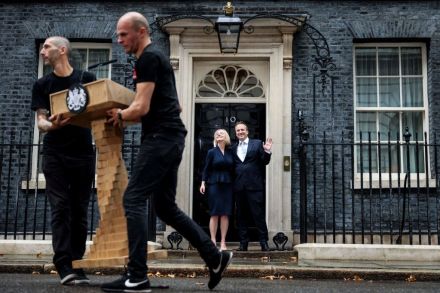
Farewell, Truss’s twisty lectern. Last week in Downing Street Rishi Sunak used one with a straight column. If he follows recent Tory tradition, he’ll have one made to his own design, paid for by the party (£2,000-£4,000 a pop) and loaned to the government. [Getty Images] Each lectern (from the Latin legere, ‘to read’) has sent a message.

What to do about the Equality Act

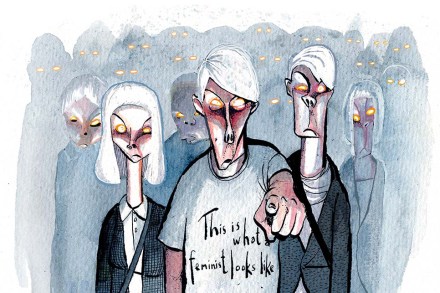
Among people of a conservative disposition, it’s long been accepted that the Equality Act needs to be repealed. This legislation, passed in 2010 in the dying days of Gordon Brown’s premiership, was designed to embed Labour’s egalitarian ideology into the fabric of the British state, yet none of Brown’s successors have done anything about it. In July, Rishi Sunak told a group of Conservative party members at a leadership hustings in West Sussex that he would ‘review’ it if he became prime minister, but don’t expect major surgery. The most we can hope for is a bit of light cosmetic work. One thing about the Equality Act not widely understood is that it didn’t create much in the way of new law.

The future of sport is in the Middle East

When the burly honchos of the Rugby League World Cup gushed about taking the game to new heights, no one was actually thinking about the Golan Heights – but that’s where we are. What sounds like a fascinating quarter--final takes place on Friday (as I write) when the dominant team in global rugby league, Australia, take on Lebanon in Huddersfield – the birthplace of the game. Amid the blizzard of sporting world cups currently taking place across the globe, this match has it all. The Lebanese team, known as the Cedars, are coached by Australian Michael Cheika, one of the world’s most eminent coaches and a former boss of the Wallabies’ rugby union side. That’s an awful lot of rugby in the mix already.

Why I’m paying to lock myself out of the internet

First comes disbelief that I have done something so extreme, followed by denial as I pick up my phone repeatedly to check it’s not just a bad dream. But no – it's really happening. Panic segues into frustration; then, finally, I arrive at acceptance. For the next three hours I will not be able to log on to social media or my favourite websites, and there is nothing I can do about it. In a last-ditch attempt to stop myself compulsively scrolling, I have spent £70 on a lifetime membership of the internet blocking software Freedom. When activated, it prevents access to specified sites across my devices until a set amount of time has elapsed.

The remarkable success of the East African Asians

When Idi Amin’s voice crackled through the radio on 4 August 1972 with his fateful ultimatum, my family paid little notice, save for wondering briefly why a government announcement had interrupted the blaring Bollywood tunes. My father’s two sisters were getting married the next day (both tying the knot at the same time meant half the wedding cost) and preparations were in full flow. In any case my family – like many of Uganda’s 76,000-odd Asians who were subject to Amin’s expulsion, giving them 90 days to leave the country – thought the President could hardly be serious. Despite being a small minority of the country’s population, the Asians were responsible for 90 per cent of Uganda’s tax revenues. To expel them would be madness. But madness came easily to Amin.

The case against book clubs

Picture the scene: it’s 8 p.m. on a Tuesday. You’re sitting on the sofa in the home of someone you barely know, gulping supermarket wine, making inane chitchat with friends of friends as you all put off the inevitable: discussing a book only a third of the women – always women – in the room have actually bothered to read. In your head, you’re counting the minutes until you can excuse yourself for the last train home, wondering what’s happening on tonight’s Bake Off and engineering a strategy to quietly remove yourself from the group WhatsApp without appearing rude. You stifle a yawn and subtly check your watch while necking yet more wine. Sound familiar? Welcome to book club.

What visitors to the Qatar World Cup can expect

In his first interview since being reappointed, Foreign Secretary James Cleverly laid down some clear diplomatic water between his party and Labour – confirming that, unlike Keir Starmer, he would attend this winter’s Qatar World Cup. The Foreign Secretary won’t be alone. The Football Association expects that some 10,000 England fans will make the journey to a World Cup widely regarded as the most controversial in history (though Prince William, the FA’s president, will reportedly not be among them). So what awaits them when they get there? If the headlines so far are anything to go by, they could be in for a rude awakening.

Time to check out: hotel horrors on screen

From Fawlty Towers to Psycho, hotel horrors have long provided a rich seam of material for big screen and small. HBO’s The White Lotus, which returns to Sky Atlantic tonight for its second series, swept the board at last month’s Emmys, with ten wins in the limited series category for its sharp social satire set at an upmarket holiday resort. Visiting the establishments you’ve seen on screen isn’t always a good move. I was excited to check in to Rome’s Grand Hotel Plaza, which has been used as a location for movies including L’innocente (1976), Gangs of New York (2002), Ocean’s Twelve (2004), The Man from U.N.C.L.E. (2015) and John Wick: Chapter 2 (2017). But I soon discovered why my suite was so heavily discounted.

Why the best horror films are silent

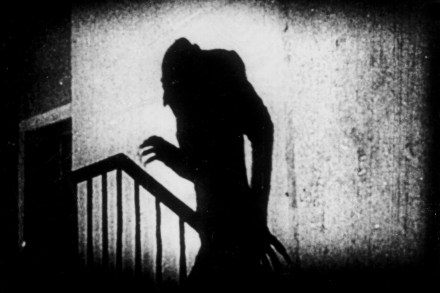
He is completely bald but his eyebrows are grotesquely hirsute; his ears and chin are both weirdly elongated, as are his bony fingers; and as he creeps up the stairs towards the bedroom of a young woman in white, his hunched frame casts a sinister shadow. Count Orlok in Nosferatu is as instantly recognisable a cinematic figure as Charlie Chaplin, Mickey Mouse or Superman. The F.W. Murnau silent film that created this image (and found itself at the centre of a copyright battle with the estate of Dracula author Bram Stoker) is celebrating its 100th anniversary this year. It continues to be regularly screened, showing at two different cinemas in London alone in the run-up to Halloween.

Is the life of ‘the spare’ really so bad, Harry?

Three cheers for whoever came up with the title of the Duke of Sussex’s upcoming autobiography, Spare. It’s punchy – and it evokes a sense of sadness. Is this how Harry has always felt? Like a disposable spare part? The 'heir and the spare' describes the first in line to the throne and the 'reserve' monarch. It may sound cruel – and perhaps it is – but as soon as hereditary systems were established, queens and kings recognised that to ensure continuity and stability for their monarchy, it was necessary to have a healthy male heir and one in reserve should the eldest one die – which they often did. Spares throughout history have struggled to define their role. But that’s not necessarily a bad thing; many have lived intriguing lives.

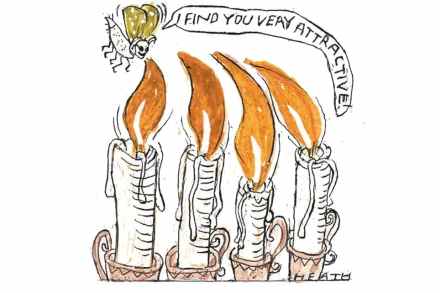
How to make your candles last longer

Under the sink. That’s where most of us will be keeping a stash of candles in case the lights go out this winter on account of an erratic electricity supply. There’s nothing worse than finding yourself in darkness and not remembering where you’ve left the candles and the matches. Be prepared. We’ve got out of the habit of using candles except for dinner parties, so we’ve lost touch with our inner chandler. Not many children go to sleep looking at night (tea) lights because they’re afraid of the dark. So I sought out the founder of Candle Maker Supplies off the Shepherd’s Bush Road in London, David Constable, who remembers the 1970s when blackouts meant everyone using candles. His tip: chill your candles before using them; that way, they last longer.

The hyper-competitive world of New York parenting

I stumbled upon it in one of the darkest corners of the internet: a Facebook parenting group. The mother’s intentions were pure, I tried to tell myself. But I couldn’t help feeling exasperated – and even a bit saddened – by her post: 'I’m desperately looking for a Rubik’s cube tutor for my son,' read the message. 'He’s four.' It was June 2020. The world was in the horrendous early throes of Covid-19. Governments were struggling to contain the virus. Researchers were working around the clock to churn out a vaccine. Millions had already lost their jobs and their health. Millions more would lose their lives in due course.

The cult of the wood-burner

The British middle-classes are a predictable breed. We love nothing more than to take goods that were once prudent and pragmatic and give them a luxury edge. From the Mini Cooper, first marketed as an affordable car for the masses, to Land Rover Defenders that we have no intention of spoiling with mud, we like our creature comforts to be rooted in a make-do-and-mend mindset, even if they have long outgrown their original purpose. It’s little wonder, then, that the British have been so quick to embrace wood-burners. Because what embodies that no-nonsense, post-war mentality better than huddling around the hearth to keep warm or stacking logs into a shed on a cold October morning?

The Crown doesn’t need a disclaimer

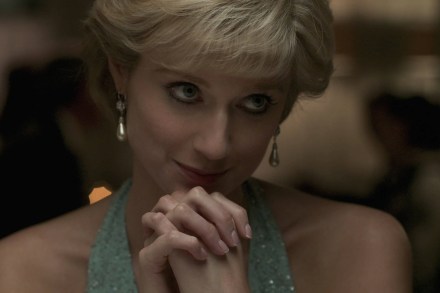
The fifth series of Netflix’s The Crown will soon be upon us. Scripted, as ever, by Peter Morgan, the show will cover the travails of the royal family throughout the 1990s, spanning everything from the then Prince Charles and Princess Diana’s marital difficulties and eventual divorce to the rumours of Prince Philip conducting an affair with a much younger woman (his partner in carriage driving, we are told). Jonny Lee Miller, erstwhile Sick Boy from Trainspotting and Sherlock Holmes from Elementary, dons thick glasses and a grey wig to play former prime minister John Major, a decent man who never stood a chance. Later in the series, we are promised the first appearance of Bertie Carvel as Tony Blair, who will come into his own in the sixth and final instalment.

Why thieves are after your number plates

My day had started as it always does, with a near 40-mile round trip to school, then an hour’s walk in the pretty country park close to our home near Nottingham. As usual, I parked in the small car park and exchanged ‘good mornings’ and ‘beautiful weather, isn’t it?’ with the familiar faces I see most days – dog walkers, joggers and mums herding their kids to the village school. There was nothing out of the ordinary about my walk, which covers an undulating route on a track alongside the canal, through a small wood and past fields of sheep. Until I returned to my car, that is.  Straight away I realised something was different, but it took a few seconds to register what it was. The front number plate was missing.

Carrie, please don’t launch a lifestyle brand

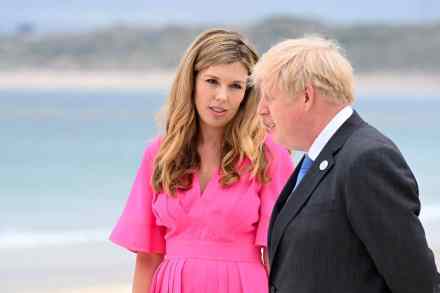
When Carrie Symonds first emerged as the paramour of Prime Minister Johnson, I liked what I saw. I admired her bravery in waiving her anonymity to reveal that, as a teenager, she had been targeted by the serial rapist John Worboys to campaign against his release from prison. And I appreciated her love of our dumb friends; she was widely believed to have been behind her boyfriend’s promise to promote animal welfare in his first speech as prime minister, quite a turnaround for a man who had said that he ‘loved’ hunting in part because of the ‘semi-sexual relation with the horse’.

Let’s give Meghan Markle the applause she deserves

The late actor Christopher Plummer once likened working with Julie Andrews on The Sound of Music to ‘being hit over the head with a big Valentine's Day card'. Reading the latest bulletin from the Duchess of Sussex, the image returned unbidden; having to listen to the ceaseless stream of platitudes that this bad actress expels verbally into the world is like being hit over the head with an inspirational poster – LIVE, LAUGH, LOVE – until one loses the will to live, let alone laugh and love. But whereas we might once have loathed her, so shameless is the ageing starlet in pursuit of income – sorry, insight – that her performance now verges on the admirable.

What your signature says about you

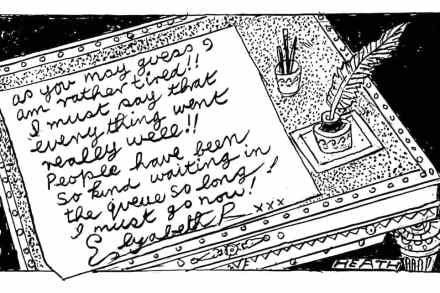
I have a photograph of Queen Elizabeth II and her parents on the wall of my bathroom, not out of any lack of respect but because the gloom there prevents it fading. It is signed Albert, with an odd droop forward of the bar of the T to join a single flourish beneath, and Elizabeth in a familiar hand. This is not the late Queen’s signature, though, for it was made in 1927, when Princess Elizabeth was hardly into talking, let alone signing. Queen Elizabeth, whom we still think of as the Queen Mother, was a simple royal duchess then. Yet one can’t help thinking that in choosing her style of italic signature she had taken note of that of her namesake: the first Queen Elizabeth.

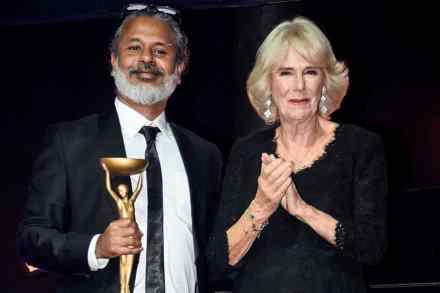
Inside the Booker Prize

It’s been a great week for the powerful fantasies of fiction (see more below), but over the weekend no novel anywhere in the world could compete with the fantasy of British politics. Continental Europe watched spellbound as the Prime Minister and her Chancellor humiliated themselves and the standing of the UK. The reactions of the different nations were predictable, but none the less excruciating for that. In Germany, where journalists have disconcertingly deep knowledge of British constitutional history, the reaction was dismay, as a distracted friend inflicts yet further damage on themselves.