Spectator Life

Spectator Life

An intelligent mix of culture, style, travel, food and property, as well as where to go and what to see.

What your signature says about you

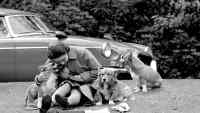
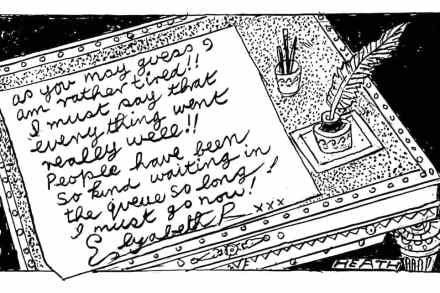
I have a photograph of Queen Elizabeth II and her parents on the wall of my bathroom, not out of any lack of respect but because the gloom there prevents it fading. It is signed Albert, with an odd droop forward of the bar of the T to join a single flourish beneath, and Elizabeth in a familiar hand. This is not the late Queen’s signature, though, for it was made in 1927, when Princess Elizabeth was hardly into talking, let alone signing. Queen Elizabeth, whom we still think of as the Queen Mother, was a simple royal duchess then. Yet one can’t help thinking that in choosing her style of italic signature she had taken note of that of her namesake: the first Queen Elizabeth.
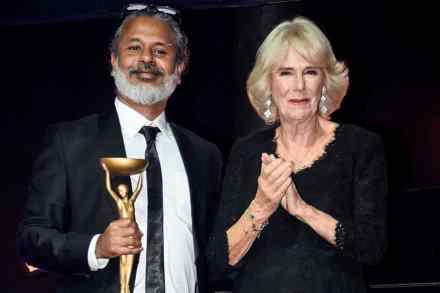
Inside the Booker Prize

It’s been a great week for the powerful fantasies of fiction (see more below), but over the weekend no novel anywhere in the world could compete with the fantasy of British politics. Continental Europe watched spellbound as the Prime Minister and her Chancellor humiliated themselves and the standing of the UK. The reactions of the different nations were predictable, but none the less excruciating for that. In Germany, where journalists have disconcertingly deep knowledge of British constitutional history, the reaction was dismay, as a distracted friend inflicts yet further damage on themselves.

How to live like a Parisian

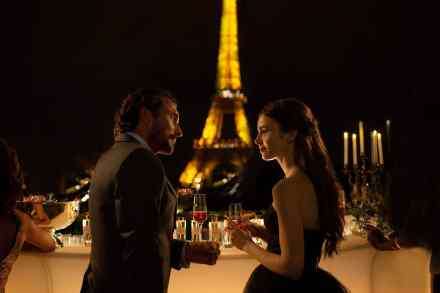
I wanted to hate it. In the weeks leading up to my trip to Paris, I was told incessantly about how much of a dump it was, about how I'd be faced with overflowing bins and skilled pickpockets. I was even warned against drinking the tap water.  According to some, to be properly British means hating the French. And there's plenty to take against: rude waiters, deliberate incompetence in maintaining their side of the Channel crossing, awkward double-cheek kissing, obsessiveness about cheese, astounding corruption in farming subsidies. My trip to France had one rule: do not enjoy it. Do not let them win. But I have a confession to make. It wasn’t long before I realised that perhaps not all elements of the French character are détestable.

The best tricks to tackle household pests

Recently, Antonia Hoyle wrote about this autumn’s influx of wasps, flies, mice and spiders into her home. In response, Spectator readers have been offering their tricks and tips for getting rid of household pests… ‘Grow pots of lavender everywhere; hang up dried sheaves, put it in vases. Grow it in pots outside and under windows. You don’t see flies around lavender. Grow basil, mint and rosemary. I put sprigs of rosemary in wardrobes, suitcases when travelling, in bath water and in clothes drawers. Spiders are meant not to like basil in particular so tear up leaves and sprinkle in prime areas. Leave dried basil leaves on windowsills where you don't grow it in pots. Spray lemon oil. Drink mint tea to avoid bites.

In defence of Shakespeare’s Globe

Off to my old manor, the Globe theatre, to join a celebratory gathering of thems and theys for I, Joan, a non-binary telling of the Joan of Arc story. The show has caused no shortage of outrage in various communities on the left, centre and right, and has had the Globe labelled as misogynist by feminists of a certain generation. It is a great compliment to the Globe that even though it only opened in 1997, it is already held so dear that whatever happens there is quickly amplified into a broader debate. In my time as artistic director, we had one Sun front page ridiculing our engagement with foreigners; then later a concerted pile-on from left and right when we had the temerity to invite both Israelis and Palestinians to an international festival.

Battles royal: how Charles has influenced British architecture

It is the evening of 30 May 1984. The country’s leading architects have assembled at Hampton Court to celebrate the 150th anniversary of the body that represents their interests, the RIBA. It is a sea of black polo necks, masculine chit-chat and clinked glasses. Given that the ‘R’ in RIBA stands for ‘Royal’ – albeit an honour actually awarded by William IV in 1837, three years after the Institute of British Architects’ founding – it is perhaps no surprise that a royal has been drafted in to politely murmur some congratulations over dinner. Yet what happened next was most certainly not expected.

How the coffee subscription ruined Pret

I have a deep-seated hatred of the hospitality QR code. It ripped through the industry as part of questionable social-distancing initiatives during the pandemic, taking the place of menus and human interaction – and has stubbornly refused to disappear, making my heart sink when I find one sellotaped to the table of a bar or restaurant. However, there’s one hospitality QR code that I found myself developing a fondness for – the one that comes with Pret a Manger’s coffee subscription. Launched in September 2020, the scheme is a financial godsend for coffee addicts.

Is Will Smith too toxic to be taken seriously?

After 9/11, American comedians found themselves in a tricky situation. Make fun of any of the usual standbys of their trade – politicians, authority figures, Rudy Giuliani, anyone who wore a badge for a living – and they were liable to be shouted down in an angry chorus of: 'Too soon!' Yet if all the jokes they could tell were sanitised and tame, their reputations would decline in an instant. It was a bold comic who tried to argue that telling jokes was a natural human response to disaster; many audiences simply refused to find things funny. Will Smith now finds himself in a similar position. The one-time Fresh Prince of Bel-Air has been a Hollywood pariah since he assaulted Chris Rock on stage at the Oscars in March.

What a greasy spoon in West London tells us about the threat of nuclear war

All-day diners feasting on the full English, the cheese omelette or the celebrated sausage sandwich (£3.80) at George’s Café, at 36 Blythe Road, Hammersmith, probably don’t realise they are dining at an address which is pivotal in global cultural history. So pivotal, in fact, that it might just tell us whether human civilisation is about to be extinguished in a nuclear holocaust. A claim like that needs fleshing out. Here it is.

Why I admire Saudi Arabia’s monstrous new city

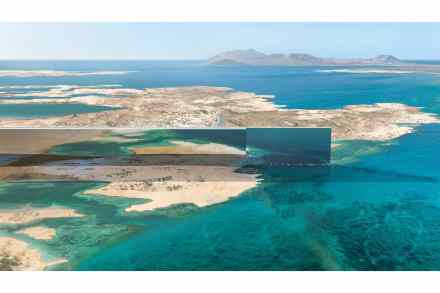
The Kingdom of Saudi Arabia wants me to know that it is building a new city. Its adverts follow me around the internet. ‘Imagine a traditional city and consolidating its footprint, designing to protect and enhance nature.’ I’m imagining. Their city ‘will be home to nine million residents, and will be built with a footprint of just 34 square kilometres. And we are designing it to provide a healthier, more sustainable quality of life’. According to its website, this new town ‘is a civilisational resource that puts humans first’. Which all sounds vaguely nice, if also nicely vague (although as I happen to be a human myself, I do appreciate the gesture). That is, until you see what they actually mean by this.

The truth about ‘the most haunted house in England’

Place and story are little remembered now. The rectory in Essex was severely damaged by fire in 1939. But any old house with an unpleasant atmosphere, especially isolated, damp, dark and unmodernised, was once described as ‘like Borley Rectory’. Judging by this long ‘story of a ghost story’, the place showed its true nature from the beginning. Many of the incumbent rectors, their families, servants and guests heard and felt ghosts, always malevolent. Crockery flew about and hit people; candlesticks tumbled down stairs; there were whisperings, cries, thumps and bumps. The usual. Well, odd things do happen in old houses. I have entered rooms which I was immediately desperate to leave.

Good riddance to long books

As soon as I picked up the parcel, my heart sank. The sheer weight of it gave the game away. Already I could unhappily picture myself struggling to hold it in one hand without straining a wrist while standing on the Piccadilly Line. I’d ordered it after coming across a couple of positive references to it in quick succession: Lonesome Dove by Larry McMurtry. Written in the 1980s, set in the 1870s, it’s a cowboy story that won a Pulitzer in its day and still has its enthusiasts. I just hadn’t thought to check its length. In fact the paperback isn’t much smaller than a box of Kleenex and runs to 839 pages. That’s scarcely less than my paperback of Ulysses and more than other whoppers I’ve read lately, The Magic Mountain and Our Mutual Friend.

Where would we be without our dogs?

Is a dog man’s best friend? Or is man a dog’s best friend? There is no relationship quite like that between dog and human. My husband loves me, but if I locked him in a cupboard for ten minutes, he would be furious. If I locked my dog up for an hour, she would be nothing but overjoyed to see me when I let her out. There is something profoundly moving about two friends who have such a complete, unquestioning trust in each other. Our dog, Budgie, has become a firm fixture in our lives – she accompanies me everywhere. Last week she wasn’t allowed in the Post Office and I took it as a personal affront. A nice man looked after her outside while I posted my parcel. I gave the lady in the Post Office a firm look as if to say: ‘How could you?

The secrets of London by postcode: W (West)

It’s the area that unites James Bond, Rick Wakeman and both Queen Elizabeths. In the first of our series looking at the quirky history and fascinating trivia of London’s postcode areas, we explore the delights to be found in W (West) – everything from fake houses to shaky newsreaders to dukes who are women… The BBC News TV studios are mounted on enormous steel springs to prevent the damage that would otherwise be caused by the Bakerloo line, which runs underneath Portland Place, right down the side of New Broadcasting House. Can’t have vibrations from the Tube trains sending Huw Edwards all wobbly, can we? The same problem was faced by the radio studios that used to occupy the basement – you would occasionally hear the trains on air.

In praise of farm shops

As a city-dweller for 34 years, I am used to the hustle and bustle of other people. Cars, sirens, strangers chatting in the street: it’s the background noise of everyday life, a comforting reminder that you’re never alone. So when I moved to the Suffolk countryside in April last year, I found it a bit of a shock. Pregnant, freelance, with a husband often in London for work, I had a two-year-old for company, few friends and a big empty house overlooking fields, sky – and not much else. It's a 20-minute drive to the nearest town, and there’s nothing but a ramshackle pub in walking distance. We switched to online shopping for convenience, so I didn’t even have the weekly trip to the supermarket to fall back on.

Neon signs have a curious power

In a corner of St Pancras station, Tracey Emin is always turned on. ‘I want my time with you’, a neon sculpture by the artist, has been on show here since 2018. It was part of the ‘annual’ Terrace Wires public arts programme, in which a new work is commissioned every year to hang from the station’s roof; but the pandemic distended time, and Emin’s words have stayed put. Though a new commission was unveiled yesterday, an installation by Shezad Dawood, that hangs on different wires, elsewhere in the terminus. Assembled from bright pink tubes, and shaped like Emin’s looping script, ‘I want my time with you’ looms over the grand Victorian concourse that sends the Eurostar to the continent.

I think I’ll sue over my appearance in Sky’s Boris drama

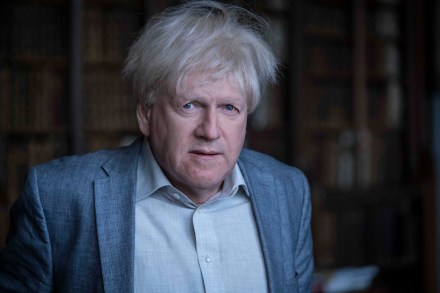
There on my television screen, in a somewhat surreal sequence, was Boris Johnson contemplating the women in his life. And suddenly before me appeared the famous Wyatt features: first eyes, then a nose and then a mouth, right into camera. Medium-range shot and then a close-up. Ah, we had faces then. And then I looked harder, and my blood turned to Freon. It was just a large photograph of me stuck on a 10ft projector screen. Couldn’t those cheapskates at Sky have got a goddamn actress instead of a Polaroid?  As it turns out, This England, the Kenneth Branagh series about my old friend Boris, is more Psycho than psychodrama. Someone in the make-up department seems to have thought they were remaking What Ever Happened to Baby Jane?

The art of menus

There is, of course, no endeavour, no craft, no profession, no trade that neglects to ‘reflect society’. This is a commonplace. The collective narcissism of considerate builders, for instance, claims that hod carriers and brickwork reflect society. The contention of Menu Design in Europe is kindred. Graphic artists, restaurateurs, decorators and chefs have, through two centuries, expanded their capabilities according to the milieux in which they have practised. Menus are, then, not merely functional lists, they are self-advertisements, exhibitions, seductions and, occasionally, desirable objects that are apparently collectible. Indeed this book has the unmistakable feel of an obsessive’s scrapbook, a completist’s trophy.

Sky’s Boris Johnson drama has a fatal flaw

You almost have to feel sorry for Sky. After spending 18 months building up to their big Boris Johnson drama, they end up releasing it at exactly the same time that British politics enters its own cliffhanger mode with drama that could rival any season finale. This England – which tells the story of the start of Johnson’s premiership and the first wave of the Covid crisis – begins tonight on Sky Atlantic, starring Kenneth Branagh as Johnson and Ophelia Lovibond as Carrie. But should Sky have known better than to air it now? Generally the best real-life dramas follow a simple rule of thumb: time is on your side. Rather than rush out your first draft of history, much better to wait until the dust has settled – even if you do have Branagh on board.

Where have all the cool girls gone?

How would you describe Kate Moss? Supermodel, bad girl, party animal, everybody's favourite plus-one? Well, after her latest announcement, you’d better add ‘wellness guru’ to that list. The 48-year-old has just unveiled her health and lifestyle brand, Cosmoss, which she has positioned as ‘self-care created for life's modern journeys’. The woman who once said her beauty regime consisted of 'three Cs and one V’ – cigarettes, champagne, coffee and vodka – has switched to the three Ss, trademarking the phrase 'soulful, sensual, self-aware'. Feels wrong, doesn’t it? My first reaction to the news was: great, another cool girl who’s been swallowed up into the mundane world of green shakes and yoga.

House of the Dragon: so far, so rubbish

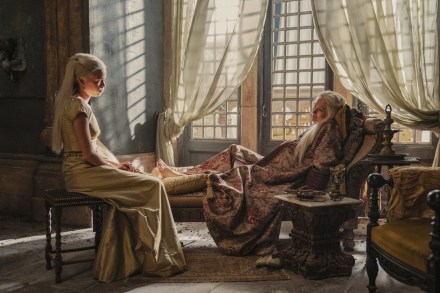
The good news – apparently; I haven’t seen it yet so this may just be a false rumour – is that House of the Dragon episode 6 is really exciting, full of incident and drama and intriguing, well-drawn characters. But the bad news, as I can personally testify, is that in order to reach that point you have to wade through five whole hours’ worth of ball-breaking tedium. Admittedly, even the original Game of Thrones used to do this a bit on occasion: episode after episode of characters talking to apparently little purpose, then suddenly the Red Wedding. But the difference was, you never doubted that the story was going somewhere, and that the whole was underpinned by the mighty creative vision of an obsessive world-builder who had mulled over every detail for eons.

Why do bankers love techno?

Bankers and other assorted finance bros are an inescapable presence on the London nightlife scene. Industry, the British-made TV drama that follows a group of graduates on (and off) a City trading floor, begins its second series on BBC1 tonight and spares no detail of the drug-fuelled hedonism of its young bankers. One plot arc in the first series starts when the protagonist, exhausted after a long night on the powder, executes a trade in the wrong currency. Some in the field have protested that the on-screen excess is unrealistic. But much of it is apparently inspired by real-world experience. Mickey Down, one of Industry’s creators, spent just over a year working at Rothschild at the beginning of the 2010s.

No one wants a more sensitive James Bond

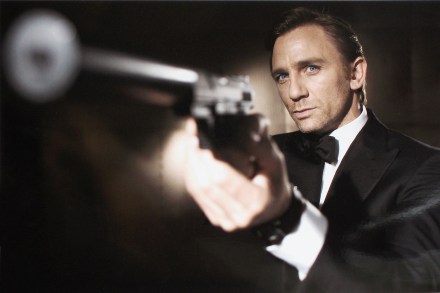
Men do not come to see James Bond movies for the sensitive brooding of an ageing spy. They come for the car, the bikini and the volcano. This is apparently lost on some people in Hollywood – the same people who occupy the unfortunate position of actually making James Bond movies. The Daily Telegraph reports: 'The next James Bond films will have bigger roles for women and a more sensitive 007, according to the producers.' Variety quotes producer Barbara Broccoli saying 'Bond is evolving just as men are evolving', adding: 'I don’t know who’s evolving at a faster pace.' I have a difficult time believing that any fan of James Bond ever expressed a desire for the greatest secret agent in the history of film to be more in touch with his feelings.

Michael Palin isn’t a ‘national treasure’

It's a well-known fact that Michael Palin is a 'national treasure'. Or so you are told just about every single time the travel presenter and writer appears on television or features in a newspaper interview. So it was with grim inevitably that a few days before the first instalment of his latest expedition, Michael Palin: Into Iraq, aired on Channel 5 on Tuesday, the Daily Telegraph and the Sunday Times both felt it imperative to describe him with this phrase. Never mind that he's no doubt utterly sick of this lazy cliché – objectively, it's a misleading misnomer.

The joy – and occasional pain – of a fountain pen

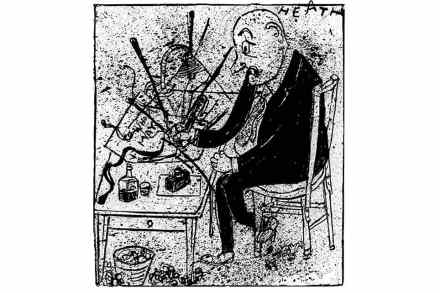
Our new King isn’t the only royal to have lost his rag over a leaky pen, as happened when he was signing a visitors’ book at Hillsborough Castle near Belfast. ‘Oh God, I hate this,’ King Charles said, before handing the pen to his wife, Camilla, Queen Consort. ‘I can’t bear this bloody thing… every stinking time,’ he added. Tired of having to wash his hands after every warrant-signing session, the 10th-century Arab Egyptian ruler the Fatima caliph al-Mu’izz demanded his servants find him a writing utensil that wouldn’t leak everywhere. Courtiers set to work and soon a revolutionary new pen appeared that held ink in a reservoir. It allowed him to write at any angle without fear of leakages.

The enduring appeal of Arnos Grove station

It's not in Whitehall nor Westminster; not on the central London tourist trail. Instead it’s ten miles away, on the wrong side of the North Circular, an obscurity in the suburbs, rarely visited for its own sake. But Arnos Grove Tube station is one of the masterpieces of 20th century British architecture – and this week it celebrates its 90th anniversary. Until September 1932, the northern branch of the Piccadilly line ended at Finsbury Park. Then five new stations were built: Manor House, Turnpike Lane, Wood Green, Bounds Green and, finally, Arnos Grove, all commissioned by Frank Pick and designed by Charles Holden. Suddenly it was only 20 minutes to Leicester Square.

Is Britney Spears really ready for a comeback?

For the finale of the #FreeBritney franchise, it seems that the 2000s Queen of Pop is to return to music. Recent reports have claimed that Britney Spears will be collaborating with Elton John on a song titled 'Hold Me Closer'. As exciting as this is, I can’t help but think that – seeing as her conservatorship was ended less than a year ago by a court ruling – she may be biting off more than she can chew. I question if she is truly ready to return to the inevitable pressure that comes with being in the public eye. I’m no therapist, but the treatment that Britney has endured over the past 14 years surely has to have lasting mental effects on the star’s health.

The fatal problem with The Rings of Power

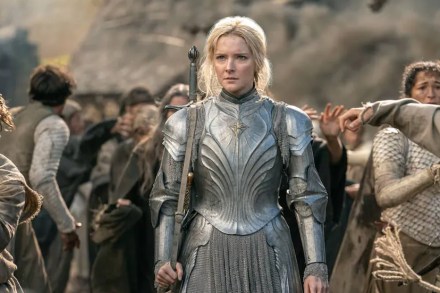
Three episodes in I think I’ve worked out the thing that’s most annoying about The Rings of Power. It isn’t the gratuitously diverse casting. It isn’t the saccharine tweeness of the hobbity Harfoots. It isn’t the ‘You go girl!’ tediousness of the relentless female character heroics. It’s that the entire series appears to have been constructed with all the charm, flair, character, originality and artistry of an Ikea wardrobe. Take the scene where Galadriel (Morfydd Clark) and her fellow shipwreck victim Halbrand arrive – looking ludicrously healthy for a duo who till recently spent days clinging desperately to a raft of the Medusa – in the city state of Numenor.