Spectator Life

Spectator Life

An intelligent mix of culture, style, travel, food and property, as well as where to go and what to see.

In praise of Jodie Comer

She’s got all the trappings of superstardom: killer looks, a clutch of awards and £4.5 million in the bank. But mention ‘Jodie Comer’ to your friends and you’re bound to get a few blank stares. The British actress, best known for playing super-stylish assassin Villanelle in the BBC series Killing Eve, has yet to become a household name. And, like many in her growing legion of fans, I want to know why. This month I saw Jodie, 29, in Prima Facie, her debut West End play. It’s a masterpiece of a monologue in which she confronts gruelling issues including sexual assault, misogyny and bias in the criminal justice system – and she was nothing short of astonishing. When the curtain fell, I could barely speak.


The funny truth about life as a diplomat’s wife

In the early 2000s my husband, a diplomat for the EU, was posted to Kazakhstan, a vast empty steppeland next to Siberia. It was winter and the place was covered with thick snow. My family were in England, my husband was mostly in the office; I was 61 and I didn’t know a soul. Our previous posting had been to Damascus and I had occupied myself by writing a book about the old palaces there, but here there were no old buildings as the Kazakhs had been nomads. I had nothing to do. Everyone spoke Russian – I didn’t. As my husband was a senior diplomat we qualified for a cook, but she and I could only communicate using animal noises: chicken was cluck-cluck, beef was moo and lamb was baa. The main foods available seemed to be cabbage, onion and potatoes.

Is Netflix losing the battle of the streaming giants?

From time to time, Netflix’s marketing brains like to get a bit cute with the company’s past. ‘Don’t give up on your dreams – we started with DVDs,’ read one recent viral post. But while the streaming giant happily references its most famous transition, it’s much more coy (and probably wisely) when it comes to its latest one. It isn’t hard to see that 2022 Netflix is a very different beast to the one most of us signed up for. If you joined Netflix during its peak – e.g. somewhere in the long window between House of Cards and Tiger King – you would have likely bought into the idea of it being a one-stop shop for all things streaming. But has it really kept that promise?

Why I still love the Edinburgh Festival

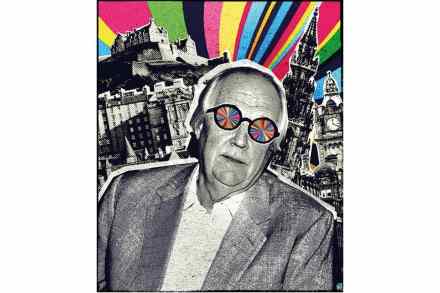
When I was in my twenties, exactly 50 Edinburgh Festivals ago, Frank Dunlop directed the first professional production of Joseph and the Amazing Technicolor Dreamcoat which Andrew Lloyd Webber and I had written for a primary school concert in 1968. In the first four years of the work’s existence, it began to burrow its way into educational musical syllabi at a modest pace. This we appreciated, but in 1970 we stumbled into overnight success with our double album of Jesus Christ Superstar, and we did not thereafter give our earlier piece the attention it perhaps deserved.

The lost charm of London’s St Giles

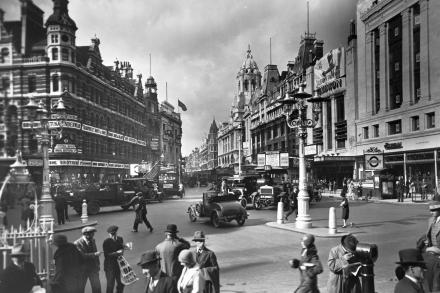
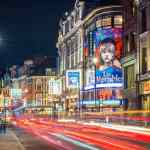
London's architectural landscape is changing at such a pace that it's hard to remember what's been lost beneath the acres of tarpaulin. Buildings I must have walked past a thousand times and that I could have sworn were important landmarks have been disappearing at an alarming rate. Despite the devastation there appears to be little in the way of pushback from harried, post-pandemic Londoners. How quickly we forget what our eyes once took for granted; the familiar razed without a second glance. The area known as St Giles, just east of Charing Cross Road and south of New Oxford Street, has suffered more ignominy than most.

The books Spectator readers take on their summer holidays

Recently, Spectator writers shared their all-time favourite summer holiday reads. In response, Spectator readers have been offering their own recommendations for what books to take to the beach… 'You might try Helen Thompson’s Disorder: Hard Times in the 21st Century, a history of oil politics. It starts with the simple fact that in evolving from the steam to petroleum age, the old western powers no longer had direct access to fuel and faced a growing dependency on oil from Russia, initially, and then the Middle East. The US, of course, is an exception as it has domestic resources – but foreign policy errors led to it being the guarantor of petroleum resources to the rest of Nato.

We haven’t heard the last of Johnny Depp vs Amber Heard

The last thing I wanted to do was write about the Johnny Depp and Amber Heard circus. Really. For months I’ve done everything humanly possible to avoid the social media cults, the TikTok clips and my mother – who was so enthralled by the case that she cancelled numerous plans so that she could watch the live trial, and was temporarily banned from Facebook for commenting that she would give Heard a slap if she ever came across her, which is probably unlikely. But after the latest development in the story, which happened after the judge ruled that Heard was in fact defamatory towards Depp, awarding him around £12 million in damages, I couldn’t stay quiet any more. And neither could a number of celebrities.

Why Harry Hill’s little green aliens are popping up all over London

Sitting in a posh office overlooking the Royal Academy, the comedian Harry Hill is deploying one of his lesser known modes: introspection. ‘I suppose I’m one of a growing number of celebrities who do art,’ he says, one hand fiddling with his trademark oversized shirt-cuff. His point – which he returns to several times – is one of definition: as much as he enjoys making art, and as much art as he makes, he can never quite see himself as an artist. In his defence, he isn’t alone. After more than a decade as the face of one of the most-loved comedy shows this century, Hill can probably count himself among the ten most recognisable comics in Britain.

Who needs a hosepipe? The watering cans worth investing in

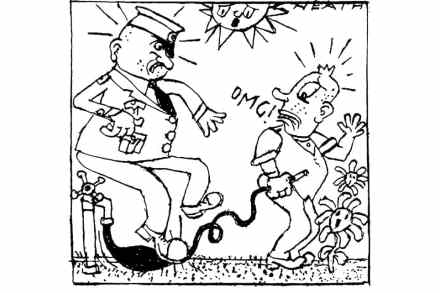
In the hot, dry summer of 1976, I was working as a gardening student at Arboretum Kalmthout in Belgium. The temperatures in July were frequently 40°C by lunchtime, so we worked in the early mornings and through the evenings. My job was to drive a tractor pulling a trailer, on to which were placed dustbins full of water drawn from a borehole. These were ferried around the grounds so we could water rare, precious and drought-hating rhododendron and tree species. The owners of the garden were white-faced with apprehension all that month but the stratagem worked and we saved the lot. Something of that anxiety comes back to me, for my garden is at risk of losing plants from drought. We have had a measly 0.

The bizarre history of London’s private members’ clubs

At the height of the IRA’s terrorist campaign on mainland Britain in December 1974, a bomb was lobbed through the front window of the In & Out – the Naval and Military Club, then in Piccadilly. Exploding, it knocked everyone off their feet, including the barman Robbins, and trashed the Long Bar. But in the silence that followed came the unwavering request of senior member Commander Vaughan Williams: ‘Another pink gin please, Robbins.’ A subsequent cartoon in the London Evening Standard depicted the scene of devastation (no one was injured or killed) with a mess-jacket-wearing member calmly wondering what the barman had put in his pink gin: ‘But I’ll have another!

How the travel industry convinced us we needed holidays

In September 2019, Thomas Cook filed for compulsory liquidation, leaving 600,000 customers stranded abroad. It was a sorry end to a company that had lasted 178 years and survived both world wars. Founded by a Baptist preacher who began organising railway trips to Midland cities for local temperance societies, the company grew into one of the largest travel agencies in the world, thanks to the transformation of tourism from an activity for the idle rich to an experience open to all. This opening up of travel is the story Lucy Lethbridge tells in Tourists, taking the reader from the last years of the Grand Tour to the first years of the package holiday.

In defence of Fergie

My first reaction to anyone buying even a bog standard two-up-two-down terrace in London is a fake congratulations through gritted teeth. So when it was reported last week that the Duchess of York, ex-wife of disgraced Prince Andrew, had bought a £5 million mews house in Mayfair, I was surprised that I didn’t share the outrage of the general public. Sure, she does very little, spending her days lounging around in Royal Lodge, the Grade II-listed Windsor property she shares with her ex. But there’s a part of Sarah Ferguson that is totally relatable, and as she has tried – and often failed – to navigate the inner workings of the royal establishment, I have watched her with admiration.

Yours for £45,000, the car that drove Margaret Thatcher into history

‘A new girl drops in at the palace,’ announced the London Evening News on the front page of its ‘election special’ of 4 May 1979. The accompanying image showed a beaming Margaret Thatcher (pre-implant teeth in evidence) waving from the rear seat of a ministerial car, on her way to meet the Queen and receive her official invitation to form a new administration. Another ‘new girl’ (or boy?) might be dropping in at the palace soon – but if he or she wants to do it in the same car, it will cost them.

Heat 2 is a classic of the crime genre

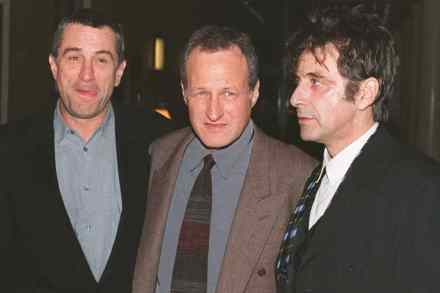
Of all the things in the world of entertainment that might get me excited, 'a new Michael Mann project' tops the list. A film writer and director, Mann not only is a talented storyteller, but has mined the criminal underworld for his subject matter, from his debut feature in 1981, Thief. Since then, he’s rarely veered from criminal elements in his subject matter (Last of the Mohicans and Ali being the two notable exceptions). He is the great auteur of the crime genre; in other words, he makes arthouse films for dads. In 1995 Mann released what many consider to be the greatest crime film ever made.

Beyoncé and the pornification of pop

Beyoncé Knowles has always been sexy: naturally and consciously so. But her sexiness – those astonishing bottom-swooshing dance moves; the gleaming, undulating chest; the ever-changing, lustrous locks – sat alongside a moral substance that grew as her career progressed. She weighed in on politics, raising $4 million for Barack Obama and singing at his first inaugural ball. She weighed in on sexual morality, telling women in one of her most iconic songs that their man ought to, if he was to be taken seriously, ‘put a ring on it’. She is a committed Christian, having grown up in a Methodist household and frequently spoken of her faith.

Has the Edinburgh Fringe lost its edge?

Every August, thousands of comedians make the pilgrimage to Scotland for the Edinburgh Festival Fringe. By the end of the month, those who manage to stand out in this crowded field (and it is a very crowded field) might have Live at the Apollo or Netflix calling, or maybe even a sitcom commission. But this year, with performers facing hefty registration fees, rent more expensive than a luxury foreign holiday and exorbitant marketing campaigns, all in the midst of a cost of living crisis, more and more are asking: has the Fringe lost its edge? As the festival kicks off for its 75th year, comedian Vittorio Angelone says its culture seems to have changed.

The art of learning to breathe properly

I thought I knew how to breathe properly. My years of studying dance at various institutions have all involved tuition on breathing and its relationship with movement and posture. So I was sceptical when I joined my step-sister Octavia’s online breathwork classes – what more was there to learn? My first class was in lockdown, at a time when many of us felt in a continual state of anxiety. We were guided through various techniques that manipulated the rate and depth of our breathing. It was dynamic and intense, much harder than I imagined. But nothing much happened at first. I started to think that maybe this wasn’t for me.

What Spectator writers read on their summer holidays

The flights are booked, the passports are dusted down and it’s time to pack. But which books deserve space in your suitcase? Here, Spectator writers share their all-time favourite summer holiday reads… Matthew Parris My all-time favourite re-read at any time of year is Thornton Wilder’s The Bridge of San Luis Rey. A very short novel with the kind of perfection a geometrical proof may command, it starts with the death of a group of travellers crossing a Peruvian rope bridge who are linked only by the fact that they were on the bridge when it snapped, and traces the life of each up until that point. Wilder’s quest is to discover whether there exists any divine plan. Toby Young For pure escapism, I Am Pilgrim by Terry Hayes is hard to beat.

In defence of Beyonce

People complaining about supposedly offensive pop lyrics is hardly anything new. It’s as old as the form itself; never-ending proof that everyone is offended by something and that every era has its own set of taboos. But the speed with which music stars appear to be acquiescing to other people's hurt feelings today is surely something new. Take Beyonce. She’s one of the biggest stars in the world. A genuine living legend. And yet because a handful of disabled charities and irked right-on tweeters have complained about one word in one of the songs on her new album Renaissance, her ‘team’ has almost immediately promised to scrub and re-record the offending lyric as soon as possible. The word that has caused so much offence?

The curious rhythm of life in Spain’s Santiago de Compostela

Surely no other city can claim to have so many backpacks and walking sticks on its narrow cobbled streets. In Spain’s Santiago de Compostela it always looks like there is a giant hiking convention going on. These aren’t your average ramblers, though. They are pilgrims, as the city marks the end of the famous Camino de Santiago pilgrimage. The Camino, or the Way of St James, is most associated with the 500-mile route from the base of the French Pyrenees westward though Pamplona, Burgos and Leon.

Why now is the time to be spontaneous

I am not naturally a spontaneous person. I relish neatly laying out projects and plans in my Moleskine diary. It was out of character, then, when on the second Monday of the Wimbledon fortnight I decided on the spur of the moment to head to the All England Club and join the queue for a day ticket. If I didn’t get in, I reasoned, I could always have a nice meal in a nearby restaurant and watch the action on a big screen, content in the knowledge that I was at least sharing the air of the SW19 postcode. My back-up plan wasn’t needed. When I joined the ‘queue’, I was the only person in it. I was ushered straight into the grounds to enjoy six glorious hours of sun-drenched tennis. Perhaps there was something in this spontaneity lark after all.

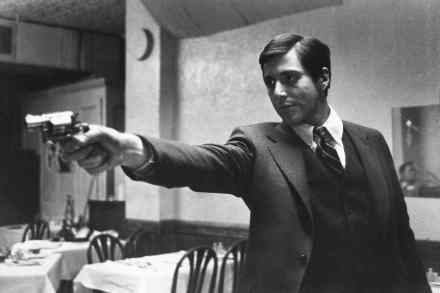
Heavy is the head: ten films about the challenges facing new leaders

The Tory leadership race may already have supplied plenty of entertainment – but sometimes the real drama begins when a new ruler actually takes power. Many films have examined what can happen when an inexperienced leader assumes control, from the Biblical epic Exodus: Gods and Kings (2014) to sci-fi blockbuster Dune (2021). Others have explored the challenges that face new leaders at the helm – whether it’s being duped into invasions, subduing those who don’t accept your rule or catching conspiracists. Here are ten that might make informative (or cautionary) viewing for the next Tory leader: The King (2019) – Netflix https://www.youtube.com/watch?

The surprising tricks that can cut your energy bills

We are all facing months of rising bills, with warnings that there may even be blackouts ahead. But all is not lost. Here are ten ways you can cut your energy consumption – and some of them will surprise you… Change your lightbulbs – even the 'energy saving' ones. If you still have old-style incandescent lightbulbs in your home – or even the original, fluorescent energy-saving bulbs – you are wasting a fortune. A five-watt LED lightbulb produces as much light as an old-style 60-watt lightbulb does. Lighting constitutes the single biggest proportion of most energy bills on account of how often we have the lights on – so this single change can make a significant difference.

Turning 40 is dreadful – let’s not pretend otherwise

Last week, pictures of the actress Sienna Miller frolicking with glee in a tiny orange bikini in St Tropez with her boyfriend were widely shared. Miller is 40, and her boyfriend, the Burberry model Oli Green, is 25. Miller was described as looking 'incredible', a mixture of fantastic abs and, it was implied, exuberance at her still-strong, possibly intensifying sexual power. Women at 40 are a fascinating breed, treading a line of dubious width between youngish and middle aged; between fertility and its winding down. In past centuries, women were lucky (or unlucky) to get to 40.  Now the ether resounds with rhetoric about how empowering it is, how the follies of youth have been left and in their place come the burnished glories of still-attractive maturity.

Mad Men in the movies: ten films about advertising

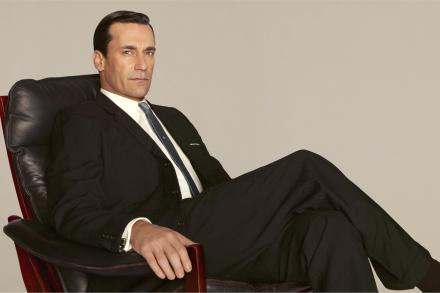
This week Mad Men celebrates the 15th anniversary of the show’s debut. Elmer Wheeler’s famous phrase about the science of advertising holds as true today as it did when he originated it almost a century ago: ‘Don’t sell the steak, sell the sizzle.' Matthew Weiner’s series cast the advertising profession under a jaundiced eye, examining the mores and morays of Madison Avenue advertising executives from 1960 to late 1970. The show made Jon Hamm (as Don Draper aka Dick Whitman) a star, as well as boosting the careers of other regular cast members including Elisabeth Moss, John Slattery, Jared Harris, and Christina Hendricks.

The strange feminism of Ivana Trump

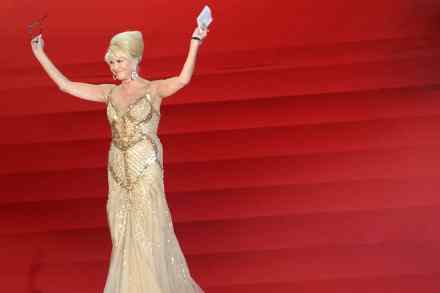
For a woman whose life was all about ascent, there is a cruel irony to the fact that Ivana Trump was found dead at the age of 73 at the bottom of the stairs of her Upper East Side apartment last Thursday. Born in 1949 in Communist Czechoslovakia, the girl whose father was an electrical engineer made her name on the basis of dizzying verticals: first as a professional skier and then as billionaire’s wife and manager of her second husband Donald Trump’s eye-bending skyscrapers in New York and Atlantic City. After her acrimonious tabloid divorce from Donald in 1991 following his affair with chorus-girl Marla Maples, Ivana made her name from surviving - and exposing - the indignities of her marriage’s collapse.

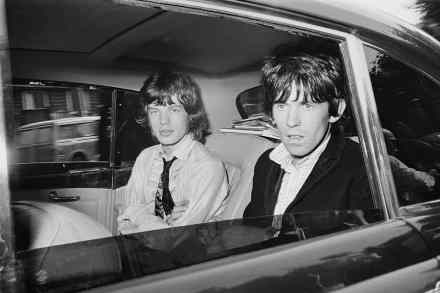
My night with the Rolling Stones

That’s another prime minister the Rolling Stones have outlasted. When the band first plugged in under that name at London’s Marquee Club on July 12, 1962, Harold Macmillan was in No. 10 dealing with the ‘little local difficulty’ of sacking a third of his cabinet. Then came Alec Douglas-Home, Harold Wilson, Ted Heath, Wilson again, Jim Callaghan, Margaret Thatcher, John Major, Tony Blair, Gordon Brown, David Cameron, Theresa May and now the soon-to-depart Boris Johnson. Thirteen administrations, an even dozen US presidents and six popes. And through it all the Stones themselves have just kept rolling along. Not bad for a band of misfits that everyone, including them, thought would last a year or two at most.

Why TikTok reels are reshaping comedy

Bella Hull started standup six years ago. Back then, she lived in fear of a bad set being uploaded to YouTube, where a shaky camera and lacklustre crowd might stain any Google search of her forever. Now, due to the rise of video ‘reels’, popularised by TikTok, Instagram and YouTube during the pandemic, for Bella and other digital savvy comedians, creating online video is a necessity for reaching fresh, young, and more global audiences. Bella has been publishing funny short-form videos in portrait (AKA TikTok reels) for one year and has amassed over 888k likes on the platform. Jacob Hawley on TikTok (jacobhawley) For a lot of circuit comedians, lockdown forced them to put down the microphone and pick up their smartphone.

This summer’s most gripping crime reads

As ever, there is an endless supply of crime novels and true crime books out there to pick from for summer reading. Here are five of the best to pack in your hand luggage… City on Fire by Don Winslow Don Winslow is rightfully regarded as one of crime writing’s big hitters. His monumental ‘Cartel’ trilogy about America’s war on drugs is a towering literary achievement. Now, he’s embarking on another three-book run. Set in 1980s Rhode Island and inspired by The Iliad, this first instalment sees a beautiful woman spark a war between Irish and Italian gangsters – and Danny Ryan, a faithful but undervalued member of the Irish clan, is thrust into the centre of the mayhem.