Spectator Life

Spectator Life

An intelligent mix of culture, style, travel, food and property, as well as where to go and what to see.

How ‘iconic’ became anything but

Though I love words, I don't generally get on other people’s cases about them as I don't expect everyone to have my almost parasexual attachment to the English language. I’ve suffered silently through the flagrant misuse of ‘epic’ and ‘awesome‘ and numerous moronic reference to food as ‘orgasmic’ and ‘artisanal’ featuring 'curated table-scapes’. If you’re older than five and say ‘nom’ (in any multiple) then frankly, I believe that you should have your voting rights taken away – it’s called Universal Adult Franchise for a reason. However, I’m going to make an exception for ‘iconic’, the overuse of which has mildly irritated me for quite some time.
The secrets of London by postcode: SW (South West)

Ferrets at Buckingham Palace, swearing at Wimbledon and the real-life incident that inspired Del Boy’s fall through the bar – it can only mean that our trivia tour of London’s postcode areas has reached SW… The Clermont was the first hotel in London to have lifts. The ‘ascending rooms’ (as they were known when the hotel opened in 1862) were powered by water pressure. Back then the five-storey building, next to Victoria station, was known as the Grosvenor and was a favourite of Sir Arthur Conan Doyle. So much so, in fact, that he included it in ‘The Final Problem’, the short story with which he first tried to kill off Sherlock Holmes.

The dos and don’ts of getting a wood-burner

Of all the money we’ve spent on our barn conversion since we moved in 13 years ago, the wood-burner we installed in our living room trumps bathrooms, oak flooring and even a beautiful garden room extension as our best investment. At £2,000, the neat cast-iron stove was worth every penny – and never more so than now, when the temperature is plummeting and our smart meter informs us that we’re blowing a zillion pounds a day on gas and electricity despite being frugal with the heating and, well, everything else.  Log-burners weren’t such a common sight when we got ours in 2012, but since then they've grown in popularity among those wanting to add a flick of English country chic to their homes. And as our energy bills have soared, they've become even hotter property.

Will Elon Musk’s Starlink cause a mutiny on Pitcairn?

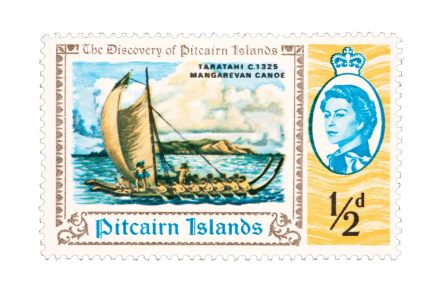
What difference does the internet make? Critics blame it for a range of ills, from social collapse and child abuse to obesity. So shouldn’t we greet with some caution and even sadness the recent announcement that Elon Musk’s Starlink satellite broadband is to reach tiny Pitcairn Island in the Pacific Ocean, home to the handful of descendants from the 1789 mutiny on the Bounty? Will the advent of Zoom calls and the ability to stream The Crown turn this idyllic tribe into socially fractured, screen-obsessed time-wasters? Is high-speed connectivity the beginning of the end for this Pacific paradise? I think not. Because this 38-strong community collapsed long before Musk was crowned the richest man in the world. It doesn’t take Starlink for paradise to turn sour.

How to survive the party season

December is here and it's going to be murder out there from now until the new year. Spectactor Life writers explain how to get through it – from swerving bores and turning down invitations to lining your stomach and crashing with panache... Swerve bores Celia Walden When trying to escape the party bore, pick an excuse that’s as close to the truth as possible: ‘So sorry – just seen a man with a tray of bellinis,’ or ‘Be right back: I love pigs in blankets!’ It took me decades to work out that only the most realistic line won’t hamper the rest of your night.

Indiana Jones and the absurdity of Hollywood de-ageing

This week, in homes across the land, there is one guarantee: somewhere, someone will be watching one of the Indiana Jones films, and it’ll likely be the first or the third in the series. Raiders of the Lost Ark and Indiana Jones and the Last Crusade are little less than perfect seasonal comfort food: witty, exciting, stuffed full of indelible characters and unforgettable set-piece action scenes. These films stand as those rare pictures that, however many times you watch them, continue to be fabulously entertaining. The others in the franchise – Temple of Doom and Kingdom of the Crystal Skull – are less effective, and the latter has become a byword for mediocrity.

The office Christmas party is back with a vengeance

I’m bad at Christmas. I hate turkey, wrapping presents and the idea of forced, planned fun. My family – mostly – shares the same view. Extra shifts are picked up and presents are sent with time to spare to avoid actually having to see each other. Fortunately, even if I’m no fan of Christmas itself, there is one saving grace: the office Christmas party. No other work event can compare. Leaving drinks are strained, after-work drinks are pedestrian and inviting colleagues to things like birthdays often just feels wrong. The office Christmas party is the opportunity for a night of true debauchery before you all head off for the festive break, leaving just enough time to live down anything embarrassing you might have done.

How to avoid paying London’s Ulez charge

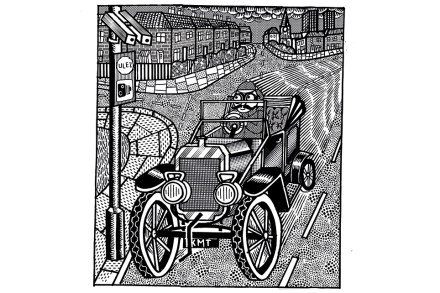
It’s getting hard to escape low emission zones. In Birmingham, Oxford and Bristol – and pretty soon the whole of London – unless your vehicle is squeaky clean, you are going to have to pay every day that you drive. London--based readers probably know by now of Transport for London’s plans to expand its £12.50-a-day Ultra Low Emission Zone (Ulez) to every single borough, from Hayes to Hornchurch, Cheshunt to Caterham, and with a sticky-out bit which I think has been deliberately designed to include Chessington World of Adventures. For many, this is an outrage. The Conservative MP for Carshalton and Wallington, Elliot Colburn, has described himself as ‘very, very angry’, calling the expansion a ‘disgusting move’.

The enduring appeal of ’Allo ’Allo!

If you think your life is stressful it’s good to reflect on what poor René Artois went through each week in ’Allo ’Allo!, the 1980s BBC sitcom set during the German occupation of France. RAF pilots hidden in his mother-in-law’s cupboard upstairs, German officers in the café downstairs, Herr Otto Flick of the Gestapo likely to limp in at any moment – and all the time trying to serve drinks and juggle a sex life that would have exhausted even Errol Flynn. ‘I have to be nice to the Germans, they are my customers, they are winning the war, so if I am not nice to them they will shoot me,’ René would say. ‘I have to be nice to the Resistance, otherwise they will shoot me for being nice to the Germans.

Michael Beale has broken my heart

Most football fans have had their attention riveted on Qatar for the past couple of weeks, but for those of us who support Queens Park Rangers there’s been an unwelcome distraction at home. Our manager Michael Beale, who’s only been in charge for 21 league games, announced on Monday that he’s leaving us for Rangers, the Glaswegian football club. Having spent a huge amount of time and effort recruiting a manager in the summer – and seemingly picking a winner – QPR’s top brass will have to start again. Beale was one of the few people in authority (me included) who hadn’t disappointed my children Such behaviour isn’t particularly unusual in the modern game.

A daily shower is money down the drain

When did it become an inalienable human right to have a shower every day? I ask the question because pretty clearly it wasn’t always so. Yes, the Romans had showers – of course they did (they probably had the internet, too, but archaeologists can’t see it). A potter about online will tell you that we got the first mechanical shower here (hand pumped) thanks to the ingenuity of a plumber from Ludgate Hill named William Feetham. That was in 1767, which means that by the time Jane Austen was getting ink on her fingers a shower was an option for some. So the answer to my question is somewhere between 1767, when I expect a monthly bath was de rigueur for most of us, and around 1990, by which point it become common for Britons to take a daily shower and regard it as essential.

The tyranny of card-only payments

Even though being a right-centre comedian accords me default outsider status, I am not in any way an edgy bloke. Consequently, I find myself surprised at just how unnerved I’ve become by the drift towards a cashless society. I’m not yet at the stage where I’ve started using phrases like ‘the great reset’ or renaming my first son ‘Crypto’, but I have become a bit twitchy about yet another huge change concerning the fundamentals of how we live (and the way we all ignored it when we realised we could go to a restaurant with a built-in reason to not tip). The perils around the exclusive use of contactless payments are – like most things – something I hadn’t thought about much until it affected me. I was doing a couple of gigs in Dublin.

The best out-of-print books (and where to buy them)

Those overstuffed shelves of the latest releases aren’t always the best place to start when you’re shopping for a book to read (or to give as a Christmas gift). You can find plenty of out-of-print books with timeless appeal that are worth snapping up – if you know where to look.   Elizabeth von Arnim’s Introduction to Sally, for example, is almost 100 years old, but is a very enjoyable read if you can find a copy. Mr Pinner is a shopkeeper and he and his wife have longed for a child for years, so they are thrilled when their daughter is born. Mr Pinner wants to call her ‘Salvation’ but they compromise on ‘Salvatia’ (shortened to Sally). Sally grows up to be the most beautiful girl anyone has ever seen.

The myth of the career woman

The image of the single, childless ‘career woman’ is drawn so sharply in our minds, so deeply ingrained in culture and overused in media, it obfuscates the real story. Contrary to popular belief, most working women are not putting their careers ahead of love, marriage and motherhood. Never mind that there are no ‘career men’ – no one accuses a single, childless man of prioritising career over love and family just because he’s single and can pay the rent. But women are made to wear this label – though I have yet to meet a woman who has declined a date with a guy she’s interested in because she’d rather be on a Zoom call.

The best Oscar Wilde films

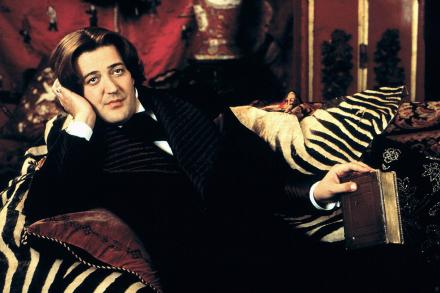
It is 122 years this week since Oscar Fingal O'Flahertie Wills Wilde died – in exile, poverty and disgrace – at Paris’s shabby St Germain Hôtel d'Alsace. His last words were said to be: ‘My wallpaper and I are fighting a duel to the death. One or the other of us must go.’ Despite Wilde’s precipitous fall from grace and the ignominy heaped upon him (his children had to change their surname to Holland), within a relatively brief time his plays were revived and books reissued to renewed popular acclaim. And more than a century later, that appeal hasn’t faded: this year in England alone, The Importance of Being Earnest toured the north and Richard Strauss’s adaptation of Salome was performed at the Royal Opera House.

The rise and fall of the Sealyham terrier

‘What breed is he?’ is the question I hear most when I’m walking my six-month-old Sealyham terrier, Murray. Most of the time my answer is met with blank looks or ‘I’ve never heard of that’. But just once in a while, someone will recognise the breed – and when they do, they usually have a Sealyham story to tell. The Sealyham is a breed that has a few stories of its own. It was developed between 1850 and 1891 by the eccentric sportsman Captain John Edwardes. While he didn't leave many notes of what breeds went into it, it's thought that the now-extinct Old English terrier, the West Highland terrier, the corgi and the Dandie Dinmont terrier all contributed.

The beauty of gaslights

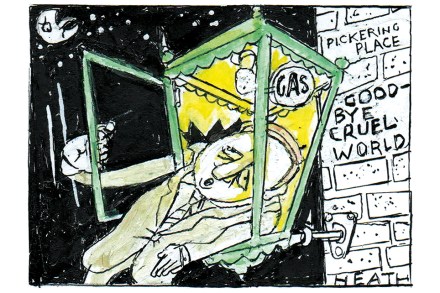
Turn down an alley off St James’s Street (the east side), lined with old painted panelling, and you are in Pickering Place, which pub quizzers say is London’s smallest public square. It is certainly charming, with stone paving, wrought iron railings, Georgian windows and a sundial on a pedestal. A gaslight on a wall bracket used to glow sympathetically in the space. Now Westminster Council has replaced it with an LED. It had threatened to do the same for all its 299 gaslights still under council control, but a rearguard action has halted its plans. The beauty of gaslights may depend on your starting point. They were, at a crucial moment of his life, anathema to John Ruskin.

The story of architecture in 100 buildings

One recent estimate claims there are 4.732 billion buildings on Earth, but it’s difficult to establish a credible methodology to count them. Is Manhattan’s Rockefeller Center, created out of swaggering pride and ambition, in the same category as a shanty hut in an Algerian bidonville? Unless you live in a desert, buildings are unavoidable, making architecture not just a necessity for survival but the art form most pregnant with meaning. When I was a boy I wanted to be an architect. Not because I was interested in drain schedules, load paths, wrangling with local authorities or designing kitchen extensions but because architecture seemed the most powerful expression of style. We know and judge cultures by their monuments, not their facility for credit default swaps.

The environmental cost of vaping

A few months ago I wrote a piece for The Spectator about the surge in popularity of Elf Bars and the potential health risks of these colourful e-cigarettes. But disposable vapes are now posing a different kind of problem – for the planet.  These single-use devices, which last for around 600 puffs, head straight to landfill after users suck out their smoke. The vapes which don’t make it to the dump can be found lining the gutters of our cities, having been cast aside. In Britain an estimated 4.3 million people use vapes today, up from around 800,000 a decade ago, according to YouGov data.

In praise of straightforward men

When the Queen’s granddaughter Zara Phillips married the rugby player Mike Tindall in 2011, the shallower among us wondered what she saw in him. We’re not wondering now. Watching the monstrous regiment of muppets and divas competing in the latest series of ITV's I’m a Celebrity… Get Me Out of Here! and seeing Tindall's equable nature – highlighted by the incompetent creative men who surround him, be they pop stars, actors or alleged comedians – makes it clear that the uncomplicated man is the smart woman’s choice. Tindall seems tremendously capable – an overlooked virtue in a romantic partner, and one that comes to the fore during the hard times.

Which appliances are pushing up your energy bills?

With the Chancellor confirming that the energy price cap will rise in April, it seems we won’t be taking our eye off our electricity usage any time soon. But while energy saving tips have become a staple of breakfast television shows and small talk, how many of them really add up in practice? The Spectator’s data team has crunched the numbers to see what typical household devices actually cost to run. And the answers are quite surprising. Perhaps you’ve heard the warnings over the past weeks of so-called ‘vampire devices’ – those pesky contraptions which carry on costing you money when you’re not actually using them. You may even be among the almost half Britons who say they’re already making an effort to switch off their gadgets at the plug for that reason.

The curious case of the Asian Maradona

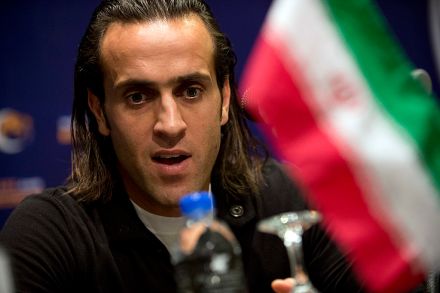
When England line up against Iran in Doha today, the VIP seats should be studded with former players from both sides. But one who almost certainly won’t be present is a player with a solid claim to having been the greatest Iranian footballer in history. Because Ali Karimi is a wanted man. The 44-year-old is hugely influential in Iran – he has 13 million social media followers there. But he has positioned himself as such an overt critic of the country’s regime that he’s now living in exile, threatened with arrest – and worse – should he return to or be forcibly taken back to Iran.

What happened to my secret snap of David Beckham?

There is one footballer who will be under particular scrutiny at the Qatar World Cup – but not because he’s playing in it. David Beckham retired as a player, aged 38 in 2013, but nine years on his stature has continued to grow. The former England captain's profile is so high that those tasked with the tricky job of getting positive publicity for Qatar agreed to pay him a reported £10 million to plug the tournament.  This is the story of my role as a cog in the wheels of the media machine that helped propel Beckham to this position – and of one particular incident, involving surreptitious snaps of him sitting on a sun lounger. But first some context.

In defence of the Brummie accent

‘It is impossible for a Brummie to open his mouth without making some other-accented Englishman hate or despise him.’ I am misquoting George Bernard Shaw, of course – but maybe the great man had the much-maligned Birmingham accent in mind when he made his famous pronouncement. In a recent study more than 2,000 people were asked to listen and react to 15 British accents. When they were asked which they would consider the most trustworthy, Birmingham ranked bottom. Yorkshire came out on top, with 60 per cent considering it trustworthy, while RP (Received Pronunciation) came in second at 57 per cent. The Edinburgh Scottish accent was third, with Welsh and Geordie rounding off the top five.

The power of the dog

We live in a dog-crazy land. You know it’s true. There are 12.5 million pet dogs in Britain, and no fewer than one in three households have one. Which is, by any measure, a lot of dogs, especially when we’re confronting a cost-of-living crisis. Most people, of course, will already know why we have quite so many of them: they’re cute when they’re young and beautiful or handsome when fully grown; they provide companionship, yet they don’t do passive aggression or sarcasm. Most of us already have siblings, parents or a spouse for that.

For my 60th birthday, I’m taking up smoking

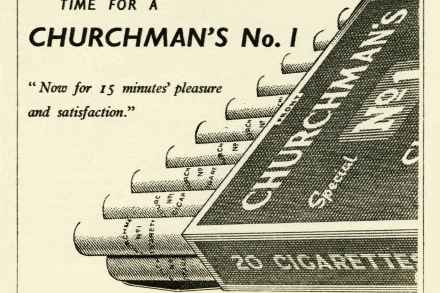
Next month I will be 60. It’s an unwelcome landmark birthday as far as I’m concerned but they say that taking up a new hobby or pastime is a good way to combat the advances of old age. So I’ve decided to take up smoking. It was either that or something physical such as cycling or jogging or walking football but, to quote Ronnie Barker in Porridge: ‘What, with these feet?’ Besides, older cyclists look ridiculous, serious runners tend to look ten years older than they really are and as for walking football… what’s the point? No, smoking is easier, more pleasurable, more relaxing and even allows me to multi-task. I can enjoy a Camel Blue while birdwatching, walking the dog or listening to Northern Soul – all of which I also plan to do more of in my sixties.

If Sister Nijole can be happy, so can you

In the past five years I’ve met many people who’ve had direct, sometimes horrific, experience of communist rule. But I was more excited about doing a recent interview than I had been about any of the previous ones. It was going to be with a nun in a convent in Lithuania. I had imagined the scene: we would enter a large, gloomy, medieval stone convent. We would be cautiously admitted into a cavernous hallway and then ushered by a silent nun into a small, bare room for visitors. Then, dressed in black nun’s garb, Sister Nijolė Sadūnaitė would enter the room, head bowed, and sit in a plain wooden chair, her face lit only by a candle.

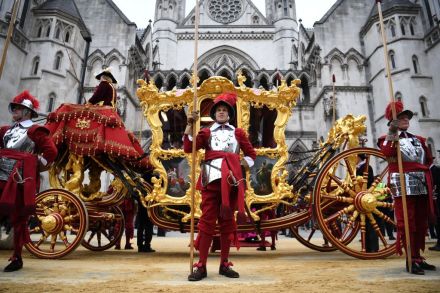
The pomp and pageantry of the Lord Mayor’s Show

The Lord Mayor’s Show is a mix of traditional buttoned-up pageantry and let-your-hair-down carnival. A bit like the state opening of parliament without all the MPs, and Notting Hill without the jerk chicken. I am a Freeman of The Worshipful Company of Merchant Taylors, one of the ‘Great 12’ livery companies of the City of London. The Lord Mayor’s Show is an occasion in which the City’s livery companies – there are some 110 in all – have prominent place. What’s more, the incoming Lord Mayor has a special link to the Merchant Taylors as a member of the Company’s Court. Which is all a roundabout way of saying: I have been roped into today's show to ride atop a camel.

How we’re marking Remembrance Day in the Falklands

Last Saturday was pure sunbathing weather. I mention this because a) I’m writing from the Falkland Islands, where such occurrences are not exactly regular, and b) I spent the whole beautiful day, with two or three dozen other volunteers, drilling through rock to stake out a couple of hundred 6ft metal figures. I even had to wear a hat. This wasn’t the first time I’d attempted such a challenge. I lent a hand twice last year – first when we put up 100 Tommy silhouettes commemorating the centenary of the Royal British Legion. In the main these were set out on the sloping banks around the Stanley Cemetery and its first and second world war Cross of Sacrifice.