Joanna Rossiter

Joanna Rossiter

Joanna Rossiter is a freelance journalist and author of The Sea Change (Penguin)

The romcom is dead

From our UK edition

From bucket hats to Britney Spears, the 1990s and 2000s are back in vogue. Who could have predicted that the cringe-inducing baggy trousers and All Saints-esque crop tops that filled teenage wardrobes 20 years ago would be resurrected with such gusto by Gen Z? But there’s one part of turn-of-the-century culture that remains firmly consigned to the past. Unlike the clothing of the era, the romcom has proved remarkably resistant to modern reinvention – no matter how hard Hollywood tries. Last month, two romantic comedy veterans – Reese Witherspoon and Ashton Kutcher – reunited in a stoic effort to woo audiences back to the genre.

How the royals do Cornwall

From our UK edition

There was arguably no better advocate for holidaying in Britain than Queen Elizabeth II. Her Majesty loved to spend her summers in Scotland, having stayed at Balmoral each August since she was a girl. But could the next generation of royals favour the warmer climes of Cornwall over chilly Scotland? It certainly seems so. After Charles became King, William inherited the Duchy of Cornwall estate from his father. Not only is he now responsible for the Duchy’s extensive portfolio of Cornish property and farmland but he also inherits the 500-year-old Restormel Manor in the heart of Cornwall. Situated only a few miles from the house that inspired Daphne Du Maurier’s Rebecca, it frequently hosted King Charles and the Queen Consort during their annual tour of the region.

Just Stop Oil aren’t like the suffragettes

From our UK edition

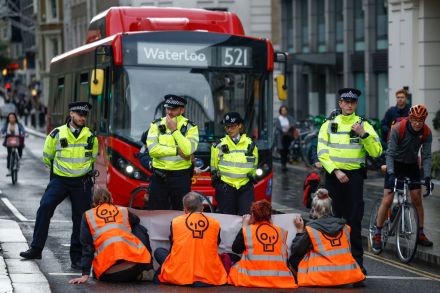
What do Just Stop Oil protesters have in common with the suffragettes? Their antics of blocking motorways and chucking tomato soup at famous paintings might lead you to think there are few parallels. But Helen Pankhurst – great-granddaughter of Emmeline – thinks they do share some common ground. Both groups, Pankhurst suggests, are on the right side of history. In an article for the Guardian, she claims that ‘the climate crisis is a feminist issue’. ‘I have absolutely no doubt that in 100 years’ time (climate activists) will be seen as the real heroes,’ she says. Like Just Stop Oil, the suffragettes targeted museums, sports events and public buildings to raise the profile of their cause. But contrary to what Pankhurst suggests, the similarities stop there.

The cult of the wood-burner

From our UK edition

The British middle-classes are a predictable breed. We love nothing more than to take goods that were once prudent and pragmatic and give them a luxury edge. From the Mini Cooper, first marketed as an affordable car for the masses, to Land Rover Defenders that we have no intention of spoiling with mud, we like our creature comforts to be rooted in a make-do-and-mend mindset, even if they have long outgrown their original purpose. It’s little wonder, then, that the British have been so quick to embrace wood-burners. Because what embodies that no-nonsense, post-war mentality better than huddling around the hearth to keep warm or stacking logs into a shed on a cold October morning?

Why Warwickshire rivals the Cotswolds for rural living

From our UK edition

Have we reached peak Cotswolds? Not if the queues outside Diddly Squat Farm Shop near the village of Charlbury are anything to go by. Locals bemoan the traffic jams around Jeremy Clarkson’s estate as fans flock from far and wide to take home a bottle of the ‘cow juice’ from the Clarkson’s Farm TV series. Clarkson’s tongue-in-cheek product is a wry nod to the area’s reputation for rural chic, forged by the likes of Lady Bamford’s Daylesford Organic farm shop – where a scented candle will set you back £49 – and Nick Jones’s Soho Farmhouse, where a stay in a luxury ‘piglet house’ costs £395 a night.

How to offer a room to a refugee

From our UK edition

Michael Gove has announced that members of the public will be able to offer rooms and accommodation to named refugees through a government portal – Homes for Ukraine – which was launched on Monday. Gove said that he was confident there would be no shortage of people coming forward, although he gave a somewhat roundabout answer as to whether he himself would be hosting a refugee. The British public, however, appear to be very open to becoming hosts, with one in three saying they would offer a room, according to a poll conducted by The Observer. When Gove launched the scheme in the House of Commons yesterday, Lisa Nandy was quick to criticise the government’s policy of asking volunteers to name Ukrainians who they wished to host.

The trouble with boycotting Russian food

From our UK edition

As the war in Ukraine worsens, the horrific scenes filling our screens have prompted a visceral reaction from the British public: 78 per cent now support Russian sanctions – up from 61 per cent in late February. Economic sanctions have undoubtedly hit the Kremlin’s spending power ­– and that’s to be encouraged. But what should we make of the broader cultural boycott of Russia that is rapidly gaining pace? So far, Britain's boycotts have had a peculiarly culinary bent. While Putin continues his onslaught, British shoppers have been encouraged to shun vodka and caviar. Lockdown revived an intense interest in cooking amongst the house-bound middle classes.

What a picture of bin Laden reveals about free speech in schools

From our UK edition

A foreboding air of déjà vu surrounds the suspension of a teacher from a Bedfordshire school this week. A pupil at All Saints Academy complained that an image of Osama bin Laden had been labelled as the prophet Muhammad in a religious studies class and the teacher responsible has now been suspended until an investigation is completed. The school said in a statement that ‘All Saints Academy recognises the deep hurt and distress that has been caused to the Muslim community’ and called the images that were used ‘totally inappropriate’ and ‘offensive’. Was the image of bin Laden shown in jest, to start a discussion or did the teacher simply make a mistake? The details of the case aren’t yet clear.

Putin won’t be fazed by Britain’s show of military support to Ukraine

From our UK edition

Can the British army afford to take on Russia? That’s the burning question that has been left after Defence Secretary Ben Wallace announced this week – to surprisingly little fanfare – that the UK is sending 30 elite troops and 2,000 anti tank weapons to the Ukraine. Wallace clearly intended to send a message to Moscow on where Britain’s allegiance lies, but such political posturing can only be beneficial if it’s backed up by sustained support in the long term – something the British army is in no place to do. As Britain seeks to reduce the size of its army to just 72,500 regular soldiers, Russia has amassed over 106,000 troops on the Ukraine border.

The windswept Devon island adored by Agatha Christie

From our UK edition

Burgh Island certainly knows how to make an entrance. As you descend the hill at dusk into Bigbury-on-Sea the white hotel drinks up all the light. Like a flashy piece of costume jewellery, it’s the only thing you notice on the skyline. But, then again, it's used to making good first impressions. Despite its diminutive size, the island appears in Agatha Christie's Evil Under the Sun before any of the novel’s characters, upstaging even Hercule Poirot. The reader is never in any doubt that the book's murder will hinge entirely on ‘the little windswept gull-haunted promontory – cut off from land at each high tide’ and the ‘comfortable and most exclusive hotel’ on its most northerly shore.

The tragi-comedy of Peppa Pig World

From our UK edition

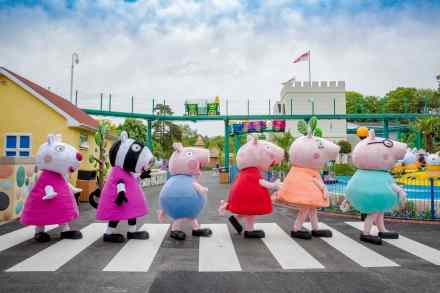
There is something uniquely soul-destroying about British theme parks. The effusive, American cheer of Disney Land somehow fails to translate in Blighty where no amount of sugary pastel scenery, singing flowers and glockenspiel music can distract from the bad weather. Indeed, if Peppa Pig World really does embody 'the power of UK creativity', as Boris suggested in his CBI speech, we really are in more trouble than I thought. Maybe the PM got lucky with the weather during his visit to Peppa Pig World last weekend. But, for the rest of us, it's hard not see an hour-long queue in the drizzle for Peppa's Big Balloon Ride as anything other than a particularly cruel form of parental purgatory.

Sabina Nessa and the truth about stranger danger

From our UK edition

The brutal murder of primary school teacher Sabina Nessa in Kidbrooke, South London this month has prompted more anger about female safety on British streets. It’s reminiscent of the aftermath of the horrible case of Sarah Everard, another instance of a killer targeting a female victim – seemingly out of the blue – in a public space assumed to be safe. Such incidents understandably heighten fears among women of predatory attacks by men, and lead to calls for greater protection – more police patrols or rape alarms, for instance. Campaigners have praised men for crossing over to the other side of the road rather than walking behind women in order to help them feel safe: ‘it’s small actions like that that make a huge difference,’ said one.

The Isles of Scilly, a botanist’s paradise

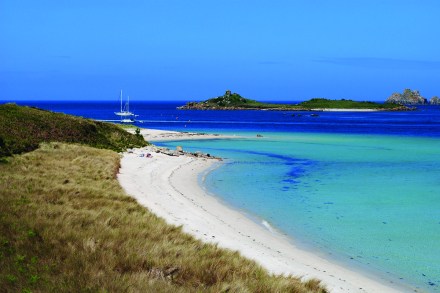
'You can get away from everything,’ said Harold Wilson of the Isles of Scilly, ‘not only in distance but also in time’. During the parliamentary recess, Wilson would frequently catch the sleeper from Paddington to Penzance before making the notoriously choppy crossing to Britain’s most westerly archipelago. There he would unwind in his cottage on St Mary’s. This family of five islands 28 miles off the nose of Land’s End has always enjoyed a somewhat secretive coterie of admirers — Jude Law and Michael Morpurgo to name but two. Deserted beaches with a Caribbean palette are surely part of the draw, as are hedgerows festooned with wild garlic, pink bells and exotic aeoniums.

scilly

What Jeff Bezos should have learnt from Neil Armstrong

From our UK edition

Amazon founder Jeff Bezos joined the billionaire space race today in his suitably phallic looking New Shepard rocket. Bezos successfully travelled to just beyond the Karman Line: the official boundary between the earth’s atmosphere and the rest of the universe. So what sage words did the billionaire have for the rest of us as he looked out of the window at a sight that only 556 other humans have had the privilege to witness? A philosophical thought perhaps? A rumination on our planet’s beauty or fragility? Or maybe an assertion of mankind’s technical prowess? Alas, we were given none of this. According to the entrepreneur, as he descended on a rocket-powered air cloud, it was the ‘Best. Day. Ever.

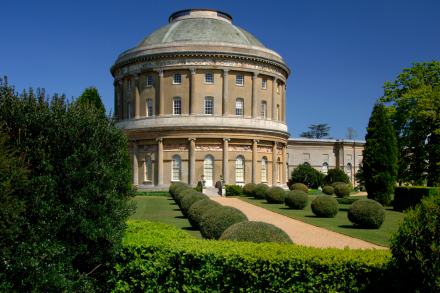
The sumptuous Suffolk estate that transports you to Tuscany

From our UK edition

Ah Italia! Land of gelato, Vespas and frescoes – I’ve pined for the place so many times over the last year that it’s difficult to know which I love more: Italy itself or the idea of Italy.  The joy of travel is always sparked in part by imagination: the anticipation of a place before you arrive; the memory of it once you leave. And it's not without reason that we love to recreate the places we admire back home. The Chinese have even gone so far as to enshrine their nostalgia for England through Shanghai’s mock English suburb Thames Town. It’s a riot of British stereotypes – from phone boxes to village greens.

The shallowness of the Oxford dons’ Rhodes protest

From our UK edition

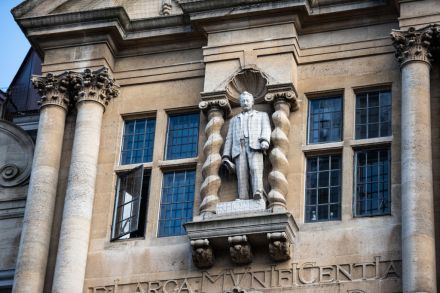
Rhodes must fall. At least, that’s the conclusion of 150 Oxford dons who have joined a boycott of Oriel college over its decision to keep its Cecil Rhodes statue in place. The protest may have made national headlines but who does it really serve? Certainly not the students at Oriel who will feel the brunt of the impact: the rebel dons say they will refuse to give tutorials to Oriel undergraduate students and will not assist the college with its outreach work, including interviewing undergraduates. In short, their chosen form of protest costs them nothing and punishes students who largely support the removal of the statue anyway.

Batley Grammar and the dilemma for trainee teachers

From our UK edition

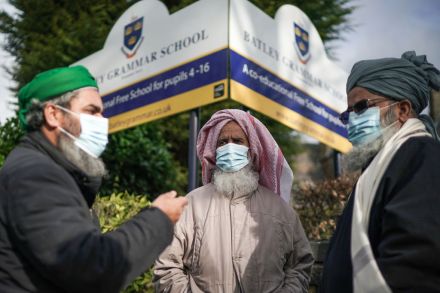
Should a teacher show a picture of the prophet Mohammed in the classroom? In the wake of the ugly scenes recently at Batley Grammar school when one teacher did just that, there are few questions more relevant to the work of a teacher right now. But when one trainee student at Manchester Metropolitan university contacted his course leader to ask whether they would support someone who did show such an image in class, the response was not the one he expected. The university’s reaction was telling: it did not initially respond to the trainee’s email request for advice. Instead it contacted him a month later saying he must attend a disconcertingly named ‘fitness to practise cause for concern meeting’. Don’t go into teaching if you care about free speech.

Why is Ursula von der Leyen still talking about Sofagate?

From our UK edition

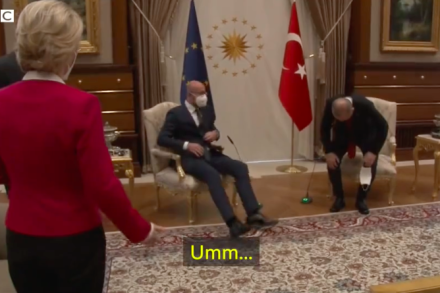
Almost a month has passed since the now infamous ‘sofa-gate’ incident where, during a meeting with Turkish president Tayyip Erdogan, Ursula von der Leyen was not provided with a chair. Instead she was forced to sit on a nearby sofa. And yet it is this event – rather than Europe’s ongoing vaccine woes – that seems to be at the forefront of the president of the European Commission’s thoughts. Von der Leyen used a speech given to the European Parliament to reiterate accusations of sexism over sofa-gate. The president did everything she could to drive home her feminist message, concluding that:  'I am the president of the European commission.

The art of storing and unveiling

From our UK edition

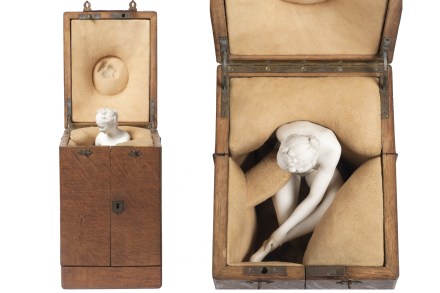
‘Put beauty first and what you get will be used forever,’ said Roger Scruton in his BBC documentary Why Beauty Matters. The philosopher’s neat elision of beauty and utility is perfectly embodied by Étienne Maurice Falconet’s nymph, who is to be the star of a forthcoming lecture by Waddesdon Manor curator Juliet Carey. This small marble figure would be far less remarkable were it not for the elegance of the 19th-century wooden box in which she is housed. Exquisite, flesh-like pillows of chamois fill the space around the nymph’s form: the box and the sculpture seem at one, as though locked in a dance. The nymph has been stored this way since the 19th century when Edmond de Rothschild commissioned a set of boxes for his collection from Chenue.

Beijing is quietly challenging Brussels

From our UK edition

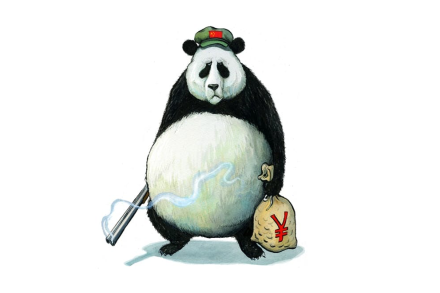
The new agreement between China and the US on climate change, announced this week, contained the usual worthy overtures. Both nations reasserted their commitment to fighting the ‘climate crisis’ by ‘co-operating with each other and with other countries.’ But can the West really take the Chinese Communist party at its word? Judging by Beijing's activity in the Western Balkans, the answer is a resounding no. In Bosnia and Herzegovina, Chinese state-owned energy companies have built four coal power plants since 2010, with a further four planned – made possible by the Chinese Development Bank.