Spectator Life

Spectator Life

An intelligent mix of culture, style, travel, food and property, as well as where to go and what to see.

Britain’s hiring culture has become absurd

‘Congratulations! We’re delighted to inform you that you’ve made it through to the fifth stage.’ At this point, I wasn’t sure whether to laugh or cry. I’d done the HR screening call; completed the written task; got through the first-stage interview and then repeated myself in the second. So what, exactly, was left? A PowerPoint presentation? A half-marathon? Solving a Rubik’s cube underwater?   Experiences like this became a common feature of my life after I was made redundant from my job at a technology magazine in 2024. While I was fortunate enough to secure regular freelance and contract work, the lack of a fixed salary quickly created friction elsewhere.

The wonder of Irish linen tea towels

Her name, let us say, is Mary Ann McCready. She is eleven-years-old when she first walks through the gate at six in the morning. The hooter has already gone. Her mother walked her to the mill from a kitchen-house off the Grosvenor Road: a two-up, two-down with six children in one room and an outside privy shared with the next terrace. Mary Ann is a half-timer. She does school until noon, the mill until six. She is paid two shillings a week.  By 13 she is full-time.

Dietary requirements are killing the dinner party

For centuries, as a dinner party guest you ate what you were served. Nobody dreamed of calling up their host in advance demanding what they would like on the menu. This is one reason why the dinner party somehow made it through the 1980s era of Tom Wolfe’s ‘Social X Rays’ – Mid-Atlantic society-types who ate nothing and resembled skeletons. Previous threats to the dinner party included the first drink driving laws, which Bron Waugh claimed ruined country social life. Then came the cocaine diet guest (no food touched), who has been spiritually succeeded by the equally annoying Ozempic-jabber, bragging to their hostess about how ‘unhungry’ they feel.

The madness of British sunbathing

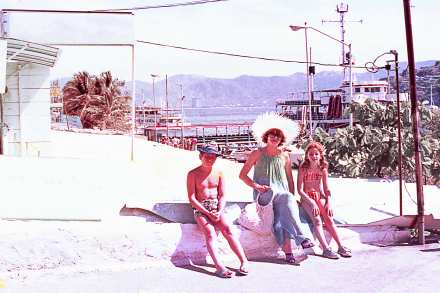
‘Mad dogs and Englishmen go out in the midday sun.’ The phrase’s origin is somewhat disputed, but it was made famous by Noël Coward’s song of the same name, supposedly written on the drive between Hanoi and Saigon in the early 1930s. Coward was English himself, and the song is a humorous act of national self-flagellation; an explicit dig at a peculiarity deeply embedded in the British culture: our collective inability to behave sensibly in the sun.  Spring, by almost anybody’s measure, is upon us. May provides two Bank Holidays and the first reliable warmth of the year. Like clockwork, the country takes leave of its senses.

The political gossip

If you’re at a high-profile but dreary launch of a political memoir at Daunt Books or find yourself in the Red Lion in Westminster any weeknight after six, Samuel Ordington-Mortimer will almost certainly be there, too. You usually hear him before you see him: a braying, gleefully indiscreet voice regaling his listeners with the latest salacious tidings at top volume.   By the time he hoves into view, a florid figure whose flushed cheeks perfectly match his claret-coloured trousers, you can expect either a cry of ‘dear boy’ or ‘darling girl’, regardless of how well you know him. There then follows a parade of cheek-kissing, occasionally with a ‘friendly’ squeeze on the arm or buttock, depending on how many glasses of wine have been consumed that evening.

Am I allowed to enjoy funerals?

Before I had ever been to a funeral, I imagined what it would be like: a grim, depressing affair. The sky would be leaden and there would be rain. There would be deeply sorrowful music – Adagio in G minor by Albinoni, a verbose elegy, stiff hymns, muffled sobbing, regulatory prayers and afterwards egg sandwiches, polite chatter and weak cups of tea. But this version of a funeral has changed in recent years and has become more relaxed and celebratory, perhaps in line with declining church attendance. A recent Co-op Funeralcare study found that 68 per cent of people agreed that funerals should be more of a celebration of life, up from 58 per cent in 2019.

A Local Election Candidate’s Tale

As the results are being announced for this year’s local elections, I am reminded of where I was almost exactly a year ago: standing in Carn Brea Leisure Centre in Redruth, Cornwall waiting to hear my neighbours’ verdict on me and the Conservative party.  The Count stalks my memory like I’m Mina Harker.   To be fair, it wasn’t the worst six hours I have spent in a provincial sports hall - it ranks somewhere between a team-building five-a-side football tournament and my GCSEs - and I’m glad I didn’t take the Liz Truss option of waiting in the McDonalds across the street.  I had never been to a count, and so didn’t know how much of what we watch on election night is pure theatre.

The ‘airport effect’ that’s ruining modern life

The phrase ‘computer says no’ now has its own Wikipedia page. The first recorded use dates back to a Stasi-era 1970s East German film segment titled ‘Der Computer Sagt: Nein’. However, its idiomatic use arose in 2004 via a series of sketches in Little Britain, each illustrating an example of technology-enabled bureaucratic intransigence, typically flying in the face of common-sense human judgment. It is perhaps the 21st-century equivalent of ‘jobsworth’. To behavioural scientists, the phrase illustrates something known as ‘defensive decision-making’, whereby the primary motivation for a decision is not the likely quality of the outcome but the decision-maker’s often unconscious urge to use any available means to offload accountability for his actions.

Britain would never host the Met Gala

So, the Met Gala has rolled around again, with the predictability of death, taxes and the knowledge that some of the world’s most tedious celebrities will be photographed wearing some frankly bizarre outfits. As with the Oscars, the gala is a display of how deeply unfair it is to be a woman at these events. Men turn up, traditionally, in inoffensive displays of black tie, although this year’s theme of ‘costume art’ saw Colman Domingo appear in what looked like a Wetherspoons carpet and the 32-year-old Bad Bunny decided to anticipate old age by dressing like a man in his late seventies, complete with silver hair and grandfather make-up. God knows why.

Diets haven’t gone away

Four years ago the NHS told us that over half the female population was trying to lose weight so it's hardly surprising that many millions are injecting themselves with fat jabs.  But I refuse to pander to the notion that us women all need to be a size 10 so I shan't be going anywhere near the jabs or dieting.  If I feel like a piece of toast with blueberry jam, the odd crisp and a nibble of chocolate I am not going to feel fat or guilty about eating any of it.  Who says we have to be so thin anyway?

Meet the Middletons – 15 years on

This week has seen Prince William and Catherine Middleton celebrate 15 years of marriage, with the occasion marked by a suitably heartwarming family photograph of them and their children on holiday in Cornwall. Theirs has been a union that has generally received a good press, bar the odd salacious rumour about what William gets up to in Norfolk and near-constant speculation about Kate’s weight and appearance. However, her revelation two years ago that she was suffering from cancer led to a wave of public sympathy that has suggested that she, not Meghan, is the true heir to the compassionate, grounded legacy of Princess Diana.   If only the same might be said of the rest of her family.

The romance of backgammon

To my mind, there can be few more perfect games than backgammon. Equally at home in an Iraqi teashop or played atop a fur in a plutocrat’s ski chalet, it is a game punctuated with bitter glares, bemused chuckles, and outrageous reversals of fortune. For those not yet initiated, the aim is to race all your men (pieces) to your home section and off the board first, avoiding their being knocked off the board and sent back to the beginning, while delaying your opponent’s men as much as possible. It blends luck and skill, and is at times infuriating, but always fun.  The name we know dates to 1635, but it has been played under other names and variants for at least 1600 years – 5000 if you think The Royal Game of Ur is close enough.

Finland’s sad secret to happiness

In recent years it’s become a hackneyed truism that Nordic nations have found the key to happiness. The Danes, who often take first place in global rankings for mental wellbeing, pride themselves on hygge, that feeling of cosiness evoked by wrapping oneself in blankets and being surrounded by candles. The Swedes promote lagom, the concept of the optimal medium. And while the Finns also appear to be satisfied with their lot – Finland came first in this year’s World Happiness Report for the ninth time in a row – they have no well-known term that encapsulates their attitude to life. In the spirit of Nordic oneupmanship, however, that could be about to change.

How the Rolling Stones keep rocking

The Rolling Stones’ resilience is hard to get one’s head around. In a world of fleeting cultural phenomena, they just keep going… and going… and going. Earlier this month, under the pseudonym ‘The Cockroaches’, the band released 1,000 copies of a vinyl-only single (their 124th in their 65th year of rocking) ahead of a new studio album which will come out this summer. The combined age of the three surviving principals Mick Jagger, Keith Richards and Ronnie Wood is 242. The band are so venerable that even jokes about their age are getting old: their ‘Steel Wheels’ tour was dubbed ‘Steel Wheelchairs’ back in… 1989.  Full disclosure: I’m hardly a Rolling Stones fan.

Why are cows a TikTok sensation?

A farmer in Derbyshire is going to make his cows uglier to try to deter  modern agricultural impostors. These impostors are neither foxes nor badgers but social media influencers who keep showing up to film content with his animals.   They arrive in waves. On one occasion, dozens surrounded Alex Birch’s herd at the edge of a field. Another time, a yoga teacher unfurled her mat and filmed a class beside the cows, as though they were props in a bucolic stage set. Wearied by the intrusion, Birch now speaks of crossbreeding his Highland cows to make them ‘less photogenic’.

Confessions of a former bullfighting enthusiast

Bullfighting season in Spain began earlier this week at Seville’s huge annual fair, known as the Feria de Abril. A couple of days before the fair began, at a corrida de toros (‘running of bulls’, translated into English as ‘bullfight’) in the Andalusian capital’s beautiful 18th-century bullring, one of the country’s best-known bullfighters (toreros) was badly gored in the rectum. The reaction from anti-bullfighters, pouring out on social media and in comment threads, was entirely predictable: he deserved it.   This sort of hateful, knee-jerk reaction to bullfighting can be ignored as the ranting of morons.

Don’t fall for Rome’s tourist traps

Is any tourist attraction on earth really worth enduring a madding crowd to see? My mother, denied international travel for half her life by the Soviet state, made up for this deprivation by becoming the world’s most fanatically rigorous tourist. A major site left unseen or portion of a museum unexamined was, to her, as morally repugnant as leaving food on the plate or abandoning a book half-way through.   I, spoiled frequent flyer that I am, find crowds the ultimate holiday buzz-killer. Nowhere is this more true than in Rome, which clocked a record 52.92 million overnight visitors for the Papal Jubilee year of 2025 and, according to pre-bookings tracked by the local tourist board, is expecting even more tourists this summer.

Marmalade doesn’t belong to the EU

‘Citrus marmalade?’ Well, that’s a tautology, if ever I’ve heard one. I’ve been making marmalade for a long time and written about it extensively. I wouldn’t quite paint myself as a marmalade obsessive (I’ve met them, and I know that I cannot literally or figuratively compete), but I’m certainly a marmalade fangirl. They line my cupboards and are a breakfast non-negotiable. I seek out unusual citrus fruit, and pore over old preserve cookery books. January is officially marmalade-making season in our house and, for the full month, every window is steamed up, every surface is slightly tacky from over-zealous jarring.

How to be a good enough godfather

Of all the inappropriate presents I've bought my godson over the years, the nadir was the Swiss Army knife I sent for his 11th birthday. I was pretty pleased when I ordered it: a genuine Victorinox, none of those Chinese knockoffs. He'll be removing stones from horses' hooves in no time, I thought to myself. But a week later he sent me a thank you note in unusually shaky handwriting saying the knife had been confiscated by his mother after he'd had it for only a day because he cut his hands to pieces. Had I ruined his chances of being a violinist or a heart surgeon?  It all started promisingly when I was asked to be a godfather in 2008.

The decline of the country house hotel

For decades, the idea of the country house hotel – a uniquely British phenomenon – has held a seductive sway for those who would never dream, unlike Hyacinth Bucket’s sister Violet, of having their own mansion ‘with the Mercedes, swimming pool and room for a pony’. There is something wonderfully appealing about turning up at a vast estate that could double as a National Trust property, to be greeted by charming domestic staff who could have stepped out of Downton Abbey, and of abandoning all one’s worldly cares and concerns for a weekend of pampering and history alike.

We can still save Prince Harry

‘It won’t last,’ my schoolfriend Albert told me, as we staggered down Embankment one summer evening in 2018, a few pints into his birthday pub crawl. I wasn’t sure as to what he was referring. The evening twilight? His youthful good looks? Our ability to walk in a straight line? He expanded: ‘Harry and Meghan. She’s not right for him. They’ll be divorced within five years. Just you wait.’ Then he burped. I was surprised by Albert’s comments. I, like tens of millions of other viewers, had been taken in by the royal wedding weeks before. Yes, the presence of Oprah Winfrey and an over-enthusiastic American preacher had been a little gauche.

What has become of our table manners?

When I was a child, I always wanted to watch television during supper, but my dad wasn’t keen. He preferred family conversation and as we chatted over a meal he would try to gently steer us towards more pleasant subjects rather than the vulgar or provocative topics I tended to propose. ‘A meal is a sacred thing,’ he’d tell me.  I spent my secondary education at a bizarre school run by a quasi-Vedic cult, where table manners were also important. Before lunch, we chanted a Sanskrit mantra. The organic vegetarian food was to be offered, not grabbed. We sat upright, our backs as straight as any Himalayan yogi. We were told not to eat more than we needed. Naturally, I sneered at much of this as angrily as any teenage Clash fan would.

How technology changed birdsong

I was a beady, birdy child. I had binoculars, made lists and sewed a Young Ornithologist’s Club (YOC) patch on my M&S jeans. Every spring, our YOC leader, a cheery ex-Army man ‘Binks’ Williams would drive a minibus at 6 a.m. to Wimbledon Common, for us to experience the Dawn Chorus. This was more exciting in principle than reality, as unless I could see a bird through my bins, it didn’t really exist. I was hopeless at identifying birds through song alone.

The luxury of the modern playground

The 1990s were great years. The economy was humming, the West could duff up any Middle Eastern dictator it wanted, and the arrival of Oasis and Blur meant the music press could convince us we were cool again. Parents didn’t think to question the idea that for their kids, things could only get better.  30 years later, I also don’t question it. My countrymen are now poorer than the average hick from Alabama, as well as every other state. Climate change is working its way through all four horsemen of the apocalypse. And while AI probably isn’t going to destroy humanity, your employer will replace you with a robot that has been programmed to spend half its time on acid.

Why British toilets are revolting

First things first, as this is an article about toilets, we need to establish if the word ‘toilet’ is an acceptable word. Here at The Spectator, editorial opinion on this crucial point is deeply divided. Some have expressed a preference for ‘bog’. Others opt for 'john', 'jakes', or lavatory.

The curious life of an antique dealer

Over ten years ago years ago, I made the transition from auction house ‘expert’ to antiques dealer. And it came as a rude shock. Nothing like a healthy dose of comeuppance; deference vanished overnight.   Auction houses are open to the public for consultation, even the grander ones in London’s West End; or that is how it was in the early 2000s. Back then, anyone could turn up (without an appointment) and ring a buzzer on the front counter. And, as an auction specialist, you played the part. Keep ‘em waiting for ten minutes, then a star-like descent down to reception, where a forelock-tugging hopeful awaited with Tesco bag and fake Fabergé frog in ‘resin’ — a useful auction house term to describe plastic.

In praise of the paperback

At long last, hardback books, it seems, are finally drifting into, if not obsolescence, then at least abeyance. It turns out that punters are chary of buying hefty tomes, and so publishers are considering putting books out in paperback first. For once, this is a literary development that I will be applauding.  For centuries, hardback books were the only thing you could buy. In the 1920s, it was impossible to stroll along with a paperback of Woolf’s To the Lighthouse in your pocket to impress the ladies, since paperbacks of that sort did not exist. They are a relatively new beast on the literary scene. It was Allen Lane who brought the sixpenny paperback into the world in the 1930s, a feat for which he should be lauded, on a par with Alexander Fleming.

My time as an overdrawn Coutts customer

Dear old Coutts, the private bank used by the King, now requires clients to have £3 million in the kitty before they deign to allow you to open an account. The £3 million minimum deposit is the biggest single jump of the bank’s wealth test in its illustrious 333-year history, designed to attract ‘ultra-high-net-worth individuals’ apparently. Whoever they are, I am not one of them.   I had an account at Coutts opened for me by my mother when I was 15 at a small, rather cosy little branch it used to have on the corner of Sloane Street and Cadogan Square.  As I went in and out, I got to know the cashiers who greeted me by name, which made me feel I’d really arrived, although where I wasn’t quite sure.

Meet the humans training robots at the ‘arm farm’

AI is set to take over all cognitive tasks in the next few years. Your hard-won career as a paralegal, data analyst, radiologist, coder or novelist is about to be hacked out from under you. So far, so apocalyptic. But what about the jobs that are primarily embodied? Sous-chef, rehabilitation nurse, plumber, dog-trainer? These are expected to lag behind, awaiting the next generation of robots. But there is an important further question. Who will train these robots? Answer: you will.  This is the concept of the arm farm. On an arm farm, practitioners of the aforementioned jobs - chefs, nurses, plumbers etc. - wear Go-pro helmets, pressure-sensitive gloves, even full motion-capture rigs, and do the jobs that the robots will ultimately usurp.