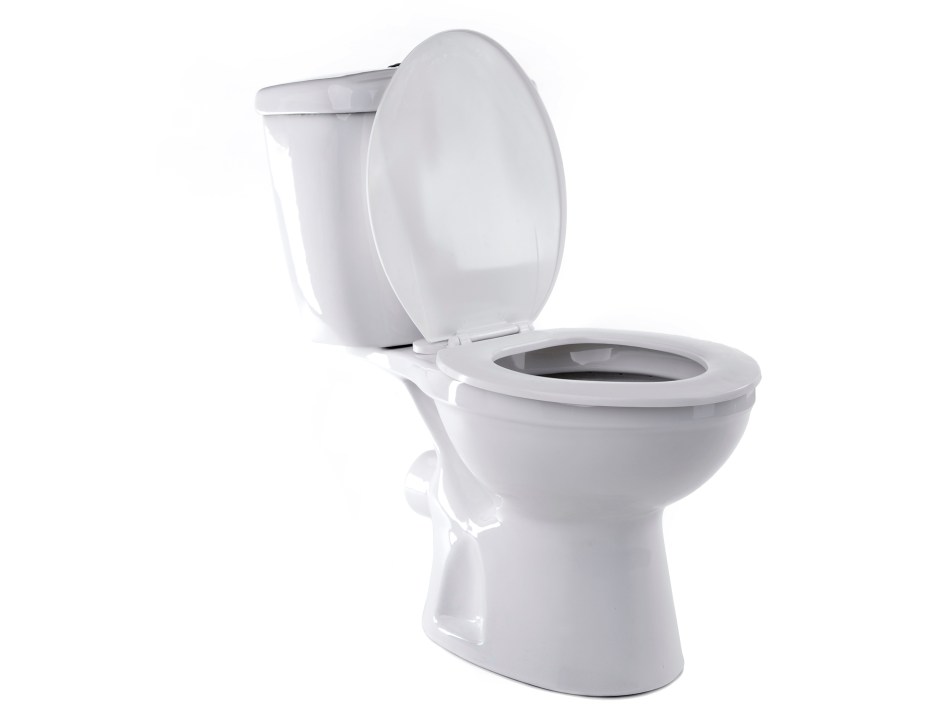
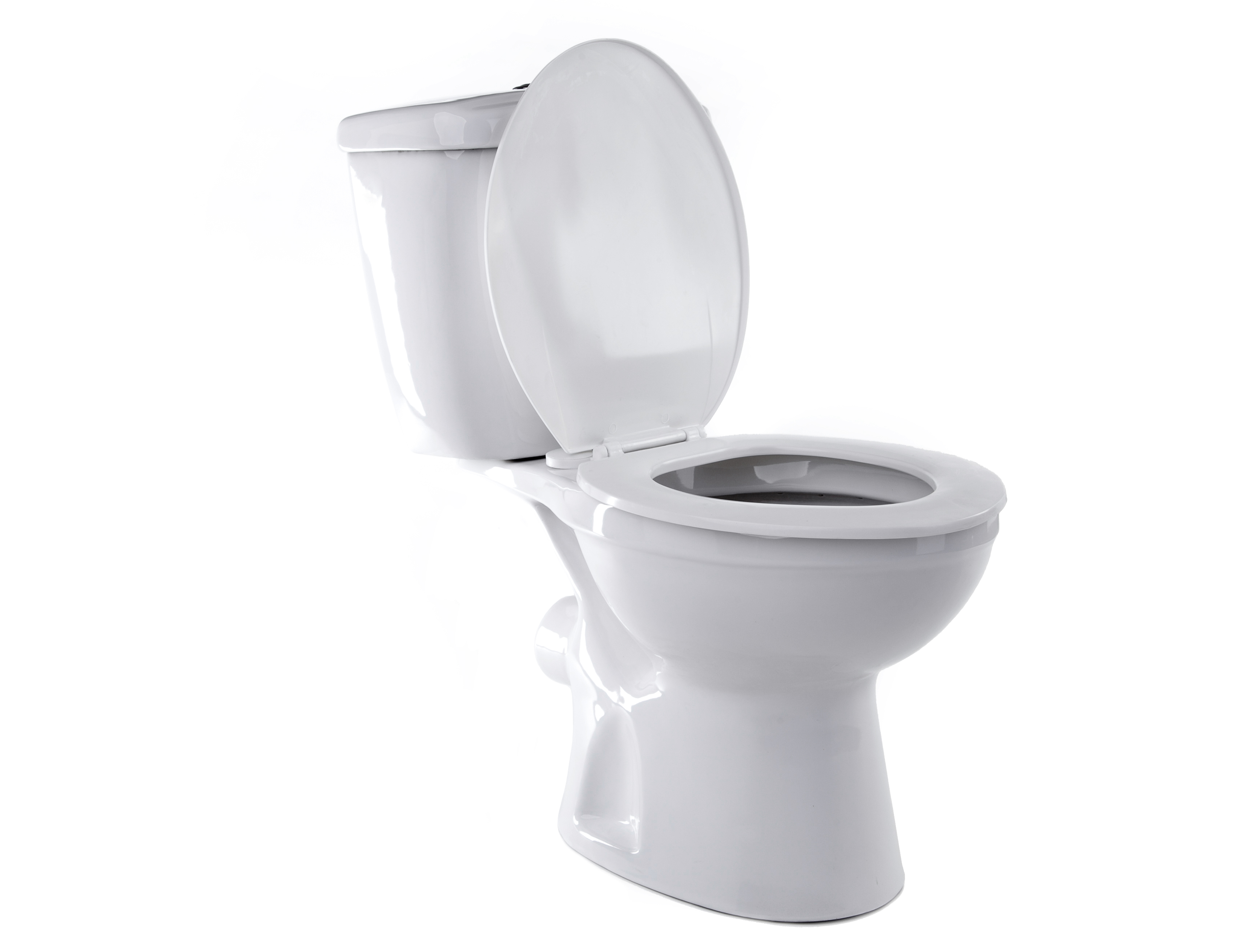
First things first, as this is an article about toilets, we need to establish if the word ‘toilet’ is an acceptable word. Here at The Spectator, editorial opinion on this crucial point is deeply divided. Some have expressed a preference for ‘bog’. Others opt for ‘john’, ‘jakes’, or lavatory.

We also got votes for ‘dunny’, restroom, WC, outhouse, ‘chugger’, KYBO, tearoom, ‘jerry’, ‘Jordan’, ‘thunderbox’, ‘quincy’, ‘can’, ‘hopper’, ‘neddy’, ‘head’, ‘toot’, ‘forakers’, ‘shiloly’, cottage, ‘shunkle’, throne, think tank, ‘brasco’, ‘khazi’, and ‘Reading Room’, but in the end it came down to a brutal bog-off between ‘loo’ and ‘toilet’, and we decided that ‘loo’, once an acceptably classless euphemism, has now become a bit twee, Surrey and Non-U, whereas ‘toilet’ has been oddly re-gentrified, into acceptability, like Hackney, so toilet it is.
And with that out of the way, we can move on to the point of this article which is, I am afraid, the unfortunate truth that large parts of the developed but non-western world now regard our western toilets as gross, primitive, and backward. This is as surprising as it is sobering. Because, of course, we judge civilisations by their toilets: and their relative absence, presence, functionality, and cleanliness.
The advanced nature of Roman toilets, for instance, is one reason why we admire the Romans. In 200AD they generally had running water, nifty slate seats, and vinegar-soaked sponges for wiping, even if their habit of doing it all communally is a bit odd. By contrast, 1200 years later medieval barons were still doing their business through holes in the walls of their castles. And as late as the 17th century, the Palace of Versailles was famously built with so few WCs, aristocratic ladies at the court of the Sun King were reduced to squatting discreetly in corners.
But then came the great advances of western sanitation, mainly by Brits, making our toilets the best – and firmly proving the superiority of western civilization. First, Scotsman Alexander Cumming invented the S bend, trapping bad odours beyond water. This single innovation made indoor toilets tolerable. Three years later Joseph Bramah, a locksmith, improved the design with a hinged valve at the bowl’s base.
As late as the 17th century, the Palace of Versailles was famously built with so few WCs, aristocratic ladies at the court of the Sun King were reduced to squatting discreetly in corners
Not content with that, Thomas Crapper (yes yes, really) further improved the little room with the ballcock mechanism that controlled the cistern’s fill-and-stop cycle. Then came Thomas Twyford’s single-piece ceramic pedestal toilet of 1883, which created the freestanding porcelain form we still recognise today. And then, in terms of toilet design, we rested on our lavatorial laurels. Job done.
For a century the western toilet reigned supreme, and everyone copied us. But now comes the bad news. Nearly 50 years ago the Japanese, inspired by the Asian tradition of using water as part of your necessary ablutions, quietly invented the washlet. In its Platonic and ideal form, this is Toto’s heated, self-cleaning electronic seat, introduced in 1980, which arguably represents the largest leap in toilet comfort since Cumming’s S-trap two centuries earlier.
If you’ve never used a Toto washlet (and many westerners haven’t, which tells a story by itself) it is basically a truly sophisticated electro-toilet that neatly spritzes you clean with water (with special settings for male and female) then dries you with a warm puff of air. You can still wipe up with paper if you wish, and many do, but either way you end up very hygienically cleansed.
This is, obviously, a major advance on the western toilet, which might be a marvel of technology in terms of porcelain and U-bends, but then leaves you to wipe yourself clean with paper. Paper? Just paper? As some have put it: if you got mango ice cream all over your face, would you be content with wiping it off with dry paper, maybe smearing some of it into your eyes? Of course not, you’d wash it, with water. Just using paper is therefore gross, and Japanese toilets are therefore better.
Despite this, the spread of the Japanese toilet has been slow, and is only speeding now. The main vector of transmission has been posh hotels, which have always led on bathroom comfort – the Savoy pioneered the individual bathroom – and which now adopt Japanese toilets because their rich, well-travelled customers demand them.
First I saw them in Bangkok, Hong Kong, Singapore; then the United Arab Emirates, China, Malaysia. Now five-star properties in London, New York, and Paris have noticed. The logic is simple: once you’ve used a Toto in Tokyo or Seoul, the standard western arrangement feels like a step back into the dark ages. Meanwhile, non-hotels are also catching up, via the humbler douche hose – that modest wand mounted beside the pan – which at least acknowledges that water must be involved in this process.
At this point you may be asking: what about the bidet? Bidets try, in an awkward way, to do the same job, but they demand a separate fixture, a separate trip, and a separate set of more difficult contortions. And they’re practical only if you have a large bathroom and a lot of time.
More fatally, the bidet never recovered from the Second World War. American GIs, encountering them in French brothels, formed an association between bidets and prostitutes that lodged permanently in the national psyche. The result: American bathrooms remained bidet-free for 80 years, and the West kept pace with the USA, as always.
Which leaves us with the superior east Asian toilet, and the irreducible fact that east Asians look at our loo-paper without water, and they wince with disgust. This is simultaneously embarrassing and humiliating and it is time for us to step up. First, we all need to get simple versions of the Japanese toilet (I have a spray douche in my flat). Then, ideally, we westerners need to remember we are the proud, resourceful people who invented the ballcock. We can, if we push really hard, take the sanitary lead once more. Put it another way: we need a new Thomas Crapper.



Comments