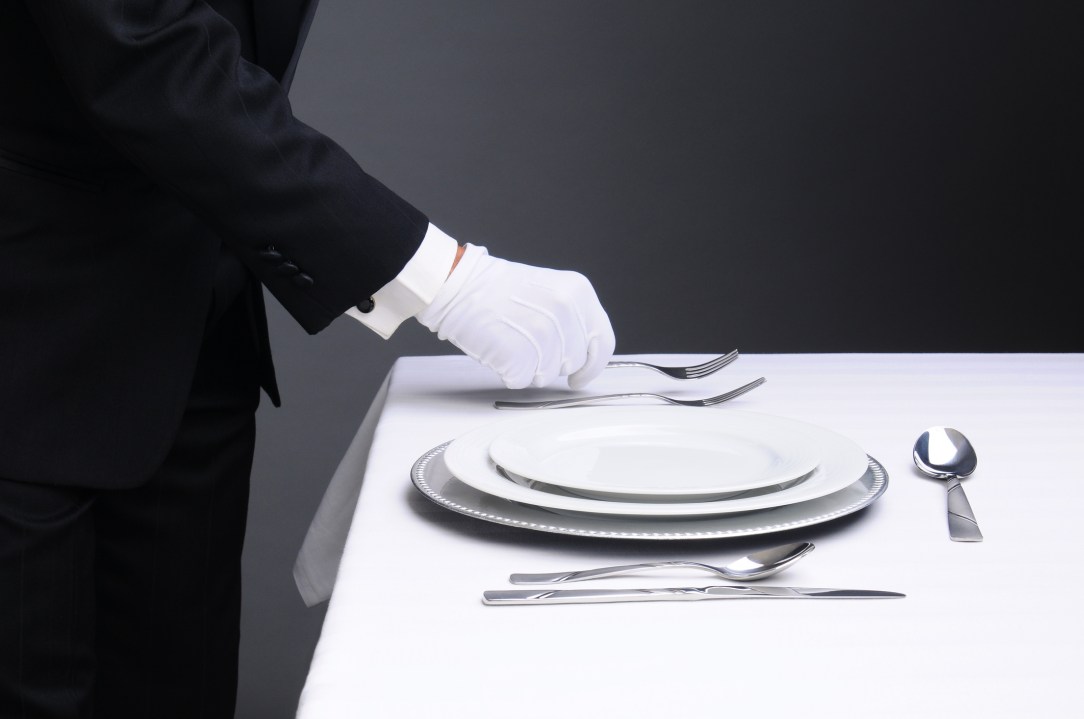
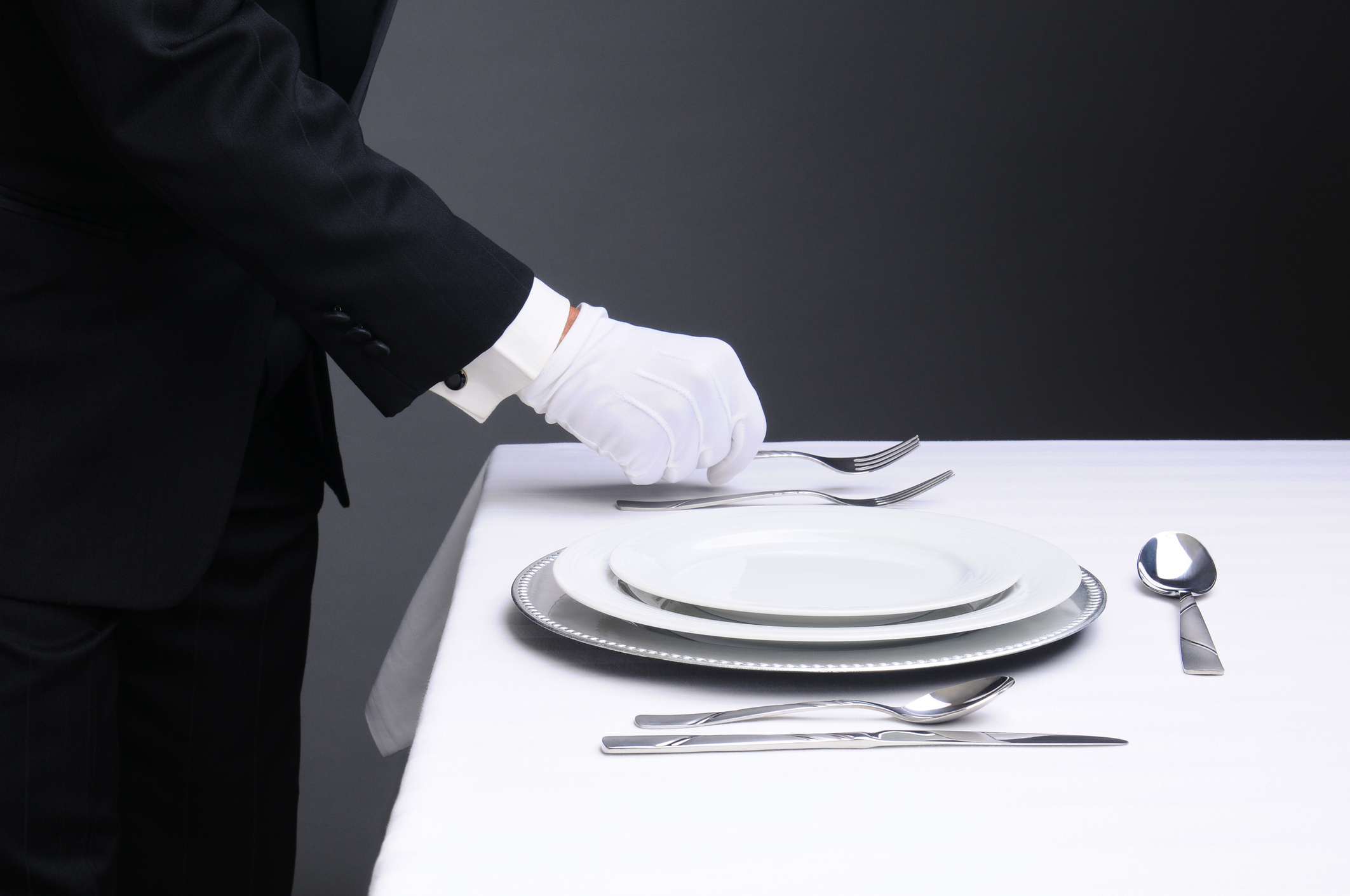
When I was a child, I always wanted to watch television during supper, but my dad wasn’t keen. He preferred family conversation and as we chatted over a meal he would try to gently steer us towards more pleasant subjects rather than the vulgar or provocative topics I tended to propose. ‘A meal is a sacred thing,’ he’d tell me.
I spent my secondary education at a bizarre school run by a quasi-Vedic cult, where table manners were also important. Before lunch, we chanted a Sanskrit mantra. The organic vegetarian food was to be offered, not grabbed. We sat upright, our backs as straight as any Himalayan yogi. We were told not to eat more than we needed. Naturally, I sneered at much of this as angrily as any teenage Clash fan would. But time has had the final word, and I have come to see the sense in it. So now it’s me who finds myself out of step, pushing against the cultural current.

Recent surveys suggest that 73 per cent of Britons believe table manners are less important than they once were. Among those aged 12 to 27, a striking 60 per cent consider traditional table etiquette irrelevant. Nearly a third of under-30s admit to chewing with their mouths open. Vogue magazine says that correcting elbows on the table is as antiquated as fussing over the proper use of a grapefruit spoon.
It would be easy to paint all of this as a new thing that’s powered by younger generations, but I’ve noticed a decline in table manners for many years and among all ages. I recall, nearly three decades ago, sharing a flat with a man in his thirties. He was successful, articulate, and by most measures intelligent, yet he possessed the astonishing habit of picking his nose at the table – and, worse, consuming the results. When I asked, as politely as I could, whether he might refrain, he agreed, though with an indulgent bemusement I’d have expected if I’d asked him if we could take to wearing top hat and tails for breakfast.
Much is made of the visible rules of table etiquette: keep your elbows off, hold your cutlery correctly, wait until everyone is served, refrain from scrolling through your phone. These are not trivial, but they are not, to my mind, the worst offences. The greater danger lies not in what we do at the table, but in what we choose to say.
The secret ingredient of any recipe is what you speak and think about as you eat. So never talk about calories or weight at the table. It’s as bad as talking about STDs during sex. Speaking of which, don’t mention anything graphic at the table. If you’re not sure whether something is too stomach-churning to raise then it probably is.
Recent surveys suggest that 73 per cent of Britons believe table manners are less important than they once were
Religion and politics are more delicate. In the right company – among those who enjoy robust but civil disagreement – they can enliven a meal. But such conversations require judgement, and judgement is in increasingly short supply, so in most cases, it is wiser to steer clear. Monologues about work or money are also appropriate; they belong to the office desk, not the dinner table.
The purpose of conversation at a meal is not merely to fill silence, but to create an atmosphere conducive to enjoyment and digestion. There is something almost physiological about it: tension unsettles, while ease allows both mind and body to settle. I try to follow my own advice. Regular readers will know I’m a vegan and an opinionated, gobby one at that, but one of my rules of animal advocacy is to never raise it at the table. There’s a time and place for everything.
There are smaller courtesies that matter more than we might admit. Speak quietly, addressing those nearest to you rather than fog-horning to the entire table. Make an effort to include both neighbours, not just the most engaging companion. And, of course, never speak with your mouth full – a principle so basic that its neglect feels almost sarcastic.
But my biggest table-talk bugbear is when someone mentions one type of food while the table is eating a different type of food. Goodness, of all the times to evoke that fiery spicy Thai meal you had, a mealtime of pasta with a gentle, creamy sauce isn’t one of them. Food is, after all, a sensory experience. To drag the mind elsewhere is disloyal and it diminishes the moment.
We live, increasingly, through screens – texting, scrolling, half-listening. Mealtimes remain one of the few occasions when we sit together, face to face, with people we have chosen to be with. It seems a pity, then, that we should forget how to behave when we get there. Perhaps that insistence that a meal is ‘a sacred thing’ was not so quaint after all.




Comments