Is any tourist attraction on earth really worth enduring a madding crowd to see? My mother, denied international travel for half her life by the Soviet state, made up for this deprivation by becoming the world’s most fanatically rigorous tourist. A major site left unseen or portion of a museum unexamined was, to her, as morally repugnant as leaving food on the plate or abandoning a book half-way through.

I, spoiled frequent flyer that I am, find crowds the ultimate holiday buzz-killer. Nowhere is this more true than in Rome, which clocked a record 52.92 million overnight visitors for the Papal Jubilee year of 2025 and, according to pre-bookings tracked by the local tourist board, is expecting even more tourists this summer. Luckily, there is a solution. So loaded is the Eternal City with extraordinary museums, churches, hidden piazzas and parks that there are several un-crowded alternatives to every heaving tourist site.
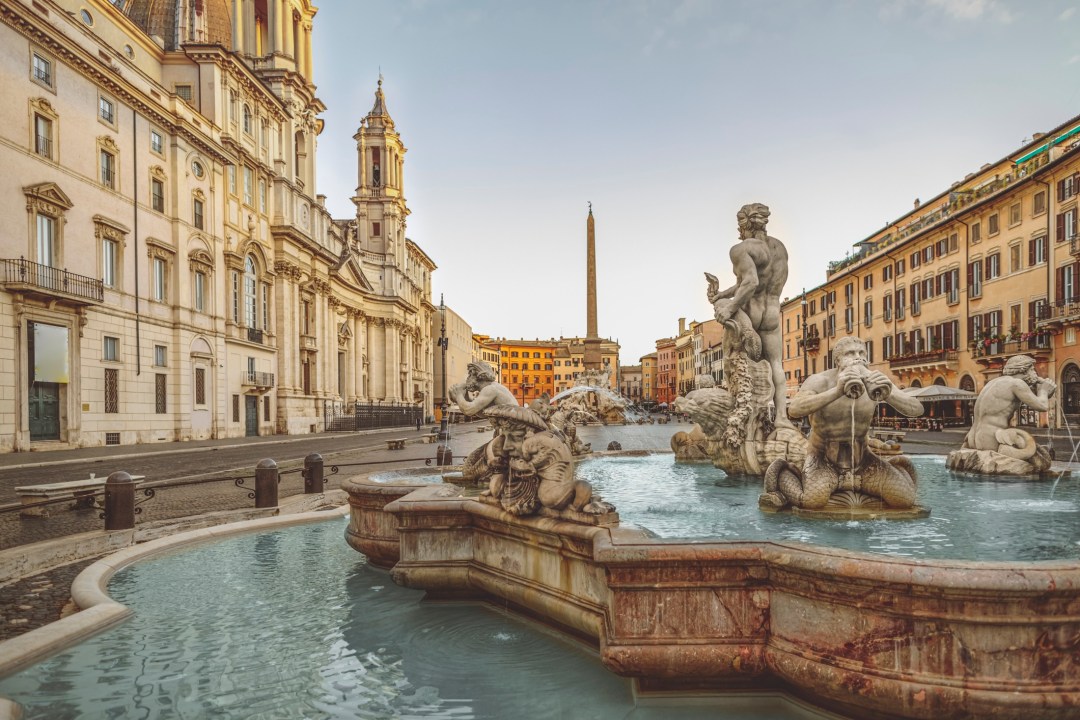
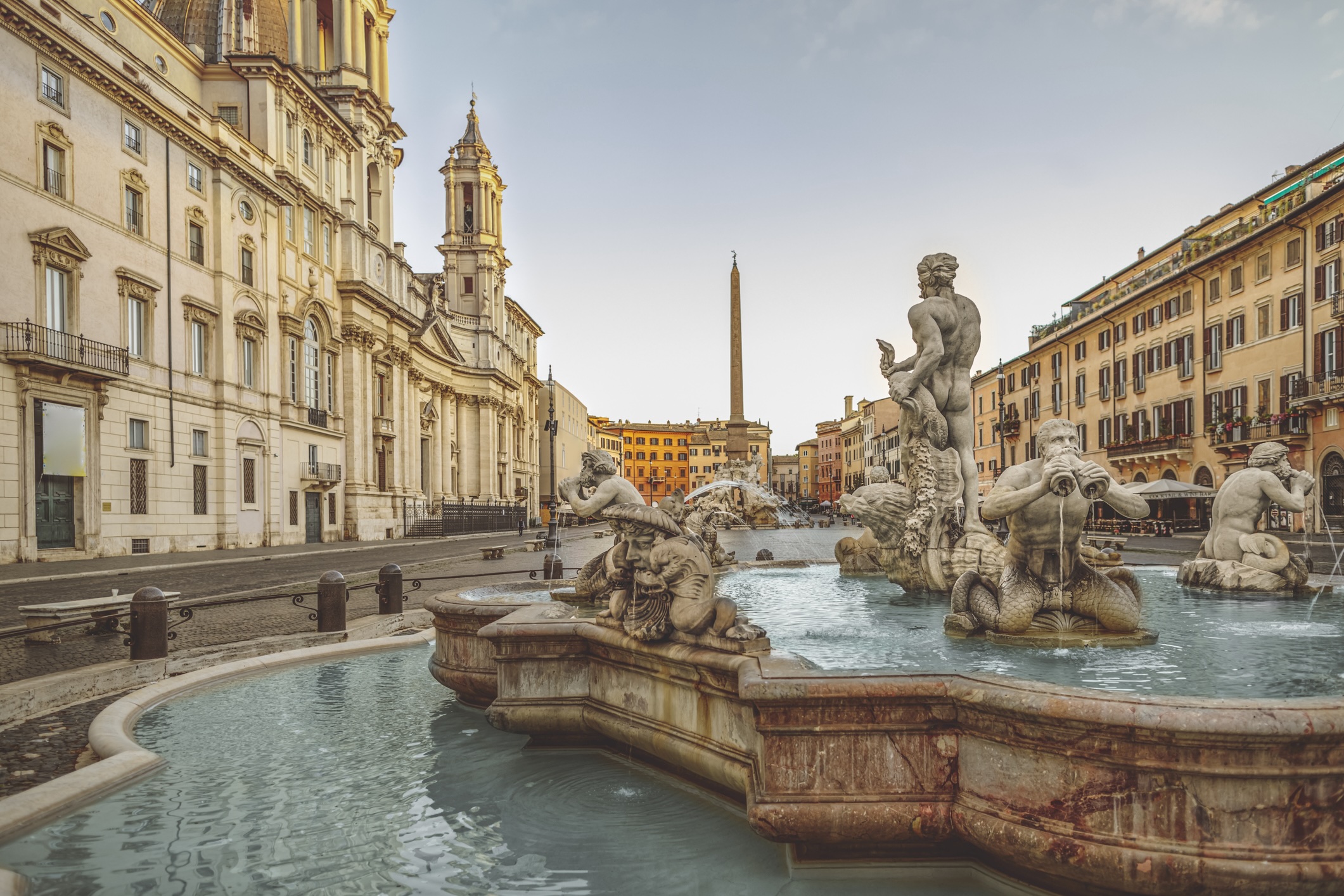
A basic rule of thumb is to avoid going anywhere near the Colosseum, the Spanish Steps, the Pantheon and especially the Trevi Fountain any time before midnight. So crowded is the Trevi that last year the city authorities even introduced tickets to allow you to get close. Wait till the wee small hours to experience the magic of the place, the later the better. The same applies to Piazza Navona, which, being very large, is bearable during the day but lovely only in the dead of night when Borromini’s fountains are illuminated by the reflected light of shimmering underwater bulbs.
St Peter’s Basilica is, in my opinion, Rome’s most overrated architectural monument. Add a minimum of an hour’s wait under the hot sun to shuffle through airport-style security and it’s unbearable. The antidote is Donato Bramante’s Tempietto in the cloister of San Pietro in Montorio, a tiny jewel of Doric high renaissance architecture built in 1502. It is as tiny and perfect as St Peter’s is stupefying and grandiose. If you can’t do without some grandeur try San Paolo Fuori le Mure, a Roman basilica on the site of St Paul’s martyrdom rebuilt on a vast scale in the 1880s. Close by is the madly eccentric Centrale Montemartini, a former 1910s power station converted into an overflow for the Capitoline Museums’ collection of classical statuary where exquisite marbles stand among monumental two-storey-high generators.
St Peter’s Basilica is, in my opinion, Rome’s most overrated architectural monument
The Passeggiata del Pincio in the Villa Borghese gardens is famous for its sunset views – but these days the only view observable is over the heads of a vast crowd and a forest of raised selfie sticks. Try instead the panoramic terrace in front of the Aqua Paola fountain. If it’s specifically a sunset glimpse of St Peter’s that you’re after, the back side of the Piazza Garibaldi a little further up the Gianicolo hill offers stunning West-facing views over the Basilica from the top of the city walls.
The Vatican Museums are, like the Louvre’s Mona Lisa, so crowded as to be borderline unvisitable – unless you can afford the €800-a-head tickets for the 5.30 am key opening ceremony alongside the Vatican Clavigero or Key Master as he turns on the lights and unlocks doors. Or another trick is to show up before the last entry at 6pm and stay till closing time at 8pm. But an alternative for remarkable classical collections in a glorious renaissance palace is the Palazzo Altemps. Another overflow of the Capitoline collections, the always-empty Altemps houses the Ludovisi throne with its ancient Greek bathing scene, easily one of top ten pieces of classical sculpture in the world.
For those seeking a fix of Raphael but without the throng of the Vatican is the Villa Farnesina on the Trastevere bank of the Tiber. Another unexpected Raphael is the Sybil in Santa Maria della Pace – which you can also enjoy while sipping a coffee via an internal window in the upstairs cafe at the next-door Chiostro di Bramante.
It’s an enduring mystery why the Vatican Museums are always so full and the Capitoline Museums so empty. The Capitolini – designed by Michelangelo – include some of the world’s very greatest classical statuary, for instance the equestrian statue of Marcus Aurelius, as well as major works by Caravaggio, Rubens, Titian, Velazquez, Reni and Guercino. Be sure to study the museum map, because many parts (including the picture gallery) are hidden away through unpromising-looking passageways. The queue, such as it is, is caused by the tragicomically tiny and inefficient ticket office. Buy online and skip right to the entrance.
Two secrets to the Capitoline Museums. One is that if you head through the tunnel that connects the two halves and take the stairs to the right you emerge onto a perfectly-preserved Roman panoramic portico that commands the most magnificent possible view of the imperial forums. It’s always empty. Second is the cafeteria at the back, which has a large terrace and glorious view of the Colosseum, which is about as close as you ever need to get. For lovers of monumental Roman public architecture, the Teatro di Marcello near the Ghetto is a Colosseum-in-miniature, while the Baths of Caracalla and the Baths of Diocletian are nearly as stupendous and more extensive.
As for the Pantheon – well there you have me, because there is nothing like it in the world for appreciating the sheer jaw-dropping grandeur and magnificence of Roman civilisation. This, I would say, is the only absolutely must-see monument in the city, crowds and (newly introduced) tickets be dammed. Again, try either opening or closing times for a chance at solitude. But if you have already been, an almost equally stunning alternative is Santa Maria Degli Angeli near the Termini train station. This church occupies one of the monumental chambers of the Baths of Diocletian and is, like the Pantheon, an authentic, perfectly preserved vast ancient Roman building – albeit disguised by later baroque stonework.
A word on the tourist geography of Rome’s centro storico. A triangle roughly bounded between the Piazza del Popolo to the north, the Spanish Steps to the west and the Corso Vittorio to the East, is scorched earth, filled with tourist-trap trattorias, Airbnbs and trinket shops. Two main parts of the old centre are still populated by locals (albeit mostly bourgeois bohemians) – Monti, and the area around the Campo de Fiori. Here you will still find mom-and-pop groceries, electrical shops, family-owned restaurants and bars still largely patronised by real Romans.
Trastevere, on the right or Etruscan bank of the Tiber, is a mixed bag. Much of the areas around Piazza Trilussa have been wholly colonised by tourist-orientated bars and restaurants and dominated by the Tonarello industrial complex, the sprawling offspring of a once-humble trattoria which has expanded to multiple locations in the area fanned by the evil winds of Instagram and Tripadvisor. Yet just a few steps beyond Piazza Santa Maria in Trastevere is the student-local stalwart Bar San Callisto, famous for its €2.50 Peroni Red beers, and the fiercely local Piazza San Cosimato and Via San Francesco della Ripa.
A few useful escape hatches. Near the Campo Dei Fiori is the charming, privately-owned Galleria Spada, a charming and near-deserted palace with a decent art collection and a perspective-trick passageway by Borromini. The Oratorio del Gonfalone off the Via Giulia is a tiny, frescoed jewel box that hosts regular choral concerts. The nearby Santa Barbara dei Librai also has free classical recitals, a perfect way to start a civilised evening. The Renaissance and mannerist art collections of the Galleria Doria Pamphilj may not at be up to Vatican Museum standards (though their famous Velazquez is a heart-stopper) but its vast enfilades are mercifully empty. The Galleria Colonna, a private palace open just once a week, is also a hidden marvel. Take care not to trip on the French cannon ball that lodged in the marble steps of the ballroom in 1849 and was (rather wittily) left in place as a family conversation piece.
Forewarned is forearmed. If you’re savvy, Rome, like Venice, can be enjoyed entirely without crowds even at the height of high season. The trick is to avoid anywhere you might have heard of and instead stick to a private, connoisseur’s Rome that you’ll have almost to yourself.





Comments