Ivo Delingpole

Rivals is an ode to Thatcherite excess

From our UK edition

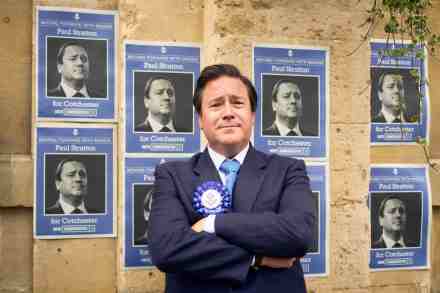
Today, Rivals returns for a second series on Disney+. The first series was that rarest of phenomena: an adaptation that didn’t hate its source material. Sure, the producers decided to cram the plot with more subtle-as-a-sledgehammer politics than appears in the actual book, but you could tell they revered Jilly Cooper and the world of Rutshire and wanted to do it justice. Cooper executively produced the first series but must have been away on some days (I can’t see her let a well-heeled huntswoman pronounce the Beaufort hunt ‘Boh-fore’ rather than ‘Boh-fuht’, particularly when a major scene in the book hinges on the pronunciation of ‘Belvoir’).

The romance of backgammon

From our UK edition

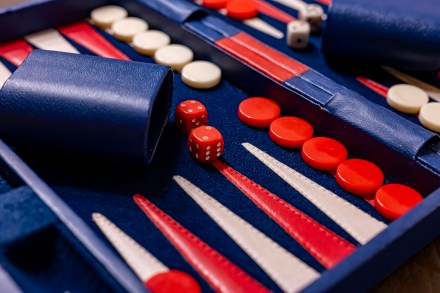
To my mind, there can be few more perfect games than backgammon. Equally at home in an Iraqi teashop or played atop a fur in a plutocrat’s ski chalet, it is a game punctuated with bitter glares, bemused chuckles, and outrageous reversals of fortune. For those not yet initiated, the aim is to race all your men (pieces) to your home section and off the board first, avoiding their being knocked off the board and sent back to the beginning, while delaying your opponent’s men as much as possible. It blends luck and skill, and is at times infuriating, but always fun.  The name we know dates to 1635, but it has been played under other names and variants for at least 1600 years – 5000 if you think The Royal Game of Ur is close enough.

Why Prince George should go to Eton

From our UK edition

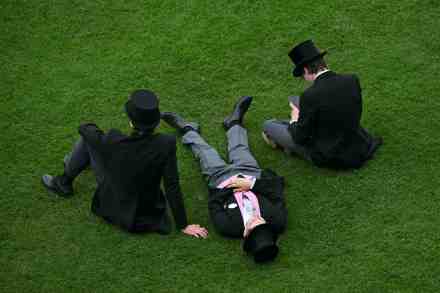
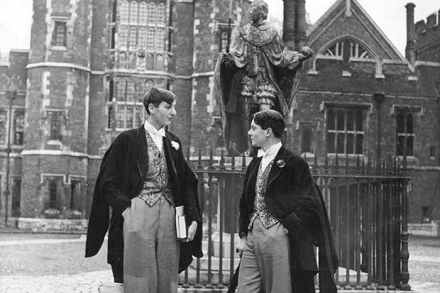
After three years of theatrical um-ing and ah-ing, the Prince and Princess of Wales have seemingly acceded to the obvious: Prince George is apparently going to Eton. Despite their perennial posturing at being a ‘modern’ royal family (is there such a thing?) there was really only one option. Eton is after all – somewhat paradoxically – the only place capable of offering any semblance of a normal adolescence for George, as well as mentally preparing him for kingship. To an outsider, this sounds ridiculous. How can prancing around in tailcoats while speaking unique slang (teachers are ‘beaks’; Year 9 is ‘F Block’) have any bearing on normalcy? Yet normal is relative. One of the first things you realise at Eton is that the exceptional is unexceptional.

The rise of grey market peptides

From our UK edition

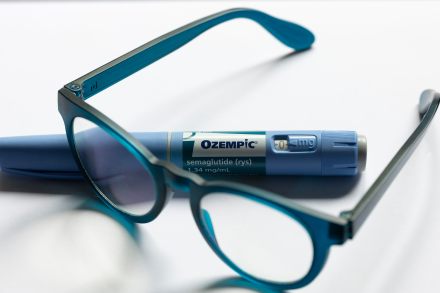
Would you inject yourself with an unapproved drug you could only buy off a sketchy website? Most people instinctively would say no. Yet, throw in a debilitating chronic condition or a crippling insecurity, and the promise of miraculous effects, and the question becomes a lot harder. Such is the quandary faced by those considering taking peptides, the hottest health trend in Silicon Valley, but a trend soon to leach into the mainstream.   Peptides – mainly produced in China – are short chains of amino acids that carry out a range of biological processes, from modulating hormones to repairing tissue damage. You know one of them already – GLP–1 (Glucagon-like peptide-1), marketed as Ozempic or Mounjaro.

Yes, gyms are conservative

From our UK edition

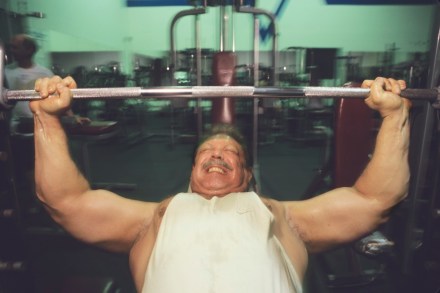
This new year, you may find yourself in the gym. The aim, of course, is to mitigate the effects of the gallon of brandy butter consumed over Christmas. But you may also be trying to build the ‘new you’ (clichés abound when it comes to fitness). Yet as a Spectator reader, you might soon find yourself strangely at home. That’s because the gym is a curiously conservative space. Partly that’s down to the kind of people it attracts, but also because of its existing clientele: disaffected young men. Last year, a Guardian columnist was mocked for stating this, but anyone who’s spent time in a squat rack knows it’s true.

In defence of Notting Hill Carnival

From our UK edition

This isn’t going to be a piece celebrating the rich cultural tapestry of London’s Afro-Caribbean community, sombrely expressing the importance of preserving its heritage and history. I just like going to Carnival. I see it as an opportunity to make the most of the last dregs of the summer. I’ll meet my friends, dance to a grizzled Rasta’s tunes with a Magnum or two (a syrupy, 16.5 per cent alcohol, Jamaican tonic wine), watch the steel drums and befeathered dancers, before decamping with a box of jerk chicken and fried plantain. There’s no £499 VIP Platinum wristband you can buy to have the premium Carnie experience I spent the first decade or so of my life in London, and returning here as an adult is a disillusioning experience.

The political climate at Glastonbury was not especially febrile

From our UK edition

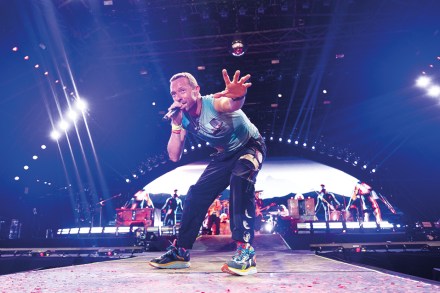
Everyone who wasn’t at Glastonbury this year knows exactly what it was like: a seething mass of hatred and rabid leftiness, characterised by an angry punk duo named Bob Vylan calling for the death of the IDF. But that’s just the tabloid hysteria talking – betraying also maybe a hint of envy towards those lucky enough to have bagged one of the £400 tickets. The truth is, the political climate was not especially febrile. Sure, the jaunty red, white, green and black of the Palestinian flag was very en vogue, but a few years back it was the blue and yellow of Ukraine and the EU. A few decades before that it was free Tibet. Flags of various communist regimes with questionable human rights records, meanwhile, dip in and out.

Complain all you like but Glastonbury has delivered the goods again

From our UK edition

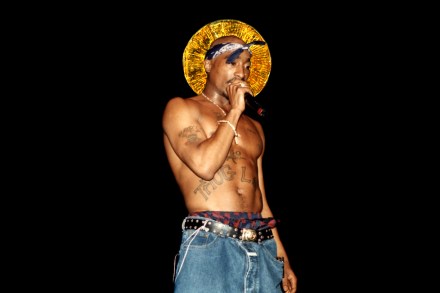
There’s yet to be a Glastonbury line-up that hasn’t provoked a chorus of naysaying. Refrains like ‘looks rubbish. I wouldn’t go’ and ‘not like it used to be’ are de rigueur. Dismissing the headliners as ‘crap this year’ rivals football as the nation’s favourite sport. Yet there’s something to be said for trusting the Glastonbury bookers: check out, say, the lower-tier bands on the 1994 poster and see how many greats they discovered before they were famous – Radiohead, Pulp, Oasis... Nowhere else in the world could hand written signs for toilets induce a Proustian yearning to return Glastonbury’s prestige and legendary ‘vibe’ are now such that the festival is bigger than any of the artists playing there.

Stoicism is back

From our UK edition

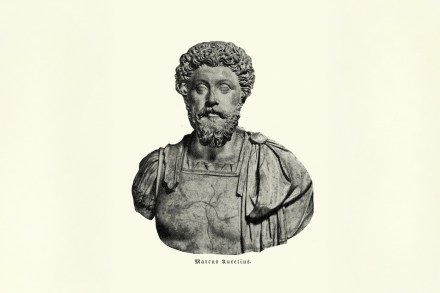
If Marcus Aurelius were around today, would he have a podcast? The answer, of course, is no. His meditations were for his own guidance and never knowingly meant to be published. This doesn’t mean he wouldn’t have found himself shoved forward as a hero of a new resistance. His sound bites would be rendered into TikToks while teenagers put his quotations as their phone backgrounds. Twenty-somethings working in industries he couldn’t conceive of (‘digital marketing’? Quid est?) would stutter his words like mantras as they shiver in Clapham back garden ice baths. For stoicism has returned, and in its strangest form yet.

Would you drink fermented horse milk?

From our UK edition

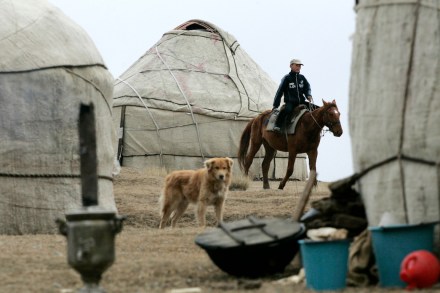
To my great disappointment, I was never (knowingly) fed qarta – a popular dish of boiled and pan-fried horse anus served without sauce or spices. I did, however, get to try the next best thing – kymyz, mares’ milk fermented in a goatskin. It was the second day of a horse trek in Kyrgyzstan and it had begun to hail. Not exactly golf ball-sized, but close enough to the golf ball sweets you bite into to find bubble gum. The horses coped, perhaps because getting pelted with hail is a fair trade for not being on a Kyrgyz menu. We stopped under a tree and our guide’s blank stares gave no indication of whether the weather was normal or not. The following two hailstorms suggested it was.

Eton’s recipe for success

From our UK edition

One of the first things you realise on arriving at Eton is that while you may be at arguably the best school in the world, you’re also possibly among Britain’s most hated. It’s great being surrounded by 15th-century quadrangles and Georgian boarding houses, and your uniform is as dapper as it gets (so long as you don’t mind dressing like a penguin). But you can’t walk into Windsor wearing a college crest, for fear of being mugged, and the papers are filled with stories claiming you’re overprivileged or not actually that clever. It’s a double-edged sword. You have the advantage of a brilliant education, but bear a stigma that can’t be removed no matter how many times you pretend to your friends that you vote Labour.