William Cash

William Cash is the former Times US West Coast correspondent and former editor of the Catholic Herald.

Dietary requirements are killing the dinner party

From our UK edition

For centuries, as a dinner party guest you ate what you were served. Nobody dreamed of calling up their host in advance demanding what they would like on the menu. This is one reason why the dinner party somehow made it through the 1980s era of Tom Wolfe’s ‘Social X Rays’ – Mid-Atlantic society-types who ate nothing and resembled skeletons. Previous threats to the dinner party included the first drink driving laws, which Bron Waugh claimed ruined country social life. Then came the cocaine diet guest (no food touched), who has been spiritually succeeded by the equally annoying Ozempic-jabber, bragging to their hostess about how ‘unhungry’ they feel.

English Tourism Week won’t save the tourist industry

From our UK edition

‘English Tourism Week’, which runs until 23 March, kicked off with a jaunty reception in Downing Street. Various ‘celebratory’ and industry events are planned for this week. But those who work in England's tourist industry are not in the mood for celebrating. For all the fanfare, our tourist and hospitality sectors are in trouble – and the government is to blame. The tax will further cripple the marginalised UK tourism sector To celebrate ‘Tourism Week’ while at the same time administering a punishment beating that hits B&B, hotel and pub owners, as well as self-catering and Airbnb owners, is the equivalent of chartering a luxury bus to parade the English cricket team – ‘Cricket Awareness Week’ – down Whitehall after their last 5-0 Ashes whitewash.

We must cut Send to help our kids

From our UK edition

It is ‘insane’, Reform’s Doge chief Richard Tice said this week, that children are wearing ear-defenders in classrooms, supposedly as a ‘calming activity’ to reduce anxiety and stress. Such practices, he said, show UK’s ‘special educational needs and disabilities’ system – known as Send – is not fit for purpose. The number of children receiving support for Send has increased from 1.3 million in 2019 to 1.7 million today, and by 2029, Send-related debts in UK councils are expected to reach £17.8 billion. These costs may bankrupt some local authorities.

Putin’s trap, the decline of shame & holiday rental hell

From our UK edition

50 min listen

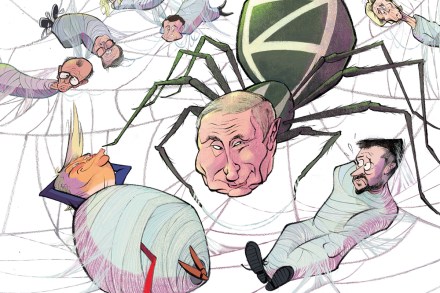
First: Putin has set a trap for Europe and Ukraine ‘Though you wouldn’t know from the smiles in the White House this week… a trap has been set by Vladimir Putin to split the United States from its European allies,’ warns Owen Matthews. The Russian President wants to make a deal with Donald Trump, but he ‘wants to make it on his own terms’. ‘Putin would like nothing more than for Europe to encourage Ukraine to fight on… and lose even more of their land’. But, as Owen writes, those who count themselves among the country’s friends must ask ‘whether it’s time to choose an unjust peace over a just but never-ending war’. Have European leaders walked into Putin’s trap? Owen joins the podcast alongside Gideon Rachman of the Financial Times.

Owning an Airbnb is hell

From our UK edition

I know it can be difficult to have sympathy for anybody who owns a holiday let, but for me and my wife August is often a war between us and the holiday guests from hell. It’s an open season of refund-seeking, blackmailing guests and wild children whose parents think we operate a kids’ club in our gardens. And it’s only getting worse. We got a flavour the week that schools broke up late last month, when a group of eight adults calmly sat on the terrace in the sun, swilling cans of beer and prosecco as their pack of six children began picking up heavy pebble gravel and throwing the stones at the windows of my elderly parents’ barn.

This conclave is all about Portugal

From our UK edition

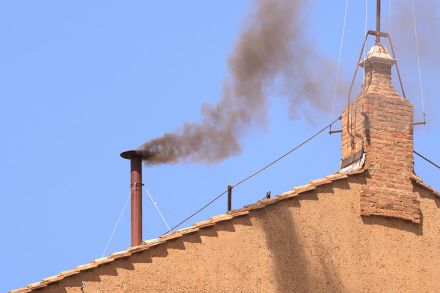
With an inconclusive first and second day at the Conclave – to date – speculation in Rome is mounting that there may be deep divisions inside the Sistine Chapel. We may be in for an intense session of vote trading and complex geopolitical chess-board negotiations. The next pope, especially if it is one of the younger members of the Conclave – by which I mean under 70 – will shape the faith of some 1.4 billion Catholics for possibly as long as 20 years, maybe more.  Age may turn out to be a critical factor. The Conclave may want a younger pope from an entirely new generation not besmirched by the sins of the church.

The Vanity Fairytale

From our UK edition

The last time I saw Graydon Carter, editor of Vanity Fair for 25 years, he was strolling along Jermyn Street in London. Graydon was a media-land acquaintance from LA and New York where I worked as a journalist in the 1990s. We gossiped affably for a few minutes about mutual British friends before heading back to our different lives (him to a suite at the Connaught, me to a rented flat in Pimlico). It wasn’t until I read his entertaining new memoirs, When the Going Was Good, that I realised quite how very different our lives had become ever since I met him at Vanity Fair’s first Oscar party in 1994. Graydon and his team of fixers quickly won over Hollywood by adapting the 1990s media mogul spending mantra of: ‘I gave my wife an unlimited budget and she exceeded it.

The dark side of World Book Day

From our UK edition

What began in 1998 with Tony Blair standing in the Globe Theatre to announce a new celebration of books has morphed into something much bigger. Along with Black History Month or World History Day, tomorrow’s World Book Day is now a full member of the woke calendar. This calendar has grown – largely thanks to the UN, which spends millions inventing such initiatives – into a global non-profit industry. In March alone, we have Zero Discrimination Day, World Wildlife Day, and World Day for Glaciers. As an author of several books, I’m all for celebrating reading, poetry and especially book buying.

The Davos I knew is over

From our UK edition

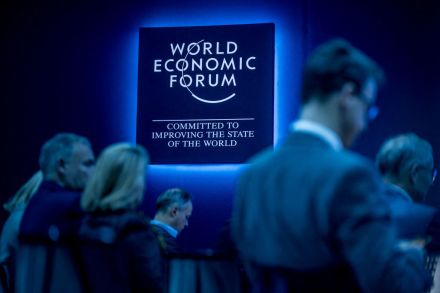
Has the merry-go-round of the global elite summit – epitomised by the World Economic Forum (WEF) at Davos, which concluded this weekend – had its day? As I saw at Davos when I was editor of the finance magazine Spear’s, the WEF has been out of touch for years. Its costs of attending are now so expensive that it is increasingly difficult to justify attending what is essentially a global-class corporate ego massage circus. The first problem with Davos as a platform to ‘improve the state of the world’ is that there are now plenty of other, smaller, and more exclusive global insider CEO ‘thought leadership’ conferences. There is the Sun Valley Conference in Idaho, the Milken Conference in LA, the Google Summer Camp in Sicily, and Brilliant Minds in Stockholm.

The LA dream has burnt out

From our UK edition

Last year, I wrote here about the dark side of LA, after the Friends actor Matthew Perry was found dead in the hot tub of his $6 million Pacific Palisades house. I grimly predicted that his luxury ocean-facing bungalow – sold on to a developer for over $8 million just a few months after his fatal drug overdose – would become a new stop off on the ‘Movie Star’s Homes’ tours.  Was I wrong? The Perry multi-million glass bungalow narrowly avoided the flames. The LA wildfires have torn through the Palisades area, and have reached the very part of the Hollywood Hills where I used to live in the 1990s. Los Angeles Sheriff Robert Luna said that it looked as though ‘an atomic bomb dropped in these areas’.

Hollywood is quietly welcoming Trump

From our UK edition

When I lived in LA in the 1990s, there was one golden rule of the film industry: Hollywood should follow and never lead. This mantra was, predictably, ignored in the wake of the election. Variety splashed with the headline ‘Hollywood on Edge After Trump’s Devastating Victory’. One actor was quoted bemoaning the ‘unimaginable cruelty that’s going to be unleashed on women, immigrants and the LGBTQ community’. Another said they had called LA pharmacies to ‘hoard birth control pills’. ‘I know lots of agents and producers who voted Republican’ Yet this fractious relationship is about to see a surprising plot twist.

William Cash, Marcus Nevitt, Nina Power, Christopher Howse and Olivia Potts

From our UK edition

31 min listen

On this week’s Spectator Out Loud: William Cash reveals the dark side of Hollywood assistants (1:12); Marcus Nevitt reviews Ronald Hutton’s new book on Oliver Cromwell (7:57); Nina Power visits the Museum of Neoliberalism (13:51); Christopher Howse proves his notes on matchboxes (21:35); and, Olivia Potts finds positives in Americans’ maximalist attitudes towards salad (26:15).  Presented and produced by Patrick Gibbons.

The dark truth about Hollywood assistants

From our UK edition

Anew stop has been added to the map of Movie Star Homes and Crime Scenes, on sale at LAX airport: 18038 Blue Sail Drive, Pacific Palisades, the sleek single-storey $6 million ocean-view house where the Friends actor Matthew Perry was found floating in his hot tub last October. His death has revealed something of the dark world of LA’s celebrity staff. Perry’s assistant, two doctors and LA’s ‘Ketamine Queen’ have been charged with supplying the drugs Last week it was reported that Perry’s live-in assistant Kenneth Iwamasa injected his boss with ketamine before his death. While watching a movie around noon, the actor asked Iwamasa – part-butler, part-nurse and head of shopping (including meds and drugs) – for his third jab of the day.

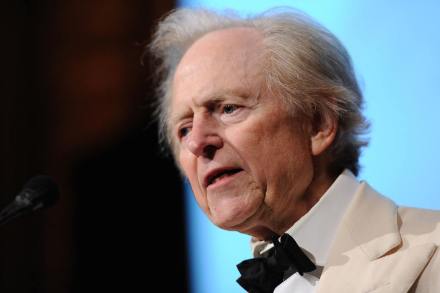
Tom Wolfe 1931-2018

Tom Wolfe has died at the age of 87. In 1998, William Cash interviewed the great author for The Spectator: Yes, Tom Wolfe does own one of those 12-room Upper East Side apartments, as he wrote in Bonfire of the Vanities, 'the mere thought of which ignites flames of greed and covetousness under people all over New York, and for that matter, the world'. Contrary to reports in the British press, however, the 68-year-old dandy New Journalist, self-styled Zola of Our Times, does not resemble Bela Lugosi with 'cracked lips' and the blood sucked from a 'ghastly livid-white' face. Although he does wear a cape at night and has rarely been seen out in public in the last year, he looked extremely well in his whipped ice-cream suit.

Hugh Hefner was the king of soft porn – and luxury living

From our UK edition

I got to know Hugh Hefner quite well when I lived in LA in the nineties and was a fairly regular visitor to the Playboy Mansion. As the Times of London's Hollywood Correspondent, I was a regular on the guest list for The Playmate of the Year awards and occasionally was asked over for one of his supper evenings in his private cinema – with drinks served by waitress-style bunnies. During one Playmate of the Year awards in 1992, I wrote a piece for The Spectator about covering the LA riots from his study as the city went up in flames. Hefner's life philosophy was that 'Life is too short to live somebody's else dream'.

Why the Midlands will matter on June 8th

From our UK edition

It is no coincidence that Theresa May chose to hit the campaign trail in Wolverhampton and Dudley last weekend; both are areas where Ukip did especially well in 2015. What is emerging is that the West Midlands – particularly the Labour-held Midlands marginals – will be the key battleground in this coming election. From the creation of the Mercian kingdom by Alfred the Great, to the Battle of Bosworth and Germany’s bombing of Coventry in 1940 – not to mention the 2015 election which led to Brexit – the Midlands has provided the backdrop against which the future of our country has been shaped. The election on 8 June will be no exception.

How Britain’s legal system went global

From our UK edition

It was Henry Fairlie in his famous article in The Spectator in 1955 that made the critical point about the way 'Establishment' power (political, legal, media, foreign office, civil service and so on) is exercised in Britain: namely such a 'matrix' of influence was exercised 'socially', behind closed doors; or maybe 'closed chambers' would be more apt as the Supreme Court faces the biggest legal showdown in its short history on Monday 5 December.

William Cash: Like Nigel Farage, I am also resigning from Ukip

From our UK edition

On the morning of the Referendum vote, I texted Nigel Farage - as the Heritage and Tourism spokesman of his party -  to say he 'had fought a hard battle and deserved to win'. He texted back: 'One dares to hope'. Like most of the best English people I know Nigel has a strong sense of loyalty and decency and also loves a drink. He doesn't take himself - or politics -  that seriously. Like Jimmy Goldsmith he gave up a business career to fight his cause. He only pursued his convictions so hard because he believed in leaving the autocratic and anti-sovereign EU  - and risking the opprobrium of many - regardless of career or any financial rewards. Well, now he has resigned from Ukip, and I have decided to follow his example.

David Cameron’s decision to sack Owen Paterson will send rural voters flooding to Ukip

From our UK edition

During Owen Paterson's vocal conversation with David Cameron in defence of his record as Environment Minister after learning he was being sacked, Paterson reportedly said: 'this will be a kick in the teeth to 12 million countryside voters... you are making a big mistake'. There is already mounting evidence to suggest Paterson could be right. Judging by the two standing ovations that Paterson went on to receive last Friday at the Game Fair at Blenheim Palace (at the mere mention of his name), Charles Moore commented that 'you could almost see the disaffected Tory voters fleeing to Ukip across the tent'.

In praise of those who have improved healthcare in Staffordshire

From our UK edition

Last week, the House of Commons considered the vital matter of the Francis Report – one year on. It is quite difficult at this stage in the tragedy of Stafford hospital to recall how it all came about and the difficulties that those of us who experienced it had to endure, the patients and the victims in particular. There was complete and total resistance, a granite-like refusal, to having a proper look at what was going on. A tooth and nail battle had to be fought to get the Inquiry in the first place, under the Inquiries Act 2005. I was absolutely astonished that successive Secretaries of State completely refused, point-blank, to have such an inquiry in the case of Mid Staffordshire.