Emma Beddington

Grotesque vignettes: The Body in the Mobile Library and Other Stories, by Peter Bradshaw, reviewed

From our UK edition

There’s a face I found myself making again and again when reading Peter Bradshaw’s short stories, and it was not pretty: top half screwed up in incredulity; lower half slack with bovine confusion. What, my expression said, just happened? What indeed? Bradshaw is best known as the Guardian’s chief cinema critic, but this isn’t his first foray into fiction. The collection comes in the wake of three novels; but he’s admitted that ‘the short story form has always obsessed me’. That fascination with the form has given him the confidence to play with it, and us, and my confusion was deftly engineered from the start. In the opening story ‘The Kiss’, boy meets girl in a Hendon pub in 1951. Then what? Nothing really.

Nina Stibbe’s eye for the absurd is as sharp as ever

From our UK edition

Nina Stibbe is back in London. It has been 20 years since she left, and 40 years since she first arrived from Leicester to nanny, ineptly, for Mary-Kay Wilmers, the editor of the London Review of Books. Back then, she chronicled her adventures (minor car crashes; thinking Alan Bennett was in Coronation Street; inadvertently stealing Jonathan Miller’s saw) in deadpan letters to her sister Vic that became the delicious Love, Nina. This time she’s resolved to keep a diary of her year as ‘Debby’ Moggach’s lodger in a narrow Kentish Town terrace with an over-watered garden she already disapproves of.

The man who hired himself out to do next to nothing

From our UK edition

Have you ever dreamed of just giving up? Doing nothing? Shoji Morimoto went ahead and did it: so much so that he didn’t even write the memoir that bears his name. Rental Person Who Does Nothing is the story of how he stopped working as a freelance writer and offered himself – just his basic presence, no extras – to strangers in Tokyo, being paid only travel expenses to do nothing, or more accurately next-to-nothing, from waiting in queues to watching people work. The book, he explains in the foreword, is the fruit of conversations with a writer, S (‘not a particular fan of Rental Person’), and an editor, T. Morimoto just ‘watched with interest and surprise as this book developed’.

An old man remembers: The Librarianist, by Patrick deWitt, reviewed

From our UK edition

It’s a mark of how difficult Patrick deWittis to pigeonhole that I’m tempted to reach for reductive mash-ups to sell you his winning fifth novel. The lovechild of Elizabeth Strout and Wes Anderson? Katherine Heiny meets the Coen Brothers? It’s not quite any of that. On the surface, The Librarianist is his most conventional narrative yet (the Man Booker shortlisted The Sisters Brothers was an absurdist western; his other novels are similarly left field). A chance encounter leads the friendless, but ‘not unhappy per se’, retired librarian Bob Comet to volunteer at the Gambell-Reed Senior Center, where he forges new bonds and reflects on his past. But it’s odder and funnier than that suggests. For a start, the narrative arc is all over the place.

Tears and laughter: We All Want Impossible Things, by Catherine Newman, reviewed

From our UK edition

Edi is dying of ovarian cancer and she’s craving the lemon cake she once got from Dean & Deluca deli in New York in the mid-1990s. Her forever best friend Ash is keeping vigil by Eli’s bedside in the Graceful Shepherd Hospice in western Massachusetts, trying to track down that elusive cake and keep Edi happy and comfortable with juice, lip balm and company. She’s also ‘whoring around’ (Ash’s words) with a variety of inappropriate people: the palliative care doctor, a substitute teacher from her daughters’ old school, and Edi’s brother. Then there’s her own not-quite-ex-husband, Honey… That’s the set up for the US memoirist and journalist Catherine Newman’s first adult novel.

Mitfordian mischief: Darling, by India Knight, reviewed

From our UK edition

It takes chutzpah to tackle a national treasure as jealously loved and gatekept as Nancy Mitford’s The Pursuit of Love. Purists greeted last year’s television adaptation much as cat-owners might welcome a partially eviscerated mouse. I avoided watching, because the Wes Andersonification of my greatest literary succour seemed likely to burst every vein in my eyeballs. Can India Knight pull it off? The bones remain intact. Beautiful, guileless aristocrat Linda Radlett falls disastrously in love with a rich banker and then a broke radical before finding happiness with an urbane Frenchman. But plot was never really the point. The delight is in the details. Knight’s are bang on, and there’s joy in spotting them.

Back on the road: Less is Lost, by Andrew Sean Greer, reviewed

From our UK edition

Get ready for more of Less: Andrew Sean Greer’s hapless novelist is back on the road. First things first: you need to have read Less, Greer’s Pulitzer-winning first outing for his creation, to appreciate this slighter but equally charming sequel. That’s no hardship. Less was hilarious and humane: a hymn to second acts. In it, Arthur Less – a tentative, faded Battenberg blond-and-pink man, around whom embarrassments and misunderstandings coalesce – scuttled across the world to avoid facing his 50th birthday and the wedding of his long-time lover Freddy to someone else, both imminent. In Less is Lost, Arthur has a stranger and scarier destination for a West Coast homosexual: America’s heartlands.

Good luck enjoying eating salmon ever again

From our UK edition

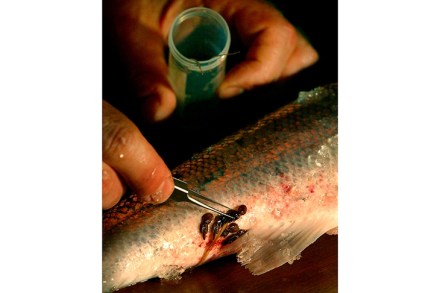
‘I saw the best minds of my generation destroyed by cat videos,’ begins Henry Mance’s How to Love Animals, winningly. That is the paradox he sets out to unpick in this densely factual and intermittently horrifying book: how a world in thrall to cuteness, endlessly compelled to click on videos of kittens and owls having a special friendship, can remain indifferent to the suffering of almost all other animals, whether farmed, in captivity or in the wild. That’s a tough brief. I’m not sure it’s a book I would choose off the shelf, because the subject matter is deeply unpalatable.

Not just a trolley dolly: the demanding life of an air hostess

From our UK edition

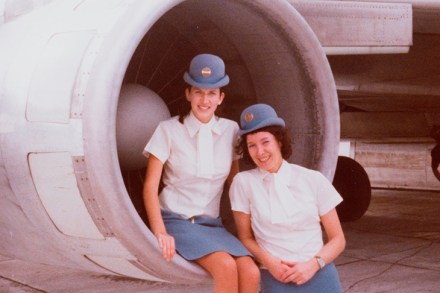
Come Fly the World is not the book I thought I was getting. The slightly (surely deliberately) pulpy cover — a glamazonian stewardess, her mirrored cat-eye sunglasses reflecting a runway — promised a Mad Men-era history of silver service and highballs at 30,000 feet, glamour, frocks and sexual shenanigans. Admittedly, deprived of the quixotic delights of a Ryanair snack pack shared with a fractious toddler on a delayed 5 a.m. flight to Alicante at the moment, I ignored the subtitle: ‘The Women of Pan Am at War and Peace.’ That sets the tone more accurately.

Victoria Wood: stiletto in an oven glove

From our UK edition

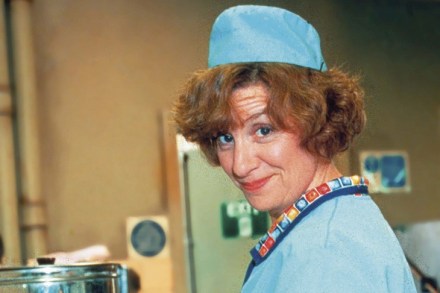
Even if you didn’t have an Auntie Dot in Cockermouth (the one who ate a raffia drinks coaster, mistaking it for a high-fibre biscuit), it was impossible not to feel Victoria Wood got you, somehow. Her death in 2016 triggered an outpouring of grief commensurate to her talent, but it also revealed how intimately, how individually, she was loved. Lazily viewed as the cosiest of national treasures, Wood was finer and fiercer than that: she distilled something essential about British character (national, regional, sexual), and her forensic skewering of middle-class aspiration, high and low culture and any and every class of stupidity managed to remain warm: a spectacular balancing act. Mainly, though, she was wickedly, consistently, funny: Acorn Antiques alone merited a damehood.