A.S.H. Smyth

A.S.H Smyth is a journalist and radio presenter in the Falkland Islands. He was once selected to play cricket for the national side but couldn’t make it.

The charming side of elections in the Falklands

From our UK edition

It’s election time in the Falklands, where every four years we choose eight members of the Islands’ legislative assembly. They say you don't want to know how laws or sausages are made. But the way such a far-flung and tiny parliament is put together is actually pretty interesting. In the Falklands there are only two constituencies. Stanley has five seats, with 15 candidates this year and 1,590 registered voters. ‘Camp’ (the rest of the Falklands, including any ‘outer’ islands big enough to have human inhabitants) has three seats and only four candidates, with 239 registered voters.

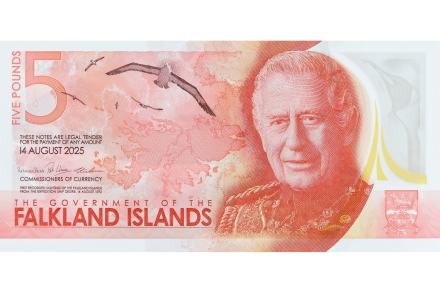
The Bank of England could learn from the Falklands

From our UK edition

While the Bank of England consults on who will appear on the next round of British bank notes, with reports that Winston Churchill could be dropped from the fiver, this week in the South Atlantic a new set of bank notes came into circulation. The notes will include the Falkland Islands coat of arms, the national flower, the black-browed albatross, and Hugo Burnand’s official portrait of HM the King August 14 is Falklands day, and in celebration of the first recorded sighting of the Islands (in 1592), fresh fivers, tens, and twenties will be rolled out: the first new notes since 1984. (There will be no new fifties, apparently the Falklands bought enough of these notes in the 80s to last for the next 90 years).

The night has a thousand eyes

From our UK edition

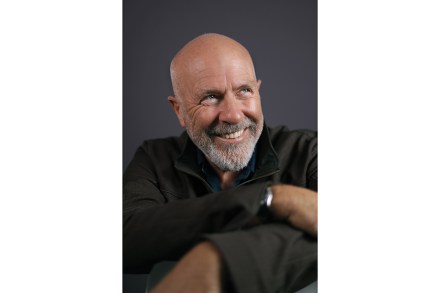
From a young age – ten perhaps – the author Dan Richards has had a strained relationship with night-time. Grappling with insomnia, he would take ‘the homeopathic approach to [his] waking nightmares’, rereading Moominland Midwinter despite its existential terrors. Even now, he writes, he finds it easier to sleep when he is not at home. This has, for better or worse, given him time to think – and lots to think about – while not much else was going on.

A pawn in the Great Game: the sad story of Charles Masson

From our UK edition

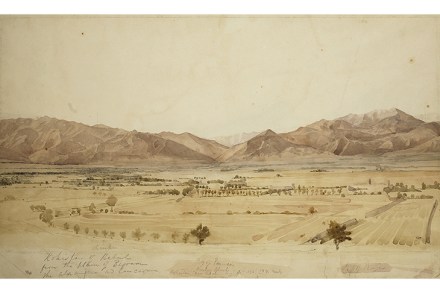
‘Everyone knows the Alexandria in Egypt,’ writes Edmund Richardson, ‘but there were over a dozen more Alexandrias scattered across Alexander the Great’s empire.’ By the early 19th century, though, very few had been identified. Moreover, the prevailing scholarly view was that there remained ‘not a single architectural monument of the Macedonian conquests in India’ — let alone in Afghanistan, which had, ‘for more than 1,000 years... been a blank space in western knowledge’. So finding one would be ‘a world-changing achievement’.

Richard Flanagan rails against wrongs ‘too vast to have a name’

From our UK edition

‘Is it because we see our world only darkly that we surround ourselves with lies we call time, history, reality, memory, detail, facts?’ Richard Flanagan’s memoir opens at the Ohama coal mine in Japan, once home to his father and a host of other POW slave labourers. It then spirals outwards via his childhood (in a remote Tasmanian settlement), his much-put-upon mother (who hoped Richard would become a plumber), his semi-present, kindly, traumatised father Archie (enshrined in The Narrow Road to the Deep North) and on through all the now-familiar Flanagan themes.

The magic and mystery of Georgia: Hard by a Great Forest, by Leo Vardiashvili, reviewed

From our UK edition

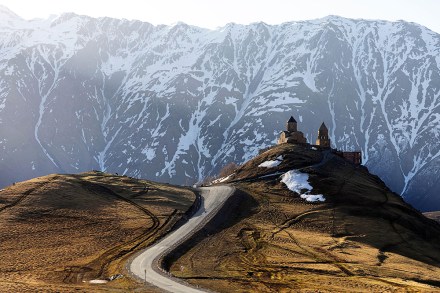
In my drafts folder there languishes an email to The Spectator pitching a letter from a then-forthcoming trip to Georgia. That was, alas, the spring of 2020. So when I saw Leo Vardiashvili’s debut novel billed as ‘a winding pursuit through the magic and mystery of returning to a lost Caucasian homeland’, I leapt at the vicarious travel opportunity. Fleeing the disintegrating post-Soviet republic in the early 1990s, Irakli Donauri and his sons (though not his wife) arrive in London – Tottenham, specifically – where they are surprised to find ‘no top hats, no smog and no afternoon tea’. The boys grow up; two decades pass; their mother never joins them. Then one day, overwhelmed by homesickness, Irakli returns to Georgia – and promptly disappears.

A strong whiff of goodbyes: The Pole and Other Stories, by J.M. Coetzee, reviewed

From our UK edition

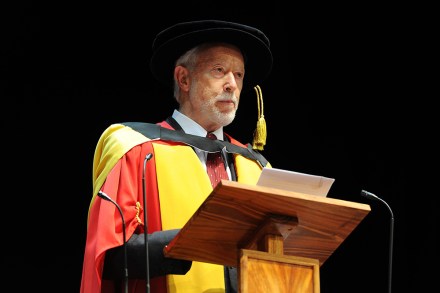
New books by, articles about or Sasquatch-like sightings of J.M. Coetzee routinely send me back to that infamous YouTube clip of Geoff Dyer face-planting while being introduced by Coetzee at the Adelaide Book Festival – an episode often cited as evidence that the Nobel Laureate has no sense of humour. The garlanded ex-South African’s work is famously as dry as the Karoo, and Coetzee himself has been accused of having only ever laughed once. But a smile is visible in ‘The Pole’, the longest story in this collection. Beatriz, in her late forties, is an educated Spanish woman, ‘a good person’ in a ‘civilised’ (read dormant) marriage, involved in organising things like highbrow concerts but otherwise not taken seriously.

Falklanders won’t forgive the EU’s ‘Las Malvina’ blunder

From our UK edition

This week, the European Union, in its infinite wisdom, made pretty much the only blunder which, in the eyes of Falkland Islanders, there is no coming back from: referring to the Falklands as ‘Las Malvinas’.  The row was sparked after the EU chose to sign a declaration with Argentina and 32 other South American countries, referring to the UK overseas territory as both ‘Islas Malvinas’ and the ‘Falkland Islands’. Brussels might not – perhaps – quite realise the extent to which the M-word is no laughing matter in these latitudes. (Just ask a Spanish teaching friend of mine!

How we’re marking Remembrance Day in the Falklands

From our UK edition

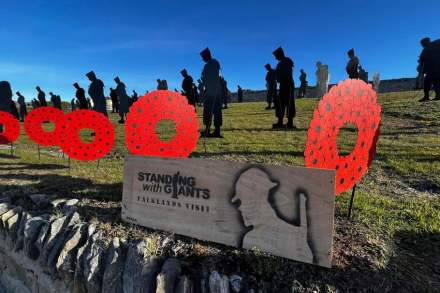
Last Saturday was pure sunbathing weather. I mention this because a) I’m writing from the Falkland Islands, where such occurrences are not exactly regular, and b) I spent the whole beautiful day, with two or three dozen other volunteers, drilling through rock to stake out a couple of hundred 6ft metal figures. I even had to wear a hat. This wasn’t the first time I’d attempted such a challenge. I lent a hand twice last year – first when we put up 100 Tommy silhouettes commemorating the centenary of the Royal British Legion. In the main these were set out on the sloping banks around the Stanley Cemetery and its first and second world war Cross of Sacrifice.

Why Falklanders are the ones to watch at the Commonwealth Games

From our UK edition

Stanley, Falkland Islands I’m not saying the Falklands is a tiny place, but last month, over the course of just a few hours, I had my hair cut by one international athlete and then my passport processed by another. Soon-to-be international athletes, anyway. They’re both part of the Islands’ team for this year’s Commonwealth Games, which is taking place in Birmingham this week. The Falklands has despatched 16 competitors across four sports: badminton, table tennis, cycling and bowls. For many participants, this is their first Commonwealth Games. For some, thanks largely to Covid, it will be their debut international appearance.

Proof at last that the Great Pyramid wasn’t built by aliens

From our UK edition

Because I once made the mistake of dabbling in Egyptology, some ‘friend’ will schwack me every other week with a meme, cartoon or article about people who still believe the pyramids were built by aliens. I have longed for a handy single volume to present to these loons, full of unarguable evidence putting this business past dispute – and Pierre Tallet and Mark Lehner have provided it. In 2013 excavators in Egypt’s Eastern Desert on the Gulf of Suez uncovered the world’s most ancient harbour installation at Wadi el-Jarf. Here they unearthed a cache containing the oldest extant inscribed papyri (c.2607-5 BCE).

Why did the Allies dismiss the idea of a German resistance movement?

From our UK edition

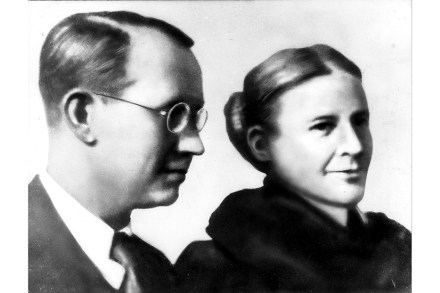
In 1928, a modest young lecturer from Wilwaukee, Mildred Harnack, née Fish, arrived in Berlin to begin her PhD in American Literature. In the febrile, polyglot atmosphere in the city at the ‘crossroads of Europe’, the media was still mocking Adolf Hitler and few took him seriously. Mildred saw, close up, the brokenness of American and German capitalism and, distantly, the apparently level playing fields of communist Russia. As the Nazis gained increasing control over the body politic, she taught an overtly socialist syllabus — Dos Passos, Theodore Dreiseret al. When, halfway through her dissertation, the university fired her, she promptly started teaching at a night school for working-class students. ‘Should Hitler be chancellor?’ she asked her pupils.

The scholars who solved the riddles in the sands

From our UK edition

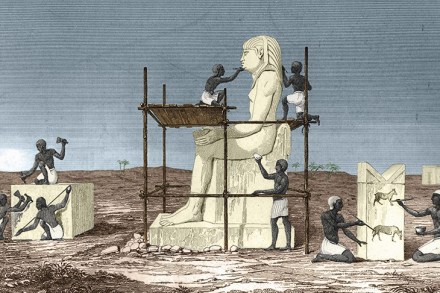
In 1835 the first two Egyptian antiquities were registered in the British Museum: a pair of red granite lions from Nubia. Each bore the name of Tutankhamun — not that anyone had ever heard of him. All serious understanding of the millennia-spanning Nilotic civilisation had disappeared before the last hieroglyph was carved in 394 AD. In the mid-18th century the most advanced ‘scholarship’ on the subject consisted of ‘pinpricks of insight in an enveloping fog of misapprehension’, and by the early 19th century the Egypt of the pharaohs was still largely buried in the sand. The word ‘Egyptology’ did not exist.

How to scale a mountain without leaving home

From our UK edition

In January a friend visited me at my home in Colombo, and I promised him that we would climb Adam’s Peak. That plan was scotched when, days before he landed, I went down with dengue fever. But I’d done Adam’s Peak before (twice, actually), and there would always be another chance to do it, right? Things changed. When lockdown came to Sri Lanka, I found I was already bored and irritable in the first week. Then I saw a cheery Facebook post about some chap called David Sharp who used his time in isolation to calculate how many stairs he would have to climb in his home to ‘top’ the various mountains of the British Isles. Virtual mountaineering, if you will. Well, I thought, why don’t I do the same with Adam’s Peak?

Maaza Mengiste’s The Shadow King is certainly no Abyssinian Andy McNab

From our UK edition

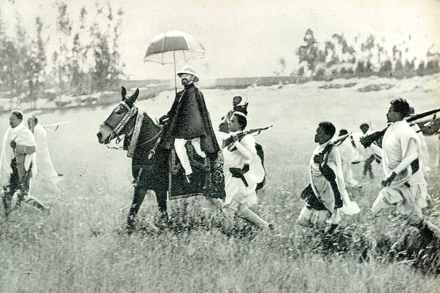
In 1935 the troops of Benito Mussolini’s sinister-clownish Roman Empire II invaded Ethiopia, in large part out of spite for Italy’s embarrassing defeat there 40 years earlier. Initially largely uncontested — thanks both to Emperor Haile Selassie’s desperate faith in international brotherhood and to a hearty dose of Quislingism from his leading nobles — when ‘war’ eventually did break out it was so one-sided that Ethiopian women were gathering spent bullet casings for reuse while Italian planes (the older Ethiopians believing these were dragons) dropped poison gas on them. Selassie, meanwhile, fled to England.

The great American trauma in minute detail

From our UK edition

Why, I asked some months back in these pages, do the protagonists in American fiction these days seem so lost? What is it they’re all so het up about? Well... everything. At least according to the narrator of Ducks, Newburyport. Lucy Ellmann’s monster novel is a more or less non-stop narration of the thoughts of one Ohio housewife, a former college teacher who now bakes pies for money, attempts to keep her household shipshape, feels the pinch of post-bail-out America, is frustrated in the usual ways, and frets persistently about the physical, moral and emotional safety of her offspring (other people’s too) in those ostensibly United States.

More dystopian futures

From our UK edition

Only Helen DeWitt would start a book with an epigraph of her own pop-culture mash-up poetry and end with an appeal to buy the writer coffee. The author of just two previous published novels (about a multilingual child prodigy, and an encyclopaedia salesman turned sex-peddler, respectively), DeWitt keeps a pure flame, and doesn’t want to hear why others won’t. She and her characters inhabit an intellectual, emotional and physical triangle between New York, Berlin and Gloucester Green bus station, Oxford. ‘It would mean a lot to me to work with [an editor] who admired Bertrand Russell,’ one of her narrators remarks... about her children’s book. Another one has ‘views on the Kaddish of Mr Leon Wieseltier’.

A story from a grain of sand

From our UK edition

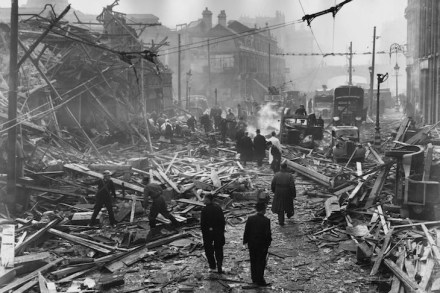
In 1945, on a Putney side street, in a city full of darkness and half in rubble from the Blitz, the 14-year-old Nathaniel and his sister are abandoned by their parents into the care of men they think may well be criminals. Their father is still troubled as a result of the war; their mother close to stories from the present. Left to his own devices, Nathaniel sees the world in terms of shipping routes, and learns London’s geography (or an earlier form of it) by barging on the Thames with smuggled greyhounds. In a house full of odd comings and goings, and ‘dangerous with secrets’, his new confrères include an Aramaicist ethnographer, a lusty St Lucian pot-washer and a girl whom Nathaniel names, out of necessity, after the street on which they first met.

The weird world of the hapax legomenon

From our UK edition

Today is National Indexing Day (#indexday) – at least according to the UK's Society of Indexers. 'Celebrating book indexes, indexers, and the profession of indexing.' As I write, they're wrapping up their annual jamboree, at London's Foundling Museum. A few months back, I was out walking the dog and listening to Dracula on my phone when I could've sworn I heard a character described as 'indexy'. Now, audio recordings are not always perfect, and glitches – digital or human – do creep in (I recently heard one narrator trip over a word, say 'sorry', then repeat the word and carry on – all of which remaining in the finished version). But I thought I'd give Greg Wise, narrating, the benefit of the doubt. I rewound the tape. Nope: 'indexy', for certain.

Cannon law

From our UK edition

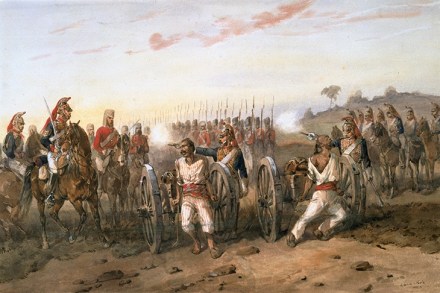
Many and various are the things one finds in Kentish pubs (I’m told); but few could top the sepoy’s skull discovered at The Lord Clyde, Walmer, complete with brief biography: Skull of havildar ‘Alum Bheg’, 46th Regt. Bengal N. Infantry... blown away from a gun. From this grisly starting point, Kim Wagner, lecturer in British imperial history at Queen Mary University of London, narrates how, in the swelter of mid-1857, following outbreaks throughout British India, native Bengal Army units at Sialkot mutinied, killing officers and civilians and looting the cantonment, and then set out for Delhi to join Bahadur Shah, the briefly-minted ‘Emperor of India’. They didn’t make it.