Christopher Shrimpton

Frederic Prokosch – the man who seemed to know everyone

From our UK edition

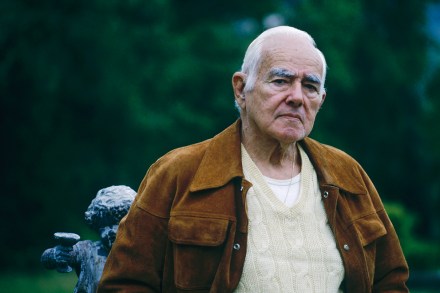
One day Frederic Prokosch wrote a novel. He was 27 years old, living with his parents in New Haven, Connecticut, and desperate to be published. Leafing through an old atlas, he had visions of Lebanon and Syria, of the apricot trees of Damascus, the pilgrims travelling from Transcaucasia, and the Orontes River flowing among the rocks. His visions grew more vivid and the voices clearer: ‘I leaned forward in my chair and started to write as though mesmerised.’ The resultant book, The Asiatics, was an immediate success, praised by the likes of Thomas Mann, Albert Camus and André Gide. Others, however, were less sure. How could one write about Asia without ever having been there? Prokosch, it seemed, had quite the imagination.

In praise of Elizabeth Taylor (no, not that one)

From our UK edition

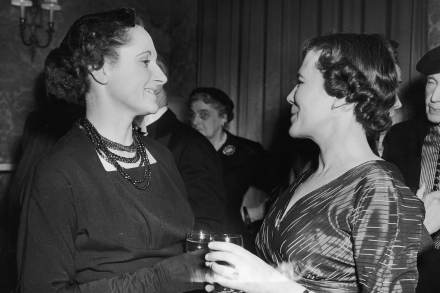
On 15 November 1975, Elizabeth Taylor died. No, not that Elizabeth Taylor – she had many more years, and many more husbands, to get through. I mean Elizabeth Taylor the author, whose 12 novels and four volumes of short stories so piercingly and hilariously chronicle the quietly desperate lives of middle-class women in and around the sleepy towns and villages of the Thames Valley in the middle part of the last century. Kingsley Amis thought her ‘one of the best English novelists born in this century’. Anita Brookner considered her ‘the Jane Austen of the 1950s and 60s’. Despite such accolades, Taylor never quite achieved the status she deserved. She was never a bestseller; she never won a prize. In fact, a faintly patronising air bedevilled her throughout her writing life.

No Sir Lancelot: A Good Deliverance, by Toby Clements, reviewed

From our UK edition

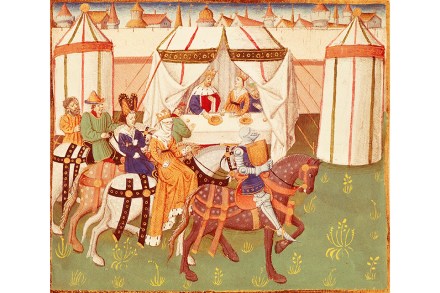
Sir Thomas Malory is not much of a knight. He lies; he is lecherous; he is bested in tourneys; he misses battles due to a dicky stomach; he inadvertently causes the deaths of his friends. He is no Sir Lancelot. But he has his talents, chief among them being his ability to spin a yarn, and he has won much renown for his retelling of the legend of King Arthur and his Round Table, later to be published as Le Morte d’Arthur. Now he has the chance to set his own story straight. Well, straight-ish. A Good Deliverance is a sly and salty fictional account of the life and deeds of Malory, whose real-life record is shrouded in mystery. The story begins in 1468 with the elderly man’s arrest and imprisonment in Newgate Prison. No charges are forthcoming.

Shared secrets: The New Life, by Tom Crewe, reviewed

From our UK edition

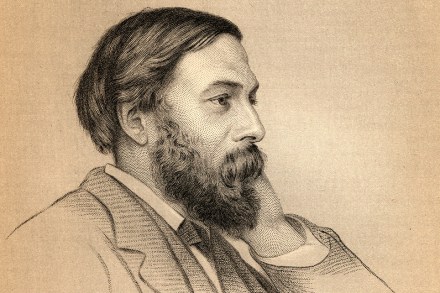
‘It is shocking to read about. But once you are used to it, it is a little like reading about Ireland, or socialism.’ This is the accepting, if unfeeling, response of John Addington’s undergraduate daughter after reading his recently completed book on homosexuality. ‘It is a very rational argument, Papa.’ The New Life, Tom Crewe’s superb debut novel, is set in fin-de-siècle London and follows Addington and his co-author Henry Ellis (based on John Addington Symonds and Havelock Ellis) as they try to make a rational argument for ‘the impossible subject’. They are respected writers and family men, but each is burdened by an unacceptable private life: Addington has brought a young man to live in his home; Ellis’s wife has moved away to be with another woman.

Boy wonder: The Young Pretender, by Michael Arditti, reviewed

From our UK edition

During his brief stage career Master Betty, or the Young Roscius, was no stranger to superlatives: genius, unparalleled, superior, Albion’s glory, a Child of Nature, the Wonder of the Age. He was a child prodigy who, in the early 19th century, took British theatre by storm. Aged just 11 William Betty made his debut and was hailed as a second David Garrick. Bettymania ensued: theatres fought for his services and the House of Commons adjourned early to see him tread the boards. But it didn’t last. After two years Betty’s star had faded. In Michael Arditti’s latest novel, The Young Pretender, we follow Betty, now aged 20, as he attempts to stage a comeback. It is soon clear that this may be a mistake.

A topsy-turvy world: Peaces, by Helen Oyeyemi, reviewed

From our UK edition

At a village train station in deepest Kent two men and their pet mongoose are setting off on their honeymoon. The men are Otto and Xavier Shin and the mongoose is Árpád Montague XXX; the train is the Lucky Day — a former tea-smuggler’s transportation, now home to a mysterious woman named Ava Kapoor. They do not know who she is or where they are heading. Nonetheless they embark, happy in the knowledge that anything could happen. Readers familiar with Helen Oyeyemi will already feel at home. Playful, otherworldly and sinister, her novels tend to inhabit a fairy-tale world of wicked stepmothers, haunted houses and run-away children. Mr Fox cannibalised parts of Bluebeard; Gingerbread shared ingredients with Hansel and Gretel.

A campus novel with a difference: The Netanyahus, by Joshua Cohen, reviewed

From our UK edition

Dr Benzion Netanyahu’s reputation precedes him. ‘A true genius, who also happens to be a major statesman and political hero,’ writes one former colleague in a letter of recommendation. Unhelpfully, another letter follows where a different former colleague describes him as a ‘prolific rabble-rouser’, with ‘a history of inciting terrorist violence’. These letters land in the pigeonhole of Ruben Blum, a historian at sleepy Corbin College in upstate New York. Ruben, the first and only Jew on the faculty (it’s 1959), is to interview Netanyahu for a position. Netanyahu is a revisionist Zionist; Ruben has carved a quiet patch in taxation studies.