Charles Spencer

Brother against brother in the English civil war

From our UK edition

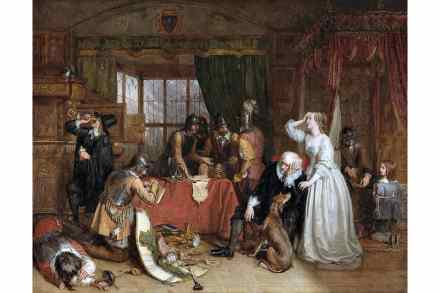
‘The Wars of the Three Kingdoms’ is the best description of the devastating conflict that erupted in England, Ireland and Scotland during the 1640s and 1650s. While Britain lost 2.2 per cent of its population in the first world war, 4 per cent perished during these terrible 17th-century clashes. The kingdoms were, at the outset, Charles I’s. At a time when even a great leader would have struggled to navigate the political, religious and social torrents confronting him, the king was weak and apt to act on the latest advice he received; his only strengths were piety, art patronage and being a loving husband and father. When a ruler of energy and charisma was desperately needed, Charles was happiest reading the Bible or playing chess or lawn bowls.
Magic of New Orleans

From our UK edition

More than 11 years after getting sober, memories of my more disgraceful drunken nights can still make me blush with shame. Waking up in a police cell with no idea how I came to be there was a low point and so was being discovered unconscious in the pouring rain under the shrubs in a neighbour’s garden. In the mercifully rare moments when I find myself dreaming of a drink, it is the thought of such dark times that helps keep me on the straight and narrow.  But of one long drunken night I have only the fondest if admittedly befuddled memories. It happened in 1996 on a press junket. Disney was opening its new animated film of The Hunchback of Notre Dame not in Paris, but in New Orleans, with its famous French Quarter.

From pirates to princes — the heroic transformation of the Normans

From our UK edition

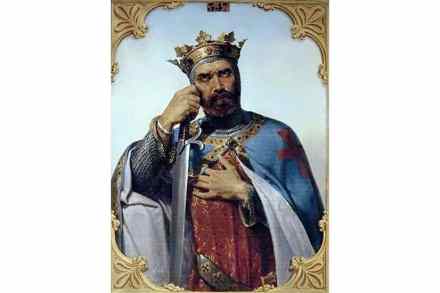
The Normans had an astonishingly good run. Not only did they take over England in 1066, of course, but they also triumphed over the Muslims, establishing themselves in southern Italy and founding a principality in the Near East. William the Conqueror’s is one of the most famous names from Europe’s Middle Ages, but the achievements of Robert Guiscard were nearly as astonishing: leaving Normandy with five knights and 30 infantrymen, he became Duke of Sicily, Apulia and Calabria. Meanwhile, his son Bohemond was one of several Norman heroes of the First Crusade, and rose to become Prince of Antioch. These military successes did not surprise contemporaries.

 Everlasting love

From our UK edition

A few weeks ago, feeling stale and stressed, I escaped to our dilapidated cottage in Dorset for a few days on my own. When I was younger, and especially when I was drinking heavily, I often felt ill at ease in my own company, but these days I get on quite happily alone, though I sometimes worry that I talk to myself too much, and wonder whether I am going slightly mad in my old age. I once read that it’s OK to talk to yourself, but there might be cause for concern if you find that you are answering yourself back. I do that all the time. If I am going mad at least it is a contented kind of dottiness, and walking on the cliffs, eating seafood at the splendid Hive Beach Café in Burton Bradstock and drinking endless cups of PG Tips did me the world of good.

Losing the plot | 24 March 2012

From our UK edition

You know those sad, confused people you sometimes see, standing on street corners and shouting dementedly at passing cars. Well, the other week, that madman was me. I was in Sheffield to cover the Crucible’s Michael Frayn season, and had risen early to write my review. And then my usually reliable laptop failed to come up with an email connection. I kept trying, and failing, to get the copy across, then realised that unless I got a shift on I would miss my train. So I ordered a taxi and checked out. Only the taxi didn’t come and catching the train looked less and less likely. And it was then that I lost the plot entirely, shaking my fist at passing but occupied cabs, and shouting at God that I wished I were dead — all the symptoms of a certifiable nutter, in fact.

Parental guidance

From our UK edition

Whisper it ever so quietly, but I think we might just be through the worst that winter has to throw at us. I’m writing this down in Dorset, and though there was a ferocious wind at West Bay, whipping up huge waves that broke spectacularly over the pier, and a peculiarly spiteful heavy shower, precisely angled so that the rain penetrated deep into my left ear as I walked along the prom, it was nothing like as cold as it has been. Better still, the roadside verges in our village of Netherbury are blessed with beautiful clumps of snowdrops, planted by the brilliant local wildlife photographer Colin Varndell and a team of volunteers, which lift the spirits whenever you see them. I no longer feel the need to crawl into bed and hibernate whenever I have any time off.

Out and about

From our UK edition

We are already more than halfway through January and I am still managing to stick heroically to my new year’s resolution. This is to keep smoking throughout 2012 — with a particularly large intake of nicotine and tar planned for the dreaded Olympic Games when everyone will be banging on about the glories of physical fitness. There will be no end of temptations to quit, of course. I was at a wonderful dinner party over the festive period, held, romantically, in a candlelit, lovingly restored vintage railway carriage. When I announced I was going to nip outside for a fag, the hostess looked at me with a mixture of disbelief and horror, as if I had proposed shooting up heroin or molesting a young child.

Sounds for a cool Yule

From our UK edition

One of the unwritten rules in our house is that Christmas should never be mentioned until a few days before the big day. Mrs Spencer gets into a state in the run-up to the festive season, not least because, as a teacher at the Royal Ballet School, she has rehearsals of The Nutcracker to attend at Covent Garden, in which the school’s pupils always appear, as well as end-of-term reports to write. When she is in the thick of all this, the idea of writing Christmas cards, buying presents and planning the catering brings on acute anxiety attacks, and if I so much as mention how much I am looking forward to the festivities all hell can break out. But secretly I am looking forward to it, tremendously.

A night at the opera

From our UK edition

Thanks to the generosity of friends, Mrs Spencer and I went to the opera the other week, an exceptionally rare event. Having grown up with the rougher edges of pop and rock music, the trained voices of opera singers always strike me as being artificial and overblown. And there is something about the snooty splendour of Covent Garden that brings out a chippy adolescent resentment in me, though on most matters these days I am soundly right-wing and usually enjoy a spot of luxury. The evening didn’t begin well. Our taxi got stuck in a traffic jam and we had barely travelled 100 yards before the meter hit ten quid and we bailed out.

Box of delights | 22 October 2011

From our UK edition

I don’t know about you but I have to steel myself these days to turn on the Today programme in the morning. There is always the terrifying prospect that an infuriatingly overexcited Robert Peston will come on, barely able to contain his glee as he reports that one’s own bank or pension fund has just gone spectacularly bust. And when that dire day comes, as I increasingly fear it will, Peston will doubtless be followed by a sanctimonious government minister who will inform us that we are all going to have to work until we are 80 before we can receive our meagre state pensions. What’s scariest of all, I find, is that when one runs into people who really understand money, they always seem to take the most apocalyptic view of all.

Mammoth enterprises

From our UK edition

Next month it will be five years since the death of my former boss, Peter Hepple, and I still miss the man who saved my career and very possibly my sanity. Peter was for 20 years, from 1972–92, the editor of the Stage newspaper, often affectionately known as the actors’ Bible. But he contributed to it for more than half a century. His first article appeared in 1950, a review of the long-forgotten male impersonator Ella Shields who was topping the bill at the Queen’s Theatre, Poplar. His last, a piece on stage psychics, appeared posthumously in the week of his death. Peter would review almost anything that moved, from strippers to Strindberg, from high opera at Covent Garden to cheesy tribute bands in working men’s clubs.

Musical heaven

From our UK edition

Here in suburban Surrey it is already the season of mists and mellow fruitfulness. The damson tree in our front garden is so weighed down with fruit that the branches almost reach the ground, as if it were impersonating a weeping willow, and my dear old mum has made two jars of delicious jam, with the promise of many more to come. The leaves on the great chestnut I see from my study window are beginning to turn, the lawn is sodden with rain and the summer holidays already seem a distant memory. I find that it is always this time of year, rather than 1 January, that brings on reflections about the past, and the future.

Tim Rice: a hard graft to success

From our UK edition

When one thinks of Tim Rice, one doesn’t exactly picture a man who has had a tremendous struggle to make it to the top. When one thinks of Tim Rice, one doesn’t exactly picture a man who has had a tremendous struggle to make it to the top. He met Andrew Lloyd Webber in 1965, wrote several world-conquering hit musicals with him, and later moved on to Disney where he got a slice of the action on Beauty and the Beast and The Lion King, among others. Unlike his former colleague, who has so often appeared driven and troubled, Rice has always given every impression of enjoying life greatly. But it wasn’t always plain sailing as a fascinating CD makes clear.

Radio rage

From our UK edition

It’s the small things that drive you mad. It’s the small things that drive you mad. Every so often I start worrying about the big stuff — God, or lung cancer or early-onset Alzheimer’s — but a cigarette and a cup of coffee usually puts me right, even if it makes cancer a little more likely. What reduces me to a quaking heap is losing a bank statement or rushing off to work and discovering I can’t find my car keys. Such minor inconveniences make me feel as though my whole life is collapsing into chaos and the universe itself is out of joint. Cue whimpering self-pity. Just occasionally, however, I am able to summon up a manly rage, as happened the other day when I was contacted by the Today programme on Radio 4.

Crowded house

From our UK edition

In ‘Poetry of Departures’, in which Philip Larkin imagines escaping his existence as a librarian for a life of wild daring and adventure, he writes: We all hate home And having to be there; I detest my room, It’s specially-chosen junk, the good books, the good bed. In ‘Poetry of Departures’, in which Philip Larkin imagines escaping his existence as a librarian for a life of wild daring and adventure, he writes: We all hate home And having to be there; I detest my room, It’s specially-chosen junk, the good books, the good bed. And my life, in perfect order. It is, he concludes, ‘reprehensibly perfect’. I wish I could say my life was so well organised.

The great divide | 23 April 2011

From our UK edition

It seems to me that society can now be divided into three different types of people on principles that have nothing to do with class, wealth or status, and everything to do with one’s ease — or lack of it — with modern technology. It seems to me that society can now be divided into three different types of people on principles that have nothing to do with class, wealth or status, and everything to do with one’s ease — or lack of it — with modern technology. In this arrangement, my parents, who live comfortably in Surrey with two cars in the drive and a delightful garden, would belong to the underclass. They have no computer at home, would have little idea how to use one if they did and even struggle with mobile phones.

Trip switch

From our UK edition

The drugs don’t work sung the Verve on one of their best songs, and I’m feeling the same myself at the moment. The drugs don’t work sung the Verve on one of their best songs, and I’m feeling the same myself at the moment. The stash in my bedside cabinet aren’t drugs of the recreational variety but anti-depressants that I have been taking, on and off, but mostly on, for 30 years now. Depression for me always starts with acute anxiety and sudden rushes of panic.

Passing pleasures

From our UK edition

I was in New York the other week, furtively sneaking into a preview of the doomed new Spider-Man musical, which features music from Bono and The Edge of U2. Just typing the infinitely silly names of those two humour-free and tiresomely bombastic rock stars makes me feel irritated, but not nearly as irritated as the $65-million show itself, with its pretentious and sometimes downright incomprehensible storyline, and a score that contains nothing approaching a decent tune. Spider-Man is one of the biggest fiascos I have endured in more than 30 years of reviewing theatre, and so po-faced that it doesn’t even achieve ‘so-bad-it’s-good’ status.

Labour of love | 22 January 2011

From our UK edition

I have long believed that a part of you dies in winter and doesn’t come back to life until you feel the sun on your face and a mid-westerly breeze in the air. I have long believed that a part of you dies in winter and doesn’t come back to life until you feel the sun on your face and a mid-westerly breeze in the air. We must take comfort where we find it in these dark days and I have recently discovered a splendid pick-me-up that might just get you through the next couple of months with a spring in your step.

Box of delights

From our UK edition

Sitting on my desk as I write are two objects of wonder and delight. They are a pair of box sets from the Deutsche Grammophon label celebrating the company’s 111 years of existence. An odd anniversary to celebrate, you might think, and I suspect the real reason is that the marketing men somehow forgot the centenary and are catching up late, with the rather lame excuse that the number 111 ‘enjoys a special kudos in musical circles’ because Op. 111 was Beethoven’s last piano sonata. The first box was released last year, and very quickly sold out. By the time I became aware of it, you could only lay your hands on second-hand copies selling for eye-watering prices. It was such a success, however, that DG has recently reissued it, along with a second collection.