Culture

Culture

The good, the bad and the ugly in books, exhibitions, cinema, TV, dance, music, podcasts and theatre.

The Karakachan sheepdog is a match for any bear – but not for modern society

More from Books

Kapka Kassabova is celebrated for her poetic accounts of rural communities dwelling at the margins of modernity, but also along a border zone in the southern extremity of her native Bulgaria. In her previous book, Elixir, her chosen people were the Muslim Pomaks of the Rhodope Mountains, with their ancient herbalist traditions. In Anima, she explores the world of transhumance pastoralists, known in Bulgarian as the Karakachan and in Greek as the Sarakatsani. It is not so long ago that the Greek component of this extraordinary sheep-herding tribe acquired cultural cachet in this country. American and English anthropologists hurried off to study and write about them (notably J.K. Campbell in Honour, Family and Patronage, 1964).

A tale of impossible love: The End of Drum Time, by Hanna Pylväinen, reviewed

More from Books

In the arctic borderlands in the 1800s Finns and Swedes have come to live among the Sami. Missionaries and traders, they have brought alcohol and Protestant teaching.  ‘Mad Lasse’ is what the locals call the preacher, and mostly they keep their distance, staying with their reindeer out on the tundra, following their ancient customs.  Some, though, have been awakened.  Hanna Pylvainen’s novel opens with Biettar, a Sami widower, brought to church by an earthquake – by a voice he heard among the tremors. In his fur trousers, stinking of smoke and reindeer, he falls to his knees before Mad Lasse, declaring himself with God. So the preacher exerts his pull, but then so does the trading post next to the church.

Portrait of an artistic provocateur: Blue Ruin, by Hari Kunzru, reviewed

More from Books

Whatever happened to the likely lads and lasses of the East London art scene at the high noon of Cool Britannia? Hari Kunzru’s seventh novel, Blue Ruin, loads much else on to its ideas-rich plate – not least a pandemic yarn set in the panic-stricken spring of 2020. At its core, however, his plot traces contrasting afterlives from the Sensation generation. It reconnects three survivors – two male artists and the woman both loved – from a time when making conceptual art could feel like ‘a kind of social repair’, even a ‘utopian laboratory’. In his earlier career, Kunzru himself seemed to belong in a gilded group of younger British authors.

Islands of inspiration: a poet’s life on Shetland

Lead book review

Shetland comprises an archipelago of some 300 islands and skerries situated roughly half way between London and the Arctic Circle. Stereotyped by many outsiders as bleak and somehow ‘on the edge’, according to the poet Jen Hadfield’s stylish memoir – about her 17 years of living there – it can be more illuminating to see these places as somehow central to everything. Visiting Foula, Hadfield overcomes her vertigo, finding the island ‘peaceful and dreadful’ all at once Storm Pegs is as much an account of the author finding new personal bearings as a series of magic lantern slides about insular life. The title alludes to a traditional piece of perforated wood used by mariners to keep track of their whereabouts: you stuck the peg in a hole and navigated accordingly.

Unless the Treasury is tamed, there’s no solution to Britain’s problems

More from Books

The Tory era is not (quite) over yet, but already the obituaries are in. In particular, two new books from Torsten Bell and Paul Collier seek to bury not just Rishi Sunak and his cabinet but the whole economic approach that the Conservatives have taken since 2010, or perhaps even 1979. Let’s start with Bell – until very recently head of the Resolution Foundation thinktank, and before that the man who, as Ed Miliband’s policy director, gave us the joy of the EdStone. Great Britain? sets out a comprehensive list of the ways in which we have become a ‘stagnation nation’: low investment, high inequality, insufficient house building, stingy benefits, low-paid labour and so on.

A brief glimpse of secretive Myanmar

More from Books

Were trains to blame for the travel writing boom of the 1980s? When Paul Theroux’s The Great Railway Bazaar was published in 1975, it sold 1.5 million copies and launched a publishing phenomenon. At first, long-distance train journeys conjured all the romance of the golden age of travel: leather luggage, first-class compartments and the billowing steam from an antique engine. But with each new imitator, the format became increasingly stale, and now train trips suggest the cushioned charm of Michael Portillo’s never-ending BBC series. Nevertheless, as Clare Hammond shows in On the Shadow Tracks, rail journeys can still take the traveller deep inside a country.

A sea of troubles: The Coast Road, by Alan Murrin, reviewed

More from Books

Contemporary Irish writers have a knack of making their recent past feel very foreign. Clare Keegan’s Small Things Like These is set in 1985, but the horrors she reveals about one of Ireland’s Magdalene laundries seem more like ancient history. Alan Murrin pulls off something similar in The Coast Road, where in late 1994 divorce is still illegal in Ireland, unlike the rest of Europe. Izzy Keaveney, a housewife with two teenage children, ‘has the depression’ and has dragged herself to Sunday morning mass despite a hangover. She spent the previous evening at a dinner-dance, listening to her politician husband James give a talk about the importance of business in the local community. ‘Are you going to spoil another night?

Pure Puccini: an opera lover’s melodramatic family history

More from Books

‘If a horse is born in a stable, does it bark like a dog?’ By the time the Duke of Wellington’s famous question (‘If a man is born in a stable, does that make him a horse?’) made its way down to the young Michael Volpe, growing up in a fractured Italian family on the ‘streets and railway tracks... estates and football terraces’ of 1970s west London, it was mangled almost beyond recognition, bent and twisted into a surreal new shape. But the spirit of Wellington’s question remained, burrowing into a boy with one foot in the stable and one beyond, his very name a contradiction of identity: the blandly Anglicised, Sunday-best ‘Michael’ at odds with the sly, sinuously Italian ‘Volpe’ – fox.

Runaway lovers: The Heart in Winter, by Kevin Barry, reviewed

More from Books

Watching Kevin Barry’s progress over the years has been a pleasure. His first novel, City of Bohane, flamboyant with tribal vernacular and savagery, was followed by Beatlebone, a beguiling surreal odyssey, and then Night Boat to Tangier, where two tired old crims wait and talk their way through the dark hours. Escaping Beckett’s long shadow, the vigil had a hint of redemption. Never has the lawless life been depicted with such wry sweetness.  What Barry celebrates above all is language, swooping from desolation to deadpan mirth in a phrase. Pain that lies too deep for tears can be assuaged by laughter. The award-winning novels were interspersed with collections of short stories, prize-winners resonant with the hidden music of the old country.

The atmosphere of a historic country house cannot be bought

More from Books

The Historic Houses Association can congratulate itself. This pressure group for country houses, founded in 1973, has proved to be one of the most effective lobbying organisations of our time. When it came into being, the future, according to the architectural historian John Cornforth, was ‘full of gloom’ for the country house. The Destruction of the Country House exhibition of 1974 revealed the extent of the crisis, which had set in a century earlier with the agricultural depression of the 1870s. That was when aristocrats who had previously relied on the income from their estates built their hopes on landing a transatlantic beauty with ‘plenty of tin’. The supply of heiresses dried up in about 1912, just before the first world war.

No Sir Lancelot: A Good Deliverance, by Toby Clements, reviewed

More from Books

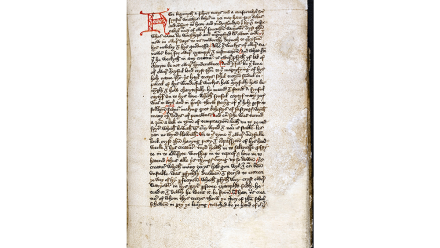
Sir Thomas Malory is not much of a knight. He lies; he is lecherous; he is bested in tourneys; he misses battles due to a dicky stomach; he inadvertently causes the deaths of his friends. He is no Sir Lancelot. But he has his talents, chief among them being his ability to spin a yarn, and he has won much renown for his retelling of the legend of King Arthur and his Round Table, later to be published as Le Morte d’Arthur. Now he has the chance to set his own story straight. Well, straight-ish. A Good Deliverance is a sly and salty fictional account of the life and deeds of Malory, whose real-life record is shrouded in mystery. The story begins in 1468 with the elderly man’s arrest and imprisonment in Newgate Prison. No charges are forthcoming.

One damned thing after another: Britain’s crisis-ridden century so far

More from Books

Asked about the greatest challenges he faced as prime minister, Harold Macmillan is said to have replied: ‘Events, dear boy, events.’ The first quarter of this century has seen no shortage of events that have blown prime ministers off course. There was Tony Blair by 9/11 and the resulting war in Iraq; Gordon Brown by the financial crisis of 2007-8; David Cameron and Theresa May by Brexit; and Boris Johnson by Covid. With the exception of May, none of these people had any inkling, on taking office, of the bolts from the blue that would ultimately define their premierships.

AI is both liberating and enslaving us

More from Books

Elaine Herzberg was pushing a bicycle laden with shopping across a busy road in Tempe, Arizona in 2018 when she was struck by a hybrid electric Volvo SUV at 40mph. At the time of the accident, the woman in the driver’s seat was watching a talent show on her phone. The SUV had been fitted with an autonomous driving system consisting of neural networks that integrated image recognisers. The reason Herzberg died was because what she was doing did not compute. The autonomous driving system recalibrated the car’s trajectory to avoid the bicycle, which it took to be travelling along the road, only to collide with Herzberg, who was walking across it. She became the first casualty of artificial intelligence.

Cold War spying had much in common with the colonial era

More from Books

The CIA, this fascinating new history notes, is ‘possibly the most infamous organisation on the planet’. Its hidden hand is often presumed to be everywhere, pulling the strings. That’s pretty impressive, given that it only has, by most estimates, around 20,000 employees. (The exact number is, naturally, classified.) At the same time, it’s routinely portrayed as comically inept – a bunch of ‘clowns’ and ‘a refuge for Ivy League intellectuals’, as Richard Nixon put it. This has led to a dichotomy in CIA histories. On the one hand it is depicted as an all-powerful evil force, responsible for many of the world’s ills since its foundation in 1947.

Shalom Auslander vents his disgust – on his ‘grotesque, vile, foul, ignominious self’

Lead book review

The word is Yiddish, and is an expression of disgust. A decent translation of it into vernacular English would be ‘yuck’. Shalom Auslander has been feeling feh about himself for pretty much as long as he has been conscious. Born into a strictly religious family, with a mother given to quoting Jeremaiah and a father whose violence and cruelty were almost literally biblical, or at least strongly evocative of the Old Testament, Auslander grew up to be the kind of Jew who, when visiting the Wailing Wall in Jerusalem, writes ‘fuck you’ on a piece of paper and shoves it in a crack. It is more traditional for the pious to write a prayer. But that is Auslander’s prayer.

If only Britain knew how it was viewed abroad

More from Books

A London-based foreign correspondent is probably not the target audience of Michael Peel’s latest book. Indeed, what Peel (himself a former Financial Times correspondent in Lagos, Abu Dhabi, Bangkok and Brussels) discusses in eight lively, well-researched chapters won’t come as a surprise to any of his UK-based foreign colleagues: how Britain is perceived abroad; and how little it seems to permeate the national consciousness. This blindness – or the British inability to realise how they appear to others, as opposed to the image they have of themselves – often has foreign correspondents pulling their hair in disbelief. If only Britain knew how it was seen! One senses that Peel’s return to London from Tokyo after 13 years of foreign postings must have felt like a crash landing.

An insight into the American Dream: Table for Two, by Amor Towles, reviewed

More from Books

Amor Towles was a Wall Street banker before he published his first novel, Rules of Civility, in 2011, at the age of 46. Since then, his books have sold six million copies, and the second, A Gentleman in Moscow (2016), has been made into a Paramount + series starring Ewan McGregor. Towles’s success in banking and publishing has perhaps given him a particular insight into the American Dream. The six stories and one novella that make up his stylish and confident new collection, Table for Two, all feature characters in pursuit of an ambition that puts them in varying degrees of peril – protagonists tasked with missions of differing seriousness.

The pleasure of reliving foreign travel through food

More from Books

The idea of the kitchen as a space for transformation and transportation is not a new one. Many writers have explored the room’s ability to offer both domesticity and alchemy at the same time – how it allows cooks to travel vicariously through the food they make. This is the subject of Cold Kitchen, Caroline Eden’s memoir of her time spent in her kitchen in Scotland and of her travels to Eastern European and Central Asian cities – and somehow she makes it fresh and compelling. She is an author and critic who has written extensively about the food and culture of the countries of the former Soviet Union. Black Sea, in which she explored Odessa, Istanbul and Trabzon, received a clutch of prizes, and Red Sands, about Central Asia, won the prestigious André Simon food book award.

What will we do when all our jobs are done for us?

More from Books

Laughs are in short supply in the academic world unless that world is serving as the victim of satire. So full marks to the Swedish philosopher Nick Bostrom for loading Deep Utopia – his reflections on life in a ‘solved world’, perfected by technology and science – with self-mockery and slapstick. Bostrom isn’t the first to fret about the travails of extreme leisure. John Maynard Keynes feared that economic abundance would produce more disgusting aristo-like behaviour. It’s nice to see how mighty minds can be so wrong. Bostrom cites John Stuart Mill being seriously depressed by the prospect, as humanity solved its problems, of there not being enough music to keep everyone happy all day.

The roots of anti-Semitism in Europe

More from Books

The medieval trope that Jews are inherently bloodthirsty has echoed down the ages. Forms of the blood libel have been disseminated ever since the myth emerged in England in the 12th century with claims that Christian children were being ritually murdered by Jews in re-enactments of the crucifixion of Jesus. In the aftermath of 7 October, Labour’s Rochdale by-election candidate Azhar Ali accused Israel of lowering its defences so that it could justify the shedding of innocent Palestinian blood. Gigi Hadid, the American model, shared a video which alleged that Israel is harvesting the organs of Palestinians.

Distrust and resentment have plagued Anglo-Russian relations for centuries

More from Books

Has a book ever been more bizarrely mis-titled than this one? The First Cold War: Anglo-Russian Relations in the 19th Century has nothing whatever to do with the actual Cold War, nor is it for the most part concerned with the 19th century. Rather, Barbara Emerson has written a thorough and often diverting diplomatic history of Anglo-Russian relations from the 16th to the early 20th century. This period encompasses at least 14 wars in which British and Russian troops found themselves embroiled, sometimes on the same side, sometimes on opposite sides. None of these wars was remotely ‘cold’. Nor does Emerson attempt to make any argument that the shifting great power politics of the 19th century resembled those of the post-second-world-war nuclear age.

Citizens of nowhere: This Strange Eventful History, by Claire Messud, reviewed

More from Books

Any personal history is hard to fictionalise, not least because the story needs to be both universal and unique. Claire Messud manages to find the right balance in her latest novel, reconstructing her family’s past in vivid episodes that open a multitude of windows on to the world. Continents and decades chase one another as the narrative traces the movements of the Cassar family. Hailing from Algeria, for much of the book they are citizens of nowhere. Their tribulations begin in 1940, when Lucienne and her children, François and Denise, flee Greece (where their father, Gaston, has been posted as the French naval attaché) to wait out the war in the relative safety of an Algerian hinterland.

Paris is perhaps the greatest character in Balzac’s Human Comedy

Lead book review

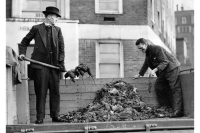
Open one of the major novels by Honoré de Balzac and you are likely to encounter a sentence such as this, from Cousin Bette: ‘Towards the middle of July, in the year 1838, one of those vehicles called milords, then appearing in the Paris squares for the first time, was driving along the rue de l’Université.’ Or this (from César Birroteau): ‘On winter nights there is no more than a momentary lull in the noise of the rue Saint-Honoré.’ It is the same story in Père Goriot (rue Neuve-Sainte-Geneviève), Cousin Pons (Boulevard des Italiens) and others. From the first words of the tale, the reader is cast into the drama of the street. One of the first things to beware of is the mud.

The good old ways: nature’s best chance of recovery

More from Books

Britain is one of the most nature-depleted places on Earth. The consequences for human wellbeing and resilience, as well as for non-human life, are grave. Conservationists and others say it doesn’t have to be this way. But when it comes to recovery, what should we aim for? How much can we know about what was once present? How much is it practicable or sensible to restore? What does recovery, let alone ‘rewilding’, really mean in a rapidly heating world? Sophie Yeo does not have the answers to all of these questions. Nobody does. What she does offer in Nature’s Ghosts are insights that could help shape a better informed and more constructive debate.

Disgusted of academia: a university lecturer bewails his lot

More from Books

There’s a beautiful moment in I Am the Secret Footballer (2012), a Guardian column turned whistle-blower memoir, when the anonymous author is momentarily freed from an enveloping depression caused by his career as a professional sportsman. He’s at Anfield to play against Liverpool in one of the biggest games of the season when he picks up a pristine, unused football before a warm-up drill and, inexplicably, sniffs it. With that inhalation he’s transported from the corruption, pressure, scandalous abuse and monstrous egos of elite sport and for a few seconds becomes a kid uncontainably excited at the prospect of kicking a new ball around his council estate.

Kapows and wisecracks: Fight Me, by Austin Grossman, reviewed

More from Books

Superheroes are the trump card of genres. As a rule of thumb, if a novel has a murder, it’s ‘Crime’; if it has a murder on a space station, it’s ‘Science Fiction’; and if it has a murder on a haunted space station, it’s ‘Horror’. But a novel with crimes, robots, faeries, cavemen, magic, cyborgs and time travel can only be ‘Superhero’. It is rarely successful outside the graphic variety, possibly because such strenuous suspension of disbelief is best managed in comics. Yet it can be done. Michael Chabon’s The Amazing Adventures of Kavalier and Klay is one, while Lavie Tidhar’s Our Violent Century and Nick Harkaway’s Titanium Noir are both clever and witty. Perhaps the most recognisable success was Austin Grossman’s smart 2007 Soon I Will Be Invincible.