Chris Mullin

‘Evil visited that day and we don’t know why’ – Dunblane 30 years on

From our UK edition

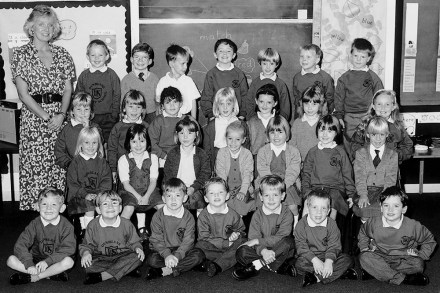
Shortly after 9.30 a.m. on 13 March 1996, a man walked into the gymnasium at Dunblane Primary School, near Stirling, Scotland. He was armed with two 9mm Browning self-loading pistols, two .357 Smith & Wesson revolvers and 743 rounds of ammunition. Within three or four minutes, he’d fired 105 rounds, resulting in the deaths of a teacher, Gwen Mayor, and 16 children. A further three teaching staff and 14 children were injured. He then took his own life. It could have been a great deal worse.  There was a suspicion that he intended to kill most of the school’s 600 pupils but that he’d arrived a few minutes late for assembly, by which time most of the children had dispersed to their classrooms.

Is Keir Starmer really Morgan McSweeney’s puppet?

From our UK edition

Every government has its éminence grise.  The quiet, ruthless man (or occasional woman) operates in the shadows, only to be eventually outed when the boys and girls in the backroom fall out among themselves or when someone pens a memoir. Think Peter Mandelson, Nick Timothy, Fiona Hill and Dominic Cummings. The authors of Get In, both lobby journalists, have produced a detailed insider account of the rise of Keir Starmer, as seen through the eyes of those inhabitants of the political underworld whose names rarely surface in the public prints. In this case, the focus is on one alleged strategic genius, a man in his late forties with the memorable name of Morgan McSweeney, referred to throughout by the somewhat sinister moniker of ‘the Irishman’.

Six politicians who shaped modern Britain

From our UK edition

‘All political careers end in failure,’ said Enoch Powell. Maybe. But just occasionally our imperfect political system throws up someone whose impact on our way of life, for good or ill, outlives them. In a series of elegant essays, Vernon Bogdanor, professor of government at King’s College London, examines the careers of six politicians – three from left of centre, three from the right – who, in his view, changed the political weather of modern Britain. Only one, Nigel Farage, is still alive.  First up is Aneurin Bevan, the left-wing firebrand who, in the teeth of fierce opposition from the mighty, vested-interested British Medical Association, presided over the creation of the National Health Service.

One damned thing after another: Britain’s crisis-ridden century so far

From our UK edition

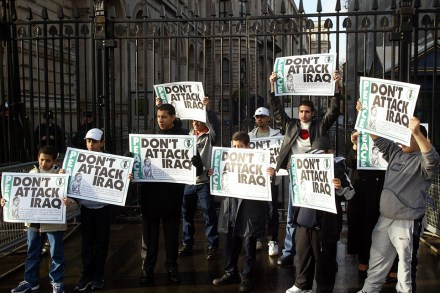
Asked about the greatest challenges he faced as prime minister, Harold Macmillan is said to have replied: ‘Events, dear boy, events.’ The first quarter of this century has seen no shortage of events that have blown prime ministers off course. There was Tony Blair by 9/11 and the resulting war in Iraq; Gordon Brown by the financial crisis of 2007-8; David Cameron and Theresa May by Brexit; and Boris Johnson by Covid. With the exception of May, none of these people had any inkling, on taking office, of the bolts from the blue that would ultimately define their premierships.

The travails of Britain’s first Labour government

From our UK edition

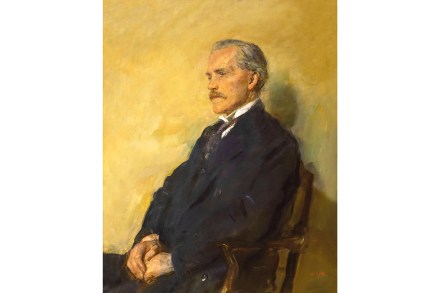
Once the working classes were allowed to vote it was inevitable that sooner or later they would elect a government which reflected their interests. That moment came with the appointment, in January 1924, of the first Labour government.    The circumstances could hardly have been less auspicious. There had been three general elections in as many years. No party had an overall majority. Labour, with 191 seats, was not even the largest, with the result that, throughout its short life, the government was entirely dependent on the goodwill of the Liberals, which soon ran out. With a couple of junior exceptions during the wartime coalition, no Labour MP had any experience of government.

Rory Stewart is a fish out of water

From our UK edition

Rory Stewart is one of that almost extinct species in the modern Conservative party, a one-nation Tory. He is also – or was (until Boris Johnson kicked him out) – a politician with hinterland. He had been places and done things before getting himself elected in his late thirties, entering parliament in 2010. Disillusion rapidly set in: Too much of our time was absorbed in gossip about the promotion of one colleague or the scandal engulfing another. Even four weeks in, I sensed more impotence, suspicion, envy, resentment, claustrophobia and schadenfreude than I had seen in any other profession. It is made clear to him from the outset that rebellion was fatal to ambition.

British politics has become a nasty game of Gotcha

From our UK edition

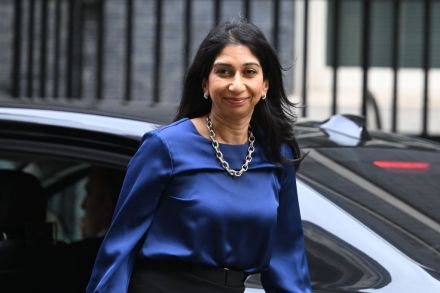
As Tony Blair once remarked, British politics has become a game of Gotcha. I am, to put it mildly, no fan of Suella Braverman, but for the life of me I cannot get excited about this latest piece of nonsense to do with her speeding ticket. It is certainly no resigning matter. When I have made this point, I have generally received a favourable response. But there are some dissenters. One response was that, ‘We’re talking about Braverman, Chris. How do we get rid of her?’ To which there is an obvious riposte: ‘At a general election, perhaps?’ We live in the age of the feeding frenzy. Originally a tabloid phenomenon it has long since infected mainstream journalism.

The secret of the Tories’ long domination of British politics

From our UK edition

No other country, wrote Karl Marx in 1854, was so ripe for revolution as Britain. How wrong can you be? Despite two world wars, innumerable booms and busts, not to mention the extension of the franchise to the lower orders, 170-odd years later Britain’s ruling class are (or were until recently) almost as firmly in the saddle as they have ever been. Their influence, not to say control, over the commanding heights remains almost as absolute as ever. The facts are stark. Not for nothing is the Conservative party widely regarded as the most formidable electoral machine in Europe. It has been in power for roughly two thirds of its 200-year history. Of its 19 leaders, only four have failed to win at least one election (and three of those were up against Tony Blair).

We let Hong Kong down: Chris Patten on the end of colonial rule

From our UK edition

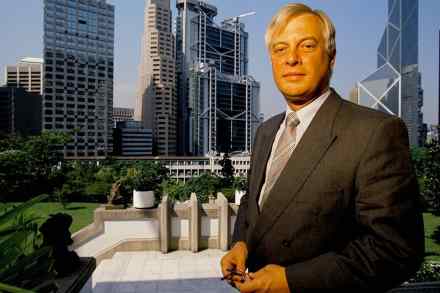
After 13 years in parliament, rising star Chris Patten had the bad luck to be one of the few Tory MPs to lose his seat in 1992. Had he been re-elected he would probably have become chancellor of the exchequer. Instead, he found himself in the wilderness. But not for long. Within months he had been appointed governor of Hong Kong, tasked with the tricky business of presiding over the transfer of the territory to communist China. It was a lucky break. Had he been chancellor, the odds are that his political career would have come to a sticky end the following September, when the pound fell out of the Exchange Rate Mechanism. Instead, it was Norman Lamont who drew the short straw. By the time Patten arrived in Hong Kong the clock was ticking.

Andrew Mitchell relives the agony of Plebgate

From our UK edition

Andrew Mitchell, as he readily admits, was born into the British Establishment. Almost from birth, his path was marked out: prep school, public school, Cambridge, the City, parliament, the Cabinet. At every step along the way he acquired the connections that would propel him to the stratosphere. But for one extraordinary event, who knows where he might have ended up? Certainly in one of the top jobs. In other circumstances this might have been a conventional story. Posh boy goes into the City, makes loads of money and then takes time out to come and govern us. In fact this is an unusual memoir — honest, self-deprecating and rich in anecdote. A fundamental streak of decency runs throughout.

Chips Channon’s judgment was abysmal, but the diaries are a great work of literature

From our UK edition

It is often said that the best political diaries are written by those who dwell in the foothills of power. Henry Channon’s political career peaked at parliamentary private secretary to the deputy foreign secretary Rab Butler, so he was well-placed to document, and sometimes actively to participate in, the intrigues of those who inhabited the Olympian heights. Channon’s other great advantage was that he entertained — on an awesome scale. Scarcely an evening passed when he was not either hosting or attending a party in one of the capital’s grand salons: ‘All London,’ as he put it — by which he meant the great and the fashionable — flowed through his drawing room.

One of the lucky ones: Hella Pick escapes Nazi Germany

From our UK edition

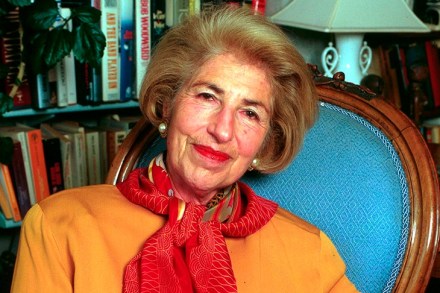
Hella Pick is one of that vanishing generation of Jewish refugees who arrived in Britain on the eve of the second world war, courtesy of the Kindertransport. An only child of separated parents, born and brought up in Vienna, she was luckier than most: her mother got out soon afterwards. Her grandmother, who remained, died in Theresienstadt. Early life in the UK was not easy for refugees from Nazism. Visas were only granted to those who had an offer of work, and just about the only work permitted to them was domestic service, which must have been particularly galling for people like Hella’s mother who had once been prosperous. Young Hella was relatively fortunate.

Blonde with a bombshell: Sasha Swire’s revelations about the Cameroons

From our UK edition

Ten years ago, reviewing Alastair Campbell’s diaries for The Spectator, I concluded as follows: Who will be the chroniclers of the Cameron government? Somewhere, unknown to his or her colleagues, a secret scribbler will already be at work, documenting the rise and, in due course, no doubt, the fall of this administration. Well, here it is. It comes from an unpredictable source deep inside that privileged little caste who governed us between 2010 and 2016: Sasha Swire, wife of Hugo, a middle-ranking minister MP for a safe seat in rural Devon and a man who, for all that he was a low-key figure, has a very sharp wit and is fabulously well-connected (he once even walked out with Jerry Hall).

The great ministerial merry-go-round

From our UK edition

‘Annual reshuffles are crazy,’ remarked one of the prime minister’s most trusted advisers in July 1999 as I hovered outside the cabinet room, waiting to be anointed as the lowest form of ministerial life in John Prescott’s vast department — environment, transport and the regions. He went on: There is massive in-built insecurity. Ministers, who may not be there in a year, are on top of a civil service which is permanent and who have nothing more to worry about than who gets what gong. The chances of moving anything more than 0.1 per cent are slim. Crazy as reshuffles may be, most prime ministers are addicted to them. On New Labour’s watch, John Reid held nine different ministerial posts in ten years.

That’ll be the day

From our UK edition

We’ve had Alan Johnson the lad from the slums of north Kensington, Alan Johnson the postman and Alan Johnson Member of Parliament and cabinet minister. Now comes the sequel: Alan Johnson the rock and roll years. Actually, it’s not quite a sequel since it covers much of the same territory as two of the previous volumes, albeit from a slightly different angle. Although Johnson went on to hold five cabinet posts, politics was never part of Johnson’s life plan. All he ever wanted to be was a rock star and, who knows, it was an ambition he might have realised but for the fact that his musical instruments kept being stolen. As recounted in This Boy, his wonderful and hugely successful first volume of memoirs, Johnson’s start in life was, to put it mildly, unpromising.

Team spirit and terrorism

From our UK edition

Alastair Campbell is a man of many parts.   Journalist, spin doctor extraordinaire, diarist and now novelist. For this, his third novel, he has teamed up with the former professional footballer Paul Fletcher to produce a very readable thriller. The division of labour seems to be that Campbell has done most of the writing while Fletcher has supplied behind-the-scenes colour. The late Martin McGuinness is among those credited with having advised. It is set in February 1974, around the general election that brought Harold Wilson back to power and also the year when the IRA’s mainland bombing campaign reached its height.

Feeding the frenzy

From our UK edition

Tony Blair once remarked, during one of the periodic feeding frenzies that engulf British politics, that public life was becoming a game of ‘gotcha’. These days feeding frenzies, like Atlantic hurricanes, seem to strike with increasing frequency. No week passes without someone, somewhere calling for this or that minister to quit. When a minister does resign the focus quickly switches to whomever is next in line. No sooner has the defence secretary gone than Damian Green enters the frame, until Priti Patel obligingly puts her head on the block, only to be followed by Boris Johnson, and so on. Now, three weeks on, Damian Green is again back in the spotlight. At the time of writing his prospects do not look good.

The Brexit referendum joins Iraq and Suez on my list of political disasters

From our UK edition

To the Business School at the University of Edinburgh to be interviewed on the theme of ‘Great Political Disasters’. Main criteria for inclusion: decisions, often taken for short-term reasons, whose unforeseen consequences have echoed down the ages. Everyone will have their own little list, but mine included the Balfour declaration, Partition, Suez, Wilson’s failure to devalue in 1964 (which haunted subsequent Labour governments), Denis Healey’s IMF loan in 1976 (which he later admitted had been unnecessary and which led to the Winter of Discontent and the election of Margaret Thatcher), the poll tax, Iraq and the Brexit referendum (yes, I realise that the jury is still out on that last one).

Diary – 17 August 2017

From our UK edition

To the Business School at the University of Edinburgh to be interviewed on the theme of ‘Great Political Disasters’. Main criteria for inclusion: decisions, often taken for short-term reasons, whose unforeseen consequences have echoed down the ages. Everyone will have their own little list, but mine included the Balfour declaration, Partition, Suez, Wilson’s failure to devalue in 1964 (which haunted subsequent Labour governments), Denis Healey’s IMF loan in 1976 (which he later admitted had been unnecessary and which led to the Winter of Discontent and the election of Margaret Thatcher), the poll tax, Iraq and the Brexit referendum (yes, I realise that the jury is still out on that last one).

Corbyn for PM? | 3 June 2017

From our UK edition

‘The news that Harry Perkins was to become prime minister went down very badly in the Athenaeum.’ Thus begins my novel A Very British Coup, written 35 years ago and, with the narrowing gap in the opinion polls, suddenly topical again. Since Jeremy Corbyn became Labour leader it has been reprinted twice and, earlier this year, an e-book promotion sold 2,500 copies in a single day. The hero of my novel, Harry Perkins, is a former Sheffield steel worker who was brought to life in a subsequent TV adaptation by that wonderful actor Ray McAnally.