Oliver Rackham

Warning: the beautiful trees in this book may very soon be extinct

From our UK edition

John Evelyn (1620–1706) was not only a diarist. He was one of the most learned men of his time: traveller, politician, town-planner, artist, numismatist, gardener and opponent of air pollution. He was a founder of the Royal Society and gave one of its first presentations, which was expanded into Sylva, or a Discourse of Forest-Trees and the Propagation of Timber. The 350th anniversary of this famous book is commemorated by the present large and grand volume. Sylva was not only about forest trees and timber trees: it included other trees like the then new horsechestnut, it pointed out remarkable individual trees, and had an appendix, Pomona . . . concerning fruit-trees in relation to cider.
The Man Who Plants Trees, by Jim Robbins – review

From our UK edition

Remember the ‘Plant a Tree in ’73’ campaign? Forty years on, has anyone inquired into what happened to all those trees and how many are still alive? Since then, planting amenity trees has grown into an industry, and turns out to have its down sides. One is that little trees are imported in industrial quantities from other countries, as if they were cars or tins of paint, and inevitably bring with them foreign pests and diseases which destroy established trees. Globalisation of tree diseases has overtaken climate change and too many deer to become the number one threat to the world’s trees and forests. This book, by a scientific journalist, is a miscellany of what people, especially Americans, think about trees and the virtues that they ascribe to them.

The Tradescants’ Orchard, by Barry Juniper – review

From our UK edition

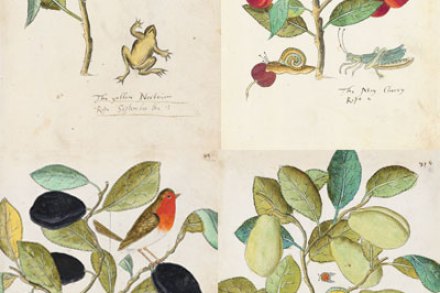
Elias Ashmole, fortune-hunter, scholar and collector, bequeathed his coins, curiosities and books in 1692 to form the nucleus of the Ashmolean Museum in Oxford. The books were later taken over by the Bodleian Library. One of them is called The Tradescants’ Orchard, from a tenuous association with John Tradescant I, Keeper of Gardens, Vines and Silkworms to King Charles I, and his nurseryman son John II. It is edited by the historian of the world’s apples and his Oxford colleague in art history.

Of knowledge, life, good and evil

From our UK edition

The British Museum contains more about trees than one might expect: trees in paintings, drawings, sculpture, and all kinds of small artefacts of wood and bark. Frances Carey, sometime Deputy Keeper of Prints and Drawings, discusses trees as viewed through the collections. She deals not with trees themselves — for that one goes to the Natural History Museum and Kew Gardens — but with trees as interpreted (or misinterpreted) by botanical illustrators, divines, etchers, literary writers, medallists, metaphorists, mythologists, painters, poets, politicians and sculptors, on a worldwide scale going back to the Neolithic if not beyond. Discussions of people’s varied reactions to trees are followed by an ‘Arboretum’: 24 chapters each dealing with one genus of tree.

Leaves on the line

From our UK edition

What is happening to trees in Britain? Horse chestnuts now turn brown in July. A microscopic caterpillar eats out the green insides of the leaves; only the outer skins remain. Horse chestnuts also weep dried blood from their bark, and sometimes the huge trees spectacularly die. Alders have been weeping bloody tears and dying. Newspapers warn of sudden oak death and acute oak decline. The Forestry Commission has stopped planting Corsican pine because of red-band needle blight. The problem is globalisation of pests and diseases. Diseases which for millions of years evolved to come to terms with their local hosts are introduced to other countries and find new host trees that have not adapted to living with them. The horse chestnut itself symbolises globalisation.

Seeing the wood from the trees

From our UK edition

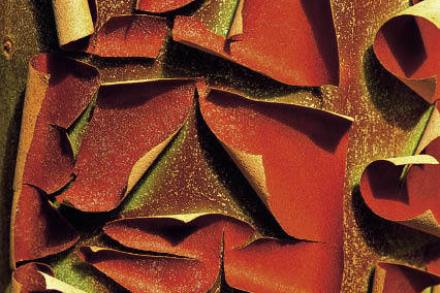
This book is a work of art by an artistic photographer. It deals mainly with a large minority of the world’s trees whose bark, as the trunk expands, peels off in pretty patterns: snake-bark maples, arbutuses and the like, as well as the familiar London plane. The author has travelled all over the world to photograph these wondrous barks. He also includes some trees whose bark stretches, like white poplar, as well as palms whose trunks are covered in leaf-bases rather than bark, bamboos which are really giant grasses, banana-plants which are not trees, and tree-ferns. He even has one example of that mysterious hard layer that does the duty of bark on the insides of hollow trees. In the real world there is much more to bark than this.

Animals without Backbones

From our UK edition

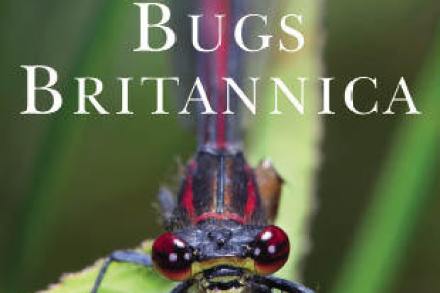
What is a Bug? For this book, any animal that is not a Beast: the whole invertebrate realm, from the humble amoeba, through insects (more than half the book), to octopuses and sea-squirts (the distant forbears of you and me, lords and ladies of creation). Its scope, as with Flora Britannica and Birds Britiannica, is the parts that Bugs play in the human story: what they do to humannity with stings and jaws and injected saliva, what humanity does to them in the field and kitchen, their names (especially Gaelic), their roles in folklore, literature, art, music, films and photography. It is a book to enjoy at random, not to read from cover to cover. There have been many books in this field.

Long live the weeds and the wilderness

From our UK edition

The Wild Places by Robert Macfarlane Robert Macfarlane is a Cambridge don, Fellow in English at Emmanuel College, with an artistic eye for wild and lonely places. He was a friend and follower of Roger Deakin, whose last book I reveiwed three weeks ago. Deakin swam in strange waters; Macfarlane sleeps — or spends the night — in unlikely places, such as tentless on the top of Ben Hope, northernmost high mountain in Britain, in a northerly hailstorm in winter. Both of them attempt the heroic task of conveying the genius loci of wild landscapes in words, with little help from pictures or maps.

Child of the New Forest

From our UK edition

Roger Deakin was a swimmer, old-fashioned socialist, carpenter, broadcaster, tree-planter, chair-bodger, ‘quasi-hippie’, art critic, naturalist, Cambridge graduate, traveller, north-east Suffolk man, champion of local individuality, anti-globaliser and explorer of the links between nature and culture. (Guess how many of these attributes he shared with this reviewer.) He founded Common Ground, the organisation that gave the only sensible advice — do nothing — about what to do after the Great Storm 20 years ago. He died last year leaving this, his last work. It is not a book about wildwood, in the proper sense of woodland in the dim and distant past before the coming of settled humanity. Much of it is not even a book about trees.

All roots and branches

From our UK edition

This book covers all the trees that now live or have ever lived: what they are, how they function, how they grow, their relation to environment, plants, animals, and the human species. It is full of curious information, traditional and recent: there are fascinating new developments in long-familiar stories, such as the part played by parasitic worms in the symbiosis between figs and fig-wasps. The author is a distinguished journalist and scientist. His book is a brave attempt to boil down a huge amount of detail for the general reader. I am reminded of Rachel Carson’s The Sea Around Us, which inspired my youth. However, like all tree writers, he seems unable to avoid errors and exaggerations (‘the tree must compete through every second [of its life]’).

Trees with personality

From our UK edition

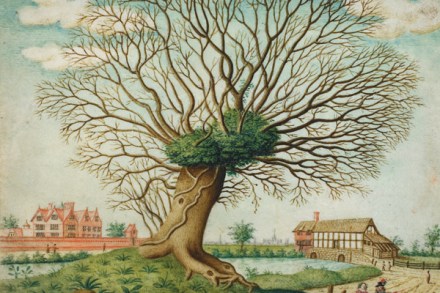
The English have loved ancient trees for centuries, have celebrated them in story and poetry, have given them names, sung songs and danced dances in their honour, have invested them with railings, plaques and chains. Artists and photographers have tried to portray special trees, along with special horses, people and pigs: notably Strutt in 1822 with his Sylva Britannica, or portraits of Forest Trees distinguished for their Antiquity, or Menzies in 1864 with early photographs of the remarkable trees of Windsor Great Park. Today most professional photographers are ill at ease with trees of character.