Culture

Culture

The good, the bad and the ugly in books, exhibitions, cinema, TV, dance, music, podcasts and theatre.

Strictly Ann, by Ann Widdecombe – review

More from Books

An oddball. And proud to be one. Ann Widdecombe has sailed through life with the same brisk, no-nonsense style that she brings to this highly readable memoir. She attended a school where God was taught ‘as a fact not a belief’. Her parents encouraged her to choose friends on the basis of ‘fun and kindness’ and nothing else. When she entered parliament in 1987 she suspected that her personal eccentricities would disbar her from high office while guaranteeing the loyal affection of the country at large. She embraced this fate cheerfully. Her ‘Doris Karloff’ tag was originated by the Labour MP Paul Flynn and she instantly adopted it as a personal signature.

Mrs Bridge and Mr Bridge, by Evan S. Connell – review

More from Books

A policeman encountering Mrs Bridge on the home furnishings floor of a Kansas City department store recognises her at once for what she is: ‘a bona-fide country-club matron’. Had she been asked to identify herself, Mrs Bridge would have said the same, after asserting unequivocally that she was first and foremost the wife of Mr Walter Bridge, successful Kansas City lawyer, as entirely constrained by her status as professional spouse as Chaucer’s Wife of Bath or Jan Struther’s Mrs Miniver. Like Mrs Miniver, Mrs Bridge inhabits an interwar world shaped by a promise of certainties — domestic, social, cultural and sexual — which are never wholly realised and remain frustratingly elusive.

The Spark, by Kristine Barnett – review

More from Books

Jacob Barnett is a youthful prodigy. His IQ tested off the scale. At nine he began work on an original theory in astrophysics; aged 12 he became a paid academic researcher. He can play complicated musical pieces or learn foreign languages almost instantly and without tuition. As one researcher puts it, ‘Jake’s working memory is a piece of paper the size of a football field.’ Jacob’s mother, Kristine, comes from an Amish family — ‘not horse-and-buggy Amish, but city Amish’; her faith has directed her along the path she has taken with her extraordinary son. (It would be interesting to know the religious views of the young quantum physicist, but we’re not told.

Alexandria, by Peter Stothard – review

More from Books

This subtle, mournful book is many things. It is a diary of three weeks spent, during the tense winter before the outburst of the Arab Spring, in off-season Alexandria, where nothing comes ‘except birds to the lake, most of them when they have lost their way’. It is also a series of fragments rescued from Peter Stothard’s rich life as Essex schoolboy, Oxford student, Times editor and lifelong classicist. Another part, but only a small one, is a history of Cleopatra — and the story of Stothard’s seven previous, failed attempts to write about her. Classical scholars, however, will recognise this book for what it really is.

To Move the World, by Jeffrey Sachs – review

More from Books

Jeffrey Sachs is the world’s best-connected development economist. An academic with highly developed communication skills, he has always managed to secure access to policy makers and to offer them advice. His record is controversial. Back in the 1990s he worked on Russia’s transition from a command to a capitalist economy. He advocated the approach that Yeltsin adopted — shock therapy. The result was pensioners on the streets selling off furniture, jewellery and even their clothes to raise cash for food. Whilst there were many other factors at play, it now seems obvious that China’s transition to capitalism was better handled. China didn’t take Sachs’s advice.

The Man Who Plants Trees, by Jim Robbins – review

More from Books

Remember the ‘Plant a Tree in ’73’ campaign? Forty years on, has anyone inquired into what happened to all those trees and how many are still alive? Since then, planting amenity trees has grown into an industry, and turns out to have its down sides. One is that little trees are imported in industrial quantities from other countries, as if they were cars or tins of paint, and inevitably bring with them foreign pests and diseases which destroy established trees. Globalisation of tree diseases has overtaken climate change and too many deer to become the number one threat to the world’s trees and forests. This book, by a scientific journalist, is a miscellany of what people, especially Americans, think about trees and the virtues that they ascribe to them.

Crime fiction – review

More from Books

‘We no longer believe in God but hope nevertheless for miracles,’ remarks Frederic Mordaunt, one of the characters of John Harwood’s third novel, The Asylum (Cape, £14.99). He’s being over-optimistic, as Georgina Ferrers, the niece of a London bookseller, soon discovers when she wakes in a strange bed to be told that her name is in fact Lucy Ashton and that the year is 1882.  It appears that she has admitted herself as a voluntary patient at Tregannon House, a Cornish mental asylum run by the charismatic Dr Straker. Tregannon, the ancestral home of the Mordaunt family, is tainted with madness; and the young heir, Frederic, assists Dr Straker in his selfless philanthropic work.

How do you define a ‘northerner’?

Lead book review

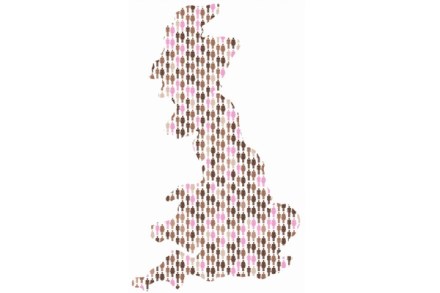
Obviously, now that every high street in England looks identical, and everyone under 30 uses exactly the same Australian rising inflection in speech, books of this sort are based on a false and wishful premise. But let us enter into Paul Morley’s game and ask the question he has asked again. What is ‘the north’ — or ‘the North’ — anyway? Obviously, as a geographical entity, we know (roughly) what we are talking about; we can argue about Derbyshire, but between Yorkshire and Scotland no one is going to dispute what the north is. Culturally, we may think we know what we are talking about, but all attempts to pin this down founder on the rocks of narrowness and outdated stereotype.

AM Homes’ May We Be Forgiven wins the Women’s Fiction Prize

AM Homes’ May We Be Forgiven has won the Women’s Fiction Prize, beating a strong field that included Hilary Mantel, Zadie Smith, Barbara Kingsolver and Kate Atkinson. Homes, who is an American writer, is something of an unknown in this country (certainly compared to Smith and Mantel). On receiving the prize, she said, 'it's my nature to think about big ideas and my gender shouldn't prevent me from doing that.' Her work concerns modern America. Sleepy academic types are disturbed. The normal vanishes. Homes has been compared to Jonathan Franzen, among others. Click here to find out if the comparison is an insult to Homes, an insult to Franzen, or simply a fair observation.

Death of a tyrant

For a king very conscious of his own power, who gloried in his status and commissioned famous artists to depict that status, Henry VIII’s death, in January 1547, was tawdry and pathetic, yet shrouded in squalid mystery. According to the accepted story, after being weak and ailing for some time, the king died in the early hours of Friday morning, 28 January 1547. However, the official proclamation of the king’s death was not made until the afternoon of Monday, 31 January. Henry apparently had great affection for Katherine Parr and adored his only son, Edward. Consequently, it is intriguing that as Henry slipped towards death, neither Katherine, Edward nor Henry’s two daughters, Mary and Elizabeth, were allowed any access to him whatsoever.

Boris Johnson to write book about Sir Winston Churchill

Boris is to write a book about Winston Churchill. As Boris puts it in a cantering press release: ‘The point of the ‘‘Churchill Factor’’ is that one man can make all the difference.’ The point of the ‘Boris Factor’ is that only one man has the spunk to invite comparison between himself and Churchill. David Cameron is, evidently, self-assured; but he would not take such a risk. Confidence is Boris’ gift; over-confidence his enemy. BoJo and Sir Winston are, to an extent, kindred spirits: witty and determined, and chancers both.

Countering Terrorism in Britain and France, by Frank Foley – review

Have you ever wondered why we’re stuck with the radical cleric Abu Qatada? It’s a question the last four Home Secretaries will have asked as they battled, and failed, to deport him. Now Theresa May is learning just how stubborn the old curmudgeon can be. Indeed, the whole issue of deporting terror suspects is a difficult one. In the nine years that followed the 9/11 attacks, France deported 129 individuals considered to be threats to national security, while we removed just nine. The intransigence of British judges is not new. Long before the ‘War on Terror’ brought matters of international security to public attention, the French had been pursuing Rachid Ramda, an Algerian wanted for masterminding the 1995 Paris Metro bombings, through British courts.

Discovering poetry: John Donne, from deviant to Dean of St. Paul’s

Holy Sonnet 7, John Donne At the round earth’s imagined corners, blow Your trumpets, angels, and arise, arise From death, you numberless infinities Of souls, and to your scattered bodies go – All whom the flood did, and fire shall, overthrow, All whom war, dearth, age, agues, tyrannies, Despair, law, chance, hath slain, and you whose eyes Shall behold God, and never taste death’s woe.     But let them sleep, Lord, and me mourn a space For, if above all these my sins abound, ‘Tis late to ask abundance of thy grace When we are there. Here, on this lowly ground, Teach me how to repent; for that’s as good As if thou hadst sealed my pardon with thy blood.

Sheila Heti: ‘I did worry putting sex in the book would eclipse everything else’

There is a question which writers (and readers) of literary fiction get tired of hearing: which bits really happened? The traditional and respectable answer is that this doesn’t matter. Everything in the book will have been transformed by art, and isn’t something that comes straight from an author’s imagination more autobiographical, more telling, than things that might have happened to them, anyway? But these serious maxims don’t always quell your desire for real-life incident or gossip. Sheila Heti’s How Should A Person Be, subtitled ‘A novel from life,’ had me googling paintings by Margaux Williamson: Heti’s best friend in real life and a character in her book. How Should A Person Be?

Amateur fantasies and professional realities

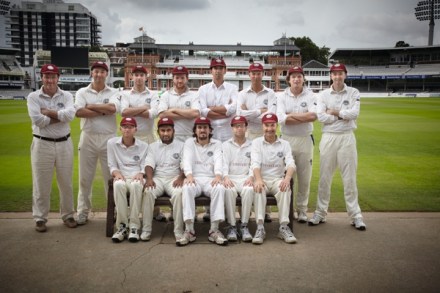
As was to be expected, it rained. Drizzle was in the air at times yesterday when the Authors XI turned out to mark 150 years of The Wisden Cricketers’ Almanack (the latest edition of which the Spectator reviewed here). Sebastian Faulks, Ed Smith and Kamila Shamsie were among the players, all of whom were dressed in Victorian garb and wore joyous grins. The Author’s XI has a book out; an account of their tour recent of England. It is a gently beguiling book, revealing something of life, the writers and, of course, cricket. It’s a perfect match. As Sebastian Faulks puts it in the foreword: ‘Amateur cricketers tend to be vain, anecdotal, passionate, knowledgeable, neurotic and given to fantasy. So do writers.

The Wit and Wisdom of Boris Johnson, edited by Harry Mount – review

More from Books

It’s just a guess, but I suspect that the mere sight of this book would make David Cameron gnash his tiny, perfect dolphin teeth until his gums began to bleed. What on earth can he do about Boris Johnson? What can any of us do? There’s something inexorable — irresistible even — about his progress,  and this slender volume of drolleries represents another small step on the increasingly well-lit path to ultimate power: what may come to be known as the ‘Boris Years,’ or even the ‘Boris Hegemony’. This book thus becomes more than merely amusing and entertaining (it’s both, needless to say); it becomes potentially significant. Future generations may ask themselves, who was this Boris Johnson exactly?

The Garden of Eros, by John Calder – review

More from Books

John Calder is Britain’s most distinguished living publisher, and at the age of 86 he’s still at it. He first set up in business in 1949 and went on to publish 18 Nobel Prize winners, as well as classics and works on music. Why doesn’t he received a knighthood? Perhaps because his distinction lies chiefly in his role as champion of the avant garde. At a time when the heights of literary achievement are said to be the kitsch historical novels of Hilary Mantel, it is salutary to be reminded of a period not long ago when literature was a vital part of the contemporary world, replete with glittering transgressive texts which explored areas previously forbidden or unknown.

Henry Cecil, by Brough Scott – review

More from Books

This is by far the best book on racing I have ever read. It combines a truly extraordinary story — one that no novelist would have dared to submit — with brilliant writing by an author who is almost as knowledgeable about horses and the turf as his subject. Sir Henry Cecil had a privileged upbringing and a not very successful academic career; by the age of 20 he still had no idea what he wanted to do with his life and it seems that it was nurture — his stepfather was a flat-race trainer— rather than nature that led him to horses. In view of his superhuman dedication to the career which chose him one must assume that he would have succeeded in anything he decided to do. His career as a trainer does indeed mark him out as a genius.

The Last Train to Zona Verde, by Paul Theroux – review

More from Books

Paul Theroux has produced some of the best travel books of the past 50 years, and some of the lamest. His latest work shrieks swansong, from its title — The Last Train — to the acknowledgement that he has reached ‘the end of this sort of travel, marinated in politics and urban wreckage’, to the closing words with which he ‘felt beckoned home’. So, if this is the last of Theroux as epic traveller, has he gone out with a bang, or another whimper? In his 2002 book, Dark Star Safari (not his best), Theroux travelled along the eastern side of the African continent from Cairo to Cape Town. This time he decided to even things out by travelling in the west, from South Africa to Namibia and Angola.

Global Crisis, by Geoffrey Parker – review

More from Books

Just before I was sent this huge tour de force of a book to review, I happened to be reading those 17th-century diary accounts by Pepys and John Evelyn which record a remarkable number of what would today be called ‘extreme weather events’. Repeatedly we see them referring to prolonged droughts, horrendous floods, summers and winters so abnormally hot or cold that their like was ‘never known in the world before’. These were the days of those London Frost Fairs, when the Thames froze so thickly that it could bear horses, coaches and streets of shops. This was the time of the Maunder Minimum, when for decades after 1645 sunspot activity was almost non-existent.

Everest, by Harriet Tuckey

More from Books

This book, as the subtitle explains, makes a bold claim: Griffith Pugh was the ‘unsung hero’ of the 1953 ascent of Everest, his achievements neglected and nearly lost to posterity. Harriet Tuckey is Pugh’s daughter, so this assertion might be little more than a kindly attempt to revive her father’s flagging reputation. Yet, Pugh was clearly no ordinary father, and Tuckey’s advocacy on his behalf is correspondingly unusual. She casts her father as a ‘uniquely talented, turbulent man,’ ‘truly great,’ ‘difficult, bad-tempered,’ ‘rather cruel’ and ‘totally selfish’.

Z, by Therese Anne Fowler, Beautiful Fools, by R. Clifton Spargo, Careless People, by Sarah Churchill – review

More from Books

The Great Gatsby is one of those great works of literature, like Pride and Prejudice, that appeals as much to the general reader as to the literary bod. It’ll always be around, if not as a movie (there have been five since its publication in 1926) then as an opera or a ballet. Last year a staged reading ran for weeks in the West End, to critical acclaim. It is a short book — a long short story really — about wealth and sex and hope and disillusion and partying. These are the themes, too, of the lives of its author and his wife Zelda. Theirs was a relationship that continues to fascinate as powerfully as any fiction, and so has produced fictions to investigate it.

Last Friends, by Jane Gardam – review

More from Books

Any writer who embarks on a trilogy is either extremely confident or taking something of a risk. The danger is that the reader will have forgotten the first two volumes and will have lost any memory of the story and the characters who now occupy the foreground of what might be a fairly mystifying account. So it is with Jane Gardam’s present novel which forms the conclusion to her foregoing Old Filth and The Man with the Wooden Hat, which featured Terence Veneering and Edward Feathers, lawyers and rivals not only in their professional lives but in most other matters, both trivial and significant. They’re not sympathetic characters, and time and distance have not improved them.

Whirligig, by Magnus Mcintyre – review

More from Books

I do not have much time for the idea of the redemptive power of the countryside. I am not alone in this. Even theologians tend to dream of the day they enter the City of God rather than 1,000 acres of nowhere. But I will buy into a modern fairytale extolling the virtues of nature and country folk when told with wit and verve. So it is with Magnus Macintyre’s novel Whirligig. This is the story of Gordon Claypole, an English businessman who finds himself among the singular natives of a Scottish island. Or rather, an almost island. Like much in the novel nothing is clear cut. Claypole is half Scottish, but a childhood holiday to Scotland brings home to him how un-Scottish he really is.

The Dark Road, by Ma Jian – review

More from Books

If you are considering adopting — that is, buying — a Chinese baby girl, recycling a television or computer, or buying a Vuiton bag, think again. Ma Jian, author of the startling Beijing Coma, prepared for this evocative and sometimes horrifying novel by travelling through Chinese regions few tourists see. There he encountered some of the millions of women who had just given birth to babies declared illegal by the one-child family laws, which were taken away and sold by corrupt officials to rich foreigners eager to adopt. He saw, too, the effects on the poor migrants who disassemble our unwanted televisions and computers and poison themselves by handling the toxic parts.

Byron’s War, by Roderick Beaton – review

Lead book review

On 16 July 1823 a round-bottomed, bluff-bowed, dull-sailing collier-built tub of 120 tons called the Hercules made its slow, log-like way out of the port of Genoa. Roderick Beaton writes: Aboard were a British peer, who happened to be one of the most famous writers of the day, a Cornish adventurer, an Italian count, a Greek count, a doctor and a secretary (both Italian), half a dozen servants of several nationalities, five horses, two dogs and a prodigious amount of money in silver coin and bills of exchange. The Hercules was not the most glamorous vessel to carry Lord Byron towards Greece and immortality, nor was the ship’s company the most bellicose to have sailed to a ‘seat of war’, but then little about Byron’s last days has ever corresponded with legend.

Chan Koon Chung – banned in China

Chan Koon Chung’s previous novel, The Fat Years, was set in a gently dystopian Beijing of 2013, when a whole month is missing from the Chinese public’s awareness, and everyone is inexplicably happy. Since it first appeared in 2009, the novel has enjoyed cult success in both Chinese and English translation, even becoming, as Julia Lovell notes in her preface, a chic take-home gift from society hostesses in mainland China. It has shades of George Orwell’s Nineteen Eighty-Four and Aldous Huxley’s Brave New World, although the setting of The Fat Years may not be as brutal as either of those. Certainly, to read it now is eerie, so much has reality caught up with Chan’s fiction.