James Mcconnachie

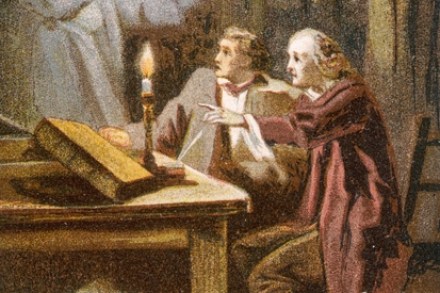
Dickens’s dark side: walking at night helped ease his conscience at killing off characters

From our UK edition

In England, walking about at night was a crime for a very long time. William the Conqueror ordained that a bell should be rung at 8 p.m., at which point Londoners were supposed to put their fires and candles out and their heads down. Again and again, until modern times, Matthew Beaumont tells us, specifically nocturnal laws were promulgated against draw-latchets, roberdsmen, barraters, roysterers, roarers, harlots and other nefarious nightwalkers — including those ‘eavesdroppers’ who stood listening in the close darkness where the rain dripped from a house’s eaves. Beaumont reads such laws as being designed to exert political and social control.
Why the most important years in history were from 1347 to 1352

From our UK edition

A group of retired Somerset farmers were sitting about in the early 1960s, so Ian Mortimer’s story goes, debating which farming invention had most changed their lives. Was it the tractor? Fertilisers? Pesticides? Silos? No, they agreed, it was the Wellington boot. Mortimer tells this old story to illustrate that ‘it is not always the most dramatic changes that make a difference to our lives’. And for all the wars, plagues, renaissances and revolutions documented in this lively survey of 1,000 years of western history, they are outweighed by quieter forms of change: the rise of peace in the 11th century, for instance, or that of record-keeping in the 13th. Later, there are all the ‘-isations’ — urban, industrial, liberal, global.

An invisibility cloak? You might just be able to see it on the horizon…

From our UK edition

The best books by good writers — and Philip Ball is a very good writer indeed — are sometimes the ones that don’t quite work. This brilliant study of how occultists and scientists alike have attempted to see the invisible is very much that kind of fascinating failure. Its subject is just too large — and, well, it is just too hard to see its edges clearly. Ball begins with pseudo-medieval recipes for invisibility: Take a black cat and a new pot, a mirror, a lighter, coal and tinder. Gather water from a fountain at the strike of midnight...

A Labour MP defends the Empire – and only quotes Lenin twice

From our UK edition

In a grand history of the British empire — because that is what this book really is —  you might expect more hand-wringing from a historian and Labour MP who has previously written a life of Engels. But despite quoting Marx half a dozen times (and Lenin, twice!) there is something about the idea of empire that excites Tristram Hunt. And this is a book about ideas, for all that it is rich in architectural description, economic fact and colourful anecdote. It describes how — and indeed when and where — the imperial ideology shaped and reshaped itself.

Lawrence of Arabia, meet Curt of Cairo

From our UK edition

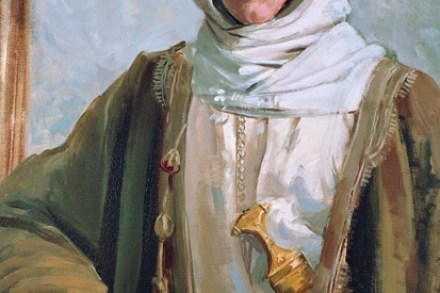
How do you write a new book about T.E. Lawrence, especially when the man himself described his escapades, or a version of them, with such inimitable genius? Scott Anderson’s answer is to intercut Lawrence’s extraordinary story — the camel raids and blown-up bridges, the rape and torture, the lies and shame — with those of three contemporaries, all supposedly engaged in a grand intelligence duel in Syria and Arabia.

In the heart of darkness, the atom bomb

From our UK edition

At the dark heart of this dark book is a startling fact: Joseph Conrad was employed to steam up the Congo river by the same company, Union Minière du Haut Katanga, that later shipped uranium from the Congo to the US, where it was used to make the bombs that devastated Hiroshima and Nagasaki. Patrick Marnham develops that historical oddity into a brilliant travelogue, blended with an angry history of America’s atomic bomb and a meditation on what the creation of nuclear weapons means for the human psyche. It is his own journey into a Heart of Darkness. He follows not a river, however, but the flow of uranium.

Hogarth and the harlots of Covent Garden were many things, but they weren’t ‘bohemians’

From our UK edition

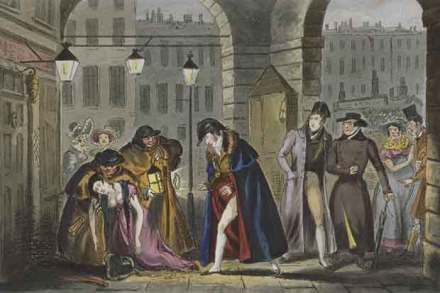
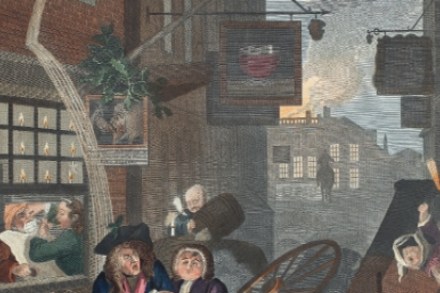
It was Hazlitt who said of Hogarth that his pictures ‘breathe a certain close, greasy, tavern air’, and the same could be said of this book. It describes the fermenting stews of 18th-century Covent Garden, and the pungent work of the artists who lived and worked among them, Hog- arth and Thomas Rowlandson in particular. You could read it as a baggy prequel to Vic Gatrell’s marvellous, Wolfson Prize- winning study of post-1780 caricaturists, City of Laughter. The ‘ring of antique courts and alleys that laid siege to the Piazza’ of Covent Garden covered no more than a quarter of a square mile of London but, according to Gatrell, they brewed up a uniquely rich artistic culture.

The Rocks Don’t Lie, by David R. Montgomery – review

From our UK edition

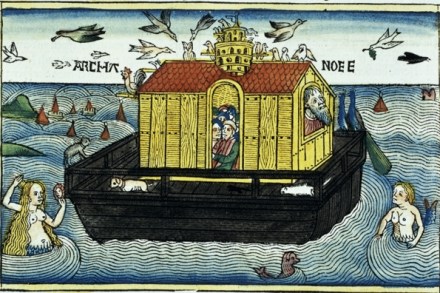
This is a book about the clash of faith and reason over the truth or otherwise of a catastrophic, world-shaping flood — and it doesn’t once mention climate change. The debate here is much less stale. David Montgomery is a prize-winning geology professor at the University of Washington, Seattle, and he recounts the history of his discipline from Aristotle to plate tectonics, showing how geological thinking has always been shaped by the great narrative of Noah’s flood. It is a grand tale, and told with verve and excitement. Montgomery also entertainingly surveys the archaeological and literary evidence for ancient Middle Eastern floods — each of which has been acclaimed, in turn, as ‘Noah’s’.

What do conductors actually do? Review of ‘Inside Conducting’ by Christopher Seaman

From our UK edition

Conductors love telling stories, especially stories about other conductors, and every chapter of this otherwise determinedly pragmatic book begins with one. Perhaps the most telling concerns a ‘famous conductor’ who mistakenly gave a massive downbeat in a bar that was supposed to be silent. The orchestra, reading the score correctly, did not play. Voice from the back of the violas: ‘He doesn’t sound so good on his own, does he?’ The anecdote illuminates the driving question behind this book, the one we’ve all wanted to ask while fearing to sound ignorant: what do conductors actually do? Some are sceptical.

Alexandria, by Peter Stothard – review

From our UK edition

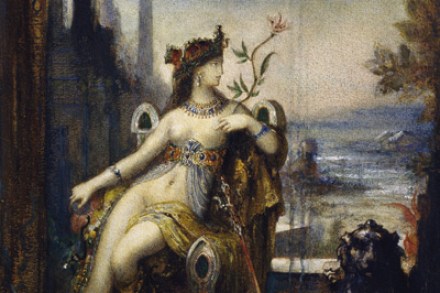
This subtle, mournful book is many things. It is a diary of three weeks spent, during the tense winter before the outburst of the Arab Spring, in off-season Alexandria, where nothing comes ‘except birds to the lake, most of them when they have lost their way’. It is also a series of fragments rescued from Peter Stothard’s rich life as Essex schoolboy, Oxford student, Times editor and lifelong classicist. Another part, but only a small one, is a history of Cleopatra — and the story of Stothard’s seven previous, failed attempts to write about her. Classical scholars, however, will recognise this book for what it really is.