Walter Ellis

The BBC’s march to war

From our UK edition

Perhaps we are growing war-weary – weary, that is, of the gathering storm of World War One documentaries on the BBC. There have been so many, not just Max Hastings (for) and Niall Ferguson (against), but Jeremy Paxman keeping the home fires burning and the reheated I Was There interviews with veterans of the conflict whom age withered, unlike those who left their corpses to stink in the mud of Flanders. For all that, 37 Days, the corporation’s recent reconstruction of the events leading up to Germany’s invasion of Belgium, was utterly compelling, once again confirming the place of docudrama in the history schedule.

Hitler’s missed opportunity: failing to smash the rock of Gibraltar

From our UK edition

It may be that only geological erosion, expected to occur sometime over the next ten million years, will finally remove Gibraltar as a source of friction between Britain and Spain. In the meantime, with a poll showing that nearly two thirds of Spaniards support their government’s current tough line on the territory, David Cameron has again reassured the Rock’s chief minister Fabian Picardo that Britain will always stand up for Gibraltar and safeguard the interests of its people. But while the tension is real and enduring, there is no suggestion on either side that the situation might be resolved by force. Seventy-three years ago, in the autumn of 1940, the mood was very different. The threat to British sovereignty was real and imminent.

A book you must read: Berlin Noir, the Bernie Gunther saga

From our UK edition

One of the givens in detective fiction these days is that the sleuth should be deeply flawed. You almost expect, as you pry open the pages of the latest overnight sensation  to discover that the inspector in question is an internet troll who gets in fights at closing time and closes his eyes to the excesses of the English Defence League while somehow remaining sympathetic and miles better than his boss, who imagines that proper procedure and pins in the board are the way to solve crime. It would be stretching things, even so, to imagine that we might get behind a Berlin detective – known as a ‘bull’ – who happens to be the go-to man for most of the Nazi hierarchy in wartime Germany.

J.K. Rowling’s “Robert Galbraith” trick reveals nothing of how publishers really treat unknown novelists

From our UK edition

Is it okay for struggling authors to talk about promotion and marketing and how they are dealt with by publishers? Apparently so.  The aspiring novelist Robert Galbraith knew rejection. His first novel, The Cuckoo’s Calling, was rejected by Orion and other publishers before it was printed in April by Sphere, a prestige imprint of Little Brown, one of the biggest names in fiction. He must have been beside himself when his little detective story was singled out for praise by Val McDermid, Mark Billingham and Alex Gray – all leading practitioners in the genre. The icing on the cake probably came when The Times, the Mail and Publishers Weekly joined in the chorus of congratulation. Galbraith, a former army officer, had arrived with a bang. What a debut! What an achievement!

Dreams and Nightmares: Europe in the twentieth century

From our UK edition

So much abuse has been heaped on the European Union in recent years that it is easy to forget that Europe and the EU are not the same thing. Geert Mak reminds us of this fact. He is one of the most celebrated journalists and commentators in the Netherlands. Mak – widely read, multi-lingual and endlessly curious – considers the whole of Europe to be his home. He has won awards for his books in Germany, as well as in his native Holland, and been inducted into the Legion d’Honneur in France. He is also, on the side, a bit of an anglophile. In 1999, with millennial fever rising, Mak was commissioned by the centre-left Dutch newspaper NRC Handelsblad to set off on an epic journey.

Rifleman by Victor Gregg is a book you ought to read

From our UK edition

I live in New York and until this month I had never heard of Victor Gregg, the World War II veteran whose 2011 memoir, Rifleman, was hailed as possibly the most honest and outspoken ever written by an enlisted soldier and 'an outstanding book that deserves to become a classic'. Gregg is 93, which is an achievement in itself, but bright as a button. When I heard an interview he gave recently to the Today Programme replayed on National Public Radio, I was reminded of Stanley Holloway playing Alfred Doolittle in My Fair Lady. In fact, the only role Gregg ever played was that of a working man who, through no fault of his own, found himself in all the wrong places at all the wrong times.

Review: Mod! – A Very British Style, by Richard Weight

From our UK edition

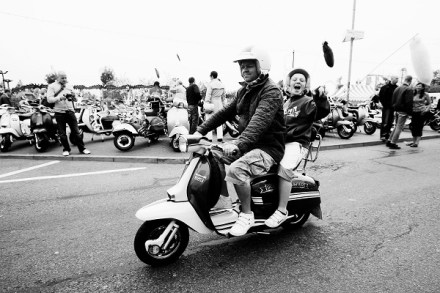
Doesn’t it all seem a long time ago? For years, the 1960s remained a key cultural reference, universally understood. But then, at some point, probably around the turn of the millennium, the Eighties took over and the Sixties began to fade into a psychedelic version of 1920s sepia. The two periods, separated by the shame and loon pants of the Seventies, were both about being young and “cool”. They were also about being bang up-to-date and liberated from “old” thinking. And, in the way of things, both have aged badly. The Mods of 1960s Britain were a social movement wrapped up in a fashion statement. Modernism, by contrast, is timeless.

Reading into that good night

From our UK edition

New York —  Call me an old curmudgeon, but it seems to me that the only way the description World Book Day would make any sense would be if, in some way, the world was brought together by a book — preferably on the same day.   But for that to happen, J.K. Rowling would have to produce an unexpected eighth volume in the Harry Potter series — Harry Potter and the Tyranny of Expectation, perhaps — when in fact, from what one hears, she plans to enter the murky world of Ian Rankin and Edinburgh noir.   So we shouldn’t get our hopes up.

Is this the future, and do I like it? Pt. 2

From our UK edition

After Paul Torday related his latest adventure in the digital new world, here is Fleet Street veteran Walter Ellis on the trials of self-publishing on Amazon. Soon kindled and soon burnt: The gentle art of online publishing The idea of a level playing field is that everyone engaged in a competitive activity should have the same opportunity to achieve success as everybody else.   Kindle is supposed to offer independent authors a level playing field. But does it? So far as I can tell, unknown authors who break into the Top 1,000 are quite rare, though nowhere near as rare as those who make it into the Top 100.   There are, of course, examples of complete unknowns rising to the top of the virtual pile and staying there.

An unlikely cult

From our UK edition

There’s something Kerry Wilkinson isn’t telling us. But I’m not sure he knows what it is.   Four months ago, the most remarkable thing about Wilkinson was that, at the age of 30, he was a part-time magistrate, handing out fines to local miscreants. A sports journalist for the BBC website, living in Preston, he looked to be heading nowhere in particular and likely to continue in this direction for some time to come.   Today, he is the UK’s most successful self-published novelist, with sales of more than 50,000. Locked In, the first in a series of crime novels featuring feisty DS Jessica Daniel, went up on Kindle on July 10, having previously been posted on iTunes.

The grim lessons of Katrina

From our UK edition

New York It is tempting when looking back on natural catastrophes to see them as symbols of the affected nation’s fatal departure from good sense or moral progress. Hubris is retrospectively invoked to justify the evident nemesis. The horrific events in New Orleans and surrounding territories are being picked apart, like entrails in aboriginal Africa, as though there might be a clue, even a message, that will explain how America has begun to fall apart. In a bid to pre-empt at least some of Congress’s investigative zeal, the President announced on Monday that he would carry out his own inquiry into the catastrophe, but senators and congressmen refuse to be deterred and are to launch their own investigation.

Diary – 15 January 2005

From our UK edition

New York America is supposed to be the can-do society, where you can order up pizza at three o’clock in the morning and refinance your mortgage with one click of a mouse. Don’t you believe it. Our local pizza parlour only opens when it feels like it. More to the point, negotiating a mortgage requires the applicant to enter a dreamlike state in which the nightmare of Pandora’s Box, represented by one’s credit rating, is countered only by the constant repetition of the realtor’s mantra: H-ome ...H-ome. And then, when you are finally approved and ready to proceed, ‘closing’ drags on for so long that by the time it arrives it’s already time to think about inheritance tax.

Survival of the richest

From our UK edition

New York As British universities lurch from funding crisis to funding crisis, the jealous eyes of the academic establishment focus obsessively on the United States as the role model for future success. The assumption is that if UK universities charged ‘realistic’ fees, they would recreate themselves as ‘world class’ — or, at any rate, superior — institutions, like those in America. But what is the truth about American universities? Are they really so much better than those in Britain? Are US students in general better educated? Does the US profit from the enormous sacrifice made each year by parents and students? Some — perhaps 20 or 30 — American universities are better than all but a tiny handful of their British equivalents.