Culture

Culture

The good, the bad and the ugly in books, exhibitions, cinema, TV, dance, music, podcasts and theatre.

Philip Marlowe returns with bark but no bite

More from Books

With so much Nordic noir around, it’s a relief to return to the granddaddy of them all, the hard-boiled private dick, Philip Marlowe. Perhaps it’s inevitable that Benjamin Black’s reboot of Raymond Chandler’s great creation does not have the bite of Chandler in an age when the casual racism, sexism and downright class snobbery of mid-century America is not easy to articulate if you want to keep an audience sympathetic. But still, Black’s love of Chandler’s harebrained plots, stock characters and corny one-liners produces a tale that is hugely entertaining. Inevitably this centres on a stunning blonde, Clare Cavendish, who walks into Marlowe’s sleazy downtown office with a missing-person case.

How did revolution become Istanbul’s new normal?

More from Books

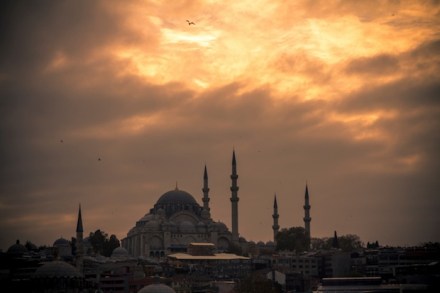
On a recent weekend I was thinking of taking my sons to downtown Istanbul to do some bazaar browsing. ‘Bad idea’,  a fellow expatriate warned me, ‘revolution on Taxim Square. Again.’ Revolt has become the new normal in Istanbul, a constant of urban life to be followed like the weather. Every few months the ritual dance erupts, chanting crowds on one side and sinister and well-drilled riot police on the other, followed by water cannon and the artillery-like noise of tear-gas canisters being fired into the crowd. How has Turkey come to this? Twelve years ago, Turkey’s then-new prime minister Recep Tayyip Erdogan promised to be an ‘Islamic Democrat’ in the sense that Germany’s Christian Democrats were Christians.

Sex and squalor in San Francisco

More from Books

Frog Music begins with a crime against a young mother, committed in a tiny space. Unlike Emma Donoghue’s bestselling novel Room, however, the setting is not present-day America but that of 1876. Blanche is travelling on a train with her new friend Jenny. She hears several loud cracks and feels something hot and wet fall on her face. When she collects her senses, Jenny lies dead. Like Kate Atkinson, Donoghue straddles the literary and the crime genre. Room, inspired by the discovery of a number of women abducted and impregnated by their captors, should have won the 2010 Orange Prize and didn’t — perhaps because its subject matter was simply too controversial. Frog Music, like Donoghue’s The Sealed Letter, is a return to a historical setting.

War is good for us

Lead book review

At the heart of this work is a startling and improbable statistic and the equally surprising and counterintuitive thesis that flows out of it. We are used to looking back on the 20th century as comfortably the most violent in all human history — the silver medal usually goes to the 14th — but if Ian Morris(a fellow at Stanford University) is to be believed, the century that could wipe out perhaps 50 million to 100 million in two world wars and throw in the gulags, the Cultural Revolution, civil wars, government-orchestrated famine, trench-stewed pandemics and any number of genocides for good measure was, in fact, the safest there has ever been. If sometime around 7a.m.

Would prisoners kill for Carol Ann Duffy?

It is of course shocking that the Justice Secretary Chris Grayling should ban prisoners from receiving books sent by their friends and relatives. We might all agree with author Philip Pullman who said that the ban is worthy of Hitler and Pol Pot and entirely typical of a government whose most senior members regularly eat their own offspring, raw, tearing away at the flesh like crazed wolverines. Or something like that, anyway. Various other authors have ranted and raved. But will it make a huge difference to the lives of the inmates? Do they often importune family members with these sort of requests: 'I see that Carol Ann Duffy has a new, slim, volume out.

When Mussolini came knocking on Hollywood’s door

More from Books

John Ford was the first of the five famous Hollywood film directors to go to war. He went expecting to get given a sword, which he could then brandish. After all, he knew about swords; they were things that came out of props baskets in his cavalry epics, but that was in films. Unfortunately in real life he found he had an arthritic thumb, which meant that having once drawn one he needed help to put the sword back in its scabbard. It had not been like that in his films, where he had only to say the word for anything to happen. There he could put a coal mine on top of a mountain in How Green Was My Valley, and farm the desert in his Westerns. But the first film he made in the navy was real life with a vengeance.

‘A dandy aesthete with visions of sacrificial violence’

More from Books

Eschewing the biblical advertising of ‘the promised land’ or indeed ‘a land of milk and honey’, the Conservative colonial secretary William Ormsby-Gore presented a far grislier picture of Palestine on the eve of the second world war when he described it as ‘full of arms and bitterness, and there are few who do good and many that do evil’. That précis is proved sadly accurate many times over in Patrick Bishop’s gripping The Reckoning, about the fatal shooting and subsequent martyrdom of the Zionist freedom fighter (or terrorist — take your pick), Avraham Stern. As characters go Stern is compelling in a car-crash kind of way.

When posters told us our place

More from Books

As a sign of the way things have changed, nothing could better this. Hester Vaizey, Cambridge history don and ‘publishing co-ordinator’ at the National Archives, has collated this splendid collection of posters issued by various government agencies in the 30 years or so after the second world war. This was, of course, the heyday and highwater mark of what furious red-faced men of my acquaintance now call ‘the nanny state’ — a phrase, incidentally, first used by an editor of The Spectator (Iain Macleod) in the pages of this magazine back in 1965. Although I never had a nanny myself, I know from repeated childhood viewings of Mary Poppins that Nanny Knows Best, and so these posters confirm.

Civilisation’s watery superhighway

More from Books

The clue is in the title: this is not about the blue-grey-green wet stuff that covers 70 per cent of our planet’s surface. Rather, it’s about how the sea and our use of it have influenced us economically, culturally, religiously and politically: Much of human history has been shaped by people’s access, or lack of it, to navigable water .... Life on the water — whether for commerce, warfare, exploration or migration — has been a driving force in human history. Admitting that he wants to ‘change the way you see the world’, Lincoln Paine also claims that ‘The past century has witnessed a sea change in how we approach maritime history.

Samuel Beckett walks into a nail bar

More from Books

It isn’t very often that a writer’s work is so striking that you can remember exactly where and when you were when you first read it. I was in a parked car in a hilly suburb of Cardiff last summer when I first became aware of George Saunders, from reading a speech he’d addressed to his American students printed in that day’s edition of the International Herald Tribune. Within the first two or three lines it was evident that this was someone quite out of the ordinary, someone of unusual intelligence, curiosity and compassion. This speech — an exhortation to be kind — is wonderful. And so are these short stories, which have lately won the first Folio prize. That said, they will not be to all tastes.

Whistling is a bloody nuisance

More from Books

Paul McCartney says he can remember the exact moment he knew the Beatles had made it. Early one morning, getting home from a night on the tiles, he heard the milkman whistling ‘From Me to You’. This incident isn’t recounted in A Brief History of Whistling. The record in question was a huge pop hit, and these authors prefer to concentrate on working-class culture, folk songs, music hall and the like. They also cover whistling at work (two blasts to your sheepdog for ‘go left’, one for ‘go right’), whistling in science fiction (it’s the one human skill that stumps an android in Star Trek) and whistling as language (the messages of the Guanch people of La Gomera in the Canary Islands can be heard five miles away).

Was Roy Jenkins the greatest prime minister we never had?

Lead book review

In any list of the-best-prime-ministers-we never-had, the name of Roy Jenkins is likely to be prominent. He was intelligent, moderate, courteous, thoughtful: he was exactly the sort of man whom any civil servant would wish to see installed in No.10. That, no doubt, is why he never got there. John Campbell makes no bones about the fact that he is a fan of Jenkins. He was, writes Campbell, ‘the first public figure I was aware of and always the one I most admired’. Campbell is far too sensible a man and good a biographer, however, to allow his book to degenerate into a paean of praise. Jenkins’s frailties are unsparingly exposed, his occasional failures recorded, his more extravagant pretensions ridiculed.

Competition: Write a book blurb to repel readers

You were on stellar form this week on the darker side of spring: the entry was full of wit and invention. There were references to Larkin, who could always be relied on to see the bleaker side of things (‘their greenness is a kind of grief’), as well as to Eliot and Thomas Edward Brown. There were also nice echoes of Ogden Nash and Wordsworth. Nicholas Holbrook and Josephine Boyle were unlucky losers and I especially liked Ray Kelley’s heartfelt closing couplet: ‘It’s not by mere coincidence that vernal/ Rhymes so immaculately with infernal.’ The winners, printed below, earn £25 each. Bill Greenwell takes the extra fiver.

Memoirs of an academic brawler  

More from Books

It’s a misleading title, because there is nothing unexpected about Professor Carey, in any sense. He doesn’t turn up to parties uninvited, like some of his less organised colleagues. As for his appointment, he was tailor-made for the job. Right class (middle); right school (grammar); right military service (guarding sand); right religion (books). An unsullied record of diligence as undergraduate, graduate, lecturer and tutor was combined with engaging resilience: ‘Teaching at St John’s was so enjoyable that I felt it was wrong to be paid for it.’ His outlook was just right for 1974; he was against ‘Old Oxford’, public schoolboys, compulsory Anglo-Saxon and all manifestations of waste, idleness and privilege.

Caught between a New Age rock and a theory junkie hard place

More from Books

Siri Hustvedt’s new novel isn’t exactly an easy read — but the casual bookshop browser should be reassured that it’s nowhere near as punishing as the opening pages might suggest. In the ‘editor’s introduction’ we’re told that what follows is an anthology of writings by and about the late artist Harriet Burden — known to friends as Harry — with her own contributions taken from a series of notebooks labelled by letters of the alphabet: Notebook H, on Edmund Husserl, has pages on Husserl’s idea about ‘the intersubjective constitution of objectivity’ and the consequences of such an idea on the natural sciences… Q is devoted to quantum theory and its possible use for a theoretical model of the brain.

The selfie from Akhenaten to Tracey Emin

More from Books

If ever there was a time to write a book about self-portraits, this must be it.  ‘Past interest in the genre,’ James Hall tells us in his introduction to this cultural history, ‘is overshadowed by the obsession with self-portraiture during the last 40 years.’ What he could not have foreseen was that self-portraiture would feature in the mainstream news as never before over the last six months or so. Firstly, the Oxford English Dictionary announced that ‘selfie’ was their word of the year for 2013, spawning a noisy debate about photographic self-portraiture. Next, David Cameron, Barack Obama and Helle Thorning-Schmidt were spotted taking a selfie at Nelson Mandela’s memorial service — an act that merited global news coverage.

The making of a novelist

More from Books

Karl Ove Knausgaard was eight months old when his family moved to the island of Tromøya; he left it aged 13, because of his father’s higher-grade teaching appointment on the mainland. As they drove over the bridge linking the island with the southern Norwegian port of Arendal, ‘it struck me with a huge sense of relief that I would never be returning, that… the houses and the places that disappeared behind me were also disappearing out of my life, for good.’ Only in a literal sense did they disappear. And the six-volume autobiographical novel sequence, My Struggle, on which Knausgaard embarked after the success of his first two books, demanded his coming to terms with his formative early milieu.

The talent and tragedy of Richard Pryor

More from Books

The troubles of Richard Pryor’s life are well known — from his childhood in a brothel to his self-immolation via crack pipe — but arranged in a biography their impact is renewed. So grotesque was his upbringing that an early encounter with a dead baby in a shoebox warrants but a single sentence in David Henry’s and Joe Henry’s addictive, frenzied book (Furious Cool, Algonquin Books,£17.99, Spectator Bookshop, £16.19). The authors are fans who have the tendency to swoon, and they hold back from condemning Pryor’s numerous wrong turns (he was a serial wife-beater who fled responsibility wherever he found it). But that hardly matters when there’s so much to pack in.

Recycling Sackville-West style

More from Books

Here’s a book co-authored by one dead woman and one living one. Sarah Raven is the second wife of Adam Nicolson, grandson of Vita Sackville-West. In 1930 Vita bought Sissinghurst, the ruins of a great 16th-century house, and with her husband Harold Nicolson created the world-famous garden. Tell me the old, old story. Vita died in 1970, and in 1983 Adam’s mother published a similar volume, co-authored ‘by Vita Sackville-West and Philippa Nicolson’; and there are several other good books about the making of this garden. So here is yet another well-illustrated hommage, from an intimate perspective, to Vita and to her gardening style. It is basically a compilation of large chunks from Vita’s gardening articles written for the Observer between 1946 and 1961.

Fleet Street’s ‘wild Irish girl’

More from Books

In her early days on Fleet Street, Mary Kenny, as she herself admits, was cast as ‘the wild Irish girl’, and did her best to live up to it. She held her own with the drinkers at El Vino’s, gave new meaning to the phrase ‘talking about Uganda’ when discovered in flagrante with an African lawyer,  and later rode the ‘condom train’ to flout Ireland’s contraception laws. Some of these stories surface in her memoir, Something of Myself and Others; others she draws a veil over, with a Catholic reticence of which her mother would doubtless have approved. Or perhaps she simply cannot remember them all. ‘Like much of my misspent youth I have no recollection whatsoever of where we went or what we did,’ she says at one point.

‘A public urinal where ministers and officials queued up to leak’

More from Books

Anyone brought up as I was in a Daily Express household in the 1950s — there were approaching 11 million of us readers — knew the writings of Chapman Pincher. His frequent scoops, mostly defence- or intelligence-related, sometimes political, scientific or medical, were unusually well-sourced and headline-grabbing. Now, aged 100, he has written his autobiography. He writes as directly and vividly as ever. After an enjoyable Darlington childhood, he progressed through grammar school to King’s College, London, where he won prizes for zoology and botany and published research papers as an undergraduate.  He became a teacher and got into freelance journalism via the Farmer & Stockbreeder.

Management consultancy! Sculpture park! Sports stadium! The many faces of the Delphic Oracle

Lead book review

‘In ancient times ... hundreds of years before the dawn of history, lived a strange race of people ... the Druids. No one knows who they were ... or what they were doing. But their legacy remains ... hewn into the living rock ... of Stonehenge.’ The unforgettable opening of Spinal Tap’s song ‘Stonehenge’ was much in my head as I read this scholarly history of Delphi. We use the word ‘delphic’ to mean riddling, ambiguous, difficult to parse. It applies just as much to the history of Ancient Greece’s most sacred site as it does to the pronouncements of its oracle. No one knows who they were ... or what they were doing.

‘Nijinsky disguised as Nigel Farage’: Angela Lansbury stars in Blithe Spirit. Review.

Blithe Spirit Gielgud Theatre If you’d asked me before this week, I’m afraid I’d have guessed Angela Lansbury had already reached the spirit world. I’ve always imagined her eternally inhabiting the mid-twentieth century, as the prim but decidedly experimental home front heroine in Bednobs and Broomsticks (1971) or the icy Cold War matriarch in The Manchurian Candidate (1962).  Yet at the age of 88 she’s alive and kicking – nigh twerking – at the Gielgud Theatre in Blithe Spirit, Noel Coward’s tale of a newly re-married widower, who inconveniently rouses the ghost of his first wife and finds himself committing “astral bigamy”.

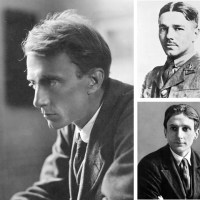
Is Wilfred Owen’s poetry any good?

Wilfred Owen, the poet whose work epitomises the horror of the First World War for most people in modern Britain, was born in Oswestry in the Shropshire Marches, close to his Welsh ancestral homeland, one hundred and twenty-one years ago today. His brief life ended just a quarter of a century later, on November 4th 1918, when he was cut down by a German machine gun as he heroically led his men across the Sambre-Oise canal in the sort of suicidal attack that his poetry had implicitly criticised. Famously, the telegram announcing his death arrived at his parents' home in Shrewsbury at the exact moment when the bells were ringing out to celebrate the Armistice ending the war.

Russell Brand vows to write the revolution

For a man who claims to be apathetic about politics, Russell Brand is rather noisy. Not content with guest editing the New Statesman and getting crucified by Jeremy Paxman, all in the name of his revolutionary cause, Brand is now writing a political book. ‘People keep asking me how The Revolution will work?’ 'We all want to bring down the government and establish a personal and global utopia, but how?' they ask. Well, in this book, I'm going to explain it.’ I suggest the title of Das Krapital.

On the trail of a Victorian femme fatale

More from Books

Kate Colquhoun sets herself a number of significant challenges in her compelling new book, Did She Kill Him? Like Kate Summerscale before her, Colquhoun mines the rich seam of legal archives to give her readers the fascinating tale of a Victorian courtroom drama: that of Florence Maybrick, accused, in 1889, of murdering her husband. Colquhoun achieves expertly all the things one could hope to expect in such a historical account. She paints a picture not only of a woman on trial, but of the complicated world of late 19th-century England. We get a sense of a woman’s changing place in the world, we see Liverpool society on display, we learn about the press, about science and justice and politics.