Culture

Culture

The good, the bad and the ugly in books, exhibitions, cinema, TV, dance, music, podcasts and theatre.

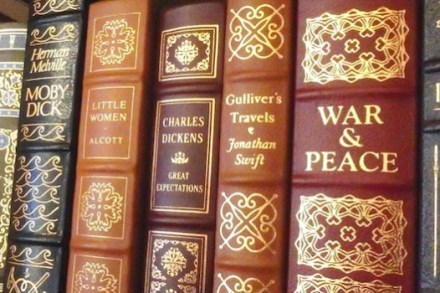
‘Great’ books best left unread: Anna Karenina, Moby Dick, Catch-22…

Martin Amis compared Cervantes’ Don Quixote to ‘an indefinite visit from your most impossible senior relative, with all his pranks, dirty habits, unstoppable reminiscences, and terrible cronies’, while Kathryn Schulz, book critic for New York magazine, poured scorn on The Great Gatsby, describing it as ‘aesthetically overrated, psychologically vacant, and morally complacent’. Cult contemporary bestsellers have also drawn contempt. In last year’s Spectator Books of the Year Thomas W. Hodgkinson recommended giving a wide berth to Paulo Coelho’s chart topper: ‘The Alchemist is surely the worst book I’ve read recently. The tale of a simple shepherd boy (ah, aren’t they all?

A cult of inspired amateurishness that seized the 60s

More from Books

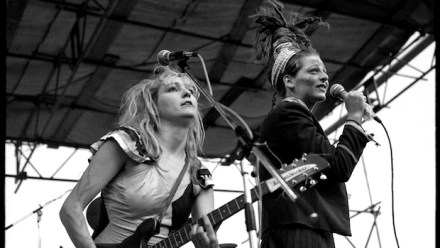
The Exploding Galaxy flashed brightly in the black-and-white world that was just coming to an end as I was growing up. When I first met them, my opinion of art was fixed firmly against what I thought of as amateur. I came from a theatrical family, dedicated to extreme professionalism and mockery of anything less. Whether it was holiday pantomimes, school plays or cabaret flamenco — anything short of Yehudi Menuhin and John Gielgud — we would be told how ludicrous they were, how comically inept. It seemed to be the only thing my parents agreed about, and so we went along with it. How we laughed! They would wrap themselves in contempt for less immaculate performers as a form of protection from the rawness of appearing in public. Professionalism is a counterfeit art.

Is Johann Hari ghost-writing Russell Brand’s ‘revolutionary manifesto’?

Whispers reach Mr Steerpike that disgraced journalist Johann Hari has been tasked with ghost-writing Russell Brand's next book, the much-dreaded revolutionary manifesto to 'establish a personal and global utopia'. Mr S asked Brand's publishers Random House for clarification. At first they wouldn't comment; but then a publicist said that was the first she'd heard of it, and insisted that Brand will be writing the book himself. What a pity. Mr S can think of nothing better than a revolutionary tract written by Johann Hari in the voice of Russell Brand. After all, Hari has form when it comes to impersonation.

The great Shakespeare authorship question

Was William Shakespeare just a nom de plume? The question is usually dismissed as boring, only of interest to snobs and cranks. Clever people, like the Shakespeare scholar Jonathan Bate, know better. But the old authorship debate has been given new life of late, thanks to the energetic writer Alexander Waugh, who is adamant that Shakespeare was not a poor boy from Stratford, but the aristocrat Edward De Vere. At a debate at Ye Olde Cock Tavern in London on Wednesday, Waugh and fellow author Ros Barber roundly thumped Professors Duncan Salkeld and Alan Nelson. The 'anti-Stratfordians', as Waugh's side are known, are on a roll. On Sunday, it was reported that Prince Philip had joined their ranks.

Half-poetry, half-prose, half-Belgian – and not half bad

More from Books

Patrick McGuinness’s prose trembles on the edge of poetry, occasionally indeed tipping gently over into it. This is thoroughly characteristic of a book that does sometimes feel as though it might be an abandoned sequence of poems, reconfigured in often spell-binding prose. The title itself is poetic: who the ‘other people’ are and which ‘countries’ they come from is never wholly clear. However, perhaps this cavil is unjustified. Poetry, after all, inhabits a literary space in which fact and fiction merge or dissolve into one another, as they do in (or are made to by) memory, so the subtitle hints at what is to follow, which is an attempt to describe the act of remembering.

Bitchiness gets in the way of the Gielgoodies

More from Books

In the summer of 1955 a group of finals students trooped into a classroom at the Royal Academy of Dramatic Art. We had come to hear Ernest Milton talk about theatre. It was exciting to be in contact with a famous actor, even though Milton had not worked for some time. But better him than the man who taught diction, whose chief experience had been as a camel-driver in Chu Chin Chow. Milton was sitting on a chair in a long, old raincoat, a brown paper bag of groceries at his feet; his beaky nose sniffed us as we crowded into the room. Peter O’Toole was in the vanguard. He had told us all that Milton was the genuine article.

Gavrilo Princip – history’s ultimate teenage tearaway

More from Books

Amid the vast tonnage of recent books about the first world war this must be the most unusual — and one of the most interesting. The ‘Trigger’ of the title is Gavrilo Princip, the 19-year-old student dropout who shot the Habsburg Archduke Franz Ferdinand on a Sarajevo street corner on 28 June 1914 and began the chain of events that led to catastrophic war a few weeks later. At first it reads oddly, a curious ragbag of material that seems disconnected.

John Crace digested – twice

More from Books

Fiction ‘So how come we’re in the same book?’ Paul from The Stranger’s Child asked Florence from On Chesil Beach. ‘Apparently,’ replied Florence looking up from the introduction to The 21st Century Digested, ‘the parodies of new books that John Crace has been doing in the Guardian since 2000 are now so popular that 131 of them have been turned into a hardback collection.’ ‘Impressive,’ murmured Paul. ‘But one thing worries me. Once even Crace’s fans see them all together, won’t they be forced to realise that he relies on the same handful of tricks for almost every novel he takes on?’ ‘You mean, like simply having the characters point out what’s wrong with the book in their dialogue?

Who’s raiding the fridge?

More from Books

There is a problem with describing what happens in Nagasaki: impossible to reveal much of the plot without flagging up serious spoiler alerts. The story demands an innocent eye; the gaining of knowledge should come page by page, and not be hurried. To set the scene: Shimura-san, a bachelor of 56, set in his ways, lives quietly in a house on the steep hillside above the Nagasaki dockyards. He has an undemanding job as a meteorologist, analysing weather patterns. One day, returning after work, hot, sticky and tormented by the clamour of cicadas, he notices, not for the first time, that a pot of yoghurt is missing from the fridge. Is the fruit juice bottle exactly where he left it that morning? He measures the level, and next day it has dropped.

The fruitcake island of Sicily and its legion of literary visitors

More from Books

At the opposite end of the Continent to ourselves, Sicily has always been an attraction for the English who, from the vantage of Europe’s historically most stable society, have gazed with fascination at perhaps its least stable. There were already links between us in the age of the Normans, who conquered Sicily at roughly the same time as they conquered us. The revival of classical learning in the Renaissance made the English increasingly familiar with the Sicilian connections of Homer, Plato, Archimedes, Aeschylus, Pindar, Empedocles, Theocritus, Virgil and Cicero, and with the island’s mythological and classical geography. Shakespeare set several plays there. English travellers and reprobates were among the first to make Naples and Sicily their playground.

How seriously should we take Ruskin as an artist?

More from Books

This stout and well-designed volume nicely complements Tim Hilton’s classic biography of John Ruskin. It is the catalogue for the exhibition at the National Gallery of Canada, Ottawa (till 11 May) and the Scottish National Portrait Gallery (4 July–28 September). A Scottish venue is especially appropriate. Ruskin (1819–1900) was a Londoner but proudly Scots by descent. He retained the slight Scottish accent of his father, a successful sherry merchant, who had been brought up in Edinburgh; and already at nine drew a highly competent map of Scotland, which is illustrated but regrettably not exhibited.

The book that brought out the Lady Bracknell in me

More from Books

I’ve always said that speech is my second language, so naturally I’m somewhat slang-shy; I love words all written down properly and punctuated to within an inch of their lives. Not so Jonathon Green, who has the same relationship with slang as Jordan does with eating wedding cake in a thong; five books about it published and another one in the pipeline. According to Wikipedia, Green is often referred to as ‘the English-speaking world’s leading lexicographer of slang’, and has even been described as ‘the most acclaimed British lexicographer since Dr Johnson’.

To be topp at lat., throw your Cambridge Latin Course away

More from Books

The wisest words about learning Latin were said by that gifted prep-school boy, Nigel Molesworth: ‘Actually, it is quite easy to be topp in lat. You just have to work.’ But things have changed since Molesworth learnt Latin at St Custard’s in the 1950s. Over the last half-century, the work has been extracted from Latin learning and, without the work, the whole point of the language disappears. As Gwynne’s Latin — an uplifting throwback to the good old days — reveals, many schools now don’t teach the vocative case. In the Cambridge Latin Course, used in 85 per cent of schools, you learn the nominative, accusative and dative cases in the first volume. Two more cases appear in the second, and you only learn the ablative at the end of the fourth.

Tales of the inconsequential

My cache of conversational titbits has been considerably boosted by the most recent challenge that I threw down to Spectator readers. I asked for an extract from either a gripping thriller or a bodice-ripping romance containing half a dozen pieces of inconsequential information, and I now know that Zanzibar is the world’s largest clove producer, and that 99 per cent of Estonians have blue eyes. Thanks, for those morsels of trivia, to J. Seery and Nicholas Hodgson, both of whom submitted fine entries. Patrick Tyson-Cain, Sergio Michael Petro, Albert Black, Walter Ancarrow and Charles Curran also narrowly missed the cut. Basil Ransome-Davies, who is on stellar form at the moment, takes £30; the rest nab £25.

An escape from New South Wales

More from Books

Thomas Keneally has constructed his latest novel around a framework of true events: the mass break-out of Japanese PoWs from a camp in New South Wales. This intrinsically thrilling incident, triggered by a fascinating clash between mutually uncomprehending cultures, is an obvious gift to a writer. There may be some who claim that any novelist could therefore have produced an interesting fictional version of it; but this is like saying that anyone could have made a landscape out of the fine park at Blenheim. Keneally spotted both the tale and its possibilities, which in itself is a truly enviable talent. His imagination is fired by the incongruities of the camp in the small town of Cowra, here fictionalised as Gawell.

Recent crime fiction | 24 April 2014

More from Books

Louise Welsh rarely repeats herself, a quality to celebrate in a crime novelist. Her latest novel, A Lovely Way to Burn (John Murray, £12.99, Spectator Bookshop, £10.99) is a dystopian thriller set in an all-too-plausible version of contemporary London. Three members of the establishment have shot dead innocent bystanders. The weather is broiling. A plague-like virus known as ‘the sweats’ spreads, bringing panic in its train. Stevie Flint, a cynical TV presenter on a shopping channel, is one of the few survivors. She contracts the disease shortly after stumbling on her boyfriend’s body. The boyfriend, a surgeon who apparently died of natural causes, had concealed a laptop in her loft shortly before his death.

The gambler’s daily grind

More from Books

Lord Doyle is a shrivelled English gambler frittering away his money and destroying his liver in the casinos of Macau. Aptly, since he is in a place filled with mock-Venetian canals and poor reproduction paintings, he himself is a fake: the man is not a real lord, and the money is not his own. He is a disgraced solicitor of modest origin, who ran off with a client’s savings after befriending her. Lawrence Osborne’s novel is a bleak and enjoyable account of someone who, perhaps through unacknowledged guilt, finds bitter solace in losing and in driving himself towards extinction.

What most imperilled country houses in the 20th century was taxes and death duties, not requisition

More from Books

Servicemen used paintings as dartboards.   Schoolchildren dismantled banisters and paneling for firewood. Architects from the Ministry of Works acted like pocket Stalins. Sarcophagi were dumped in gardens beside beheaded statues. And overhead, Luftwaffe Dorniers droned with menace. Such hazards ravaged requisitioned country houses during the last war. Yet nothing imperilled them more, in the 20th century, than super-taxes and the rattle of death duties. When the country houses were handed back, the majority were defiled as well as decaying from leaking roofs and dry rot. Cash-poor owners, already penalised by towering taxation, could not afford to carry out major repairs to their caves of ice — to borrow from Coleridge and James Lees-Milne.

Up close and personal | 24 April 2014

Lead book review

What should a writer write about? The question, so conducive to writer’s block, is made more acute when the writer is evidently well-balanced, free of trauma and historically secure. It is made still more urgent when that writer is solipsistic in tendency and keen to write, not about the world, but about perceptions of the world. Two American authors of the same period arrived at different solutions to the problem. Sylvia Plath, in her husband Ted Hughes’s assessment, first found nothing worth writing about, and then deliberately encouraged demons and hitherto controlled minor difficulties until they flared up and killed her. John Updike, on the other hand, had an immensely long and sustained writing career, with few troubles to cope with other than psoriasis.

Beauty in beastly surroundings

More from Books

The vast majority of books written about British gardens and their histories are concerned with large ones, made and maintained, sometimes over several centuries, by people with money. ’Twas ever thus. In this country, recognisable gardens began in monasteries, as well as the surroundings of palaces and noblemen’s houses, and it is only in the last couple of centuries that the middle classes have got into the act. As for the poor and dispossessed, theirs has been a very different story, too rarely told.

I’ve finally found a point for St George’s Day

We (the English that is) share our patron saint’s day with the Catalans. On Sant Jordi’s day Barcelona fills up with bookstalls and flower sellers. The men give their women flowers and the women their men books. I lived in Barcelona a few years ago and found the whole thing charming but also a bit sexist. How typically Latin, I thought, that the men would receive something cerebral whereas the women would get something decorative. Recently though, I’ve revised my opinion. Far from being an example of old-fashioned chauvinism, the Catalans are actually indulging in some progressive social engineering. A report by the Reading Agency commissioned for World Book Night states that almost 30 per cent of men have not read a book since leaving school.

The poet who welcomed war

Today, 23 April, the world celebrates the 450th anniversary of William Shakespeare's presumed birth (and marks with less joy the date of the Bard's death in 1616). That double date obscures another: the 99th anniversary of the death of a less celebrated Warwickshire-born literary lad, the poet Rupert Brooke. Brooke, like many of his friends and contemporaries, died in the First World War. But unlike most of them, he perished not in action, but as a result of septicaemia from an infected insect bite to his upper lip. En route to the bloody beaches of Gallipoli, he fell ill in Egypt, died on a French hospital ship moored off the Greek island of Skyros, and - fittingly for a classically educated poet - lies buried in an isolated olive grove overlooking the wine-dark waters of the Aegean.

Sudan was always an invented country. Maybe we should invent it again

More from Books

Sudan — a country that ceased to exist in 2011 — is or was one of the last untouristed wildernesses on earth. And for good reason: while it still existed it was the biggest country in Africa, a mainly flat and uninhabitable wasteland, mostly brown, with barely a mountain or a bosky valley to its name, unbearably hot, unhealthy, poor, and full of every sort of trouble. And yet … The author of this new book on what are now the two Sudans — the country has voluntarily split into two lesser states — says that this is one of the world’s most interesting places. That is true. As anyone who has spent time there will tell you, the Sudans (as we must now call them) both north and south exert a fascination.

From Göring to Hemingway, via Coco Chanel – the dark glamour of the Paris Ritz at war

More from Books

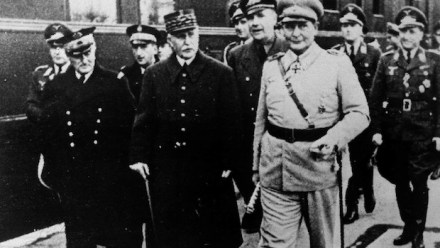
In Midnight in Paris, Woody Allen did a good job of showing how foolish it is to be obsessed by previous generations who’ve passed through Paris. Going back through the years, each group of geniuses turns out to be just as drunk and silly as the next, albeit with longer cigarette holders. Tilar Mazzeo, who has written biographies of Coco Chanel and the woman behind Veuve Clicquot, has done a similar service with this history of the Ritz. Focusing on the hotel is partly a device to write about the German occupation, but it’s mainly a way of gathering all the old Paris icons under one roof. Marcel Proust, Ernest Hemingway, Marlene Dietrich and Coco Chanel all drank cocktails there, and no one comes out of it well.

Tea with Greta Garbo’s decorator

More from Books

Many people write, or at least used to write, fan letters to their film favourites. Usually all they received in acknowledgement was a 10 x 8 glossy with a mimeographed signature. A little persistence sometimes resulted in another, with a brief ‘personal’ message written by the ladies toiling in the fan-club HQs. Not so for the two authors of this riveting book. The Mutti-Mewse twins, early on, became obsessed with all things Hollywood, firing off missives not just to the major stars but to every man Jill they saw or heard was connected to that once fabulous industry. They must have had a magic formula in their letters. Replies flowed back hand over fist.

A Mughal Disneyland and a ripping yarn

More from Books

Mysore, once the capital of a princely kingdom in South India, has lost its lustre. In Mahesh Rao’s darkly comic novel, grandiose futuristic visions are being floated: in a city desperate to reinvent itself for today’s brave new world, ancient temples and palaces are no longer enough. With India’s space programme about to send a man to the moon, Mysore must make its own giant leap. All hopes are pinned on what is destined to be a global tourist attraction: HeritageLand, planned as Asia’s largest theme park (think Mughal Waterworld — the Disneyland of south India!) And Mysore needs a new marketing slogan — ‘The Geneva of the East?’  suggests a desperate PR person. Well, at least there’s a lake.