Culture

Culture

The good, the bad and the ugly in books, exhibitions, cinema, TV, dance, music, podcasts and theatre.

Portobello’s market mustn’t be allowed to close

More from Books

After reading Portobello Voices, I feel more strongly than ever that the unique Portobello market mustn’t be allowed to close. It gets over a million visitors a year and is one of London’s most frequented sites. Blanche Girouard interviewed a cross-section of people involved with the market and has written up their recorded interviews verbatim,

The abstract art full of ‘breasts and bottoms’

More from Books

Is there any such thing as abstract art? Narratives and coherent harmonies seem to me always to emerge from the shapes and colours. Picasso’s cubist planes, as critics have noticed, usually disclose wine bottles, mandolins and bread baskets upon a table — icons of his Catholic childhood. The red and black slabs of Mark Rothko

The best funny books for Christmas

More from Books

Books do furnish a room, and quirky books for Christmas do furnish an enormous warehouse somewhere within easy reach of the M25. There are more of them than ever this year, some purportedly comic, some wilfully trivial, a few of them uncategorisable in their oddness, but all of them have one thing in common: they

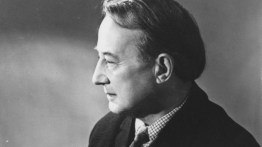
How much can you tell about E.E. Cummings from this photo?

More from Books

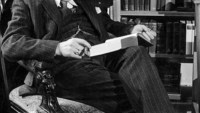
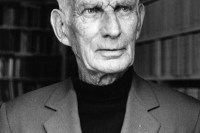
Do you think you can tell things about writers from the way they look in a painting or photograph? A more demanding test: from their books can you predict how authors look? It sounds unlikely, yet, upon seeing a photograph of an author, we do find ourselves exclaiming: ‘That’s not how I thought he’d look!’

Bill Bryson’s ‘long extraordinary’ summer is too long

More from Books

Hands up Spectator readers who can remember the American celebrities Charles Lindbergh, Babe Ruth, Al Capone, Jack Dempsey, Zane Grey, Edgar Rice Burroughs and the  adulteress and husband-killer Ruth Snyder  who all, in 1927, lit up what Bill Bryson calls ‘one hell of a summer’. Born in America only five years later, I knew about

Read any good crime fiction lately?

More from Books

No Exit Press is not a large publisher but it has the knack of choosing exceptionally interesting crime fiction. Brother Kemal (translated from the German by Anthea Bell, £7.99, Spectator Bookshop, £7.59) is the fifth of Jakob Arjouni’s novels about Kemal Kayankaya, a German private investigator whose family origins are Turkish. Kayankaya operates in the

Slow Train to Switzerland, by Diccon Bewes – review

More from Books

In 1863, the pioneering travel agent Thomas Cook took a group of British tourists on the first package holiday to Switzerland. One of them, a jolly young woman called Jemima Morrell, kept a diary — and 150 years later, English émigré Diccon Bewes has followed in her footsteps. His Slow Train to Switzerland (Nicholas Brealey,

The joy of cemeteries

Features

The idea of writing Finding the Plot: 100 Graves to Visit Before You Die first came to Ann Treneman when she was chatting with Tony Wright, formerly Labour MP for Cannock Chase. They started talking about Birmingham and she happened to remark: ‘Did you know the man who invented Cluedo came from Bromsgrove?’ His name,

The imitable Jeeves

More from Books

For as long as I can remember — I take neither pleasure nor pride in the admission — I have been one of those people who feels an irresistible curling of the lip at reviews of the ‘I laughed till I cried’ variety. Something about that hackneyed claim, invariably trumpeted in bold letters outside West

Carlos Acosta, the great dancer, should be a full-time novelist

More from Books

Carlos Acosta, the greatest dancer of his generation, grew up in Havana as the youngest of 11 black children. Money was tight, but Carlos won a place at ballet school, and before long he was enthralling audiences at Covent Garden as a half Jagger, half Nureyev figure with a twist of the moon-walking Jackson in

Why Jeremy Paxman’s Great War deserves a place on your bookshelf

More from Books

The Great War involved the civilian population like no previous conflict. ‘Men, women and children, factory, workshop and army — are organised in one complete unity of social resistance, to defend themselves both by offence and by ordinary defence,’ said Ramsay MacDonald. Geoffrey Studdert Kennedy, the popular army padre nicknamed ‘Woodbine Willie’, declared ‘There are

Village life can be gripping

More from Books

Black Sheep opens biblically, with a mining village named Mount of Zeal, which is ‘built in a bowl like an amphitheatre, with the pit winding gear where a stage would be’. It is divided into Lower, Middle and Upper Terrace, the last-mentioned known by the locals as Paradise. If, like many bookshop browsers, you judge

How we beat Napoleon

Lead book review

It feels the height of ingratitude to blame Jane Austen for anything, but it probably is her fault that most people seem to think that the only impact that the Napoleonic War had on British life was to bring Mr Wickham and the militia into the lives of the Bennet girls. It is certainly true

Competition: Back to school

Spectator literary competition No. 2823 This week’s assignment offers an opportunity to put yourselves into the 8-year-old shoes of future heads of state or literary giants. You are invited to submit a school essay or poem written at the age of eight by any well-known person, living or dead, entitled ‘My Pet’. Please email entries,

The Lady on Lenin

A delightful anecdote in Jonathan Aitken’s new biography of Margaret Thatcher, which is out today. Visiting the French estate of the late Jimmy Goldsmith in 1997, with Denis and Bill and Biddy Cash, Lady T posed for a photograph in front of the giant statue of Lenin that resides in the woodland of Montjeu. ‘I just

My dear old thing! Forget the nasty bits

More from Books

There can be a strong strain of self-parody in even the greatest commentators. When Henry Blofeld describes the progress of a pigeon in his inimitably plummy tones, or greets a visiting Ocker to the commentary box with a jovial ‘My dear old thing!’, he is impersonating himself as surely as Rory Bremner has ever done.

Clash of the titans

More from Books

This is an odd book: interesting, informative, intelligent, but still decidedly odd. It is a history of the Victorian era which almost entirely eschews wars and imperial adventures and concentrates instead on the social, political and intellectual climate of the times.  This is still a vast spectrum. Simon Heffer concludes that he must decide which

Hitler didn’t start indiscriminate bombings — Churchill did 

More from Books

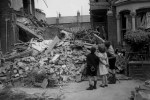
‘I cannot describe to you what a curious note of brutality a bomb has,’ said one woman who lived through the initial German raids on London during the second world war. This woman’s ambivalent reaction to having a bomb rip through her bedroom typified the shocking reality of a different type of war to any