Vernon Bogdanor

Vernon Bogdanor is professor of government at King’s College London.

Education must be at the heart of the levelling-up agenda

From our UK edition

Talent, Boris Johnson has said, is equally distributed across the country, but opportunity is not. If you live in St Albans, you are nearly three times more likely to have a degree than if you live in Barrow-in-Furness. If you’re male and live in Westminster, your life expectancy is ten years higher than a bloke in Glasgow. Life in Britain, states Michael Gove, has become a postcode lottery. GDP per capita is lower in the north-east, Yorkshire, the East Midlands, Wales and Northern Ireland than in the former East Germany. Reunified Germany has done better at levelling up than we have. This productivity gap is primarily the result of a vast difference in skills between regions. A worker in Blackburn takes five days to produce what it takes someone in Milton Keynes just three.
Oxford should not accept money that is tainted by fascism

From our UK edition

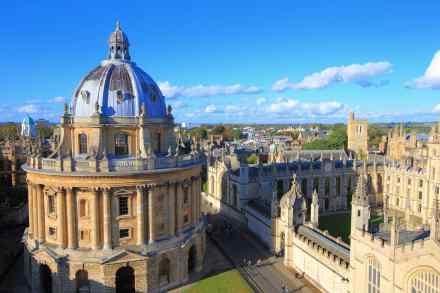
Dons and students at Oxford have in recent years been deeply exercised about Cecil Rhodes, who died 120 years ago. Some politically sensitive students removed a portrait of the Queen in the Magdalen graduate common room, and others even persuaded the geography department to remove a portrait of Theresa May. Yet they seem strangely silent on the implications of taking money tainted by fascism. This month it was announced that the university had been given £6 million from the Alexander Mosley Charitable Trust for a chair in biophysics.

Europe’s Nato problem

From our UK edition

There are four major power blocs in the world — the United States, Russia, China and the EU. Of these, only the EU does not provide for its own defence and security. Remarkably, nearly 75 years after the end of the second world war, Europe is still heavily dependent upon the United States for its defence. But it is hardly surprising that, in the Trump era, pressure has grown for an autonomous European defence policy. The question of how Europe is to be defended in the post-Brexit era has yet to be examined. The EU has, for some years, been seeking ‘strategic autonomy’, though it is never wholly clear precisely what that means.

White, blue-collar, grey-haired rebels

From our UK edition

In the 2010 general election, Ukip gained nearly a million votes — over 3 per cent — three times as many as the Greens, and nearly twice as many as the SNP. Unlike those parties, it won no seats, but its intervention almost certainly cost the Conservatives an overall majority at Westminster. The paradoxical consequence was to hand the balance of power at Westminster to the most pro-European party in British politics, the Liberal Democrats. In the local elections last year, Ukip won 24 per cent of the vote, and is well placed to win the European parliament elections in May. Its impact in next year’s general election is likely to be even greater than in 2010. So far, explanations of the Ukip phenomenon have been long on assertion but short on evidence.

The Spectator book review that brought down Macmillan’s government

From our UK edition

[audioplayer src="http://traffic.libsyn.com/spectator/TheViewFrom22_16_January_2014_v4.mp3" title="Vernon Bogdanor discuss Iain Macleod's 'What Happened' article" startat=1460] Listen [/audioplayer]Fifty years ago this week, a cover story in The Spectator helped to bring down a Conservative government. It was called ‘The Tory Leadership’ and was written by the editor, Iain Macleod, who had been a senior minister in Harold Macmillan’s government. Purporting to be the review of a book by Randolph Churchill on how Lord Home had ‘emerged’ in October 1963 as Macmillan’s successor, it claimed that Macmillan had fixed the succession so as to scupper the chances of the natural candidate, R.A. Butler, who had been deputy prime minister in all but name.

Still dancing around the problem

From our UK edition

For at least 200 years, men have sought to create a world order that would ensure stability and eliminate threats to peace. But it is only in the 20th century that this ideal has been brought to fruition, first in the ill-fated League of Nations, established in 1919, which expired, almost unnoticed, after the outbreak of war in 1939, and then in the United Nations. Governing the World charts the history of the idea of international co-operation since the end of the Napoleonic wars. It is a penetrating and wide-ranging study, illuminating not just the history of internationalism but also the problems involved in realising it in the world of today.

Not lions, but ostriches

From our UK edition

Jeremy Paxman has written an excellent book, but it is not the book that he set out to write. His central argument is that, since the empire had a formative influence on modern India, it must also have had a formative influence on modern Britain. If it influenced the colonised, it must have influenced the colonisers. But that, surely, is a fallacy. For the British empire was, for most of its history, an elite project. There is little evidence that it ever enthused the British people, except perhaps in the decade following Queen Victoria’s Diamond Jubilee in 1897, when Beatrice Webb found ‘all classes’ to be ‘drunk with the sightseeing and hysterical loyalty’.

The Tories need a genuine liberal

From our UK edition

Vernon Bogdanor says that David Cameron is the only Conservative who can read the nation’s mood and respond to it In the 1960s Harold Wilson sought to make Labour the natural party of government. Tony Blair seems to have succeeded in doing so. The Conservatives have now been in opposition for eight years, their longest period out of government since the days of Asquith and Lloyd George before 1914. Never before, during the period of mass suffrage, have they lost three consecutive general elections. Moreover, at no stage since 1997 have they appeared credible as a potential party of government. That is bad, not only for the Conservatives but also for the country.

How do we get to Denmark?

From our UK edition

Francis Fukuyama is rare amongst scholars in being unafraid to ask large questions. He first achieved fame, if not notoriety, by his thesis that, with the collapse of communism, we had reached the ‘end of history’. The rise of terrorism and the return of authoritarianism in parts of the Soviet empire led to this thesis being caricatured as implying the end of all political conflict. What Fukuyama meant, however, was that, for the first time, there were no longer ideological challenges to the dominance of liberal democracy. He reasserts this conclusion in The Origins of Political Order: ‘Liberal democracy as the default form of government has become part of the accepted political landscape at the beginning of the 21st century.

Yesterday’s heroes

From our UK edition

The Labour peer and historian Kenneth Morgan is perhaps best known for his accounts of the Attlee government, Labour in Power, and the Lloyd George coalition, Consensus and Disunity, a work of considerable relevance for anyone seeking to understand the Cameron government. But his biographies of Callaghan and Foot have caused him to be labelled the Annigoni of Old Labour, his critics arguing that he covered over their warts with a pail of whitewash. Ages of Reform is a collection of Morgan’s shorter pieces, most of them already published, but in out-of-the-way places. They are well worth preserving in book form. Their central theme is the evolutionary and beneficent progress of the left in Britain — first the Liberals, then Labour — since 1832.

Disunited from the start

From our UK edition

Twice in the 20th century, men have sought to create a new world order. The League of Nations, conceived with high hopes as a result of the Treaty of Versailles, failed catastrophically. At the outbreak of the second world war, it was to be found solemnly engaged in the task of standardising European railway gauges. The United Nations, by contrast, was born in a mood of profound disillusionment in 1945. It was not, so it seemed, only the League that had failed, but also the conception of man that had been embodied in it, a conception that had been torn apart so savagely by the Nazis. Unlike the League, the United Nations has survived, but its position has all too often been that of the man who passed by on the other side.

Linking Oxford with the world

From our UK edition

Cecil Rhodes hoped that the scholarships established through his will, would, by creating educational ties between the Empire and the Anglo-Saxon world, ‘render war impossible’. The scholars, he insisted, should not be weedy bookworms, but manly, robust types, Plato’s guardians, a society of the elect. The 20th century has not been kind to such ideals; yet the scholarships have proved of enormous value to Oxford, giving it that wider international perspective and connection with the world of public affairs which differentiate it so markedly from the Other Place. In his will, Rhodes insisted that no candidate should be disqualified on account of race or religion.

Strong family ties

From our UK edition

Kathleen Burk, Professor of History at University College, London, has written a magisterial overview of Anglo/American relations from 1497, when John and Sebastian Cabot, in Hakluyt’s words, ‘discovered that land which no men before that time had attempted’, until the modern age. Old World, New World is a remarkable achievement, based as it is upon massive and wide-ranging scholarship. It will undoubtedly become the first port of call for anyone seeking to understand this vast subject. But Professor Burk is, in Isaiah Berlin’s terms, a fox who knows many things rather than a hedgehog who knows one big thing. Her survey lacks a conclusion, and, in a sense, lacks also an overarching theme. Unlike her former teacher, A. J. P.

Two cheers are quite enough

From our UK edition

The 20th century saw the triumph of democracy; by its end, 140 out of the world’s 189 states held multi-party elections. Yet this triumph was greeted, not with enthusiasm, but with apathy and indifference. Democracy appeared to be valued more by the rulers, who had become its cheerleaders, than by the ruled, more by the elites than by the people. The elites, indeed, were tempted to blame the people for being insufficiently appreciative, and for failing to turn out to vote or join political parties. The people, however, did not reject democracy as an ideal; what they criticised were its practical short-comings. Nevertheless, the consequence may be that democracy is less secure than we think.

Adjustment and reappraisal

From our UK edition

Having It So Good follows hard on the heels of Dominic Sandbrook’s Never Had It So Good, which appeared last year. Both are doorstoppers — over 600 pages long — and the reader groans as he picks them up. Soon, no doubt, literary editors will be asking reviewers to weigh books rather than write about them. Having It So Good is, in fact, two books rolled into one. The first, on the high politics of the period, offers an outstanding interpretation of the 1950s, and is likely to become the new orthodoxy against which, no doubt, younger historians will come to react. But Hennessy is more ambitious, insisting, in uncharacteristically pompous terms, that he ‘comes from a British historical tradition that is uneasy with high politics absorbed neat’.

Prophet of doom and gloom

From our UK edition

Those who can, do; but all too often they cannot resist pontificating as well. John Lukacs is a historian of Hungarian origins and conservative inclinations with a number of important if idiosyncratic books to his credit, including biographical studies of Churchill and Hitler. His aim in Democracy and Populism, however, is more far-reaching. He seeks to do nothing less than provide that ‘new science of politics’ for the ‘new world’ of democracy which Tocqueville called for over 150 years ago but which has not yet been forthcoming. Lukacs believes that the old categories — socialist, liberal, conservative, even perhaps Left and Right — have lost their meaning.