Culture

Culture

The good, the bad and the ugly in books, exhibitions, cinema, TV, dance, music, podcasts and theatre.

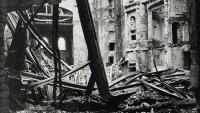
What does it say about Britain that the Palace of Westminster is crumbling?

More from Books

Many political scientists are oddly uninterested in politics. Their fascination is at a level of theory; but the means through which decisions are made in practice, through specific conversations and arguments and accommodations between actual people, strike them as so much gossip – or, worse, journalism. Jan-Werner Müller, a professor of politics at Princeton, best known to general readers for his trenchant, well-timed and comfortingly short What Is Populism?, here wanders like a niche flȃneur through the territory in between the personal and the theoretical: the ways in which people and politicians are variously welcomed, channelled, liberated and constrained by their concrete environments.

The global revolution sparked by a vegetarian schoolteacher in Helsinki

More from Books

At the turn of the 20th century, no woman was in government anywhere in the world. Change began with Finland in 1907, which elected 19 women to its parliament. Hilda Kakikoski was one of those women. She was a conservative candidate – a nationalist who was also a lesbian and a vegetarian. Paula Bartley’s Trailblazers spans the century, following the story of female politicians as they emerged. From Finland we move to Russia, where the revolution provided opportunities for the likes of the socialist feminist Alexandra Kolontai, the first woman to join a government cabinet and become a global diplomat. Constance Markievicz was the first woman to be elected to the British parliament, during her imprisonment for her role in the Easter Rising, but did not take her seat.

Stay within the lines to realise your full creative energy

More from Books

The title of this book takes the adage about ‘thinking outside the box’ and inverts it. Instead of thinking outside the box, we should think inside the box, David Epstein argues. Which box? How big is this box? Whose box? He discusses these questions as well. The phrase ‘thinking outside the box’ emerges from the nine dots puzzle devised by psychologists before the first world war. There are nine dots on a page, evenly spaced, three on each line. You must connect all nine using four lines without removing your pen from the paper. A common response is to imagine that the dots form a box and to confine your work accordingly. This makes the puzzle impossible to solve; you have to think outside the box. Or not think of a box in the first place.

Was Marcel Duchamp’s notorious ‘Fountain’ even his own work?

More from Books

This slim volume has only one fault. It has no illustrations. So you’ll have to do some Googling or visit the current Duchamp exhibition at MoMA (until 22 August) if you want to know what ‘The Bride Stripped Bare by Her Bachelors, Even’ looks like. Otherwise it’s perfect – wittily written and packed with many fascinating characters besides the ever intriguing Marcel Duchamp. He didn’t actually arrive in New York until 1915, but when he did he found himself already famous. His ‘Nude Descending a Staircase, No. 2’ had been included in the 1913 International Exhibition of Modern Art, alongside works by Picasso, Van Gogh, Gauguin, Matisse and Braque, and completely stole the show. Duchamp didn’t even know the painting was being exhibited.

A glimpse of the extremes of Emily Brontë’s imagination

Lead book review

Emily Brontë, who died, aged 30, in 1848, is a source of perennial fascination – and potentially a biographer’s nightmare. Her single novel, Wuthering Heights, has long been recognised as one of the greatest in the English canon, yet it remains a strange anomaly, seemingly unmoored from the wider history of Victorian fiction. Her haunting poems – of which there are 70-odd – can make you catch your breath. Meanwhile, like the ghost of Catherine Earnshaw, the most inscrutable of the Brontë sisters seems to appear only to disappear. This is primarily – but perhaps not entirely – down to the prosaic fact that so few of her personal papers survive, which is not the case with most Victorian writers, including her older sister Charlotte.

The tragedy of Sir Walter Ralegh’s impossible quest

More from Books

I remember little of my two years at boarding school, where I arrived aged eight, apart from the cloaks. Red, green, blue and yellow, for the houses of Ralegh, Nicholson, Gordon and Wellesley. They were called after generals, we were told, and of the four, Ralegh’s name is the best known. But why? I take a short survey of my colleagues. They all know the name but not why they know it. It is a curious fame to have, and perhaps David Gibbins’s book will do something to give it substance. Sir Walter Ralegh (Gibbins’s choice of spelling, as opposed to Raleigh, Rawleigh, Ralley and other versions in the elastic Elizabethan way with names) was more than a military commander.

Love and loneliness in the Outer Hebrides: John of John, by Douglas Stuart, reviewed

More from Books

For his third novel, Douglas Stuart moves north from the Glasgow tenements of Shuggie Bain and Young Mungo to the island of Harris in the Outer Hebrides. John-Callum, known as Cal, returns to his family croft after spending four years at a mainland textile college, following a call from his father, John, to tell him that his grandmother is dying. John is the precentor of his local church, a congregation of Free Presbyterians, who adhere to an extreme biblical morality. The 26 remaining members attend four services each Sabbath and believe that fathers have authority over children and husbands over wives, since women ‘rarely know what is best for themselves’. Stuart treats this faith, which will be inimical to the majority of his readers, with great respect.

Were the lies we told to combat communism so shameful?

More from Books

This, we might imagine, is the Age of the Fake. AI videos; TikTok fascists; the Joycean mind-fragments of a US president for whom truth itself is an ever shifting quantum concept. Surely no other generation has had to navigate such a disorientating landscape of deceit. Or perhaps they have. Our old friends the Russians gave the world The Protocols of the Elders of Zion at the start of the 20th century – a lethal, widely circulated (and still circulating) hoax outlining the world-dominating plots of Jewish people. Meanwhile, a still unidentified forger composed the Zinoviev Letter, which was published by the Daily Mail a few days before the 1924 general election.

Mourning becomes Siri Hustvedt

More from Books

At 6.58 p.m. on 30 April 2024, Siri Hustvedt’s husband of 43 years, the novelist Paul Auster, died of cancer in the library of their Brooklyn home. He was surrounded by family, including his adored daughter Sophie, who three months earlier had given birth to his first grandson, Miles. Hustvedt and Auster met at a poetry reading in 1981 and married later that year. It was she who proposed to him. Auster, aged 34, was not yet famous and Hustvedt, aged 26, was still a graduate student. By the 1990s, when she too became a novelist, they were New York literary royalty. In the 1970s, Auster had been married to the translator and short story writer Lydia Davis, with whom he had a son called Daniel. If Sophie was a summer’s day, Daniel was darkness.

Paw prints through the ages: a stunning visual history of man’s best friend

More from Books

Inspiring, educational, moving, sometimes distressing, this is a riveting visual history of man’s best friend. Thomas Laqueur, from a German Jewish family, whose mother owned boxers, introduces us to many hitherto unexplored facts. Who knew that in 1938 guard dogs, using Bedouin herding dogs, were specially bred for ‘the new Zion’? Or that Darwin thought that dogs have a conscience?   We are encouraged to scrutinise master- pieces of art with a fresh eye. In ‘The Wedding at Cana’ (1563), Paolo Veronese includes one white dog, who is ‘looking up at Jesus’s white shining face and invites us to join it’. Five dogs feature in this painting, and I took some time to spot each.

The good old bad old days: Prestige Drama, by Seamas O’Reilly, reviewed

More from Books

Set in present-day Derry, Seamas O’Reilly’s Prestige Drama centres on the filming of a television series set in the 1980s. Monica Logue, a glamorous American actress and crime drama regular, has been cast as the lead, and residents are divided between apprehension and hoping she ‘would do for Troubles-era Derry what she’d already done for shops that sold satin gloves’. When Monica vanishes, the community is left to deal with the fallout and their feelings about the Troubles, known as ‘the bad old good old days’. Each section is narrated by a different townsperson – from the show’s historical adviser to a mural painter, the local witch to a clairvoyant taxi driver – all with their own ideas about what has become of ‘the woman always catching sex pests on TV’.

Does a propensity for crime depend on one’s DNA?

More from Books

This book begins strangely. Kathryn Paige Harden and her man Travis go off into the Texas desert to take some LSD in the hope that it will provide a ‘hard serotonergic reboot’. They have not so far had sex, but Travis has plans. ‘You’ll come back with your third eye,’ he says, ‘and then we’ll fuck. You’ll be glad we waited.’ At this point you may be tempted to hurl the book across the room. The self-centredness is oppressive. But persist. It rapidly becomes a very powerful read. Harden is a psychologist and behavioural geneticist, and the primary theme of Original Sin is the way in which science raises questions about morality and the law. For example, is a psychotic man who murders his wife less guilty than a sane man who does so with a clear head?

At the beginning of the second world war, Winston Churchill seemed a most unlikely hero

Lead book review

Removed from banknotes, his statue sprayed with graffiti, blamed for Gaza, the Bengal famine, the deaths of millions, Churchill no longer sits comfortably aloft his ‘pinnacle of deathless glory’, as he wrote of Alfred the Great. In the parlance of the late Martin Amis, it’s as if our national hero’s trusted barber at Truefitt & Hill has given him a brutal rug-redo. A further clipping to his reputation is Simon Matthews’s study of his ‘poor record’ at the Admiralty between September 1939 and May 1940 – i.e. just before he becomes ‘Peak Churchill’. Viscount Stuart famously overheard Churchill reply to a questioner pressing for awkward details ‘Only history can relate the full story’, adding after the right pause: ‘And I shall write the history.

Biden

Joe Biden’s memoir will humiliate him

Just before writing this piece, I saw Gary Oldman in a London production of Samuel Beckett’s Krapp’s Last Tape. For those unfamiliar, the play revolves around an old man listening to a series of tapes recorded by himself when he was younger, musing pompously on his hopes and dreams for the future. In his present, desiccated state, he can only scoff at his middle-aged self, before being overcome by the pathetic realisation that it is all up for him and that he is doomed to a miserable, unhappy future. I suspect that much the same has been going on in Joe Biden’s household of late. If, of course he still knows what day of the week it is, or what his name is.

Would W.G. Grace recognise the game of cricket today?

More from Books

There’s a fascinating thought that the authors of Full Circle pursue for just a couple of pages, then leave hanging: ‘Association football offers an alternative history by which to consider the course cricket might have taken.’ In fact, the book demonstrates that cricket has followed football’s course, albeit about a century late. In cricket, too, professionals ousted amateurs, embraced the market, saw economic power shift east and chose a short format that allowed games to be played in an evening. Like it or loathe it, cricket has effectively become football. Reading this serious and competent work, you wonder at times why the journalists Richard Heller and Peter Oborne bothered to write it. There are already countless cricket histories.

Lean and mean: Mick Jagger was always a tightwad

More from Books

This book got glowing reviews when it was published in the US a few months ago: ‘Irresistible’ (New York Times); ‘Riveting’ (Boston Globe); ‘Energetic and engaging’ (Washington Post). I kept wondering if I was reading the same book. You wouldn’t have thought it possible to make the Rolling Stones boring, but Bob Spitz somehow manages to. Let me count the ways. By giving his own programme notes on every Stones record; by paying far too much attention to the actual recording process and crediting every new sound engineer; and by totally missing the point that it is the Stones themselves we are interested in. I’m fairly typical of diehard Stones fans in that I got hooked in the 1960s and have stayed with them ever since. I am now 82.

Marvels of the masked ball: dressing up in Georgian London

More from Books

In the satirical print ‘Remarkable Characters at Mrs Cornely’s Masquerade’ from February 1771, the Georgian craze for dressing up as fantastical characters is shown in all its theatricality and wild invention. The harlequin was always popular, as was the domino, but here we also have a ‘Savoyard’ (supposedly from Savoy) playing a hurdy-gurdy with his dancing bear in tow, a nun in full habit, ‘Mad Tom’ with wild hair and ragged clothes, and, perhaps weirdest of all, a coffin, decorated with a skull and crossbones. Peeping out from beneath its sombre frame are the two ridiculously dainty feet of the masquerader.

Accelerating the ‘kill chain’ – a terrifying glimpse of future warfare

More from Books

America possesses the most powerful military in history, but since 1945 it has not won a war against anyone other than Saddam Hussein. It appears not to understand why. In fact the only thing the US seems worse at than winning wars is learning lessons from its defeats. People such as the secretary of war Pete Hegseth think it’s all about woke. Lily-livered longhairs stateside stabbed the army in the back over Vietnam; then ‘stupid rules of engagement’ tied the military’s hands in Iraq and Afghanistan and caused the disasters there. The solution is to fight harder, if necessary even at the expense of ethics and the law. Another answer might be to get US forces fighting smarter.

No one is ordinary: The Things We Never Say, by Elizabeth Strout, reviewed

More from Books

It is both a comfort and a discomfort to yield to a new novel from Elizabeth Strout, who writes with such perspicacity that any time spent in her world unsettles as much as it consoles. So it proves with The Things We Never Say, her 11th book and the first since My Name is Lucy Barton (2016) to feature a new character. He is Artie Dam, a misunderstood 57-year-old history teacher from a Massachusetts coastal town. He is married, popular – ‘“Damn-dam, the greatest man,” his students would sometimes say to him’ – and likes nothing better than to take his sailing boat out in Massachusetts Bay. But it soon transpires that the joviality so treasured by his friends is a sham.

Is coffee-drinking the new secular religion?

More from Books

A lot of books, obviously depending on what mood you’re in and viewed from a certain angle, slantwise or squintlike, hover on the edge of self-parody: the Bible; poetry, particularly if American; pretty much everything on a Booker shortlist; Wittgenstein’s Tractatus; Ottolenghi’s cookbooks. Like most things, the best approach to books is to view them with a mixture of open-minded curiosity and outright hostility – is this thing actually profound, useful, interesting or an irritating waste of time and money, a bit of a joke, offensive, crass or just stupid and worth avoiding at all costs?

They shoot horses: Boyhood, by David Keenan, reviewed

More from Books

David Keenan’s seventh novel is quite the ride, but its plot is not always easy to disentangle. The author has said that its title is his favourite word, and the book’s clearest narrative thread concerns the abduction of a young boy outside a Glasgow football ground in 1979. The boy’s older brother, Aaron, is subsequently guided by an angel called the Precious Gift. Aaron meets the guardian angel during a run for charity in 1986, on the last day of his boyhood, or so he thought, because he could never imagine doing a sponsored run again after that, because he got into literature and smoking pot straight afterwards.

The exquisitely dull life of Elizabeth II, expert on cap badges

More from Books

The dogs, horses, diamonds, furs, full-length evening gowns of lace and pearls; private jets and limousines; the ever-present jostling retinue; the push and shove of photographers and the clamour of crowds – Elizabeth Taylor and Elizabeth II had a lot in common, each taking themselves very seriously and needing to be seen to be believed. Whereas the Hollywood actress was majestic mainly in her vulgarity and brashness, however, the late Queen, as is evident in this pair of biographies, did her level best to be reticent, even non-existent. The best known of her few recorded utterances are ‘Oh really?’ and ‘Are you sure?’. She had a tendency to stare at a person with ‘absolutely no expression’, or at best ‘an expression of controlled irritation’.

All the gossip about Lady Chatterley’s Lover

Lead book review

Lady Chatterley’s Lover was written in a villa outside Florence during the winter of 1927-28, two years after D.H. Lawrence was diagnosed with TB. Described by him as ‘a phallic novel, but good and sun-wards, truly sun-wards’, the tale is set in his native Nottinghamshire, which he left in 1912 when he eloped with his aristocratic wife Frieda von Richthofen, who was then married to his tutor. Frieda, who valued her freedom, was enjoying an affair with the Italian officer Angelo Ravagli, who became her third husband after Lawrence’s death in 1930. It is believed that Lawrence was impotent for the last years of his life. In the evenings he would read aloud his finished pages, in which the Lawrentian philosophy is expressed by Oliver Mellors, gamekeeper to Sir Clifford Chatterley.

Were Britain’s postwar dons just having too much fun?

More from Books

A history of academic life stands and falls by the number and quality of its anecdotes. On this count, Colin Kidd’s Twilight of the Dons unquestionably delivers. Did you know that the biologist Francis Crick wrote to Winston Churchill suggesting that an educational institution named after the statesman would be better off with a college brothel than the proposed chapel? Or that Eleanor Plumer, an early principal of St Anne’s College, Oxford, told the fellows of her fledgling institution that if they simply must have children, could they ‘kindly ensure’ they had them ‘in the University vacation’? At times, the book can seem to be an anthology of such anecdotes, combining, often in the same story, the world-historic and sociologically significant with the gossipy and trivial.

How Syria’s dream of freedom ended in further repression

More from Books

Anand Gopal has form when it comes to war. In Afghanistan, distrustful of President Bush’s ‘good vs evil’ and ‘you’re either with us or against us’ narrative, he did what every good reporter does: ‘I learned the language, grew a beard and hit the road like a local.’ The result was No Good Men Among the Living: America, the Taliban, and the War through Afghan Eyes, a Pulitzer and National Book Award finalist. In its refusal to stick to the script – especially American and British propaganda about all the ‘progress’ which later proved so illusory – the book recalled Michael Herr’s classic Vietnam exposé, Dispatches.

The doyen of the France’s culinary scene is unmasked

More from Books

For some reason it took nearly a decade for the news of a revolution in the restaurants of France to reach the British media. The Americans were much quicker off the mark. In March 1972, Raymond Sokolov reported in the New York Times that a chef near Lyon named Paul Bocuse, along with several of his colleagues, including Michel Guérard and Alain Senderens, were serving their customers ‘a radical simplification of the grand cuisine of the 19th century, the heavy, formal style of cooking codified by Escoffier’. Luke Barr, whose latest book is a compelling history of this culinary earthquake, last wrote about the crook, embezzler and fraudster who curiously remains the patron saint of professional cooks in Ritz & Escoffier (2018).